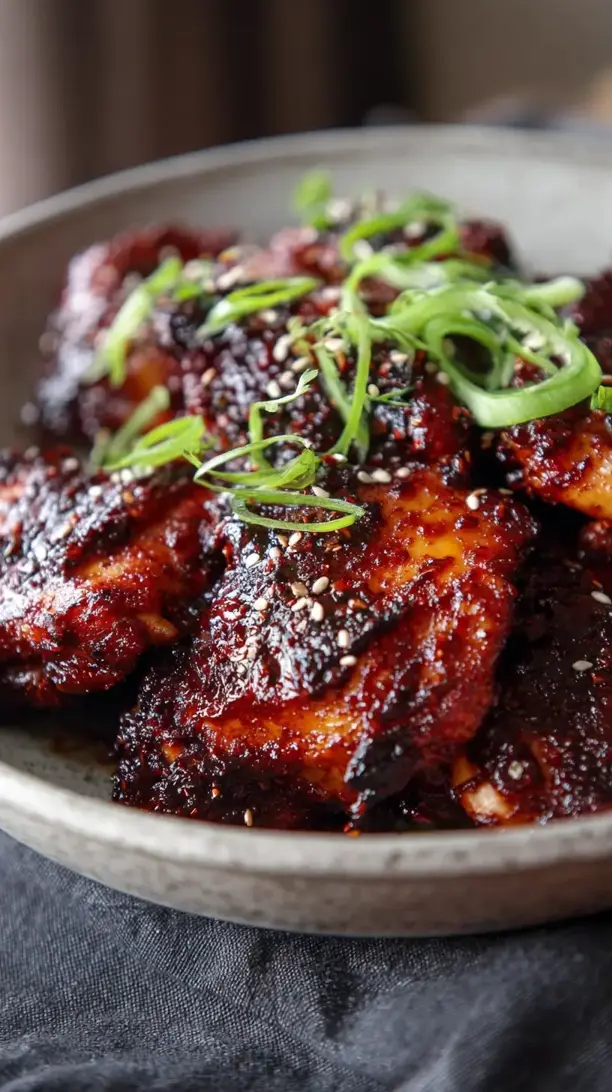
Gochujang Chicken combines spicy, sweet, and savory Korean chili paste with juicy chicken for a sticky, caramelized glaze. This dish is incredibly simple to prepare yet delivers complex, umami-rich flavor. You’ll love how the gochujang marinade creates glossy, irresistible chicken with a gentle kick.
If you're looking for the perfect Gochujang Chicken, you're in the right place. Whether you love Chicken Breast Recipes or want to explore our Crockpot Recipes collection, we've got you covered.



Why You’ll Love This Gochujang Chicken
- Big flavor, simple prep: Gochujang brings deep complexity without a long ingredient list.
- Perfect texture: Sticky, charred edges with tender, juicy chicken inside.
- Versatile cooking: Bake, grill, or pan-sear to suit your kitchen and mood.
- Gateway ingredient: Discover the fermented magic of gochujang.
Ingredients & Tools
- 600 g boneless, skinless chicken thighs
- 3 tbsp gochujang paste
- 2 tbsp soy sauce
- 1 tbsp honey or maple syrup
- 1 tbsp rice vinegar
- 2 cloves garlic, minced
- 1 tsp freshly grated ginger
- 1 tbsp sesame oil
- 1 tbsp neutral oil (like vegetable or canola)
- 2 spring onions, thinly sliced
- 1 tsp sesame seeds, for garnish
Tools: A medium mixing bowl, whisk, baking sheet (if baking) or large skillet (if pan-cooking), and tongs.
Notes: Use quality gochujang without too many additives for best fermented flavor. Don’t skip the sesame oil—it adds a nutty aroma that ties everything together.
Nutrition (per serving)
| Calories: | 320 kcal |
| Protein: | 28 g |
| Fat: | 16 g |
| Carbs: | 12 g |
| Fiber: | 1 g |
Serves: 4 | Prep Time: 10 minutes | Cook Time: 20 minutes | Total Time: 30 minutes (plus optional marinating time)
Before You Start: Tips & Ingredient Notes
- Can I use chicken breasts instead of thighs? You can, but thighs are more forgiving and stay juicier. If using breasts, pound them to an even thickness and reduce cooking time slightly to avoid dryness.
- What if my gochujang is very thick? Some brands are thicker than others. If it’s hard to mix, warm it slightly or thin it with a teaspoon of water. The consistency should be spreadable, not runny.
- Is it really spicy? Gochujang has a mild to medium heat that builds slowly. For a milder version, reduce the gochujang by a tablespoon and add a bit more honey. For extra heat, add a pinch of gochugaru (Korean chili flakes).
- Do I have to marinate the chicken? Marinating for at least 30 minutes (or up to overnight) gives the best flavor, but if you’re in a rush, even 10 minutes will impart a good amount of taste.
How to Make Gochujang Chicken
Step 1: In a medium bowl, whisk together the gochujang, soy sauce, honey, rice vinegar, minced garlic, and grated ginger until smooth. You’ll notice the sauce is thick and deeply colored—that’s exactly what you want. Taste a tiny bit (it’ll be strong!) and adjust sweetness or saltiness if needed. If it feels too thick, a splash of water can help loosen it.
Step 2: Pat the chicken thighs dry with paper towels—this helps the marinade cling better. Add the chicken to the bowl and toss thoroughly, making sure every piece is well-coated. Cover and marinate for at least 30 minutes in the fridge. If you have more time, even an hour or two will deepen the flavors beautifully.
Step 3: When ready to cook, preheat your oven to 200°C (400°F) if baking, or heat a large skillet over medium-high heat with the neutral oil. For baking: Arrange the chicken on a lined baking sheet, spooning over any extra marinade. Bake for 18–22 minutes, until cooked through and slightly charred at the edges.
Step 4: For pan-cooking: Place the chicken in the hot skillet and cook for 5–7 minutes per side, until you get a nice caramelized crust and the internal temperature reaches 75°C (165°F). Don’t move the chicken too much—let it sear properly for that beautiful color.
Step 5: Once cooked, transfer the chicken to a cutting board and let it rest for a few minutes. This allows the juices to redistribute, keeping the meat succulent. While it rests, drizzle with the sesame oil and sprinkle with sliced spring onions and sesame seeds. Slice or serve whole, with extra sauce from the pan spooned over the top.
Storage & Freshness Guide
- Fridge: Store in an airtight container for up to 3 days.
- Freezer: Freeze for up to 2 months in a sealed bag or container.
- Reviving: Reheat gently in a skillet or oven with a splash of water to maintain moisture.
Serving Suggestions
Complementary Dishes
- Steamed jasmine rice — The fluffy, mild rice is the perfect canvas for the bold, saucy chicken, soaking up every bit of that delicious glaze.
- Quick-pickled cucumber salad — Thinly sliced cucumbers with a splash of rice vinegar and a pinch of sugar provide a crisp, refreshing contrast to the rich chicken.
- Stir-fried bok choy or spinach — Lightly garlicky greens add freshness and balance, making the meal feel complete and vibrant.
Drinks
- Cold lager or crisp pilsner — The effervescence and slight bitterness cut through the richness and spice, creating a wonderfully refreshing pairing.
- Iced barley tea (boricha) — A traditional Korean choice that’s toasty, caffeine-free, and incredibly soothing alongside spicy food.
- Citrus-forward white wine — A Sauvignon Blanc or Pinot Grigio with bright acidity complements the sweet and spicy notes without overpowering them.
Something Sweet
- Mango sticky rice — Sweet, creamy, and fragrant, this dessert offers a lovely tropical finish that cools the palate after the gentle heat.
- Green tea ice cream — Its mild, earthy bitterness is a sophisticated and calming way to end the meal, balancing the spice perfectly.
- Yuzu or lemon sorbet — Bright, citrusy, and refreshing, it cleanses the palate and leaves you feeling light and satisfied.
Top Mistakes to Avoid
- Mistake: Using gochujang straight from the jar without balancing it. Gochujang is potent and needs sweet and acidic elements to round it out. Skipping the honey or vinegar can make the dish one-dimensional and overly salty.
- Mistake: Overcooking the chicken. Chicken thighs are forgiving, but they can still dry out if left too long. Use a meat thermometer if possible—75°C (165°F) is your target for juicy, perfectly cooked meat.
- Mistake: Crowding the pan when searing. If the pieces are too close together, they’ll steam instead of developing that lovely caramelized crust. Cook in batches if needed for the best texture.
- Mistake: Skipping the resting step. Slicing the chicken right away lets all those precious juices escape. A brief 5-minute rest makes a world of difference in tenderness.
Expert Tips
- Tip: Double the marinade and save half for basting. Brush a little extra sauce onto the chicken during the last few minutes of cooking for an even stickier, more intense glaze. Just make sure not to cross-contam


Gochujang Chicken
Make sticky, flavorful Gochujang Chicken in just 30 minutes. This easy Korean-inspired recipe is sweet, spicy, and savory. Get the simple recipe and cook it tonight!
Ingredients
For the Gochujang Chicken
-
600 g boneless, skinless chicken thighs
-
3 tbsp gochujang paste
-
2 tbsp soy sauce
-
1 tbsp honey or maple syrup
-
1 tbsp rice vinegar
-
2 cloves garlic (minced)
-
1 tsp freshly grated ginger
-
1 tbsp sesame oil
-
1 tbsp neutral oil (like vegetable or canola)
-
2 spring onions (thinly sliced)
-
1 tsp sesame seeds (for garnish)
Instructions
-
In a medium bowl, whisk together the gochujang, soy sauce, honey, rice vinegar, minced garlic, and grated ginger until smooth. You’ll notice the sauce is thick and deeply colored—that’s exactly what you want. Taste a tiny bit (it’ll be strong!) and adjust sweetness or saltiness if needed. If it feels too thick, a splash of water can help loosen it.01
-
Pat the chicken thighs dry with paper towels—this helps the marinade cling better. Add the chicken to the bowl and toss thoroughly, making sure every piece is well-coated. Cover and marinate for at least 30 minutes in the fridge. If you have more time, even an hour or two will deepen the flavors beautifully.02
-
When ready to cook, preheat your oven to 200°C (400°F) if baking, or heat a large skillet over medium-high heat with the neutral oil. For baking: Arrange the chicken on a lined baking sheet, spooning over any extra marinade. Bake for 18–22 minutes, until cooked through and slightly charred at the edges.03
-
For pan-cooking: Place the chicken in the hot skillet and cook for 5–7 minutes per side, until you get a nice caramelized crust and the internal temperature reaches 75°C (165°F). Don’t move the chicken too much—let it sear properly for that beautiful color.04
-
Once cooked, transfer the chicken to a cutting board and let it rest for a few minutes. This allows the juices to redistribute, keeping the meat succulent. While it rests, drizzle with the sesame oil and sprinkle with sliced spring onions and sesame seeds. Slice or serve whole, with extra sauce from the pan spooned over the top.05
Not what you're looking for?