If you’ve ever struggled with dry, bland chicken breast, this Japanese Chicken Breast recipe is your new best friend. It transforms the humble cut into something incredibly tender and juicy, packed with savory-sweet umami flavor. The secret is a simple technique and a marinade that doubles as a glossy, irresistible sauce.
Looking for Japanese Chicken Breast inspiration? You'll love what we have! Explore more Chicken Breast Recipes recipes or discover our Crockpot Recipes favorites.


Why You’ll Love This Japanese Chicken Breast
- Impossibly Tender: The method locks in moisture, banishing dry chicken.
- Flavor Bomb: A deep, complex umami blend that’s comforting and exciting.
- Deceptively Simple: No special skills needed—just whisk and pan-fry.
- Incredibly Versatile: Perfect over rice, in salads, or for bento boxes.
Ingredients & Tools
- 2 large boneless, skinless chicken breasts (about 1 lb or 450 g total)
- 3 tbsp soy sauce (use reduced-sodium if preferred)
- 2 tbsp mirin
- 1 tbsp sake (or dry white wine/extra mirin)
- 1 tbsp granulated sugar
- 1 tsp freshly grated ginger
- 1 small clove garlic, minced or grated
- 1 tbsp neutral oil (like avocado or canola)
- 1 tsp toasted sesame oil
- 1 tbsp thinly sliced green onion, for garnish
- 1 tsp toasted sesame seeds, for garnish
Tools: A large bowl, a whisk or fork, a sharp knife, a cutting board, a heavy-bottomed skillet or non-stick frying pan, and a pair of tongs.
Notes: The beauty here is in the balance of the core ingredients—the soy sauce provides the salty base, the mirin adds a gentle sweetness and sheen, and the sake helps tenderize the meat while cutting through richness. Using fresh ginger and garlic really does make a noticeable difference, lending a bright, aromatic quality that powdered versions just can’t match.
Nutrition (per serving)
| Calories: | 245 kcal |
| Protein: | 28 g |
| Fat: | 9 g |
| Carbs: | 8 g |
| Fiber: | 0.5 g |
Serves: 2 | Prep Time: 10 minutes (plus 30 mins marinating) | Cook Time: 15 minutes | Total Time: 55 minutes
Before You Start: Tips & Ingredient Notes
- Pound the chicken to an even thickness. This is the single most important step for even cooking. A rolling pin or heavy pan works perfectly to gently flatten the thicker end of the breast.
- Don’t skip the marinating time. Even 20-30 minutes makes a world of difference, allowing the flavors to penetrate and the sake to work its tenderizing magic. Overnight is even better!
- What if I can’t find mirin or sake? For mirin, a mix of 1.5 tbsp white wine and 1/2 tsp sugar can be a decent substitute. For sake, a dry white wine or even just a little extra chicken broth will work in a pinch.
- Use a neutral, high-heat oil. You’ll be searing the chicken over medium-high heat, so an oil with a high smoke point like avocado, canola, or grapeseed is ideal. Save the extra-virgin olive oil for your salads.
How to Make Japanese Chicken Breast
Step 1: Prepare the Chicken. Place the chicken breasts on a cutting board. If they are very uneven, cover them with plastic wrap and gently pound the thicker ends with a rolling pin or heavy pan until they are a relatively uniform thickness, about ¾-inch thick. This ensures the entire breast cooks at the same rate. Pat them completely dry with paper towels—this is crucial for getting a good sear and not steaming the chicken.
Step 2: Make the Marinade & Sauce. In a bowl large enough to hold the chicken, whisk together the soy sauce, mirin, sake, sugar, grated ginger, and minced garlic. Keep whisking until the sugar has completely dissolved. This mixture is your all-in-one marinade and finishing sauce, so it’s doing double duty. You’ll notice the aroma is already fantastic—savory, sweet, and a little pungent from the fresh aromatics.
Step 3: Marinate the Chicken. Place the dried chicken breasts into the bowl with the marinade, turning them over a few times to coat thoroughly. Cover the bowl and let it marinate in the refrigerator for at least 30 minutes, or up to 4 hours. If you’re in a real rush, even 15 minutes will help. For the best flavor, try not to exceed 4 hours as the salt in the soy sauce can start to toughen the protein.
Step 4: Cook the Chicken. Remove the chicken from the marinade, letting the excess drip off. Reserve all of the remaining marinade in the bowl—you’ll need it for the sauce. Heat the neutral oil in your skillet over medium-high heat. Once the oil is shimmering, carefully add the chicken breasts. Cook for 5-7 minutes without moving them, until you have a beautiful golden-brown crust on the first side. Flip them over and cook for another 5-7 minutes, or until the internal temperature reaches 165°F (74°C) when checked with an instant-read thermometer.
Step 5: Rest and Make the Glaze. Transfer the cooked chicken to a clean cutting board and let it rest for at least 5 minutes. This allows the juices to redistribute throughout the meat. Meanwhile, pour the reserved marinade into the still-hot skillet. It will sizzle and bubble—that’s good! Let it simmer for 2-3 minutes, stirring occasionally, until it thickens slightly into a glossy, syrupy sauce. Stir in the toasted sesame oil right at the end for a wonderful nutty aroma.
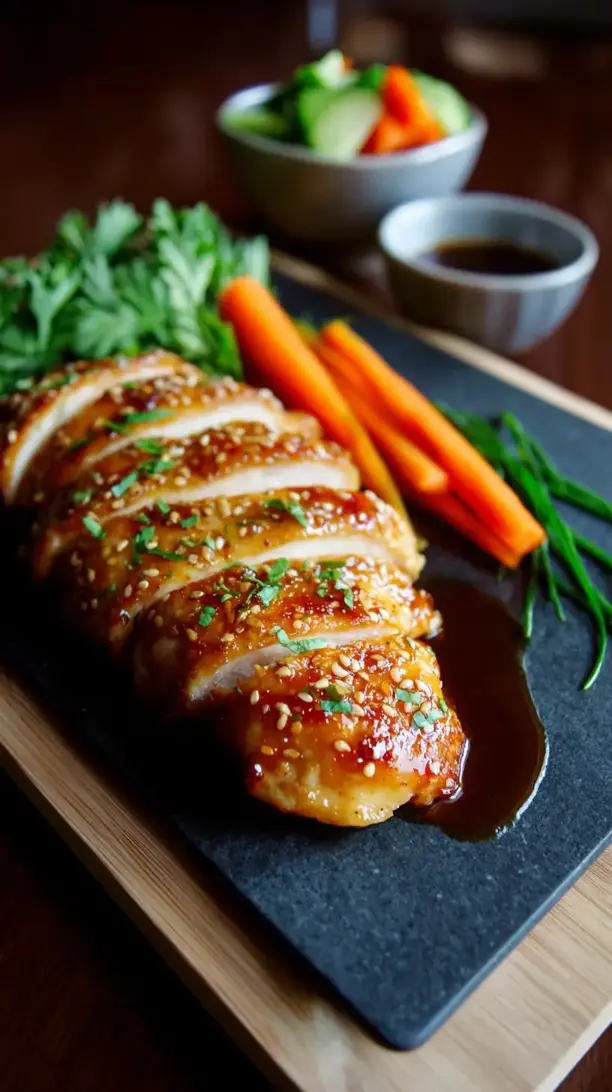
Step 6: Slice and Serve. Slice the rested chicken breast against the grain into ½-inch thick slices. This makes it even more tender to eat. Arrange the slices on a serving plate, drizzle generously with the warm, reduced sauce from the pan, and finish with a sprinkle of sliced green onions and toasted sesame seeds. The final dish should look glossy, inviting, and smell absolutely incredible.
Storage & Freshness Guide
- Fridge: Store sliced chicken and sauce in an airtight container for up to 3 days.
- Freezer: Freeze in a sealed container for up to 2 months; thaw in fridge before reheating.
- Reviving: Reheat gently in a skillet with a splash of water or sauce to maintain moisture.
Serving Suggestions
Complementary Dishes
- Steamed Japanese Rice — The classic, no-fail pairing. The fluffy, plain rice is the perfect canvas to soak up every last drop of that delicious savory sauce.
- Quick-Pickled Cucumber Salad (Sunomono) — The bright, tangy, and slightly sweet crunch of quick-pickled cucumbers provides a refreshing contrast to the rich, umami chicken.
- Steamed or Roasted Broccoli — A simple, healthy green vegetable balances the meal and also acts as another vehicle for that glorious sauce.
Drinks
- Cold Japanese Lager — A crisp, clean beer like Asahi or Sapporo cuts through the richness of the dish and cleanses the palate beautifully between bites.
- Earl Grey Tea (Iced or Hot) — The bergamot notes in Earl Grey tea offer a lovely, aromatic complement to the ginger and soy in the chicken without being overpowering.
- Dry Riesling — A wine with a touch of sweetness and high acidity works wonders, balancing the saltiness and enhancing the subtle sweetness of the mirin.
Something Sweet
- Matcha Ice Cream — The slightly bitter, earthy notes of matcha are a sophisticated and traditional finish that contrasts perfectly with the preceding savory course.
- Mochi — These soft, chewy rice cakes with sweet fillings like red bean or strawberry are a fun, textural end to the meal that stays true to the Japanese theme.
- Fresh Orange Slices with a Mint Sprig — Sometimes simple is best. The bright, citrusy freshness cleanses the palate and feels light and satisfying after a flavorful main.
Top Mistakes to Avoid
- Mistake: Not pounding the chicken. This is the fast track to a dry, overcooked thin end and an undercooked, rubbery thick end. An even thickness is non-negotiable for perfect doneness.
- Mistake: Moving the chicken too soon. Let it sear undisturbed for the first 5-7 minutes. If you try to move it before a crust has formed, it will stick to the pan and tear, and you’ll lose all those beautiful browned bits that add so much flavor.
- Mistake: Skipping the rest time. I know it’s tempting to cut right in, but if you slice the chicken immediately, all the precious juices will run out onto the cutting board, leaving the meat dry. Patience is a virtue here.
- Mistake: Pouring unused marinade over the cooked chicken without boiling it. The marinade has been in contact with raw chicken, so it must be simmered for a few minutes to kill any harmful bacteria before it becomes a safe and delicious sauce.
Expert Tips
- Tip: Use an instant-read thermometer. This is the ultimate tool for perfectly cooked chicken every single time. Pull the chicken off the heat at 160-162°F (71-72°C)—the temperature will continue to rise to a safe 165°F (74°C) as it rests, preventing overcooking.
- Tip: Slice against the grain. Look for the lines of muscle fiber running along the chicken breast and cut perpendicular to them. This shortens the muscle fibers, making each bite significantly more tender and easier to chew.
- Tip: Create a “flavor base” for the sauce. After removing the chicken, you can add an extra teaspoon of grated ginger and garlic to the pan and sauté for 30 seconds before adding the marinade. This deepens the aromatic profile of your final sauce immensely.
- Tip: For a super-glossy finish, add a tiny knob of cold butter to the reduced sauce right at the end, off the heat, and swirl it in until melted. This French technique (monter au beurre) gives the sauce a beautiful sheen and a velvety texture.
FAQs
Can I use chicken thighs instead of breasts?
Absolutely! Chicken thighs are more forgiving and have a richer flavor. You’ll follow the same process, but the cooking time may be a minute or two longer per side due to their higher fat content. Just ensure the internal temperature reaches 165°F (74°C). The sauce pairs wonderfully with the darker meat, creating an even more robust dish.
How should I store and reheat leftovers?
Store any leftover sliced chicken and sauce in an airtight container in the refrigerator for up to 3 days. The best way to reheat is gently in a skillet over low heat with a splash of water or extra sauce to prevent it from drying out. You can also microwave it in 30-second bursts, but the stovetop method preserves the texture much better.
Is this recipe gluten-free?
It can be, easily! Just ensure you use a certified gluten-free tamari instead of regular soy sauce. All the other core ingredients—mirin, sake, ginger, garlic—are naturally gluten-free, so the swap is seamless and the flavor is identical.
My sauce isn’t thickening. What did I do wrong?
Don’t worry, this is a common hiccup. It’s often because the heat wasn’t high enough to promote rapid reduction. Simply leave it simmering for a few more minutes, and it will thicken as the water evaporates. If you’re really in a rush, you can make a quick slurry with ½ teaspoon of cornstarch and a tablespoon of water and stir it in, which will thicken it up almost instantly.
Can I make this ahead of time for a bento box?
This chicken is a fantastic make-ahead option for bento! Let it cool completely to room temperature after cooking and slicing before packing it. It’s delicious served at room temperature, and the flavors actually deepen and meld together beautifully as it sits, making it a perfect packed lunch superstar.



Japanese Chicken Breast
Make juicy, flavorful Japanese Chicken Breast with this easy recipe. A simple marinade creates a tender, umami-packed meal. Get the step-by-step guide now!
Ingredients
For the Marinade & Sauce:
-
3 tbsp soy sauce (use reduced-sodium if preferred)
-
2 tbsp mirin
-
1 tbsp sake (or dry white wine/extra mirin)
-
1 tbsp granulated sugar
-
1 tsp freshly grated ginger
-
1 small clove garlic (minced or grated)
For the Chicken & Garnish:
-
2 large boneless, skinless chicken breasts (about 1 lb or 450 g total)
-
1 tbsp neutral oil (like avocado or canola)
-
1 tsp toasted sesame oil
-
1 tbsp thinly sliced green onion (for garnish)
-
1 tsp toasted sesame seeds (for garnish)
Instructions
-
Place the chicken breasts on a cutting board. If they are very uneven, cover them with plastic wrap and gently pound the thicker ends with a rolling pin or heavy pan until they are a relatively uniform thickness, about ¾-inch thick. Pat them completely dry with paper towels.01
-
In a bowl large enough to hold the chicken, whisk together the soy sauce, mirin, sake, sugar, grated ginger, and minced garlic. Keep whisking until the sugar has completely dissolved.02
-
Place the dried chicken breasts into the bowl with the marinade, turning them over a few times to coat thoroughly. Cover the bowl and let it marinate in the refrigerator for at least 30 minutes, or up to 4 hours.03
-
Remove the chicken from the marinade, letting the excess drip off. Reserve all of the remaining marinade in the bowl. Heat the neutral oil in your skillet over medium-high heat. Once the oil is shimmering, carefully add the chicken breasts. Cook for 5-7 minutes without moving them, until you have a beautiful golden-brown crust on the first side. Flip them over and cook for another 5-7 minutes, or until the internal temperature reaches 165°F (74°C) when checked with an instant-read thermometer.04
-
Transfer the cooked chicken to a clean cutting board and let it rest for at least 5 minutes. Meanwhile, pour the reserved marinade into the still-hot skillet. Let it simmer for 2-3 minutes, stirring occasionally, until it thickens slightly into a glossy, syrupy sauce. Stir in the toasted sesame oil right at the end.05
-
Slice the rested chicken breast against the grain into ½-inch thick slices. Arrange the slices on a serving plate, drizzle generously with the warm, reduced sauce from the pan, and finish with a sprinkle of sliced green onions and toasted sesame seeds.06
Not what you're looking for?