This Chicken Sausage Skillet is a vibrant one-pan meal that comes together quickly for a satisfying weeknight dinner. It features juicy chicken sausage, peppers, onions, and zucchini simmered in a savory tomato sauce. The recipe is endlessly adaptable and delivers maximum flavor with minimal cleanup.
Craving a delicious Chicken Sausage Skillet? You've come to the right spot! From Chicken Recipes favorites to amazing Desserts recipes, there's something here for everyone.



Why You’ll Love This Chicken Sausage Skillet
One-pan wonder: Everything cooks in a single skillet for easy cleanup.
Deep, satisfying flavor: Searing the sausage creates a flavorful fond for the sauce.
Incredibly versatile: Easily swap vegetables or sausage to suit your taste.
Wholesome and balanced: Packed with lean protein and colorful vegetables.
Ingredients & Tools
- 1 tbsp olive oil
- 450 g chicken sausage links (Italian-style works wonderfully)
- 1 large yellow onion, sliced
- 1 red bell pepper, sliced
- 1 yellow or orange bell pepper, sliced
- 1 medium zucchini, halved and sliced
- 3 cloves garlic, minced
- 1 (400 g) can diced tomatoes, undrained
- 1 tsp dried oregano
- 1/2 tsp smoked paprika
- 1/4 tsp red pepper flakes (optional, for heat)
- Salt and black pepper to taste
- Fresh parsley or basil for garnish
Tools: A large (12-inch) oven-safe skillet is ideal.
Notes: The quality of your chicken sausage really sets the tone here—look for one with great seasoning. And don’t skip the smoked paprika; it adds a subtle, smoky depth that makes the sauce really sing.
Nutrition (per serving)
| Calories: | 320 kcal |
| Protein: | 22 g |
| Fat: | 18 g |
| Carbs: | 16 g |
| Fiber: | 4 g |
Serves: 4 | Prep Time: 15 minutes | Cook Time: 25 minutes | Total Time: 40 minutes
Before You Start: Tips & Ingredient Notes
- Choose your sausage wisely. I highly recommend using a pre-cooked chicken sausage for this recipe. It’s juicier and harder to overcook, ensuring you get a perfect result every time. If you use raw sausage, you’ll need to adjust the cooking time to ensure it’s fully cooked through before proceeding.
- Don’t crowd the pan when browning. If your skillet isn’t large enough to comfortably fit all the sausage slices in a single layer, brown them in two batches. Crowding will steam the sausage instead of giving it that beautiful, caramelized sear we’re after.
- Slice your vegetables uniformly. Try to cut your onions, peppers, and zucchini into slices of similar thickness. This isn’t just for looks—it ensures everything cooks at the same rate, so you don’t end up with some pieces mushy and others crunchy.
- Embrace the fond. That browned, sticky stuff left in the pan after searing the sausage is pure flavor gold. When you add your onions and a splash of liquid, be sure to scrape it all up—it’s the secret to a deeply flavorful sauce.
How to Make Chicken Sausage Skillet
Step 1: Start by prepping all your ingredients. Slice the chicken sausage into ½-inch thick rounds. Slice the onion and bell peppers into strips, and cut the zucchini in half lengthwise before slicing into half-moons. Mince the garlic and have your spices measured and ready to go. This “mise en place” makes the cooking process smooth and stress-free.
Step 2: Heat the olive oil in your large skillet over medium-high heat. Once the oil is shimmering, add the sausage rounds in a single layer. Let them cook undisturbed for 2-3 minutes per side until they develop a nice, golden-brown crust. You’ll hear a good sizzle when they hit the pan. Don’t move them around too much—that sear is where a ton of flavor comes from. Once browned, remove the sausage from the skillet and set it aside on a plate.
Step 3: Reduce the heat to medium and add the sliced onion and bell peppers to the same skillet. You should see all those delicious browned bits from the sausage still in the pan. Sauté the vegetables for about 5-7 minutes, stirring occasionally, until they begin to soften and the onions turn translucent. You’ll notice the peppers will start to brighten in color.
Step 4: Add the sliced zucchini and minced garlic to the skillet. Cook for another 3-4 minutes, stirring frequently, until the zucchini is just tender and the garlic is fragrant. Be careful not to burn the garlic—it can turn bitter quickly. The aroma at this stage is absolutely incredible, a true promise of the delicious meal to come.
Step 5: Now, pour in the entire can of diced tomatoes with their juices. Sprinkle in the dried oregano, smoked paprika, and red pepper flakes if using. Give everything a good stir, scraping the bottom of the pan thoroughly to lift all that flavorful fond. This is where the magic happens and your sauce starts to form.
Step 6: Bring the mixture to a gentle simmer. Let it cook for about 5 minutes, allowing the flavors to meld and the sauce to thicken slightly. You’ll notice the colors of the dish deepening and becoming more vibrant. Season with salt and black pepper to your taste—remember that the sausage will also add saltiness, so it’s best to taste first.
Step 7: Return the browned sausage to the skillet, nestling it into the vegetable and tomato mixture. Reduce the heat to low, cover the skillet with a lid (or a baking sheet if you don’t have one), and let it simmer together for a final 5 minutes. This allows the sausage to heat through completely and absorb some of the saucy flavors.
Step 8: Finally, remove the skillet from the heat. Give it one last taste and adjust seasoning if needed. Garnish generously with freshly chopped parsley or basil for a pop of color and freshness. The dish is now ready to be served directly from the skillet for a rustic, family-style presentation.
Storage & Freshness Guide
- Fridge: Cool completely, store in an airtight container for up to 4 days.
- Freezer: Portion into freezer-safe containers and freeze for up to 3 months.
- Reviving: Reheat gently on the stovetop with a splash of water or broth to loosen the sauce.
Serving Suggestions
Complementary Dishes
- Crusty garlic bread — Perfect for sopping up every last bit of the delicious tomatoey sauce left in the skillet. The crisp exterior and soft, garlicky interior are a textural dream with the skillet.
- Creamy polenta — The soft, comforting texture of polenta creates a wonderful base for the savory sausage and vegetables. It turns the skillet into a truly hearty, spoonable meal.
- A simple arugula salad — The peppery bite of arugula dressed with a light lemon vinaigrette provides a fresh, crisp contrast that cuts through the richness of the skillet beautifully.
Drinks
- A light-bodied red wine — A glass of Pinot Noir or a Chianti complements the tomatoes and herbs without overpowering the dish. The acidity and fruit notes are a fantastic pairing.
- A crisp lager or pilsner — The carbonation and clean finish of a cold beer help cleanse the palate between bites, making each mouthful of the flavorful skillet taste fresh and new.
- Sparkling water with citrus — For a non-alcoholic option, the bubbles and hint of lemon or lime provide a refreshing counterpoint to the savory, hearty nature of the meal.
Something Sweet
- Lemon sorbet — Its bright, clean, and citrusy flavor is the perfect palate-cleanser after a savory meal. It feels light and refreshing, a perfect endnote.
- Dark chocolate affogato — A scoop of vanilla ice cream or gelato with a shot of hot espresso poured over it. It’s a simple yet decadent treat that feels special.
- Almond biscotti — These crunchy, twice-baked cookies are wonderful for dipping into a cup of coffee or tea. They’re not too sweet, making them an elegant, light finish.
Top Mistakes to Avoid
- Mistake: Using raw sausage without adjusting the cook time. If your chicken sausage is raw, you must ensure it’s fully cooked through before you consider the dish safe to eat. This may require a longer initial browning time and potentially finishing the dish in a covered skillet for longer.
- Mistake: Overcooking the vegetables. We’re aiming for tender-crisp veggies with a bit of bite, not a mushy, sad vegetable medley. Add the zucchini later in the process and keep an eye on the cooking time to preserve texture.
- Mistake: Skipping the deglazing step. When you add the tomatoes, you must scrape the bottom of the pan vigorously. Those browned bits are non-negotiable flavor. If you leave them behind, you’re leaving the best part of the dish in the pan.
- Mistake: Overseasoning before tasting. Chicken sausage can vary widely in saltiness. Always taste your sauce after it has simmered and before you add additional salt. You can always add more, but you can’t take it out.
Expert Tips
- Tip: Get creative with your veggies. This skillet is a fantastic vehicle for cleaning out the produce drawer. Thinly sliced fennel adds a lovely anise note, while a handful of spinach or kale stirred in at the very end wilts perfectly and adds color.
- Tip: Make it creamy. For a richer, creamier sauce, stir in a splash of heavy cream or a dollop of cream cheese during the last few minutes of simmering. It creates a luxurious texture that’s absolutely divine.
- Tip: Cook your pasta right in the skillet. For a true one-pan meal, after step 5, add a cup of dry, short pasta (like penne or rotini) and about 1.5 cups of broth or water. Bring to a boil, then simmer covered until pasta is al dente, stirring occasionally.
- Tip: Double it for meal prep. This recipe doubles beautifully and reheats like a dream. It’s perfect for lunches throughout the week. The flavors often taste even better the next day after they’ve had more time to meld.
FAQs
Can I use a different type of sausage?
Absolutely! This recipe is very forgiving. Turkey sausage, pork sausage, or even plant-based sausages work well. Just keep in mind that cooking times may vary slightly depending on the fat content and whether the sausage is pre-cooked or raw. The key is to achieve a good sear for maximum flavor, regardless of the type you choose.
How should I store and reheat leftovers?
Let the skillet cool completely, then transfer it to an airtight container. It will keep in the refrigerator for up to 4 days. To reheat, simply warm a portion in a skillet over medium heat, adding a tiny splash of water or broth to loosen the sauce if it has thickened too much. You can also microwave it in 30-second intervals, stirring in between.
Is this recipe freezer-friendly?
It sure is! This skillet freezes remarkably well. Cool it completely, then portion it into freezer-safe bags or containers. It can be frozen for up to 3 months. To serve, thaw it overnight in the refrigerator and then reheat it gently on the stovetop. The texture of the zucchini may soften a bit more after freezing, but the flavor will still be fantastic.
My sauce is too thin. How can I thicken it?
If your sauce is a bit runny for your liking, the easiest fix is to let it simmer uncovered for a few extra minutes to allow some of the liquid to evaporate. Alternatively, you can create a quick slurry by mixing a teaspoon of cornstarch with a tablespoon of cold water and stirring it into the simmering sauce. It should thicken up within a minute or two.
Can I make this dish spicier?
Of course! If you love heat, there are a few easy ways to turn up the spice level. Start by using a spicy chicken sausage variety. You can also increase the amount of red pepper flakes, or add a pinch of cayenne pepper with the other spices. For a fresh kick, garnish with some sliced fresh chili peppers or a drizzle of chili oil right before serving.



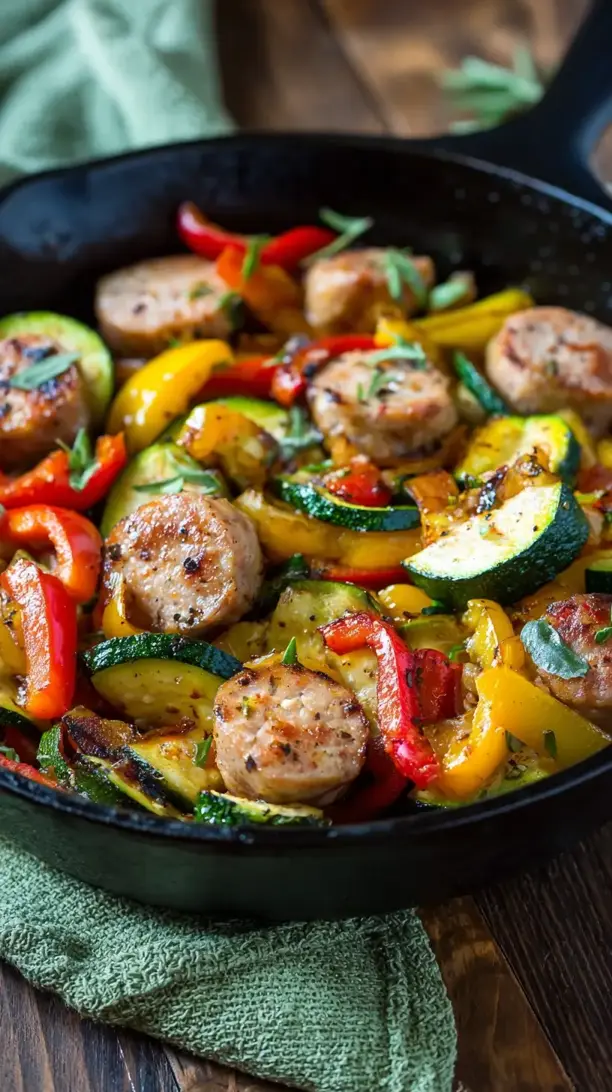
Chicken Sausage Skillet
Make this easy Chicken Sausage Skillet for a quick, one-pan dinner. Packed with sausage, peppers, and zucchini in a savory tomato sauce. Get the recipe now!
Ingredients
For the Ingredients
-
1 tbsp olive oil
-
450 g chicken sausage links (Italian-style works wonderfully)
-
1 large yellow onion (sliced)
-
1 red bell pepper (sliced)
-
1 yellow or orange bell pepper (sliced)
-
1 medium zucchini (halved and sliced)
-
3 cloves garlic (minced)
-
1 can diced tomatoes (400 g, undrained)
-
1 tsp dried oregano
-
1/2 tsp smoked paprika
-
1/4 tsp red pepper flakes (optional, for heat)
-
Salt and black pepper (to taste)
-
Fresh parsley or basil (for garnish)
Instructions
-
Start by prepping all your ingredients. Slice the chicken sausage into 1/2-inch thick rounds. Slice the onion and bell peppers into strips, and cut the zucchini in half lengthwise before slicing into half-moons. Mince the garlic and have your spices measured and ready to go. This "mise en place" makes the cooking process smooth and stress-free.01
-
Heat the olive oil in your large skillet over medium-high heat. Once the oil is shimmering, add the sausage rounds in a single layer. Let them cook undisturbed for 2–3 minutes per side until they develop a nice, golden-brown crust. You’ll hear a good sizzle when they hit the pan. Don’t move them around too much—that sear is where a ton of flavor comes from. Once browned, remove the sausage from the skillet and set it aside on a plate.02
-
Reduce the heat to medium and add the sliced onion and bell peppers to the same skillet. You should see all those delicious browned bits from the sausage still in the pan. Sauté the vegetables for about 5–7 minutes, stirring occasionally, until they begin to soften and the onions turn translucent. You’ll notice the peppers will start to brighten in color.03
-
Add the sliced zucchini and minced garlic to the skillet. Cook for another 3–4 minutes, stirring frequently, until the zucchini is just tender and the garlic is fragrant. Be careful not to burn the garlic—it can turn bitter quickly. The aroma at this stage is absolutely incredible, a true promise of the delicious meal to come.04
-
Now, pour in the entire can of diced tomatoes with their juices. Sprinkle in the dried oregano, smoked paprika, and red pepper flakes if using. Give everything a good stir, scraping the bottom of the pan thoroughly to lift all that flavorful fond. This is where the magic happens and your sauce starts to form.05
-
Bring the mixture to a gentle simmer. Let it cook for about 5 minutes, allowing the flavors to meld and the sauce to thicken slightly. You’ll notice the colors of the dish deepening and becoming more vibrant. Season with salt and black pepper to your taste—remember that the sausage will also add saltiness, so it’s best to taste first.06
-
Return the browned sausage to the skillet, nestling it into the vegetable and tomato mixture. Reduce the heat to low, cover the skillet with a lid (or a baking sheet if you don’t have one), and let it simmer together for a final 5 minutes. This allows the sausage to heat through completely and absorb some of the saucy flavors.07
-
Finally, remove the skillet from the heat. Give it one last taste and adjust seasoning if needed. Garnish generously with freshly chopped parsley or basil for a pop of color and freshness. The dish is now ready to be served directly from the skillet for a rustic, family-style presentation.08
Not what you're looking for?