
This Chicken Thigh Ramen delivers a deeply comforting, restaurant-quality bowl at home. The rich, savory broth and juicy chicken thighs create a soul-warming experience without all-day simmering. It’s a customizable, approachable project that fills your kitchen with incredible aromas.
If you're looking for the perfect Chicken Thigh Ramen, you're in the right place. Whether you love Chicken Thigh Recipes or want to explore our Breakfast & Brunch collection, we've got you covered.



Why You’ll Love This Chicken Thigh Ramen
- Quick, rich broth: Umami powerhouses create complex flavor fast.
- Juicy, forgiving chicken: Thighs stay moist and tender even if slightly overcooked.
- Endlessly customizable: Your canvas for favorite toppings and leftovers.
- Fancy but doable: Restaurant satisfaction without specialized equipment.
Ingredients & Tools
- 4 bone-in, skin-on chicken thighs
- 1 tbsp neutral oil (like grapeseed or canola)
- 1 large onion, thinly sliced
- 4 cloves garlic, minced
- 1-inch piece ginger, grated
- 8 cups good-quality chicken stock
- 1/4 cup soy sauce
- 2 tbsp mirin
- 1 tbsp sesame oil
- 2 packs (about 200g total) fresh ramen noodles
- 2 soft-boiled eggs (optional, for serving)
- 2 green onions, finely sliced
- 1 sheet nori, cut into strips
- 1 cup bean sprouts
- To taste: chili oil or Sriracha
Tools: A large Dutch oven or heavy-bottomed pot, tongs, a fine-mesh strainer (optional but helpful).
Notes: Don’t skip fresh noodles for springy texture; sesame oil adds nutty aroma.
Nutrition (per serving)
| Calories: | 580 kcal |
| Protein: | 35 g |
| Fat: | 22 g |
| Carbs: | 55 g |
| Fiber: | 4 g |
Serves: 2 | Prep Time: 15 mins | Cook Time: 40 mins | Total Time: 55 mins
Before You Start: Tips & Ingredient Notes
- Pat your chicken thighs really dry. This is the single most important step for getting that crispy, golden skin. Any moisture on the surface will steam the skin instead of searing it.
- Don’t rush the onion cooking. When we sauté the onions, we’re going for soft and sweet, not just translucent. Taking an extra few minutes here builds a wonderful sweetness into the broth’s foundation.
- Fresh vs. dried noodles—it matters. Fresh ramen noodles (usually found in the refrigerated section) have a better chew and cook in just 1-2 minutes. If you must use dried, follow the package directions but keep them slightly al dente.
- Taste your broth before assembling. Broths and soy sauces vary in saltiness. Give the broth a taste after it’s simmered and adjust the seasoning with a little more soy sauce or a pinch of salt if needed.
How to Make Chicken Thigh Ramen
Step 1: Start with the chicken. Pat the chicken thighs thoroughly dry with paper towels and season both sides generously with salt and pepper. Heat the neutral oil in your Dutch oven over medium-high heat. Once the oil is shimmering, place the thighs in skin-side down. You should hear a confident sizzle. Resist the urge to move them! Let them cook for 6-7 minutes until the skin is deep golden brown and crispy. Flip and cook for another 2 minutes on the other side. Remove the thighs to a plate—they won’t be fully cooked yet, and that’s perfect.
Step 2: Build your flavor base. Reduce the heat to medium. In the same pot, with all those glorious chicken drippings, add the sliced onion. Sauté for about 8 minutes, stirring occasionally, until they’ve softened and started to take on a little color. You’ll notice the aroma becoming sweet and inviting. Add the minced garlic and grated ginger and cook for just one more minute until fragrant—be careful not to burn them.
Step 3: Create the broth. Pour the chicken stock into the pot, using your spoon to scrape up any browned bits stuck to the bottom. That’s pure flavor! Add the soy sauce and mirin. Bring the broth to a gentle boil, then reduce the heat to a steady simmer. Carefully place the seared chicken thighs back into the pot. Let it all simmer uncovered for 20-25 minutes. The broth will reduce slightly and become more concentrated.
Step 4: Prepare your toppings and noodles. While the broth simmers, this is your moment to get everything else ready. Slice your green onions, cut the nori, and prepare your soft-boiled eggs if using. Just before you’re ready to serve, cook your ramen noodles according to the package directions in a separate pot of boiling water. Fresh noodles will only take a minute or two. Drain them well.
Step 5: Assemble the bowls. Remove the chicken thighs from the broth. You can shred the meat off the bone or serve them whole—your choice! Divide the cooked noodles between two large bowls. Ladle the hot broth over the noodles, ensuring you get plenty of those onions in there. Place the chicken on top. Now, artfully arrange your toppings: halved soft-boiled eggs, a pile of bean sprouts, a sprinkling of green onions, and a few strips of nori. Finish with a drizzle of sesame oil and a spoonful of chili oil for heat. Serve immediately and dive in.
Storage & Freshness Guide
- Fridge: Store broth, noodles, chicken, and toppings separately in airtight containers for up to 3 days.
- Freezer: Broth freezes beautifully for up to 3 months; freeze without noodles.
- Reviving: Reheat broth on stove; refresh noodles in boiling water for 30 seconds before assembling.
Serving Suggestions
Complementary Dishes
- Simple cucumber salad — The cool, crisp, and slightly tangy crunch provides a refreshing counterpoint to the rich, warm soup.
- Gyoza (pan-fried dumplings) — They’re the classic ramen sidekick for a reason; their savory filling and crispy bottom are just perfect for dipping.
- Quick-pickled vegetables — A small dish of pickled radish or carrot adds a bright, acidic note that cuts through the broth’s richness beautifully.
Drinks
- Iced green tea — Its clean, slightly bitter flavor palate-cleanses between slurps, making each mouthful of ramen taste new again.
- A light lager or pilsner — The crisp carbonation and mild hop bitterness are fantastic for washing down the savory, umami-loaded broth.
- Cold sake — If you’re feeling fancy, a slightly dry, chilled sake complements the complex flavors without overpowering them.
Something Sweet
- Matcha ice cream — The gentle, earthy bitterness of matcha is a sophisticated and surprisingly perfect follow-up to a savory meal like ramen.
- Mochi — These little chewy, sweet rice cakes, often filled with red bean or ice cream, offer a delightful and light textural contrast.
- Fresh, sliced oranges — Sometimes simplicity is best. The burst of juicy, citrus sweetness is incredibly refreshing after a rich and salty bowl.
Top Mistakes to Avoid
- Overcooking the noodles in the broth. Always cook noodles separately and add them just before serving. If they sit in the hot broth, they’ll continue to absorb liquid and turn unpleasantly mushy and bloated.
- Using low-sodium broth without adjusting. If your only option is low-sodium stock, you’ll need to be much more aggressive with seasoning. Taste, taste, taste! The broth should be deeply flavorful on its own.
- Crowding the pot when searing chicken. If you try to sear all four thighs at once in a small pot, they’ll steam instead of sear. Work in batches if necessary to ensure each piece gets proper contact with the hot surface.
- Skipping the soft-boiled egg. I know it’s an extra step, but the creamy, jammy yolk swirling into the broth is a transformative experience. It adds a layer of richness that really completes the bowl.
Expert Tips
- Tip: Make a double batch of broth and freeze it. The broth freezes beautifully for up to 3 months. Having a container of homemade ramen broth in your freezer is like a golden ticket to a fantastic, 10-minute meal on a busy weeknight.
- Tip: Infuse your chili oil. Gently heat your chili oil with a smashed garlic clove and a slice of ginger for 5 minutes before using. This creates a deeply aromatic condiment that elevates your bowl from great to extraordinary.
- Tip: Use the back of your knife to smash the garlic and ginger. Instead of mincing, try smashing them with the flat side of your knife. This breaks the fibers open, releasing more of their essential oils and flavor into the broth during the short cooking time.
- Tip: Shock your noodles. After draining the cooked noodles, give them a quick rinse under cold water. This stops the cooking process instantly, ensuring they stay perfectly springy and don’t stick together while you assemble the bowls.
FAQs
Can I use chicken breasts instead of thighs?
You can, but I really don’t recommend it for this recipe. Chicken thighs have more fat and connective tissue, which means they stay incredibly juicy and tender through the simmering process. Breasts are much leaner and have a tendency to become dry and stringy if even slightly overcooked. The thighs contribute more flavor to the broth, too. If you must use breasts, reduce the simmering time to about 10-12 minutes and use a meat thermometer to ensure they don’t go past 165°F (74°C).
My broth tastes a bit flat. How can I fix it?
A flat broth usually needs a hit of umami, acidity, or salt. First, make sure you’ve salted it adequately. Then, try adding a tiny splash of rice vinegar or a squeeze of fresh lime juice to brighten it up. For more umami depth, a half-teaspoon of white miso paste or a small dash of fish sauce can work wonders. Add these in small increments, tasting after each addition until it sings.
Can I make this vegetarian?
Absolutely! For a vegetarian version, omit the chicken and use a robust vegetable stock. For the protein, you can pan-fry slices of firm tofu or add sautéed mushrooms (shiitake are fantastic). To build depth, add a strip of kombu (dried kelp) to the simmering broth and use a bit more soy sauce or tamari. The result is a completely different, but equally delicious, bowl of ramen.
How do I store and reheat leftovers?
Store the broth, noodles, chicken, and toppings separately in airtight containers in the fridge for up to 3 days. When reheating, warm the broth in a pot on the stove. The noodles will have clumped together, so it’s best to reheat them by dunking them in a separate pot of boiling water for 30 seconds to loosen them up. Re-assemble your bowl fresh. Avoid microwaving the whole assembled bowl—it will turn the noodles to mush.
What’s the best way to make the soft-boiled eggs?
My foolproof method: Bring a pot of water to a rolling boil. Gently lower room-temperature eggs into the water with a slotted spoon. Set a timer for 6.5 minutes for a jammy, custardy yolk. While they cook, prepare an ice bath. When the timer goes off, immediately transfer the eggs to the ice bath to stop the cooking. Let them cool completely before peeling. They’ll be perfect every time.



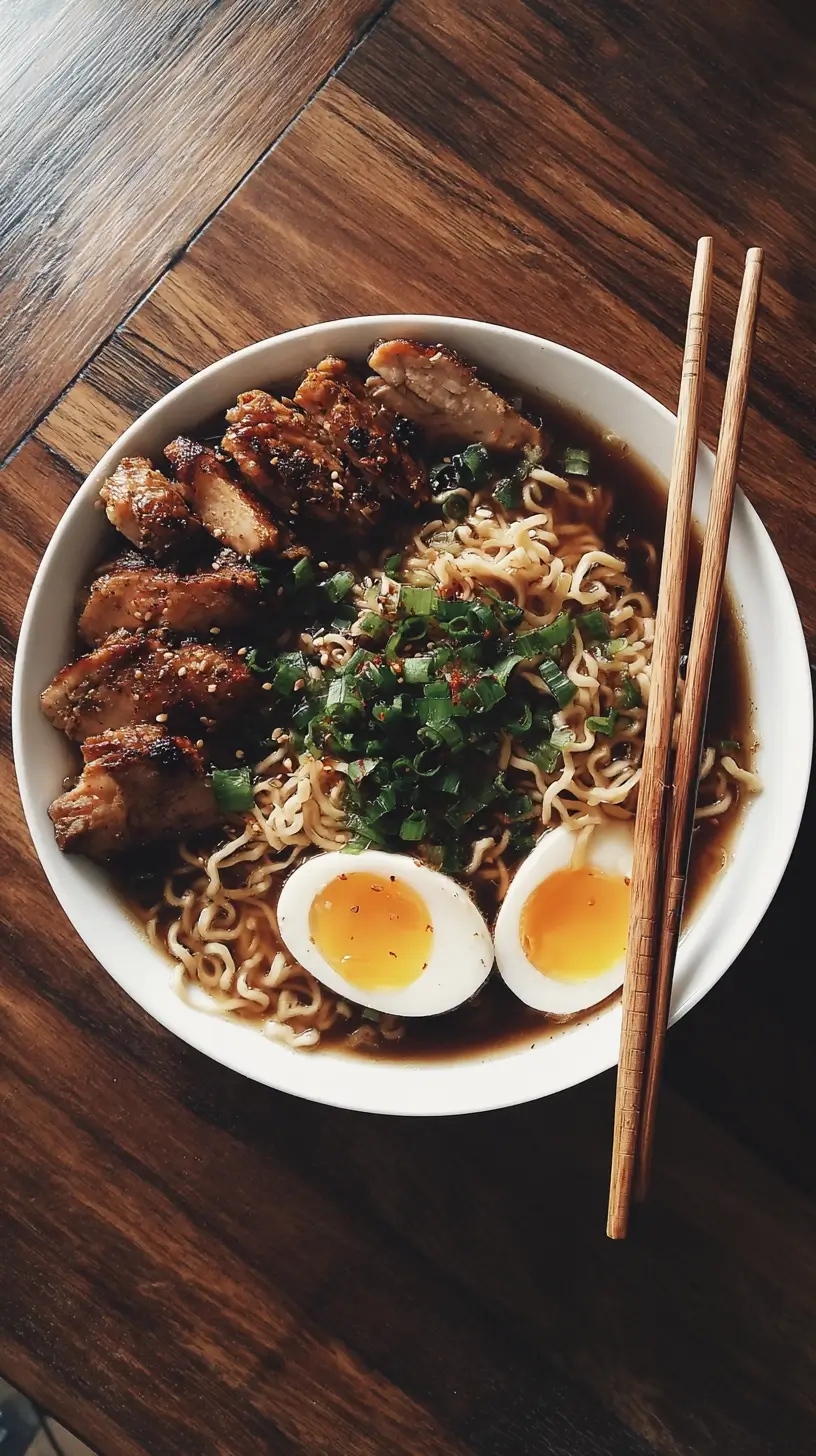
Chicken Thigh Ramen
Make restaurant-quality Chicken Thigh Ramen at home with this easy recipe. Rich broth, juicy chicken & perfect noodles in under an hour. Get the recipe now!
Ingredients
For the Broth & Chicken:
-
4 bone-in, skin-on chicken thighs
-
1 tbsp neutral oil (like grapeseed or canola)
-
1 large onion (thinly sliced)
-
4 cloves garlic (minced)
-
1 inch piece ginger (grated)
-
8 cups good-quality chicken stock
-
1/4 cup soy sauce
-
2 tbsp mirin
-
1 tbsp sesame oil
For the Noodles & Toppings:
-
2 packs fresh ramen noodles (about 200g total)
-
2 soft-boiled eggs (optional, for serving)
-
2 green onions (finely sliced)
-
1 sheet nori (cut into strips)
-
1 cup bean sprouts
-
chili oil or Sriracha (to taste)
Instructions
-
Start with the chicken. Pat the chicken thighs thoroughly dry with paper towels and season both sides generously with salt and pepper. Heat the neutral oil in your Dutch oven over medium-high heat. Once the oil is shimmering, place the thighs in skin-side down. You should hear a confident sizzle. Resist the urge to move them! Let them cook for 6-7 minutes until the skin is deep golden brown and crispy. Flip and cook for another 2 minutes on the other side. Remove the thighs to a plate—they won’t be fully cooked yet, and that’s perfect.01
-
Build your flavor base. Reduce the heat to medium. In the same pot, with all those glorious chicken drippings, add the sliced onion. Sauté for about 8 minutes, stirring occasionally, until they’ve softened and started to take on a little color. You’ll notice the aroma becoming sweet and inviting. Add the minced garlic and grated ginger and cook for just one more minute until fragrant—be careful not to burn them.02
-
Create the broth. Pour the chicken stock into the pot, using your spoon to scrape up any browned bits stuck to the bottom. That’s pure flavor! Add the soy sauce and mirin. Bring the broth to a gentle boil, then reduce the heat to a steady simmer. Carefully place the seared chicken thighs back into the pot. Let it all simmer uncovered for 20-25 minutes. The broth will reduce slightly and become more concentrated.03
-
Prepare your toppings and noodles. While the broth simmers, this is your moment to get everything else ready. Slice your green onions, cut the nori, and prepare your soft-boiled eggs if using. Just before you’re ready to serve, cook your ramen noodles according to the package directions in a separate pot of boiling water. Fresh noodles will only take a minute or two. Drain them well.04
-
Assemble the bowls. Remove the chicken thighs from the broth. You can shred the meat off the bone or serve them whole—your choice! Divide the cooked noodles between two large bowls. Ladle the hot broth over the noodles, ensuring you get plenty of those onions in there. Place the chicken on top. Now, artfully arrange your toppings: halved soft-boiled eggs, a pile of bean sprouts, a sprinkling of green onions, and a few strips of nori. Finish with a drizzle of sesame oil and a spoonful of chili oil for heat. Serve immediately and dive in.05
Not what you're looking for?


