
This Beef and Celery Stew is a deeply comforting, slow-simmered classic. The beef becomes fork-tender while the celery transforms into a sweet, silky component in the rich gravy. It’s a surprisingly straightforward meal that feels like a warm hug on a chilly evening.
Nothing beats a great Beef and Celery Stew. Whether you're a fan of Stew or want to try something from our Dessert Recipes selection, keep scrolling!



Why You’ll Love This Beef and Celery Stew
- Deep flavor, minimal effort: The slow simmer does all the hard work for you.
- Great celery use: It becomes a sweet, tender star, not just a background note.
- Forgiving & flexible: Easily adapt with herbs or extra vegetables you have on hand.
- Better next day: Flavors meld and deepen overnight for effortless future meals.
Ingredients & Tools
- 1.5 kg beef chuck roast, cut into 3-4 cm cubes
- 2 tbsp olive oil
- 1 large yellow onion, diced
- 4 cloves garlic, minced
- 1 large bunch of celery (about 8-10 stalks), sliced into 2 cm pieces
- 3 tbsp tomato paste
- 1 cup dry red wine (like a Cabernet Sauvignon or Merlot)
- 4 cups beef stock
- 2 bay leaves
- 1 tbsp fresh thyme leaves (or 1 tsp dried)
- 1 tsp Worcestershire sauce
- Salt and freshly ground black pepper to taste
- 2 tbsp all-purpose flour (optional, for thickening)
Tools: A large, heavy-bottomed pot or Dutch oven, wooden spoon, sharp knife, and cutting board.
Notes: Don’t skip browning the beef—it’s the foundation of flavor. If you prefer not to cook with alcohol, substitute wine with an additional cup of beef stock.
Nutrition (per serving)
| Calories: | 480 kcal |
| Protein: | 42 g |
| Fat: | 24 g |
| Carbs: | 14 g |
| Fiber: | 3 g |
Serves: 6 | Prep Time: 20 minutes | Cook Time: 2 hours 30 minutes | Total Time: 2 hours 50 minutes
Before You Start: Tips & Ingredient Notes
- Choosing the right beef cut is crucial. Chuck roast is ideal because it’s well-marbled with fat, which slowly renders and breaks down during the long cook, resulting in incredibly tender meat. Avoid lean cuts like sirloin, as they’ll become tough and dry.
- Don’t rush the browning step. This is where you build the foundation of flavor, known as the fond—those delicious browned bits at the bottom of the pot. Take your time and brown the beef in batches to avoid steaming it.
- Use the entire bunch of celery. Don’t discard the leafy celery tops! They are packed with flavor. Chop them up and add them in with the stalks for an extra herbal punch.
- Why use wine? The alcohol cooks off, leaving behind a complex acidity that cuts through the richness of the beef and balances the sweetness of the celery. It really elevates the entire dish.
How to Make Beef and Celery Stew
Step 1: Pat the beef cubes completely dry with paper towels—this is the secret to getting a proper sear. Season them generously with salt and pepper. Heat the olive oil in your large pot or Dutch oven over medium-high heat until it shimmers. Working in batches to avoid overcrowding, add the beef and sear until a deep brown crust forms on all sides, about 4-5 minutes per batch. Transfer the browned beef to a plate and set aside.
Step 2: Reduce the heat to medium. Add the diced onion to the same pot, scraping up any of those lovely browned bits from the bottom. Cook for about 5 minutes until the onion has softened and become translucent. Then, add the minced garlic and cook for another minute until fragrant—you’ll notice the aroma change completely.
Step 3: Stir in the sliced celery and cook for 5-7 minutes, allowing it to soften slightly and start to release its sweet, aromatic notes. Push the vegetables to the side and add the tomato paste to the center of the pot. Let it cook for a minute or two, stirring, until it darkens slightly in color. This deepens its flavor and removes any raw, tinny taste.
Step 4: Pour in the red wine, using your wooden spoon to scrape up any remaining fond from the bottom of the pot. Let it bubble and reduce by about half, which should take 3-4 minutes. This concentrates the flavor and cooks off the harsh alcohol.
Step 5: Return the seared beef and any accumulated juices back to the pot. Add the beef stock, bay leaves, fresh thyme, and Worcestershire sauce. Give everything a good stir. Bring the stew to a gentle boil, then immediately reduce the heat to low, cover the pot with a lid, and let it simmer gently for 1 hour and 30 minutes.
Step 6: After the first 90 minutes, check the stew. The beef should be starting to become tender. Remove the lid and continue to simmer for another 30-45 minutes, uncovered. This allows the liquid to reduce and thicken naturally, concentrating the flavors even further. The beef should be fork-tender at this point.
Step 7: For a thicker gravy, you can create a slurry. Mix the 2 tablespoons of flour with 3 tablespoons of cold water in a small bowl until smooth. Stir this mixture into the simmering stew and cook for another 5-10 minutes until the stew has thickened to your liking. Taste and adjust seasoning with more salt and pepper as needed. Remove the bay leaves before serving.
Storage & Freshness Guide
- Fridge: Cool completely and store in an airtight container for up to 4 days.
- Freezer: Freeze in airtight containers or heavy-duty freezer bags for up to 3 months.
- Reviving: Reheat gently on the stovetop, adding a splash of broth if needed to loosen.
Serving Suggestions
Complementary Dishes
- Creamy mashed potatoes — The ultimate comfort pairing. The fluffy, buttery potatoes are perfect for soaking up every last drop of the rich gravy.
- Buttered egg noodles or polenta — These provide a soft, neutral base that lets the deep flavors of the stew really shine through without competing.
- A simple, crusty baguette — Honestly, you’ll want something to mop your bowl clean with, and a good, chewy bread is absolutely non-negotiable for that task.
Drinks
- A glass of the same red wine you cooked with — It’s a classic pairing for a reason. The wine’s notes will mirror and enhance the flavors already in the stew.
- A dark, malty ale — The caramel and toasty notes in a good brown ale or porter complement the savory, slow-cooked beef beautifully.
- Sparkling water with lemon — For a non-alcoholic option, the crisp bubbles and citrus cut through the richness and cleanse the palate wonderfully.
Something Sweet
- A simple apple crumble — The warm, spiced fruit and crunchy oat topping provide a lovely, homey contrast to the savory depth of the stew.
- Dark chocolate pot de crème — A rich, silky chocolate dessert feels indulgent and elegant after such a hearty main course.
- Vanilla bean panna cotta — Its cool, creamy simplicity is the perfect light finish that won’t leave you feeling overly stuffed.
Top Mistakes to Avoid
- Mistake: Not patting the beef dry before searing. Any surface moisture will steam the meat instead of searing it, and you’ll miss out on developing that crucial, flavorful fond in the bottom of your pot.
- Mistake: Boiling the stew instead of simmering it. A gentle simmer is what tenderizes the tough connective tissues in the chuck roast. A rolling boil will make the beef tough and chewy. Keep the heat low and steady.
- Mistake: Adding the flour directly to the hot stew. This will almost guaranteed create lumps. Always mix flour with a cold liquid first to make a smooth slurry before incorporating it.
Expert Tips
- Tip: Make it a day ahead. The flavors in a stew like this meld and improve dramatically overnight in the fridge. It’s one of those rare dishes that’s arguably better as leftovers.
- Tip: Deglaze like a pro. After browning the meat and vegetables, that layer of browned bits (the fond) is pure flavor gold. Use your liquid—wine, in this case—and a firm wooden spoon to scrape every last bit off the pot bottom.
- Tip: Skim the fat for a cleaner finish. After the stew has finished cooking, you can let it rest for 10 minutes and then use a spoon to skim off any excess fat that rises to the surface. This results in a cleaner-tasting, less greasy gravy.
- Tip: Don’t skip the uncovered simmer. That final 30-45 minutes with the lid off is not just about reducing the liquid. It also helps to concentrate the flavors, making the entire stew taste richer and more intense.
FAQs
Can I make this stew in a slow cooker?
Absolutely! Follow steps 1 through 4 in a skillet on the stovetop to properly brown the beef and sauté the vegetables. Then, transfer everything—including the deglazed bits from the skillet—into your slow cooker. Add the remaining ingredients (except the flour slurry), give it a stir, and cook on LOW for 7-8 hours or on HIGH for 4-5 hours. If you want to thicken it, stir in the flour slurry during the last 30 minutes of cooking.
Can I freeze Beef and Celery Stew?
Yes, it freezes beautifully! Let the stew cool completely to room temperature first. Then, transfer it to airtight containers or heavy-duty freezer bags, leaving a little space for expansion. It will keep well for up to 3 months. To serve, thaw it overnight in the refrigerator and then reheat it gently on the stovetop over low heat, stirring occasionally.
My stew is too thin. How can I thicken it?
The easiest way is with a cornstarch slurry if you’ve already finished cooking. Mix 1 tablespoon of cornstarch with 2 tablespoons of cold water until smooth. Stir this into the simmering stew and cook for a few minutes until thickened. Alternatively, you can mash a few of the cooked celery pieces against the side of the pot to naturally thicken the gravy.
What can I use instead of red wine?
If you prefer not to use wine, you have a couple of great options. You can substitute with an additional cup of beef broth mixed with 1 tablespoon of red wine vinegar or balsamic vinegar to mimic the acidity. Another option is to use a dark, non-alcoholic beer, which will also contribute a nice malty depth.
Why is my beef still tough?
This almost always means it hasn’t cooked long enough. Chuck roast is a tough cut that needs a long, slow, moist cooking process to break down its collagen into gelatin, which is what makes it tender. If it’s tough, simply put the lid back on and continue simmering, checking for tenderness every 20-30 minutes. It will get there!



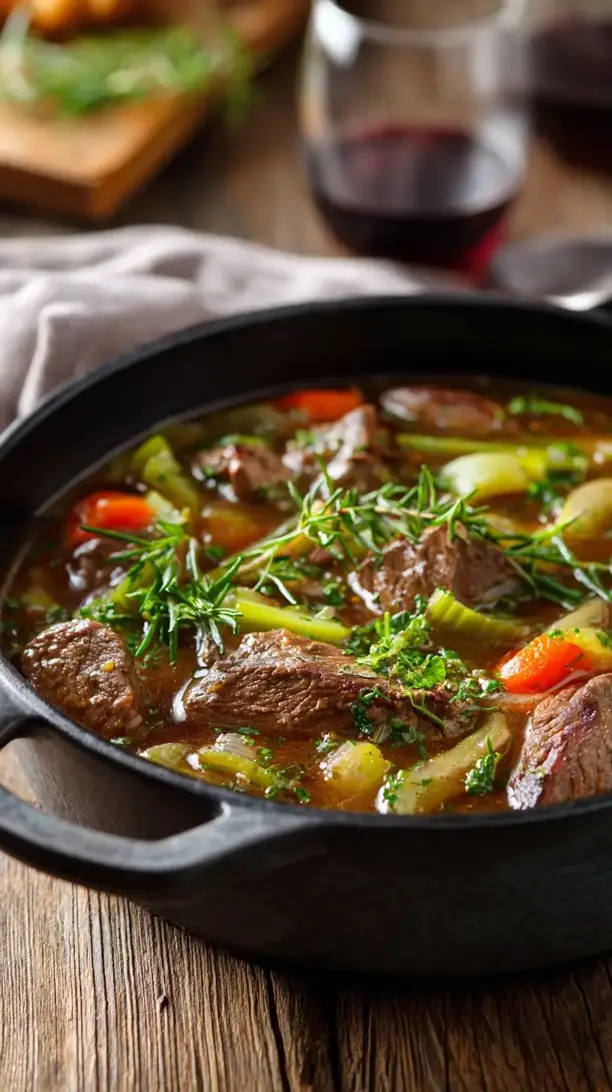
Beef And Celery Stew
Make the best Beef and Celery Stew with our easy recipe for fork-tender beef and rich gravy. Perfect for a cozy dinner. Get the recipe now!
Ingredients
For the Ingredients
-
1.5 kg beef chuck roast (cut into 3-4 cm cubes)
-
2 tbsp olive oil
-
1 large yellow onion (diced)
-
4 cloves garlic (minced)
-
1 large bunch celery (about 8-10 stalks, sliced into 2 cm pieces)
-
3 tbsp tomato paste
-
1 cup dry red wine (like a Cabernet Sauvignon or Merlot)
-
4 cups beef stock
-
2 bay leaves
-
1 tbsp fresh thyme leaves (or 1 tsp dried)
-
1 tsp Worcestershire sauce
-
Salt and freshly ground black pepper (to taste)
-
2 tbsp all-purpose flour (optional, for thickening)
Instructions
-
Pat the beef cubes completely dry with paper towels—this is the secret to getting a proper sear. Season them generously with salt and pepper. Heat the olive oil in your large pot or Dutch oven over medium-high heat until it shimmers. Working in batches to avoid overcrowding, add the beef and sear until a deep brown crust forms on all sides, about 4-5 minutes per batch. Transfer the browned beef to a plate and set aside.01
-
Reduce the heat to medium. Add the diced onion to the same pot, scraping up any of those lovely browned bits from the bottom. Cook for about 5 minutes until the onion has softened and become translucent. Then, add the minced garlic and cook for another minute until fragrant—you’ll notice the aroma change completely.02
-
Stir in the sliced celery and cook for 5-7 minutes, allowing it to soften slightly and start to release its sweet, aromatic notes. Push the vegetables to the side and add the tomato paste to the center of the pot. Let it cook for a minute or two, stirring, until it darkens slightly in color. This deepens its flavor and removes any raw, tinny taste.03
-
Pour in the red wine, using your wooden spoon to scrape up any remaining fond from the bottom of the pot. Let it bubble and reduce by about half, which should take 3-4 minutes. This concentrates the flavor and cooks off the harsh alcohol.04
-
Return the seared beef and any accumulated juices back to the pot. Add the beef stock, bay leaves, fresh thyme, and Worcestershire sauce. Give everything a good stir. Bring the stew to a gentle boil, then immediately reduce the heat to low, cover the pot with a lid, and let it simmer gently for 1 hour and 30 minutes.05
-
After the first 90 minutes, check the stew. The beef should be starting to become tender. Remove the lid and continue to simmer for another 30-45 minutes, uncovered. This allows the liquid to reduce and thicken naturally, concentrating the flavors even further. The beef should be fork-tender at this point.06
-
For a thicker gravy, you can create a slurry. Mix the 2 tablespoons of flour with 3 tablespoons of cold water in a small bowl until smooth. Stir this mixture into the simmering stew and cook for another 5-10 minutes until the stew has thickened to your liking. Taste and adjust seasoning with more salt and pepper as needed. Remove the bay leaves before serving.07
Not what you're looking for?


