
This Beef and Green Bean Stew is a deeply comforting one-pot meal with tender beef and crisp green beans in a rich tomato broth. It’s hearty, rustic, and perfect for chilly evenings. The flavors meld beautifully, making it even better the next day.
Looking for Beef and Green Bean Stew inspiration? You'll love what we have! Explore more Stew recipes or discover our Dessert Recipes favorites.


Why You’ll Love This Beef and Green Bean Stew
- Forgiving & flexible: Adapts easily to what you have on hand.
- Impressive depth: Browning builds a rich, savory foundation.
- Complete meal: Protein, veggies, and broth in one pot.
- Better leftovers: Flavors develop overnight for easy meals.
Ingredients & Tools
- 800 g beef chuck, cut into 2.5 cm cubes
- 2 tbsp olive oil
- 1 large yellow onion, finely chopped
- 4 cloves garlic, minced
- 2 tbsp tomato paste
- 400 g canned crushed tomatoes
- 750 ml beef broth
- 1 tsp dried thyme
- 2 bay leaves
- 450 g fresh green beans, trimmed and halved
- Salt and freshly ground black pepper, to taste
- 2 tbsp chopped fresh parsley, for garnish
Tools: A large, heavy-bottomed pot or Dutch oven, wooden spoon, sharp knife, and cutting board.
Notes: Using a sturdy pot prevents scorching. Don’t skip browning the beef—those bits are flavor gold.
Nutrition (per serving)
| Calories: | 420 kcal |
| Protein: | 35 g |
| Fat: | 22 g |
| Carbs: | 18 g |
| Fiber: | 6 g |
Serves: 4 | Prep Time: 20 minutes | Cook Time: 1 hour 45 minutes | Total Time: 2 hours 5 minutes
Before You Start: Tips & Ingredient Notes
- Choosing the right cut of beef. Chuck roast is your best friend here. It has a good amount of marbling, which breaks down during the long, slow cooking, resulting in incredibly tender, fall-apart meat. Leaner cuts will become tough and dry.
- Don’t rush the browning step. This is where you build the foundation of your stew’s flavor. Get your pot nice and hot, pat the beef dry, and don’t overcrowd the pan. You want a deep, brown sear, not gray steam.
- Why fresh green beans? While you could use frozen, fresh green beans hold their shape and texture much better during the simmer. They offer a pleasant, crisp bite that contrasts beautifully with the soft beef.
- The power of tomato paste. Let it cook for a minute or two with the onions and garlic. This simple step caramelizes the sugars in the paste, deepening its flavor and removing any raw, tinny taste, which makes your final stew taste much richer.
How to Make Beef and Green Bean Stew
Step 1: Start by prepping your ingredients. Pat the beef cubes completely dry with paper towels—this is crucial for getting a good sear. Season them generously with salt and pepper on all sides. Chop your onion, mince the garlic, and have your tomato paste and broth ready to go. Having everything measured and within reach makes the cooking process so much smoother.
Step 2: Heat the olive oil in your large, heavy-bottomed pot or Dutch oven over medium-high heat. Once the oil is shimmering, add the beef in a single layer, making sure not to overcrowd the pot. You’ll likely need to do this in two batches. Sear the beef for about 3-4 minutes per side, until a dark brown crust forms. Transfer the seared beef to a clean plate. Don’t worry if there are browned bits stuck to the bottom—that’s pure flavor!
Step 3: Reduce the heat to medium and add the chopped onion to the same pot. You should hear a gentle sizzle. Cook, stirring occasionally, for about 5-7 minutes until the onions have softened and turned translucent. Now, add the minced garlic and cook for another minute until it becomes incredibly fragrant. Be careful not to let the garlic burn.
Step 4: Push the onions and garlic to the side and add the tomato paste to the center of the pot. Let it cook for about a minute, stirring it around, until it darkens slightly and smells sweet and caramelized. This little trick makes a world of difference in the depth of your stew.
Step 5: Now, return the seared beef and any accumulated juices back to the pot. Pour in the crushed tomatoes and the beef broth. Add the dried thyme and bay leaves, and give everything a good stir, scraping the bottom of the pot to lift all those delicious browned bits. This is called deglazing, and it’s where the magic really happens.
Step 6: Bring the stew to a lively simmer, then immediately reduce the heat to low. Cover the pot with a lid, leaving it slightly ajar to allow some steam to escape. Let it simmer gently for about 1 hour and 15 minutes. You’ll notice the beef will start to become tender and the liquid will have reduced and thickened slightly.
Step 7: After the beef has simmered, stir in the fresh green beans. They will cook directly in the hot stew. Cover the pot again and continue to simmer for another 20-30 minutes. The green beans should be tender but still have a bit of a snap to them, and the beef should be fall-apart tender.
Step 8: Once everything is cooked to perfection, taste the stew and adjust the seasoning with more salt and pepper if needed. Fish out and discard the bay leaves. Ladle the hot stew into bowls and garnish with a generous sprinkle of fresh parsley for a pop of color and freshness.
Storage & Freshness Guide
- Fridge: Cool completely, store in airtight container for 3–4 days.
- Freezer: Freeze for up to 3 months; thaw in fridge before reheating.
- Reviving: Reheat gently on stove, adding a splash of broth if needed.
Serving Suggestions
Complementary Dishes
- Crusty, warm bread — There’s nothing better than using a thick slice to soak up every last drop of that rich, tomatoey broth. It’s a non-negotiable for me.
- Creamy mashed potatoes or soft polenta — The creamy, mild base is the perfect canvas for the hearty, savory stew to sit on top of, creating the ultimate comfort food bite.
- A simple, crisp green salad — A salad with a sharp vinaigrette helps cut through the richness of the stew and adds a refreshing, light element to the meal.
Drinks
- A robust red wine — A glass of Syrah or Cabernet Sauvignon has the body and dark fruit notes to stand up to the beef and complement the savory tomato flavors beautifully.
- A dark ale or stout — The malty, sometimes slightly bitter notes of a good dark beer mirror the deep, roasted flavors in the stew, making for a fantastic pairing.
- Sparkling water with lemon — For a non-alcoholic option, the bubbles and citrus are wonderfully palate-cleansing between bites of the rich, hearty stew.
Something Sweet
- Warm apple crumble with vanilla ice cream — The sweet, spiced apples and cool cream are the perfect, comforting follow-up to the savory main course.
- Dark chocolate pot de crème — It’s rich, silky, and intensely chocolatey, providing a luxurious yet simple ending that doesn’t feel too heavy.
- Orange and almond cake — This isn’t overly sweet, and the bright citrus notes are a lovely, refreshing way to finish the meal on a high note.
Top Mistakes to Avoid
- Mistake: Crowding the pan when browning the beef. If you add too much beef at once, the pot’s temperature plummets, and the meat steams instead of sears. You’ll miss out on all that delicious, complex flavor that comes from a proper Maillard reaction. I’ve messed this up before too, and the difference in the final stew is noticeable.
- Mistake: Skipping the step of cooking the tomato paste. Adding it straight from the can without toasting it first leaves a raw, slightly metallic taste in the background of your stew. Taking that extra minute to caramelize it transforms the entire flavor profile.
- Mistake: Boiling the stew instead of simmering it. A rolling boil will make the beef tough and chewy, no matter how long you cook it. A gentle simmer is the key to breaking down the connective tissue slowly, resulting in that dreamy, tender texture we’re after.
- Mistake: Adding the green beans too early. If you put them in at the beginning with the beef, they’ll turn to mush and lose all their vibrant color and pleasant texture. They only need that final 20-30 minutes to cook through perfectly.
Expert Tips
- Tip: Make it a day ahead. Stews are famously better the next day. The flavors have more time to meld and intensify. Just let it cool completely, store it in the fridge overnight, and gently reheat it on the stove. You’ll be amazed at the difference.
- Tip: Deglaze with a splash of red wine. After browning the beef and sautéing the onions, add about ½ cup of dry red wine to the pot. Let it bubble and reduce by half before adding the tomatoes and broth. It adds a wonderful layer of acidity and complexity.
- Tip: Thicken the stew without flour. If you prefer a thicker stew, simply remove the lid for the last 15-20 minutes of cooking. The increased evaporation will naturally concentrate and thicken the sauce to your desired consistency.
- Tip: Brown the beef in batches. I know it feels like an extra step, but it is the single most important thing you can do for flavor. Be patient, do two batches, and you will be rewarded with a deeply flavorful stew.
FAQs
Can I use frozen green beans instead of fresh?
You absolutely can, but the texture will be a bit different. Frozen green beans are often blanched before freezing, so they’re more tender to start with. Add them during the last 10-15 minutes of cooking instead of 20-30 to prevent them from becoming too soft and mushy. They’ll still taste great and make for a convenient shortcut!
My stew is a bit too acidic. How can I fix it?
This can happen, especially with certain brands of canned tomatoes. The easiest fix is to add a pinch of sugar—just about half a teaspoon at a time—stirring and tasting after each addition until the acidity is balanced. A small pat of butter stirred in at the end can also help mellow and round out the flavors beautifully.
Can I make this in a slow cooker?
Yes, it adapts wonderfully! Follow steps 1-5 to brown the beef and sauté the aromatics on the stove, then transfer everything (except the green beans) to your slow cooker. Cook on LOW for 7-8 hours or on HIGH for 4-5 hours. Add the green beans in the last hour of cooking so they stay vibrant and crisp-tender.
How long will leftovers keep?
Stored in an airtight container in the refrigerator, your beef and green bean stew will keep beautifully for 3-4 days. The flavors continue to develop, so day-two leftovers are a real treat. You can also freeze it for up to 3 months. Just thaw overnight in the fridge before reheating gently on the stove.
What other vegetables can I add to this stew?
This stew is very versatile. Diced carrots or celery added with the onions would be lovely. You could also stir in some sliced mushrooms when you add the green beans. For a heartier version, a can of drained and rinsed white beans or chickpeas added at the end works wonderfully. Feel free to get creative with what you have!



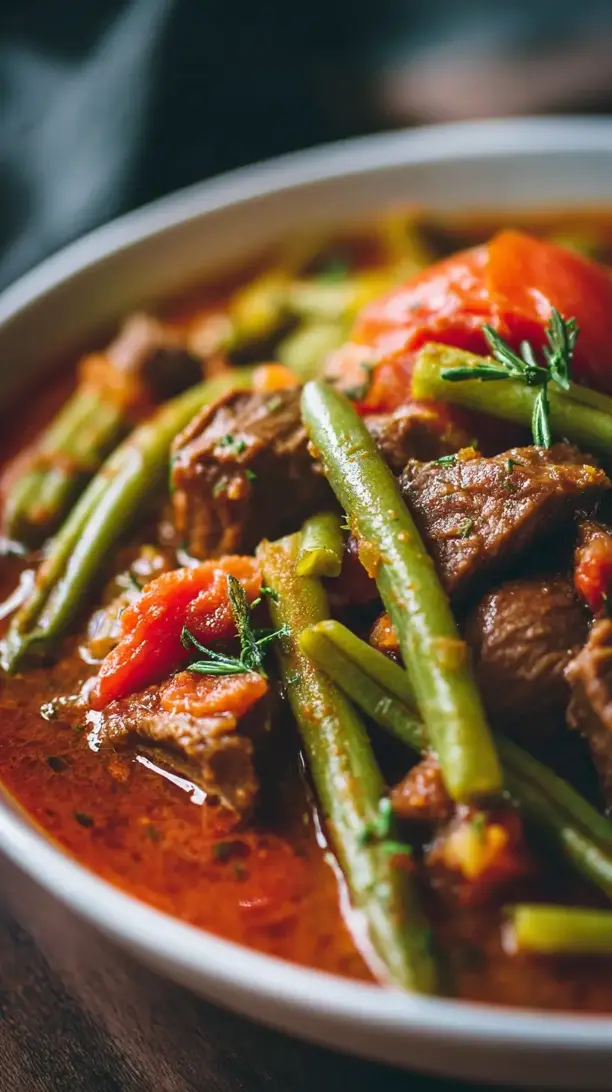
Beef And Green Bean Stew
Make this hearty Beef and Green Bean Stew for a comforting one-pot meal. Tender beef, fresh green beans & rich tomato broth. Get the easy recipe now!
Ingredients
For the Ingredients
-
800 g beef chuck (cut into 2.5 cm cubes)
-
2 tbsp olive oil
-
1 large yellow onion (finely chopped)
-
4 cloves garlic (minced)
-
2 tbsp tomato paste
-
400 g canned crushed tomatoes
-
750 ml beef broth
-
1 tsp dried thyme
-
2 bay leaves
-
450 g fresh green beans (trimmed and halved)
-
Salt and freshly ground black pepper (to taste)
-
2 tbsp chopped fresh parsley (for garnish)
Instructions
-
Start by prepping your ingredients. Pat the beef cubes completely dry with paper towels—this is crucial for getting a good sear. Season them generously with salt and pepper on all sides. Chop your onion, mince the garlic, and have your tomato paste and broth ready to go. Having everything measured and within reach makes the cooking process so much smoother.01
-
Heat the olive oil in your large, heavy-bottomed pot or Dutch oven over medium-high heat. Once the oil is shimmering, add the beef in a single layer, making sure not to overcrowd the pot. You’ll likely need to do this in two batches. Sear the beef for about 3-4 minutes per side, until a dark brown crust forms. Transfer the seared beef to a clean plate. Don’t worry if there are browned bits stuck to the bottom—that’s pure flavor!02
-
Reduce the heat to medium and add the chopped onion to the same pot. You should hear a gentle sizzle. Cook, stirring occasionally, for about 5-7 minutes until the onions have softened and turned translucent. Now, add the minced garlic and cook for another minute until it becomes incredibly fragrant. Be careful not to let the garlic burn.03
-
Push the onions and garlic to the side and add the tomato paste to the center of the pot. Let it cook for about a minute, stirring it around, until it darkens slightly and smells sweet and caramelized. This little trick makes a world of difference in the depth of your stew.04
-
Now, return the seared beef and any accumulated juices back to the pot. Pour in the crushed tomatoes and the beef broth. Add the dried thyme and bay leaves, and give everything a good stir, scraping the bottom of the pot to lift all those delicious browned bits. This is called deglazing, and it’s where the magic really happens.05
-
Bring the stew to a lively simmer, then immediately reduce the heat to low. Cover the pot with a lid, leaving it slightly ajar to allow some steam to escape. Let it simmer gently for about 1 hour and 15 minutes. You’ll notice the beef will start to become tender and the liquid will have reduced and thickened slightly.06
-
After the beef has simmered, stir in the fresh green beans. They will cook directly in the hot stew. Cover the pot again and continue to simmer for another 20-30 minutes. The green beans should be tender but still have a bit of a snap to them, and the beef should be fall-apart tender.07
-
Once everything is cooked to perfection, taste the stew and adjust the seasoning with more salt and pepper if needed. Fish out and discard the bay leaves. Ladle the hot stew into bowls and garnish with a generous sprinkle of fresh parsley for a pop of color and freshness.08
Not what you're looking for?


