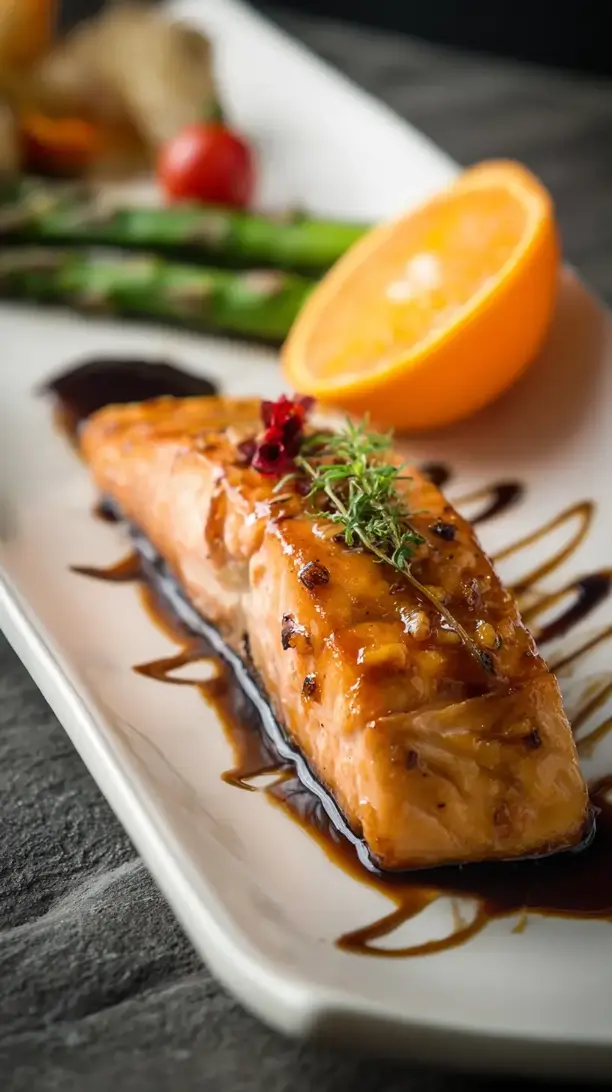
This Orange Glazed Salmon recipe delivers a restaurant-quality meal with minimal effort. The sweet and savory glaze caramelizes beautifully on tender, flaky salmon. It’s perfect for busy weeknights or elegant dinners.
Craving a delicious Orange Glazed Salmon? You've come to the right spot! From Dinner Ideas favorites to amazing Chicken Recipes recipes, there's something here for everyone.



Why You’ll Love This Orange Glazed Salmon
- Fast & Easy: Ready in about 20 minutes with minimal fuss.
- Perfect Flavor Balance: Sweet orange, savory soy, and warm ginger create a symphony.
- Impressive Presentation: Glossy, caramelized glaze makes it look bistro-worthy.
- Healthy Powerhouse: Packed with omega-3s, protein, and natural sweeteners.
Ingredients & Tools
- 4 salmon fillets (about 150-180 g each), skin-on or skinless
- 240 ml fresh orange juice (from about 2-3 large oranges)
- 60 ml honey
- 60 ml soy sauce (or tamari for gluten-free)
- 3 cloves garlic, minced
- 1 tbsp fresh ginger, grated
- 1 tbsp olive oil
- 1 orange, thinly sliced (for garnish, optional)
- 2 tbsp fresh chopped parsley or chives
- Salt and black pepper to taste
Tools: A small saucepan, a baking sheet, parchment paper or a silicone baking mat, a whisk, and a microplane or fine grater for the ginger.
Notes: Use fresh orange juice and fresh ginger for the best vibrant, non-artificial flavor.
Nutrition (per serving)
| Calories: | 385 kcal |
| Protein: | 35 g |
| Fat: | 16 g |
| Carbs: | 24 g |
| Fiber: | 1 g |
Serves: 4 | Prep Time: 10 minutes | Cook Time: 12-15 minutes | Total Time: 25 minutes
Before You Start: Tips & Ingredient Notes
- Salmon selection is key. Look for fillets that are of even thickness, if possible. This ensures they all cook at the same rate. I prefer skin-on for a little extra protection against overcooking, but skinless works beautifully too.
- Zest before you juice. If you want an extra burst of orange flavor, zest one of the oranges before you squeeze it. You can add the zest to the glaze for an intense citrus aroma that’s just incredible.
- Pat your salmon dry. This is a small but crucial step. Use a paper towel to gently pat the salmon fillets dry before seasoning. A dry surface will help the glaze adhere better and promote a nicer sear or caramelization in the oven.
- Don’t skip the reduction. Simmering the glaze until it thickens is what gives it that lovely, sticky consistency. A runny glaze will just slide off the fish, so be patient and let it bubble away until it coats the back of a spoon.
How to Make Orange Glazed Salmon
Step 1: Preheat your oven to 200°C (400°F) and line a baking sheet with parchment paper. Pat the salmon fillets completely dry with paper towels—this is your first secret to a perfect glaze. Season both sides generously with a little salt and black pepper. Place them on the prepared baking sheet, ensuring they aren’t touching so the heat can circulate evenly.
Step 2: Now, let’s make that glorious glaze. In your small saucepan, combine the fresh orange juice, honey, soy sauce, minced garlic, and grated ginger. Give it a good whisk to combine everything. Place it over medium-high heat and bring it to a lively boil. You’ll notice the mixture will foam up a bit at first—that’s totally normal.
Step 3: Once boiling, reduce the heat to a steady medium-low so it maintains a gentle simmer. Let it cook, stirring occasionally, for about 8-10 minutes. You’re looking for it to reduce by about half. The bubbles will get slower and more syrupy. To test, dip a spoon in—the glaze should coat the back of it nicely and not immediately run off. It will continue to thicken as it cools, so don’t over-reduce it into a candy!
Step 4: While the glaze is simmering, pop the salmon into the preheated oven. Roast for 10-12 minutes for fillets that are about 2.5 cm thick. The salmon is perfectly cooked when it flakes easily with a fork at its thickest part but is still moist and vibrant in the center. You’re aiming for an internal temperature of about 52-54°C (125-130°F) for medium.
Step 5: This is the fun part. Remove the salmon from the oven. Using a pastry brush or a spoon, generously slather the thickened orange glaze over the top of each hot fillet. Be lavish! You want a good, even layer. If you’re using the optional orange slices for garnish, you can tuck them around the salmon on the baking sheet before you put it in the oven—they’ll caramelize slightly and look beautiful.
Step 6: For a final touch of flavor and color, sprinkle the freshly chopped parsley or chives over the glazed salmon. Let it rest for a minute or two on the baking sheet—this allows the juices to redistribute and the glaze to set slightly. Then, serve it immediately while it’s warm and the flavors are at their peak.
Storage & Freshness Guide
- Fridge: Store leftovers in an airtight container for up to 2 days.
- Freezer: Freeze glazed salmon in a single layer, then transfer to a freezer bag for up to 1 month.
- Reviving: Reheat gently in a covered skillet with a splash of water to keep moist.
Serving Suggestions
Complementary Dishes
- Jasmine Rice or Quinoa — The fluffy, neutral grains are the perfect canvas to soak up every last drop of the delicious orange glaze. It turns the meal into something truly satisfying.
- Simple Steamed Asparagus or Broccoli — The bright green, slightly crisp vegetables provide a lovely textural contrast and their mild bitterness balances the sweetness of the glaze beautifully.
- Buttery Mashed Potatoes — For the ultimate comfort food pairing, the creamy, rich potatoes alongside the flaky, glazed fish is a match made in heaven.
Drinks
- A Crisp Sauvignon Blanc — Its citrusy and herbaceous notes mirror the flavors in the glaze and cut through the richness of the salmon flawlessly.
- Sparkling Water with Orange Slices — A non-alcoholic option that keeps the citrus theme going, making the meal feel fresh and light from start to finish.
- A Light Pale Ale or IPA — The beer’s slight bitterness and carbonation can cleanse the palate between bites of the sweet and savory fish.
Something Sweet
- Lemon Sorbet — A scoop of this bright, tart sorbet is the perfect palate cleanser after the rich salmon, leaving you feeling refreshed.
- Dark Chocolate Truffles — A few pieces of high-quality dark chocolate with a high cocoa content provide a bittersweet, elegant end to the meal without being too heavy.
- Orange and Almond Cake — If you want to double down on the citrus theme, a moist, nutty almond cake is a spectacular and fitting finale.
Top Mistakes to Avoid
- Overcooking the salmon. This is the cardinal sin of seafood. Salmon continues to cook after it comes out of the oven (carryover cooking), so it’s better to pull it out when it’s slightly under your desired doneness. Dry, chalky salmon is a real tragedy.
- Not reducing the glaze enough. If your glaze is too thin, it will pool on the plate instead of clinging to the fish. Be patient and let it simmer until it’s properly syrupy. I’ve messed this up before too, and you end up with a soupy sauce.
- Using low-quality orange juice. Bottled juice from concentrate often has a cooked, tinny flavor and added sugars that can throw off the balance of your glaze. Freshly squeezed is non-negotiable for the best taste.
- Skipping the resting time. Letting the salmon rest for just two minutes after it comes out of the oven allows the proteins to relax and reabsorb their juices. If you cut into it immediately, all those precious juices will run out onto the plate.
Expert Tips
- Tip: For a more complex flavor, add a tablespoon of rice vinegar or a teaspoon of Dijon mustard to the glaze ingredients. The acidity or sharpness adds another layer that really makes the other flavors pop.
- Tip: If you have time, marinate the salmon in half of the glaze (before it’s reduced) for 15-30 minutes in the fridge. This infuses the fish with flavor from the inside out, resulting in an even more profound taste experience.
- Tip: To get a beautifully caramelized top, you can switch your oven to a high broil for the last 1-2 minutes of cooking after you’ve brushed on the glaze. Watch it like a hawk though—it can burn in seconds!
- Tip: If your glaze ever becomes too thick as it sits, simply whisk in a teaspoon of warm water at a time until it returns to a brushable consistency. Glazes can firm up quickly as they cool.
FAQs
Can I make the glaze ahead of time?
Absolutely, and it’s a great time-saver! You can prepare the orange glaze up to 3 days in advance. Simply let it cool completely after reducing, then store it in an airtight container in the refrigerator. It will thicken considerably when cold, so you’ll need to gently reheat it in a saucepan or the microwave, adding a splash of water or orange juice to thin it out to a brushing consistency before using it on your salmon.
What if I don’t have fresh ginger?
While fresh is always best for its vibrant, zesty kick, you can use ground ginger in a pinch. Substitute about 1/4 to 1/2 teaspoon of ground ginger for the tablespoon of fresh. Be aware that the flavor profile will be slightly different—it’s earthier and less bright—but it will still be delicious. Just add it directly to the saucepan with the other glaze ingredients.
Can I cook this on the stovetop instead of baking?
You sure can! Pan-searing is a fantastic method. Pat the salmon dry and season. Heat a tablespoon of oil in a large non-stick skillet over medium-high heat. Place the salmon skin-side up (or presentation-side down if skinless) and cook for 4-6 minutes, until a golden crust forms. Flip, reduce heat to medium, and cook for another 2-4 minutes. Pour the prepared, reduced glaze over the fillets in the last minute of cooking, tilting the pan to coat them.
How do I know when the salmon is perfectly cooked?
The most reliable method is to use an instant-read thermometer. Insert it into the thickest part of the fillet; you’re looking for 52-54°C (125-130°F) for a moist, medium result. Without a thermometer, gently press the top of the fillet with a fork or your finger. It should flake apart easily and the flesh should be opaque but still glistening, not dry-looking. Remember, it will continue to cook a bit after removal from the heat.
Is it possible to use a different type of fish?
This glaze is wonderfully versatile! It pairs beautifully with other firm-fleshed fish like trout, arctic char, or even thick cuts of cod or halibut. Just be mindful that cooking times will vary depending on the thickness and type of fish you choose. The sweet and savory notes of the glaze are a classic complement to almost any non-oily, white or pink fish.


Orange Glazed Salmon
Make this easy Orange Glazed Salmon in just 20 minutes! A sweet and savory glaze creates a caramelized, flaky fish. Get the simple, impressive recipe now.
Ingredients
For the Ingredients
-
4 salmon fillets (about 150-180 g each, skin-on or skinless)
-
240 ml fresh orange juice (from about 2-3 large oranges)
-
60 ml honey
-
60 ml soy sauce (or tamari for gluten-free)
-
3 cloves garlic (minced)
-
1 tbsp fresh ginger (grated)
-
1 tbsp olive oil
-
1 orange (thinly sliced (for garnish, optional))
-
2 tbsp fresh chopped parsley or chives
-
Salt and black pepper (to taste)
Instructions
-
Preheat your oven to 200°C (400°F) and line a baking sheet with parchment paper. Pat the salmon fillets completely dry with paper towels—this is your first secret to a perfect glaze. Season both sides generously with a little salt and black pepper. Place them on the prepared baking sheet, ensuring they aren’t touching so the heat can circulate evenly.01
-
Now, let’s make that glorious glaze. In your small saucepan, combine the fresh orange juice, honey, soy sauce, minced garlic, and grated ginger. Give it a good whisk to combine everything. Place it over medium-high heat and bring it to a lively boil. You’ll notice the mixture will foam up a bit at first—that’s totally normal.02
-
Once boiling, reduce the heat to a steady medium-low so it maintains a gentle simmer. Let it cook, stirring occasionally, for about 8-10 minutes. You’re looking for it to reduce by about half. The bubbles will get slower and more syrupy. To test, dip a spoon in—the glaze should coat the back of it nicely and not immediately run off. It will continue to thicken as it cools, so don’t over-reduce it into a candy!03
-
While the glaze is simmering, pop the salmon into the preheated oven. Roast for 10-12 minutes for fillets that are about 2.5 cm thick. The salmon is perfectly cooked when it flakes easily with a fork at its thickest part but is still moist and vibrant in the center. You’re aiming for an internal temperature of about 52-54°C (125-130°F) for medium.04
-
This is the fun part. Remove the salmon from the oven. Using a pastry brush or a spoon, generously slather the thickened orange glaze over the top of each hot fillet. Be lavish! You want a good, even layer. If you’re using the optional orange slices for garnish, you can tuck them around the salmon on the baking sheet before you put it in the oven—they’ll caramelize slightly and look beautiful.05
-
For a final touch of flavor and color, sprinkle the freshly chopped parsley or chives over the glazed salmon. Let it rest for a minute or two on the baking sheet—this allows the juices to redistribute and the glaze to set slightly. Then, serve it immediately while it’s warm and the flavors are at their peak.06
Not what you're looking for?