This BBQ Pork Fried Rice is a comforting one-pan meal that transforms leftover rice and smoky barbecued pork into a savory-sweet delight. It comes together faster than takeout, with tender meat, crisp veggies, and perfectly chewy grains. The aroma filling your kitchen is pure magic—irresistibly smoky, garlicky, and deeply satisfying.
Looking for BBQ Pork Fried Rice inspiration? You'll love what we have! Explore more Dinner Ideas recipes or discover our Christmas Cookie favorites.

Why You’ll Love This BBQ Pork Fried Rice
Flavor powerhouse: Smoky BBQ pork, savory soy, and sweet notes create a complex taste.
Clean-out-the-fridge meal: Adaptable and fantastic for reducing food waste.
Perfect texture: Each grain is separate, lightly sauced, and perfectly chewy.
Quick to make: Cooks in under 15 minutes after prepping—a weeknight hero.
Ingredients & Tools
- 3 cups cooked and cooled jasmine rice (day-old is best)
- 250 g cooked BBQ pork (char siu), diced
- 2 large eggs, lightly beaten
- 1 medium yellow onion, diced
- 2 cloves garlic, minced
- 75 g frozen peas and carrots, thawed
- 2 spring onions, sliced (white and green parts separated)
- 3 tbsp light soy sauce
- 1 tbsp oyster sauce
- 1 tsp sesame oil
- 2 tbsp vegetable or avocado oil, divided
- 1/4 tsp white pepper (optional)
Tools: A large wok or a very large non-stick skillet, a good spatula.
Notes: Quality BBQ pork from a Chinese barbecue shop makes a difference. Day-old rice is essential to prevent a gummy texture.
Nutrition (per serving)
| Calories: | 420 kcal |
| Protein: | 22 g |
| Fat: | 16 g |
| Carbs: | 45 g |
| Fiber: | 3 g |
Serves: 4 | Prep Time: 15 minutes | Cook Time: 10 minutes | Total Time: 25 minutes
Before You Start: Tips & Ingredient Notes
- Your rice must be cold. This is the single most important rule for fried rice. Warm, freshly cooked rice is too moist and starchy, which will cause it to clump together and become mushy when you fry it. Day-old rice from the fridge is ideal.
- Don’t skip the oyster sauce. It might seem like a small ingredient, but it adds a deep, savory umami richness that soy sauce alone can’t provide. It’s the backbone of the sauce’s flavor profile.
- Have everything prepped and within arm’s reach. Fried rice cooks incredibly fast. Once you start, there’s no time to chop or measure. This “mise en place” is your best friend for a stress-free, successful cook.
- Use high heat. A screaming hot wok is what gives you that signature “wok hei” or breath of the wok—a slightly smoky, charred flavor. Don’t be shy with the heat; it’s what sears the ingredients quickly instead of stewing them.
How to Make BBQ Pork Fried Rice
Step 1: Start by breaking up your cold rice. Use your fingers or a fork to gently separate any large clumps. This ensures every grain gets evenly coated and fried, which is crucial for that perfect non-sticky texture. You’ll notice it feels dry and separate—that’s exactly what you want.
Step 2: Get your wok screaming hot over high heat. Add one tablespoon of your neutral oil and swirl it around to coat the surface. The oil should shimmer almost immediately. Pour in your beaten eggs and let them set for about 20 seconds before you start scrambling them quickly with your spatula. Cook until they’re just set but still soft—you don’t want dry, rubbery eggs. Transfer them back to the bowl you beat them in. This prevents them from overcooking.
Step 3: Add the remaining tablespoon of oil to the hot wok. Toss in the diced onion and the white parts of your spring onions. Stir-fry for about a minute until they just start to soften and become fragrant. Now add the garlic and stir for another 30 seconds—you’ll get this incredible aroma, but be careful not to let the garlic burn or it will turn bitter.
Step 4: It’s time for the star of the show. Add your diced BBQ pork to the wok. The trick here is to let it sear for a minute without moving it too much. You want to get a little bit of caramelization and for those delicious fatty bits to render slightly, which will flavor the entire dish.
Step 5: Now, add the thawed peas and carrots. Give everything a good toss to combine and heat the vegetables through, which should only take about a minute. They should remain vibrant in color and retain a slight crunch.
Step 6: Add the cold, separated rice to the wok. Use your spatula to press and toss the rice, ensuring it breaks up completely and mixes with all the other ingredients. You’re looking for every single grain to be heated through and starting to get a little dry. This should take 2-3 minutes.
Step 7: Drizzle the light soy sauce and oyster sauce over the rice. I like to pour it around the sides of the wok so it sizzles and reduces slightly before I mix it in. This little step adds so much depth. Toss everything vigorously to coat every single component evenly. The rice should take on a beautiful, uniform light brown color.
Step 8: Return the scrambled eggs to the wok, breaking them up into smaller curds as you add them. Also, add the green parts of your spring onions. Give it a final, vigorous toss to incorporate everything. The heat will warm the eggs through perfectly.
Step 9: Finish the dish. Turn off the heat and drizzle the sesame oil and sprinkle the white pepper (if using) over the top. Toss one last time to distribute these finishing flavors. The sesame oil isn’t for cooking—it’s a flavor bomb added at the end to preserve its delicate nutty aroma.
Step 10: Do a final taste test. The rice should be savory, a little sweet from the pork, and have a wonderful smoky aroma. Serve immediately while it’s piping hot and the textures are at their absolute best.
Storage & Freshness Guide
- Fridge: Keep in an airtight container for up to 3 days.
- Freezer: Freeze for up to 1 month; thaw in fridge before reheating.
- Reviving: Reheat in a skillet with a splash of water to restore moisture.
Serving Suggestions
Complementary Dishes
- A simple cucumber salad — The cool, crisp, and slightly acidic crunch of a quick-pickled cucumber salad provides a refreshing contrast to the rich, savory notes of the fried rice.
- Egg drop soup — A light, comforting bowl of egg drop soup is a classic pairing that starts the meal on a warm, soothing note without overpowering the main event.
- Stir-fried greens with garlic — Whether it’s gai lan (Chinese broccoli) or bok choy, a side of vibrant green vegetables adds nutritional balance and a pleasant, bitter counterpoint.
Drinks
- Jasmine green tea — Its floral, slightly sweet notes help cleanse the palate between bites and cut through the richness of the pork and sauces beautifully.
- A light lager — A crisp, cold lager is fantastic with this—the carbonation and mild bitterness are a classic match for the smoky, savory flavors.
- Ginger ale — The sharp, spicy-sweet fizz of a good ginger ale complements the dish’s sweetness and provides a refreshing lift.
Something Sweet
- Mango pudding — The sweet, tropical flavor and silky-smooth texture of mango pudding is a classic and delightful way to end a meal after something as savory as fried rice.
- Lychee fruit — Fresh or canned, the floral sweetness and juicy burst of lychee is a light, simple, and utterly refreshing finale.
- Fortune cookies — It’s a cliché for a reason! The sweet, vanilla-like crunch is a fun, nostalgic finish that everyone enjoys.
Top Mistakes to Avoid
- Mistake: Using freshly cooked, warm rice. This is the number one reason for gummy, clumpy fried rice. The excess moisture steams the rice instead of frying it, resulting in a sticky, disappointing texture.
- Mistake: Overcrowding the wok. If you add too much rice at once, the temperature of your wok will plummet. You’ll end up stewing the ingredients instead of searing them, which means you lose that essential smoky wok flavor.
- Mistake: Adding the sauce too early. If you pour the soy and oyster sauce directly onto a cold ingredient, the flavor can taste raw and sharp. Letting it hit the hot sides of the wok first allows it to caramelize slightly, mellowing and deepening its flavor.
- Mistake: Over-stirring. Constant stirring doesn’t allow the rice to develop those slightly crispy, toasted bits that add wonderful texture. Let it sit for 20-30 seconds at a time between tosses.
Expert Tips
- Tip: For even more “wok hei,” try the tilt-and-scoop method. After adding the rice, tilt the wok slightly toward the flame (if using gas) and use a scooping motion with your spatula. This encourages the flames to lick the rice, giving it a subtle, authentic smoky flavor.
- Tip: If your rice is a bit too fresh, spread it on a baking sheet. Pop it in the freezer for 15-20 minutes. This will draw out enough surface moisture to save the day and give you that perfect dry texture you need.
- Tip: Customize your protein. While BBQ pork is fantastic, this recipe is a template. Leftover roasted chicken, shrimp, or even firm tofu cubed and pan-fried would work beautifully. The sauce base is the real star.
- Tip: Add a tiny pinch of sugar. If your BBQ pork isn’t as sweet as you’d like, a quarter teaspoon of sugar added with the sauces can help balance the saltiness and enhance the caramelization, mimicking that classic char siu taste.
FAQs
Can I use a different type of rice?
Absolutely. While jasmine rice is traditional for its fragrant, slightly sticky nature when fresh (and perfectly separate when cold), you can use other varieties. Long-grain white rice like basmati works well, just ensure it’s thoroughly cooled. Brown rice can be used for a whole-grain option, but be aware it will have a chewier, nuttier texture and may require a splash of water or stock during cooking to prevent dryness.
I don’t have a wok. What can I use instead?
No worries! A large, heavy-bottomed skillet—cast iron is excellent—is a great substitute. The key is having a pan with a large surface area that can hold and distribute high heat effectively. You might not get the exact same “wok hei,” but you’ll still achieve a delicious result. Just make sure not to overcrowd a smaller pan; cook in batches if necessary.
How can I make this vegetarian?
Easily! Simply omit the BBQ pork and use a plant-based protein like cubed, extra-firm tofu (pan-fried until golden) or tempeh. To replicate the smoky-sweet flavor, you could add a teaspoon of liquid smoke to the sauce or use a smidge of smoked paprika. Increase the quantity of vegetables, like adding mushrooms or bell peppers, to bulk it up.
How long do leftovers keep?
Leftovers will keep well in an airtight container in the refrigerator for up to 3 days. Reheat it in a skillet over medium heat with a tiny splash of water to help re-steam the rice and prevent it from drying out. The microwave can work in a pinch, but it often makes the rice a bit rubbery.
My fried rice turned out a bit soggy. What happened?
This almost always comes down to the rice being too moist when you started. Either it wasn’t cold enough, or the vegetables (like frozen peas and carrots) were added while still frozen, releasing too much water into the wok. Next time, make sure your rice is fridge-cold and that any frozen additions are completely thawed and patted dry.


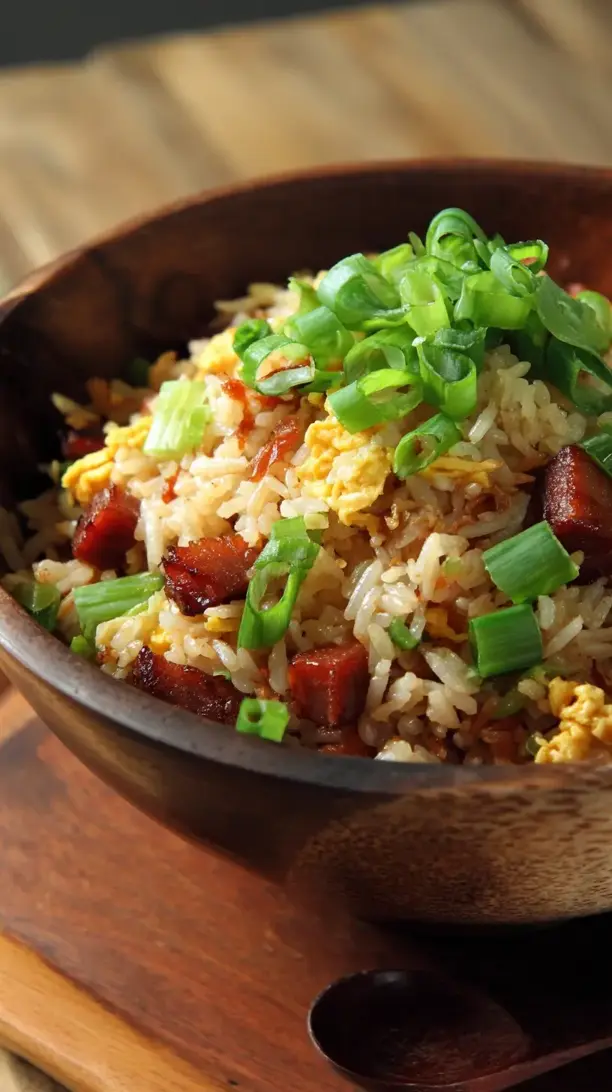
Bbq Pork Fried Rice
Make delicious BBQ Pork Fried Rice at home in under 25 minutes! This easy recipe is better than takeout. Get the step-by-step guide now.
Ingredients
For the Main Ingredients
-
3 cups cooked and cooled jasmine rice (day-old is best)
-
250 g cooked BBQ pork (char siu, diced)
-
2 large eggs (lightly beaten)
-
1 medium yellow onion (diced)
-
2 cloves garlic (minced)
-
75 g frozen peas and carrots (thawed)
-
2 spring onions (sliced (white and green parts separated))
-
3 tbsp light soy sauce
-
1 tbsp oyster sauce
-
1 tsp sesame oil
-
2 tbsp vegetable or avocado oil (divided)
-
1/4 tsp white pepper (optional)
Instructions
-
Start by breaking up your cold rice. Use your fingers or a fork to gently separate any large clumps. This ensures every grain gets evenly coated and fried, which is crucial for that perfect non-sticky texture. You’ll notice it feels dry and separate—that’s exactly what you want.01
-
Get your wok screaming hot over high heat. Add one tablespoon of your neutral oil and swirl it around to coat the surface. The oil should shimmer almost immediately. Pour in your beaten eggs and let them set for about 20 seconds before you start scrambling them quickly with your spatula. Cook until they’re just set but still soft—you don’t want dry, rubbery eggs. Transfer them back to the bowl you beat them in. This prevents them from overcooking.02
-
Add the remaining tablespoon of oil to the hot wok. Toss in the diced onion and the white parts of your spring onions. Stir-fry for about a minute until they just start to soften and become fragrant. Now add the garlic and stir for another 30 seconds—you’ll get this incredible aroma, but be careful not to let the garlic burn or it will turn bitter.03
-
It’s time for the star of the show. Add your diced BBQ pork to the wok. The trick here is to let it sear for a minute without moving it too much. You want to get a little bit of caramelization and for those delicious fatty bits to render slightly, which will flavor the entire dish.04
-
Now, add the thawed peas and carrots. Give everything a good toss to combine and heat the vegetables through, which should only take about a minute. They should remain vibrant in color and retain a slight crunch.05
-
Add the cold, separated rice to the wok. Use your spatula to press and toss the rice, ensuring it breaks up completely and mixes with all the other ingredients. You’re looking for every single grain to be heated through and starting to get a little dry. This should take 2-3 minutes.06
-
Drizzle the light soy sauce and oyster sauce over the rice. I like to pour it around the sides of the wok so it sizzles and reduces slightly before I mix it in. This little step adds so much depth. Toss everything vigorously to coat every single component evenly. The rice should take on a beautiful, uniform light brown color.07
-
Return the scrambled eggs to the wok, breaking them up into smaller curds as you add them. Also, add the green parts of your spring onions. Give it a final, vigorous toss to incorporate everything. The heat will warm the eggs through perfectly.08
-
Finish the dish. Turn off the heat and drizzle the sesame oil and sprinkle the white pepper (if using) over the top. Toss one last time to distribute these finishing flavors. The sesame oil isn't for cooking—it's a flavor bomb added at the end to preserve its delicate nutty aroma.09
-
Do a final taste test. The rice should be savory, a little sweet from the pork, and have a wonderful smoky aroma. Serve immediately while it’s piping hot and the textures are at their absolute best.10
Not what you're looking for?