Perfectly cooked Garlic Herb Chicken Breasts are juicy, flavorful, and versatile. This recipe transforms simple chicken with a vibrant fresh herb paste and pan-searing for a golden crust. It’s fancy enough for a dinner party but easy enough for a busy weeknight.
Looking for Garlic Herb Chicken Breasts inspiration? You'll love what we have! Explore more Dinner Ideas recipes or discover our Appetizers & Snacks favorites.


Why You’ll Love This Garlic Herb Chicken Breasts
Never dry: Quick brine and pan-searing lock in moisture.
Fresh, vibrant flavor: Bright herbs and lemon beat jarred seasonings.
Meal-prep superstar: Delicious hot, cold in salads, or in sandwiches.
Simple to master: Straightforward process with foundational skills.
Ingredients & Tools
- 4 boneless, skinless chicken breasts (about 1.5 lbs or 680 g)
- 3 tbsp extra virgin olive oil, divided
- 4-5 large cloves garlic, minced
- 2 tbsp fresh parsley, finely chopped
- 1 tbsp fresh rosemary, finely chopped
- 1 tbsp fresh thyme leaves
- 1 lemon (zest and juice)
- 1 tsp kosher salt, plus more for seasoning
- 1/2 tsp freshly cracked black pepper
- 1/4 tsp red pepper flakes (optional, for a little heat)
- 1/2 cup chicken broth or dry white wine (like Sauvignon Blanc)
- 2 tbsp unsalted butter
Tools: A large skillet (cast iron or stainless steel works best), measuring spoons, a microplane or zester, a sharp knife, and tongs.
Notes: Don’t skimp on the fresh herbs—they are the soul of the dish. Dried herbs won’t provide the same bright flavor. The butter at the end creates a luxurious, glossy pan sauce.
Nutrition (per serving)
| Calories: | 285 kcal |
| Protein: | 35 g |
| Fat: | 14 g |
| Carbs: | 3 g |
| Fiber: | 1 g |
Serves: 4 | Prep Time: 15 minutes | Cook Time: 15 minutes | Total Time: 30 minutes
Before You Start: Tips & Ingredient Notes
- Get your chicken to an even thickness. This is the single most important step for even cooking. Place the breasts between two pieces of plastic wrap and gently pound the thicker end with a rolling pin or heavy pan until the entire breast is a uniform ½ to ¾-inch thick.
- Don’t be shy with the salt. Chicken needs seasoning, both inside and out. Salting the meat 15-20 minutes before cooking (or even doing a quick 30-minute brine in salted water) will dramatically improve its flavor and texture.
- Mince, don’t crush, the garlic. For the herb paste, you want a fine mince so it disperses evenly and cooks gently without burning. A garlic press can make it a bit too watery.
- Have all your ingredients prepped and ready. This is a fast-cooking recipe, so you won’t have time to chop herbs or zest a lemon once the chicken hits the pan. A little “mise en place” goes a long way here.
How to Make Garlic Herb Chicken Breasts
Step 1: First, prepare your chicken. Pat the breasts completely dry with paper towels—this is crucial for getting a good sear, not a steam. If your breasts aren’t even, pound them as described above. Season both sides generously with the kosher salt and black pepper, then set them aside while you make the herb mixture. You’ll notice the salt begins to pull a little moisture to the surface; that’s a good thing.
Step 2: In a small bowl, combine the minced garlic, chopped parsley, rosemary, thyme, lemon zest, red pepper flakes (if using), and 2 tablespoons of the olive oil. Mix it all together until it forms a fragrant, coarse paste. The aroma at this point is just incredible—savory, piney, and citrusy all at once. This is your flavor powerhouse.
Step 3: Now, rub the magic in. Using your hands or a spoon, divide the herb paste evenly among the chicken breasts, spreading it over both sides and pressing gently so it adheres. Let the chicken sit with this marinade for about 10-15 minutes. You don’t need hours; this short rest allows the flavors to start penetrating the surface.
Step 4: Time to cook! Place your large skillet over medium-high heat and add the remaining 1 tablespoon of olive oil. Once the oil is shimmering hot—a drop of water should sizzle violently—carefully add the chicken breasts. You should hear a confident sizzle the moment they touch the pan. Don’t crowd them; cook in two batches if your pan is small.
Step 5: Here’s the key: don’t touch them! Let the chicken cook undisturbed for 5-7 minutes, until a beautiful golden-brown crust forms on the bottom. You can peek by lifting a corner with your tongs. When it releases easily from the pan and is nicely browned, it’s ready to flip.
Step 6: Flip the breasts and cook for another 5-7 minutes on the second side. To check for doneness, the safest way is to use an instant-read thermometer inserted into the thickest part of the breast—it should read 165°F (74°C). The chicken should feel firm to the touch but still have a little give. Transfer the cooked chicken to a clean plate to rest.
Step 7: Don’t wash that pan! All those browned, flavorful bits are pure gold. Reduce the heat to medium and pour in the chicken broth or white wine. Use a wooden spoon to scrape all those tasty bits off the bottom of the pan—this is called deglazing. Let the liquid simmer and reduce by about half, which will take 2-3 minutes.
Step 8: Turn off the heat. Stir in the cold butter and the juice from half of the lemon. Swirl the pan until the butter melts and emulsifies into the sauce, making it glossy and slightly thickened. Taste the sauce and adjust seasoning—you might want a pinch more salt or a extra squeeze of lemon for brightness.
Step 9: To serve, place a chicken breast on each plate and spoon the warm pan sauce generously over the top. The final dish should look vibrant, smell incredible, and promise a juicy, flavor-packed bite in every piece.
Storage & Freshness Guide
- Fridge: Store in an airtight container for 3–4 days.
- Freezer: Freeze for up to 3 months; slice before freezing for easy use.
- Reviving: Gently reheat in a skillet with a splash of broth to maintain moisture.
Serving Suggestions
Complementary Dishes
- Creamy Parmesan Risotto — The rich, cheesy rice is the perfect canvas for that glorious pan sauce and the juicy chicken to rest upon.
- Garlic Roasted Asparagus — It continues the garlicky theme and adds a lovely, slightly crisp green vegetable element to the plate.
- Buttery Mashed Potatoes — Honestly, is there anything better than swiping a piece of herby chicken through a pile of fluffy, buttery potatoes? It’s pure comfort.
Drinks
- A Crisp Sauvignon Blanc — Its citrusy and herbal notes mirror the flavors in the chicken beautifully, cutting through the richness perfectly.
- Sparkling Water with Lemon — A simple, refreshing non-alcoholic option that cleanses the palate between each savory, herby bite.
Something Sweet
- Lemon Sorbet — The bright, clean citrus is a fantastic palate-cleanser that feels light and refreshing after the savory main course.
- Classic Vanilla Panna Cotta — Its smooth, creamy, and subtle flavor provides a simple, elegant finish without overpowering the meal.
Top Mistakes to Avoid
- Mistake: Using a cold pan. If your pan and oil aren’t properly preheated, the chicken will start to stew and release its juices instead of searing. You’ll end up with pale, steamed chicken instead of a beautiful crust.
- Mistake: Moving the chicken too soon. I’ve messed this up before too… you’re tempted to check, to nudge it. But patience is key! Let the Maillard reaction work its magic. The chicken will naturally release from the pan when a proper crust has formed.
- Mistake: Overcooking the chicken. Chicken breasts cook quickly and continue to cook while resting. Pull them from the pan at 160-162°F (71-72°C), and they’ll carry over to a perfect 165°F (74°C). This prevents that dreaded dry, stringy texture.
- Mistake: Skipping the rest. Slicing into the chicken immediately after cooking sends all the precious juices running onto the cutting board. Let it rest for 5-10 minutes to allow the fibers to relax and reabsorb those juices.
Expert Tips
- Tip: Butterfly your breasts for even faster cooking. If you don’t have a meat mallet, simply slice the breasts horizontally almost all the way through and open them like a book. They’ll cook in half the time and stay incredibly tender.
- Tip: Use the weight of another pan. For an even more restaurant-quality sear, place a smaller, heavy skillet or a bacon press on top of the chicken while it cooks. This maximizes surface contact with the hot pan.
- Tip: Swap in different fresh herbs. The blend here is classic, but feel free to experiment. Tarragon and chives make a lovely, more delicate combination, or try oregano and marjoram for a more Mediterranean vibe.
- Tip: Make a double batch of the herb paste. Any leftover paste can be mixed with softened butter, rolled into a log in plastic wrap, and frozen. You’ll have instant compound butter ready to melt over steaks, fish, or roasted vegetables.
FAQs
Can I use dried herbs instead of fresh?
You can, but the flavor profile will be very different. Dried herbs are more concentrated and earthy, while fresh are bright and vibrant. If you must substitute, use 1/3 the amount of dried (so 2 tsp fresh becomes roughly 2/3 tsp dried). Honestly, I really recommend seeking out fresh herbs for this particular recipe—it makes all the difference.
How long can I store the leftovers?
Cooked chicken will keep in an airtight container in the refrigerator for 3-4 days. It’s fantastic cold in salads or sandwiches. You can also freeze it for up to 3 months, though the texture may be slightly less juicy upon thawing. I like to slice it before freezing for easy addition to soups or pastas.
My garlic is burning and turning bitter. What did I do wrong?
This usually happens if the heat is too high when you add the herb paste, or if the garlic is too finely puréed. A gentle mince and spreading the paste on the chicken (which acts as a buffer) should prevent this. If you’re still worried, you can add the minced garlic to the pan sauce at the end instead of in the raw paste.
Can I make this recipe with chicken thighs?
Absolutely! Bone-in, skin-on thighs would be glorious. You’d rub the herb paste under the skin, then sear them skin-side down first to render the fat and get it super crispy. They’ll take a few minutes longer to cook through, but the result is incredibly flavorful and forgiving.
What if I don’t have a meat thermometer?
While a thermometer is the most reliable tool, you can use the “touch test.” A properly cooked chicken breast should feel firm to the touch but still have a little springback, like the fleshy part of your palm when you press it. You can also make a small cut in the thickest part to check that the juices run clear, not pink.


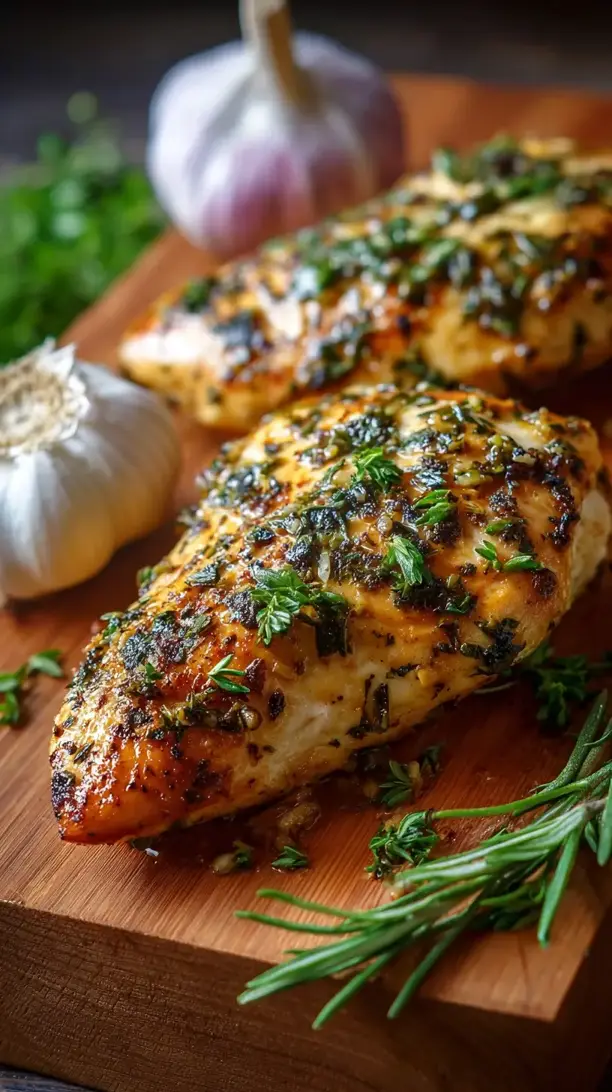
Garlic Herb Chicken Breasts
Learn how to make juicy, perfectly seared Garlic Herb Chicken Breasts with a vibrant fresh herb paste and pan sauce. Ready in 30 minutes! Get the recipe now.
Ingredients
For the Ingredients
-
4 boneless, skinless chicken breasts (about 1.5 lbs or 680 g)
-
3 tbsp extra virgin olive oil (divided)
-
4-5 large cloves garlic (minced)
-
2 tbsp fresh parsley (finely chopped)
-
1 tbsp fresh rosemary (finely chopped)
-
1 tbsp fresh thyme leaves
-
1 lemon (zest and juice)
-
1 tsp kosher salt (plus more for seasoning)
-
1/2 tsp freshly cracked black pepper
-
1/4 tsp red pepper flakes (optional, for a little heat)
-
1/2 cup chicken broth or dry white wine (like Sauvignon Blanc)
-
2 tbsp unsalted butter
Instructions
-
First, prepare your chicken. Pat the breasts completely dry with paper towels—this is crucial for getting a good sear, not a steam. If your breasts aren’t even, pound them as described above. Season both sides generously with the kosher salt and black pepper, then set them aside while you make the herb mixture. You’ll notice the salt begins to pull a little moisture to the surface; that’s a good thing.01
-
In a small bowl, combine the minced garlic, chopped parsley, rosemary, thyme, lemon zest, red pepper flakes (if using), and 2 tablespoons of the olive oil. Mix it all together until it forms a fragrant, coarse paste. The aroma at this point is just incredible—savory, piney, and citrusy all at once. This is your flavor powerhouse.02
-
Now, rub the magic in. Using your hands or a spoon, divide the herb paste evenly among the chicken breasts, spreading it over both sides and pressing gently so it adheres. Let the chicken sit with this marinade for about 10-15 minutes. You don’t need hours; this short rest allows the flavors to start penetrating the surface.03
-
Time to cook! Place your large skillet over medium-high heat and add the remaining 1 tablespoon of olive oil. Once the oil is shimmering hot—a drop of water should sizzle violently—carefully add the chicken breasts. You should hear a confident sizzle the moment they touch the pan. Don’t crowd them; cook in two batches if your pan is small.04
-
Here’s the key: don’t touch them! Let the chicken cook undisturbed for 5-7 minutes, until a beautiful golden-brown crust forms on the bottom. You can peek by lifting a corner with your tongs. When it releases easily from the pan and is nicely browned, it’s ready to flip.05
-
Flip the breasts and cook for another 5-7 minutes on the second side. To check for doneness, the safest way is to use an instant-read thermometer inserted into the thickest part of the breast—it should read 165°F (74°C). The chicken should feel firm to the touch but still have a little give. Transfer the cooked chicken to a clean plate to rest.06
-
Don’t wash that pan! All those browned, flavorful bits are pure gold. Reduce the heat to medium and pour in the chicken broth or white wine. Use a wooden spoon to scrape all those tasty bits off the bottom of the pan—this is called deglazing. Let the liquid simmer and reduce by about half, which will take 2-3 minutes.07
-
Turn off the heat. Stir in the cold butter and the juice from half of the lemon. Swirl the pan until the butter melts and emulsifies into the sauce, making it glossy and slightly thickened. Taste the sauce and adjust seasoning—you might want a pinch more salt or a extra squeeze of lemon for brightness.08
-
To serve, place a chicken breast on each plate and spoon the warm pan sauce generously over the top. The final dish should look vibrant, smell incredible, and promise a juicy, flavor-packed bite in every piece.09
Not what you're looking for?