
Breakfast ramen is the ultimate savory morning comfort food. This easy recipe transforms simple ingredients into a warm, satisfying bowl in under 20 minutes. The star is the soft-boiled egg, whose runny yolk creates a luxuriously silky broth.
Love Breakfast Ramen with Soft Boiled Egg? So do we! If you're into Savory Breakfast or curious about Burgers, you'll find plenty of inspiration below.



Why You’ll Love This Breakfast Ramen with Soft Boiled Egg
- Unexpectedly comforting: A warm, savory bowl feels like a cozy hug for your taste buds.
- Comes together fast: Ready in under 20 minutes for a special morning meal.
- Wonderfully adaptable: Easily customize with your favorite veggies or proteins.
- Game-changing egg: The runny yolk swirled into the broth adds a silky, restaurant-worthy touch.
Ingredients & Tools
- 2 packs instant ramen noodles (seasoning packets optional)
- 4 cups chicken or vegetable broth
- 2 large eggs
- 1 tbsp soy sauce
- 1 tsp sesame oil
- 1 green onion, thinly sliced
- 1 clove garlic, minced
- 1 tsp grated fresh ginger
- Optional toppings: sliced mushrooms, baby spinach, cooked bacon or ham, nori strips, chili oil
Tools: Medium saucepan, small pot, slotted spoon, bowls for serving
Notes: Using good-quality broth makes a noticeable difference. Don’t skip the fresh ginger and garlic for subtle warmth and aroma.
Nutrition (per serving)
| Calories: | 420 kcal |
| Protein: | 18 g |
| Fat: | 14 g |
| Carbs: | 55 g |
| Fiber: | 3 g |
Serves: 2 | Prep Time: 5 minutes | Cook Time: 15 minutes | Total Time: 20 minutes
Before You Start: Tips & Ingredient Notes
- Egg timing is everything. For that perfect soft-boiled egg with a firm white and runny yolk, follow the 6-7 minute boiling time closely. Using room-temperature eggs helps prevent cracking.
- Broth matters more than you think. A good-quality, low-sodium broth gives you control over the saltiness. You can always add more soy sauce later, but you can’t take it out.
- Customize your toppings freely. This recipe is a canvas—add what you love. Leftover roasted veggies, a different protein, or even a dash of hot sauce can make it your own.
- Don’t overcook the noodles. They’ll continue to soften in the hot broth, so aim for al dente when you drain them to avoid a mushy texture later.
How to Make Breakfast Ramen with Soft Boiled Egg
Step 1: Start by preparing your soft-boiled eggs. Bring a small pot of water to a rolling boil—you’ll want enough water to fully submerge the eggs. Gently lower the eggs into the boiling water using a slotted spoon to avoid cracking. Set a timer for 6½ minutes for a jammy, runny yolk. While they cook, prepare an ice bath in a small bowl.
Step 2: Once the timer goes off, immediately transfer the eggs to the ice bath using your slotted spoon. Let them cool for at least 2-3 minutes—this stops the cooking process and makes them easier to peel. You’ll notice the shell should come off smoothly under cool running water.
Step 3: Now, let’s build the broth. In a medium saucepan, heat a teaspoon of sesame oil over medium heat. Add the minced garlic and grated ginger, and sauté for about 30 seconds until fragrant—be careful not to burn them. That quick toast really wakes up their flavors.
Step 4: Pour in your chicken or vegetable broth and bring it to a gentle simmer. Stir in the soy sauce, and if you’re using any optional veggies like mushrooms, add them now to soften. Let it bubble away for 4-5 minutes so all the flavors meld together beautifully.
Step 5: While the broth simmers, cook your ramen noodles separately according to package directions, but omit the seasoning packet. Drain them well—you don’t want starchy water diluting your lovely broth. The noodles should be springy and just tender.
Step 6: To assemble, divide the cooked noodles between two bowls. Carefully pour the hot broth over the noodles—you’ll hear a satisfying sizzle. Halve your peeled soft-boiled eggs and place them gently on top, yolk-side up.
Step 7: Now for the fun part: garnishes! Scatter sliced green onions over everything, add any other toppings you like, and finish with a final drizzle of sesame oil. The aroma at this point is absolutely incredible.
Storage & Freshness Guide
- Fridge: Store broth, noodles, and toppings separately in airtight containers for up to 2 days.
- Freezer: Broth freezes well for up to 3 months; noodles and eggs do not freeze well.
- Reviving: Reheat broth separately until simmering, then add noodles briefly to warm through.
Serving Suggestions
Complementary Dishes
- Simple side salad with ginger dressing — The bright, tangy flavors cut through the richness of the ramen and add a refreshing crunch.
- Pan-seared dumplings or gyoza — Their crispy texture and savory filling make them a perfect handheld companion to your noodle bowl.
- Quick-pickled cucumber slices — A little acidity and crunch provide a lovely contrast to the warm, savory broth.
Drinks
- Hot green tea — Its subtle bitterness and clean finish help cleanse the palate between slurps of the flavorful broth.
- Iced barley tea (mugicha) — This nutty, caffeine-free option is wonderfully refreshing and a classic pairing with Japanese meals.
- Freshly squeezed orange juice — The sweetness and acidity offer a bright counterpoint to the umami-rich ramen.
Something Sweet
- Matcha white chocolate cookies — The earthy matcha and sweet chocolate create a delightful ending that nods to Japanese flavors.
- Mochi ice cream — These chewy, cold treats are fun to eat and come in flavors like green tea or red bean that complement the meal.
- Citrus yogurt parfait — Light, tangy, and a little sweet, it’s a refreshing way to finish without feeling too heavy.
Top Mistakes to Avoid
- Overcooking the eggs. Even an extra 30 seconds can turn that beautiful runny yolk into a firm, fully cooked one—set that timer and be ready with your ice bath.
- Using the ramen seasoning packet. It’s often overly salty and can overpower the delicate broth you’ve built from scratch. Trust me, you won’t miss it.
- Skipping the ice bath for the eggs. This step is non-negotiable if you want easy peeling and that perfect jammy texture. I’ve messed this up before too, and ended up with rubbery eggs.
- Letting the noodles sit in the broth too long before serving. They’ll keep absorbing liquid and can become mushy. Serve immediately for the best texture.
Expert Tips
- Tip: Marinate your soft-boiled eggs. After peeling, let them soak in a mixture of soy sauce, mirin, and water for 30 minutes—they’ll absorb incredible flavor and look beautifully stained.
- Tip: Infuse your broth with kombu. Simmer a piece of dried kelp in the broth for 10 minutes before adding other ingredients—it adds a subtle umami depth that’s just magical.
- Tip: Toast your ramen noodles. Before boiling, toast the dry noodles in a dry skillet for 2-3 minutes until fragrant—this gives them a nuttier flavor and helps them hold up better in the broth.
- Tip: Make components ahead. You can soft-boil and marinate the eggs the night before, and have your broth ingredients measured out—morning assembly becomes a breeze.
FAQs
Can I make this recipe vegetarian?
Absolutely! Simply use vegetable broth instead of chicken broth, and skip any meat-based toppings. You can add extra umami with a splash of tamari or a piece of kombu simmered in the broth. Mushrooms, tofu, or edamame make excellent protein additions that keep it fully plant-based.
How do I store and reheat leftovers?
Store the broth, noodles, and toppings separately in airtight containers in the fridge for up to 2 days. When reheating, warm the broth separately until simmering, then add the noodles briefly to heat through. The soft-boiled eggs are best fresh, but you can keep them peeled and stored in cold water in the fridge.
My eggs are always hard to peel—what am I doing wrong?
This is a common frustration! Using slightly older eggs (rather than very fresh ones) can help, as the air pocket inside expands, making peeling easier. The ice bath is crucial—it contracts the egg inside the shell. Also, try gently tapping the egg all over and rolling it between your hands before peeling under cool running water.
Can I use different types of noodles?
Of course! While instant ramen noodles have that classic springy texture, you can substitute with udon, soba, or even rice noodles. Just adjust the cooking time according to the package directions, and keep in mind that different noodles will change the overall character of the dish.
What if I don’t have fresh ginger or garlic?
You can use ¼ teaspoon of ginger powder and ½ teaspoon of garlic powder instead—the flavor will be slightly different but still delicious. If you have ginger paste or minced garlic in a jar, use about ¾ of the amount called for since those tend to be more concentrated.



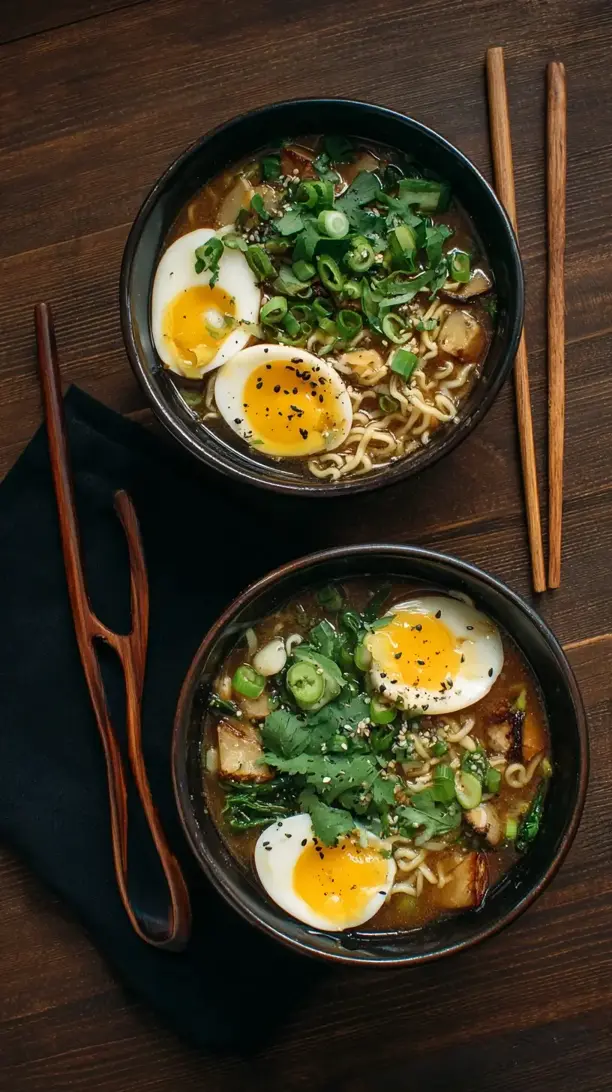
Breakfast Ramen With Soft Boiled Egg
Make the best Breakfast Ramen with Soft Boiled Egg in just 20 minutes! This savory, comforting recipe is the perfect way to start your day. Get the easy recipe now!
Ingredients
For the Ingredients
-
2 packs instant ramen noodles (seasoning packets optional)
-
4 cups chicken or vegetable broth
-
2 large eggs
-
1 tbsp soy sauce
-
1 tsp sesame oil
-
1 green onion (thinly sliced)
-
1 clove garlic (minced)
-
1 tsp grated fresh ginger
-
Optional toppings (sliced mushrooms, baby spinach, cooked bacon or ham, nori strips, chili oil)
Instructions
-
Start by preparing your soft-boiled eggs. Bring a small pot of water to a rolling boil—you’ll want enough water to fully submerge the eggs. Gently lower the eggs into the boiling water using a slotted spoon to avoid cracking. Set a timer for 6½ minutes for a jammy, runny yolk. While they cook, prepare an ice bath in a small bowl.01
-
Once the timer goes off, immediately transfer the eggs to the ice bath using your slotted spoon. Let them cool for at least 2-3 minutes—this stops the cooking process and makes them easier to peel. You’ll notice the shell should come off smoothly under cool running water.02
-
Now, let’s build the broth. In a medium saucepan, heat a teaspoon of sesame oil over medium heat. Add the minced garlic and grated ginger, and sauté for about 30 seconds until fragrant—be careful not to burn them. That quick toast really wakes up their flavors.03
-
Pour in your chicken or vegetable broth and bring it to a gentle simmer. Stir in the soy sauce, and if you’re using any optional veggies like mushrooms, add them now to soften. Let it bubble away for 4-5 minutes so all the flavors meld together beautifully.04
-
While the broth simmers, cook your ramen noodles separately according to package directions, but omit the seasoning packet. Drain them well—you don’t want starchy water diluting your lovely broth. The noodles should be springy and just tender.05
-
To assemble, divide the cooked noodles between two bowls. Carefully pour the hot broth over the noodles—you’ll hear a satisfying sizzle. Halve your peeled soft-boiled eggs and place them gently on top, yolk-side up.06
-
Now for the fun part: garnishes! Scatter sliced green onions over everything, add any other toppings you like, and finish with a final drizzle of sesame oil. The aroma at this point is absolutely incredible.07
Not what you're looking for?


