
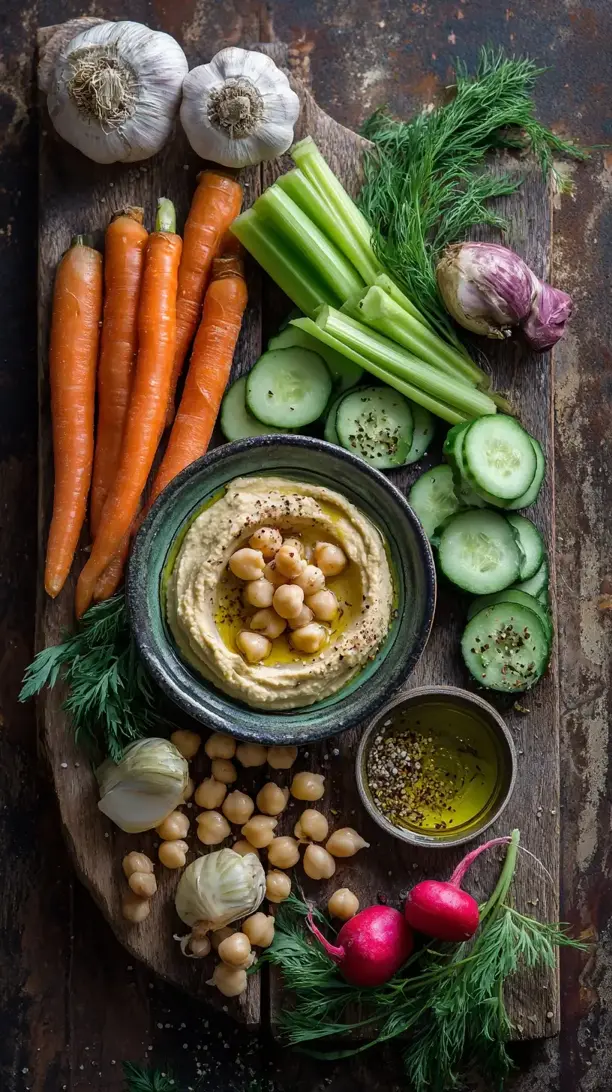
Making your own hummus from scratch is a small kitchen victory that never gets old. This Homemade Hummus with Vegetables recipe delivers a creamy, bright dip paired with crisp, colorful veggies for a quick, healthy snack or light meal. It’s rustic, elegant, and ready in about 15 minutes.
Looking for Homemade Hummus with Vegetables inspiration? You'll love what we have! Explore more Snacks recipes or discover our Chicken Recipes favorites.



Why You’ll Love This Homemade Hummus with Vegetables
- Fresh & Customizable: Adjust garlic, lemon, and tahini to your exact taste.
- Dreamy Smooth Texture: One simple step creates silkier hummus than store-bought.
- Vibrant & Appealing: Bright vegetables arranged around the hummus make a beautiful centerpiece.
- Genuinely Versatile: Use as a dip, spread, or protein-packed snack.
Ingredients & Tools
- 1 can (400 g) chickpeas, drained and rinsed
- 1/4 cup (60 ml) fresh lemon juice (from about 1-2 lemons)
- 1/4 cup (60 ml) well-stirred tahini
- 1 small clove garlic, minced
- 2 tablespoons extra-virgin olive oil, plus more for serving
- 1/2 teaspoon ground cumin
- 2 to 3 tablespoons ice water
- Salt to taste (start with 1/2 teaspoon)
- For serving: A selection of fresh vegetables like cucumber, bell peppers, carrots, cherry tomatoes, and radishes
Tools: A food processor or high-powered blender, a rubber spatula, a small bowl for ice water
Notes: The quality of your tahini and olive oil really shines here, so if you can, use a good one. A little goes a long way in making the flavor pop.
Nutrition (per serving)
| Calories: | 210 kcal |
| Protein: | 7 g |
| Fat: | 14 g |
| Carbs: | 16 g |
| Fiber: | 5 g |
Serves: 4 | Prep Time: 15 minutes | Cook Time: 0 minutes | Total Time: 15 minutes
Before You Start: Tips & Ingredient Notes
- Don’t skip the ice water. This is the secret weapon for ultra-creamy hummus. The cold water helps emulsify the ingredients and lightens the texture as it blends.
- To peel or not to peel the chickpeas? For the absolute smoothest hummus, pop the skins off the chickpeas. It’s a bit tedious, but you’ll notice the difference—the hummus becomes incredibly velvety.
- Tahini can separate. Always give your tahini a really good stir before measuring. The oil tends to rise to the top, and you want that uniform, creamy consistency for the best results.
- Fresh lemon juice is non-negotiable. The bright, zesty kick from fresh lemons is what makes this hummus taste alive. Bottled juice just can’t compare and can sometimes have a slightly bitter aftertaste.
How to Make Homemade Hummus with Vegetables
Step 1: Prepare your chickpeas. Drain and rinse them thoroughly in a colander. If you have a few extra minutes and want that super-smooth texture, you can pop the skins off by gently squeezing each chickpea between your fingers. They should slip right out. This step is optional but highly recommended for hummus perfection.
Step 2: Combine the base ingredients. In the bowl of your food processor, add the chickpeas, lemon juice, tahini, minced garlic, cumin, and a good pinch of salt. Pulse a few times to start breaking everything down. It will look a bit crumbly and thick at this stage—that’s perfectly normal.
Step 3: Stream in the olive oil. With the processor running, slowly drizzle in the 2 tablespoons of olive oil through the feed tube. You’ll notice the mixture beginning to come together and look more paste-like. Scrape down the sides with a spatula to make sure everything is incorporated.
Step 4: The magic of ice water. Keep the food processor running and begin adding the ice water, one tablespoon at a time. The hummus will magically transform before your eyes, becoming lighter in color and much creamier in texture. You may not need all the water, so stop when you’ve reached a smooth, velvety consistency that holds its shape but is easy to scoop.
Step 5: Taste and adjust. This is the most important step. Turn off the processor and taste your hummus. Does it need more salt? A bit more lemon for zing? Maybe another pinch of cumin? Adjust the seasonings to your liking and blend for another 10 seconds to combine.
Step 6: Prepare your vegetable platter. While the hummus is resting (it thickens up slightly), wash and cut your vegetables. Slice cucumbers into batons, cut bell peppers into strips, slice carrots on a diagonal, and leave cherry tomatoes and radishes whole or halved. The variety of colors and shapes makes for a beautiful presentation.
Step 7: Serve and garnish. Transfer your hummus to a shallow bowl. Use the back of a spoon to create swirls on the surface, which will help catch the final drizzle of olive oil. Drizzle a generous glug of good olive oil over the top, and you can even sprinkle with a little paprika or sumac for color.
Storage & Freshness Guide
- Fridge: Store in an airtight container for 4–5 days; stir if separated.
- Freezer: Freeze in an airtight container up to 3 months; thaw in fridge and re-blend to restore creaminess.
- Reviving: Stir in a splash of ice water or lemon juice to refresh consistency after storage.
Serving Suggestions
Complementary Dishes
- Warm Pita Bread or Flatbread — There’s nothing quite like tearing off a piece of soft, warm bread and scooping up that creamy hummus. It’s the classic pairing for a reason.
- Falafel — For a more substantial meal, serve the hummus alongside crispy, herb-filled falafel. The creamy dip is the perfect cool counterpart to the spiced, fried balls.
- Grilled Halloumi — The salty, squeaky texture of grilled halloumi cheese is a fantastic contrast to the smooth, cool hummus and fresh vegetables.
Drinks
- Minty Iced Tea — The refreshing, herbal notes of mint iced tea cleanse the palate between bites and complement the earthy flavors of the hummus beautifully.
- A Crisp White Wine — A glass of Sauvignon Blanc or Pinot Grigio, with its bright acidity and citrus notes, mirrors the lemon in the hummus and cuts through the richness.
- Sparkling Water with Lemon — Sometimes simple is best. The bubbles and citrus are incredibly refreshing and won’t compete with the delicate flavors of the dish.
Something Sweet
- Baklava — The honey-sweetened, nutty, flaky pastry provides a decadent and texturally exciting finish that contrasts wonderfully with the savory, creamy meal.
- Orange and Date Salad — Segments of fresh orange and sticky-sweet dates, perhaps with a sprinkle of cinnamon, offer a light, healthy, and vibrant end to the meal.
- Greek Yogurt with Honey and Walnuts — This is a simple, protein-packed dessert that continues the Mediterranean theme and feels both indulgent and wholesome.
Top Mistakes to Avoid
- Mistake: Using warm or room temperature water. This can make the hummus gluey and heavy. The ice water is crucial for creating a light, airy emulsion. I’ve messed this up before too, and the texture is just not the same.
- Mistake: Not blending long enough. Patience is key



Homemade Hummus With Vegetables
Learn how to make the best Homemade Hummus with Vegetables in just 15 minutes. A creamy, healthy dip perfect for snacking. Get the easy recipe now!
Ingredients
For the hummus:
-
1 can chickpeas (400 g, drained and rinsed)
-
1/4 cup fresh lemon juice (60 ml, from about 1-2 lemons)
-
1/4 cup well-stirred tahini (60 ml)
-
1 small clove garlic (minced)
-
2 tablespoons extra-virgin olive oil (plus more for serving)
-
1/2 teaspoon ground cumin
-
2 to 3 tablespoons ice water
-
Salt (to taste, start with 1/2 teaspoon)
For serving:
-
A selection of fresh vegetables (like cucumber, bell peppers, carrots, cherry tomatoes, and radishes)
Instructions
-
Prepare your chickpeas. Drain and rinse them thoroughly in a colander. If you have a few extra minutes and want that super-smooth texture, you can pop the skins off by gently squeezing each chickpea between your fingers. They should slip right out. This step is optional but highly recommended for hummus perfection.01
-
Combine the base ingredients. In the bowl of your food processor, add the chickpeas, lemon juice, tahini, minced garlic, cumin, and a good pinch of salt. Pulse a few times to start breaking everything down. It will look a bit crumbly and thick at this stage—that’s perfectly normal.02
-
Stream in the olive oil. With the processor running, slowly drizzle in the 2 tablespoons of olive oil through the feed tube. You’ll notice the mixture beginning to come together and look more paste-like. Scrape down the sides with a spatula to make sure everything is incorporated.03
-
The magic of ice water. Keep the food processor running and begin adding the ice water, one tablespoon at a time. The hummus will magically transform before your eyes, becoming lighter in color and much creamier in texture. You may not need all the water, so stop when you’ve reached a smooth, velvety consistency that holds its shape but is easy to scoop.04
-
Taste and adjust. This is the most important step. Turn off the processor and taste your hummus. Does it need more salt? A bit more lemon for zing? Maybe another pinch of cumin? Adjust the seasonings to your liking and blend for another 10 seconds to combine.05
-
Prepare your vegetable platter. While the hummus is resting (it thickens up slightly), wash and cut your vegetables. Slice cucumbers into batons, cut bell peppers into strips, slice carrots on a diagonal, and leave cherry tomatoes and radishes whole or halved. The variety of colors and shapes makes for a beautiful presentation.06
-
Serve and garnish. Transfer your hummus to a shallow bowl. Use the back of a spoon to create swirls on the surface, which will help catch the final drizzle of olive oil. Drizzle a generous glug of good olive oil over the top, and you can even sprinkle with a little paprika or sumac for color.07
Not what you're looking for?


