
There’s something about a deep, fudgy chocolate cookie that feels like a warm hug, especially when it’s finished with a sophisticated whisper of flaky sea salt. To me, these Dark Chocolate Sea Salt Cookies are the ultimate comfort food recipe—they bring that bakery-level elegance right into your own kitchen with minimal fuss. If you’re like me and love to make your holiday baking list feel special, this is the perfect place to start.
As we dive into the season, I always find myself searching for standout Christmas dessert ideas. These rich, chewy cookies have become my go-to because they truly stand out as unique Christmas cookies, balancing sweet and salty in the most memorable way. Whether you’re planning a cookie swap or just want to create some unforgettable holiday treats, this recipe fits right into your collection of Christmas baking ideas.
A little secret from my kitchen: giving the dough some chilling time is the key to that perfect, thick texture. Trust me, the result is so irresistible and simple, making these some of the easiest easy Christmas treats you’ll bake all season.
If you're looking for the perfect Dark Chocolate Sea Salt Cookies, you're in the right place. Whether you love Christmas Cookie or want to explore our Desserts collection, we've got you covered.


Why You’ll Love This Dark Chocolate Sea Salt Cookies
- Sweet-salty balance: Flaky sea salt cuts the rich dark chocolate for addictive complexity.
- Satisfying texture: Crisp outside with a soft, fudgy center and melty chocolate pockets.
- Special occasion vibe: Elegant enough for gifts or parties, yet perfect for any day.
- Easy-to-handle dough: Chilling ensures firm, scoopable dough that bakes up thick.
Ingredients & Tools
- 225 g unsalted butter, at cool room temperature
- 150 g granulated sugar
- 200 g dark brown sugar
- 2 large eggs, cold
- 2 tsp pure vanilla extract
- 280 g all-purpose flour
- 75 g Dutch-process cocoa powder
- 1 tsp baking soda
- 1 tsp cornstarch
- 1/2 tsp fine sea salt
- 340 g high-quality dark chocolate, chopped into chunks
- Flaky sea salt, for sprinkling
Tools: Stand mixer or electric hand mixer, baking sheets, parchment paper, a medium cookie scoop (about 3 tablespoons), wire cooling rack.
Notes: Use high-quality dark chocolate you’d eat alone. Dutch-process cocoa gives deeper flavor, and cornstarch ensures a soft, thick center.
Nutrition (per serving)
| Calories: | 320 kcal |
| Protein: | 4 g |
| Fat: | 16 g |
| Carbs: | 42 g |
| Fiber: | 3 g |
Serves: 18 | Prep Time: 20 minutes | Cook Time: 12 minutes | Total Time: 1 hour 32 minutes (includes chilling)
Before You Start: Tips & Ingredient Notes
- Chop your own chocolate. Pre-made chocolate chips are designed to hold their shape. We want the opposite—lovely, irregular pools of melted chocolate. Chopping a bar gives you a mix of fine shards and large chunks for maximum texture.
- Butter temperature is key. Your butter should be cool to the touch but soft enough that you can leave an indentation with your finger. If it’s too warm, your cookies will spread too much; too cold, and they won’t cream properly with the sugar.
- Don’t skip the chilling time. I know, it’s the hardest part. But this step allows the flour to fully hydrate and the butter to firm up, which is what gives us that perfect thick, chewy texture and prevents a flat, greasy cookie.
- Use a cookie scoop for consistency. This ensures all your cookies are the same size, so they bake evenly. A 3-tablespoon scoop is ideal for the large, bakery-style cookies we’re making.
How to Make Dark Chocolate Sea Salt Cookies
Step 1: Start by creaming the butter and sugars. In the bowl of your stand mixer fitted with the paddle attachment, combine the cool room-temperature butter, granulated sugar, and dark brown sugar. Beat on medium-high speed for a full 2-3 minutes. You’re looking for the mixture to become noticeably lighter in color and fluffy—this step incorporates air, which helps with the cookie’s structure. Scrape down the sides of the bowl with a spatula to make sure everything is evenly mixed.
Step 2: Add the eggs and vanilla. Crack in the two cold eggs one at a time, beating well after each addition until they are fully incorporated. The mixture might look a little curdled at this point—that’s perfectly normal, don’t panic! Now, pour in the vanilla extract and mix for just another 30 seconds until it’s all one homogenous, if slightly shaggy-looking, mixture.
Step 3: Whisk the dry ingredients. In a separate medium bowl, whisk together the all-purpose flour, Dutch-process cocoa powder, baking soda, cornstarch, and fine sea salt. Whisking is important here to evenly distribute the leavening agents and cocoa so you don’t get any bitter pockets in your finished cookies.
Step 4: Combine wet and dry. With the mixer on low speed, gradually add the dry ingredients to the wet mixture. Mix only until the last traces of flour disappear—overmixing at this stage will develop the gluten and lead to tough cookies. The dough will be quite thick and sticky.
Step 5: Fold in the chocolate. Take the bowl off the mixer. Add all of your beautifully chopped dark chocolate chunks to the bowl. Use a sturdy spatula to fold them in by hand, making sure they’re evenly distributed throughout the thick, chocolatey dough.
Step 6: Chill the dough. This is the non-negotiable step! Cover the bowl with plastic wrap and refrigerate for at least 1 hour, or up to 48 hours. If you’re in a rush, you can pop it in the freezer for 30 minutes. The dough needs to be firm enough to scoop without sticking terribly.
Step 7: Portion and preheat. About 20 minutes before your chilling time is up, preheat your oven to 350°F (175°C) and line your baking sheets with parchment paper. Using your cookie scoop, portion the chilled dough into 3-tablespoon-sized balls. Place them about 3 inches apart on the prepared baking sheets—they need room to spread!
Step 8: Bake to perfection. Bake for 11-13 minutes. The trick is to pull them out when the edges look set and the centers still appear soft, puffy, and slightly underdone. They will continue to cook on the hot baking sheet out of the oven. Don’t wait for them to look completely firm, or you’ll lose that fudgy center.
Step 9: The salt and the rest. As soon as you pull the baking sheet from the oven, immediately sprinkle the top of each cookie with a generous pinch of flaky sea salt. Then, let the cookies cool on the baking sheet for a full 10 minutes. This allows them to set up properly. After 10 minutes, you can transfer them to a wire rack to cool completely… or, you know, dig in while they’re still warm and gooey.
Storage & Freshness Guide
- Fridge: Store cooled cookies in an airtight container at room temperature for up to 5 days.
- Freezer: Freeze baked cookies layered with parchment for up to 3 months, or freeze dough balls to bake from frozen.
- Reviving: Microwave frozen or room-temp cookies for 10-15 seconds to restore warm, gooey texture.
Serving Suggestions
Complementary Dishes
- A simple scoop of vanilla bean ice cream — The creamy, cold vanilla is a classic partner that highlights the deep, complex chocolate and salt flavors without competing with them.
- A small bowl of fresh berries like raspberries or strawberries — Their bright, tart acidity provides a wonderful palate cleanser between bites of the rich, decadent cookie.
- A sharp, aged cheddar cheese plate — This might sound unusual, but the sharp, salty tang of a good cheddar creates an incredible savory-sweet contrast that truly elevates the entire experience.
Drinks
- A glass of cold whole milk — It’s a timeless combination for a reason. The cold, creamy fat in the milk coats your palate and complements the richness of the dark chocolate perfectly.
- A bold cup of black coffee or espresso — The bitterness of the coffee mirrors the notes in the dark chocolate, making both taste even more intense and satisfying.
- A glass of Cabernet Sauvignon or Port — The dark fruit notes and tannins in a robust red wine are a fantastic grown-up pairing for the sophisticated flavor profile of these cookies.
Something Sweet
- Espresso martini panna cotta — A smooth, coffee-infused dessert that continues the theme of bitter and sweet, offering a different, silky texture that contrasts beautifully with the cookie’s chew.
- Orange and cardamom olive oil cake — The citrus and spice provide a bright, aromatic counterpoint to the deep chocolate, making for a well-rounded dessert spread.
- Salted caramel truffles — Double down on the salt theme! These are a bite-sized treat that reinforces the salty-sweet magic you’ve already fallen in love with.
Top Mistakes to Avoid
- Mistake: Using melted or overly soft butter. This is the number one reason for flat, greasy cookies. The butter can’t hold the air you beat into it, causing the cookies to spread excessively in the oven before they can set.
- Mistake: Skipping the chill time. I’ve messed this up before too, in a moment of impatient hunger. The result is always a sad, flat puddle. Chilling solidifies the fat, which slows the spread and allows the outside to crisp up while the inside stays soft.
- Mistake: Overbaking the cookies. They will not look “done” in the center when you take them out, and that’s the goal! They continue to cook from residual heat. Overbaking gives you a dry, crumbly cookie instead of a fudgy, chewy one.
- Mistake: Using table salt for the topping. The fine crystals of table salt will dissolve and just make the cookie taste salty, rather than giving you those delightful, intermittent bursts of flavor that flaky sea salt provides.
Expert Tips
- Tip: Weigh your ingredients. For truly consistent results, especially with flour, a kitchen scale is your best friend. Scooping flour can pack it down, leading to dry, cakey cookies. 280 grams is always 280 grams.
- Tip: Make the dough ahead. This dough actually gets better with a longer chill—24 to 48 hours allows the flavors to deepen and meld beautifully. You can also scoop the dough balls and freeze them on a tray before transferring to a bag for bake-from-frozen cookies anytime.
- Tip: Bang the pan for texture. For an extra-wrinkly, textured top, take the baking sheet and gently bang it on the oven rack or counter about halfway through baking. This deflates the cookies slightly and creates those gorgeous cracks.
- Tip: Under-salt at your peril. Don’t be shy with the flaky sea salt finish. It should look visibly sprinkled. The salt is a crucial flavor component, not just a garnish, and it makes the chocolate taste more chocolatey.
FAQs
Can I use natural cocoa powder instead of Dutch-process?
You can, but the flavor and color will be different. Natural cocoa is more acidic and has a fruitier, sharper chocolate taste. Dutch-process is treated with an alkali to neutralize the acids, resulting in a darker color and a smoother, richer flavor that works perfectly here. If you substitute, the cookies may also spread a bit more due to the different pH interacting with the baking soda.
Why are my cookies cakey and puffy?
This usually happens if you measured your flour by scooping directly from the bag with the measuring cup, which can pack in too much flour. Too much flour means less spread and a more cake-like texture. Using a scale is the best fix. It could also be that your baking soda is old and has lost its potency, so it’s not creating the necessary lift and spread.
Can I freeze the baked cookies?
Absolutely! Once the cookies are completely cooled, layer them between sheets of parchment paper in an airtight container or freezer bag. They’ll keep for up to 3 months. To enjoy, you can let them thaw at room temperature or pop a frozen cookie in the microwave for 15-20 seconds for a warm, fresh-from-the-oven experience.
My chocolate chunks all sank to the bottom. What happened?
This is often due to the dough being too warm or soft when it went into the oven. The chunks are heavy, and if the surrounding dough isn’t firm enough to hold them in suspension as it bakes, they’ll sink. Ensuring your dough is properly chilled is the best defense against this. Also, using a mix of chunk sizes helps—the smaller pieces will stay distributed throughout.
How do I get that perfect crackly top?
The signature crackly top comes from the specific ratio of sugars and the creaming method. Beating the butter and sugars for a full 2-3 minutes is crucial to dissolve the sugar and create tiny air pockets. As the cookies bake, the surface sets while the interior continues to rise, causing the top to crack. The pan-banging trick mentioned in the expert tips can also enhance this effect beautifully.



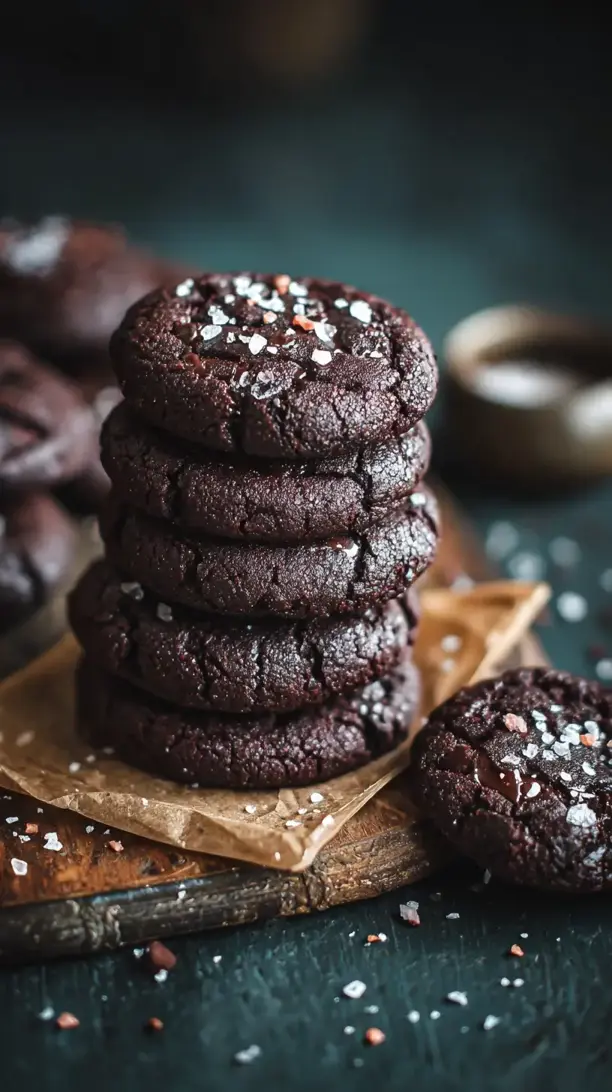
Dark Chocolate Sea Salt Cookies: A Sweet and Salty Dessert
Whip up a batch of Dark Chocolate Sea Salt Cookies with this easy chocolate cookie recipe. These rich, fudgy treats with a flaky salt finish are the perfect sophisticated holiday baking project.
Ingredients
For the Ingredients
-
225 g unsalted butter (at cool room temperature)
-
150 g granulated sugar
-
200 g dark brown sugar
-
2 large eggs (cold)
-
2 tsp pure vanilla extract
-
280 g all-purpose flour
-
75 g Dutch-process cocoa powder
-
1 tsp baking soda
-
1 tsp cornstarch
-
0.5 tsp fine sea salt
-
340 g high-quality dark chocolate (chopped into chunks)
-
Flaky sea salt (for sprinkling)
Instructions
-
Start by creaming the butter and sugars. In the bowl of your stand mixer fitted with the paddle attachment, combine the cool room-temperature butter, granulated sugar, and dark brown sugar. Beat on medium-high speed for a full 2-3 minutes. You’re looking for the mixture to become noticeably lighter in color and fluffy—this step incorporates air, which helps with the cookie’s structure. Scrape down the sides of the bowl with a spatula to make sure everything is evenly mixed.01
-
Add the eggs and vanilla. Crack in the two cold eggs one at a time, beating well after each addition until they are fully incorporated. The mixture might look a little curdled at this point—that’s perfectly normal, don’t panic! Now, pour in the vanilla extract and mix for just another 30 seconds until it’s all one homogenous, if slightly shaggy-looking, mixture.02
-
Whisk the dry ingredients. In a separate medium bowl, whisk together the all-purpose flour, Dutch-process cocoa powder, baking soda, cornstarch, and fine sea salt. Whisking is important here to evenly distribute the leavening agents and cocoa so you don’t get any bitter pockets in your finished cookies.03
-
Combine wet and dry. With the mixer on low speed, gradually add the dry ingredients to the wet mixture. Mix only until the last traces of flour disappear—overmixing at this stage will develop the gluten and lead to tough cookies. The dough will be quite thick and sticky.04
-
Fold in the chocolate. Take the bowl off the mixer. Add all of your beautifully chopped dark chocolate chunks to the bowl. Use a sturdy spatula to fold them in by hand, making sure they’re evenly distributed throughout the thick, chocolatey dough.05
-
Chill the dough. This is the non-negotiable step! Cover the bowl with plastic wrap and refrigerate for at least 1 hour, or up to 48 hours. If you’re in a rush, you can pop it in the freezer for 30 minutes. The dough needs to be firm enough to scoop without sticking terribly.06
-
Portion and preheat. About 20 minutes before your chilling time is up, preheat your oven to 350°F (175°C) and line your baking sheets with parchment paper. Using your cookie scoop, portion the chilled dough into 3-tablespoon-sized balls. Place them about 3 inches apart on the prepared baking sheets—they need room to spread!07
-
Bake to perfection. Bake for 11-13 minutes. The trick is to pull them out when the edges look set and the centers still appear soft, puffy, and slightly underdone. They will continue to cook on the hot baking sheet out of the oven. Don’t wait for them to look completely firm, or you’ll lose that fudgy center.08
-
The salt and the rest. As soon as you pull the baking sheet from the oven, immediately sprinkle the top of each cookie with a generous pinch of flaky sea salt. Then, let the cookies cool on the baking sheet for a full 10 minutes. This allows them to set up properly. After 10 minutes, you can transfer them to a wire rack to cool completely… or, you know, dig in while they’re still warm and gooey.09
Not what you're looking for?


