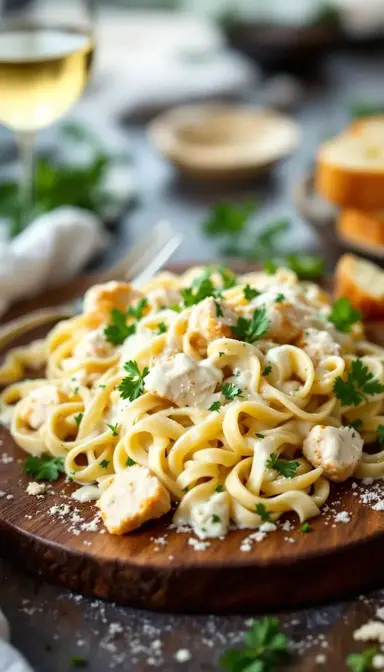
There’s something magical about a dish that tells a story—one that carries the whispers of ancient forests and the warmth of a Tuscan kitchen. That’s exactly what you get with Pappardelle al Cinghiale, a wild boar ragù so rich and soulful, it’s like a love letter to slow cooking. Imagine broad ribbons of silky pappardelle cradling a sauce that’s been coaxed into tenderness over hours, where every bite is a harmony of earthy game, sweet tomatoes, and the deep hum of red wine. This isn’t just dinner; it’s an experience.
Nothing beats a great Pappardelle al Cinghiale (Wild Boar Ragù). Whether you're a fan of Pasta or want to try something from our Appetizer Recipes selection, keep scrolling!


Why This Recipe Works
- Time is your secret ingredient: Low and slow transforms tough wild boar into melt-in-your-mouth goodness. Collagen breaks down into gelatin at 160–180°F (71–82°C), creating a luscious texture.
- Flavor layering: From the sear on the meat (thanks to the Maillard reaction) to the soffritto’s sweet foundation, every step builds depth. Deglazing with wine lifts the fond (browned bits) for maximum umami.
- Pasta perfection: Wide pappardelle is like a blank canvas for this bold ragù—its ridges and width hold every drop of sauce.
The Story Behind the Sauce
This dish is pure cucina povera—Tuscany’s genius for turning humble ingredients into something extraordinary. Hunters would slow-cook boar with whatever they had on hand: a splash of local wine, a handful of herbs, maybe a few tomatoes. What started as necessity became legend.
Essential Ingredients & Tools
For the Marinade
- 1.5 lbs (680g) wild boar shoulder or leg, cut into 1-inch cubes (or substitute venison or pork shoulder)
- 1 teaspoon kosher salt
- ½ teaspoon freshly ground black pepper
For the Sauce
- 4 oz (115g) pancetta or guanciale, diced (or thick-cut bacon in a pinch)
- 1 medium yellow onion, finely chopped
- 1 large carrot, finely chopped
- 1 celery stalk, finely chopped
- 3 garlic cloves, minced
- 2 tablespoons tomato paste
- 1 ½ cups (360ml) dry red wine (Chianti preferred, but any robust red works)
- 28 oz (800g) canned San Marzano tomatoes, hand-crushed (or regular crushed tomatoes)
- 1 cup (240ml) beef or game stock (vegetable stock works too)
- 2 rosemary sprigs (or 1 tsp dried)
- 4 sage leaves (or ½ tsp dried)
- 2 bay leaves
- 2 whole cloves (optional)
- ¼ cup (60ml) extra-virgin olive oil
For Serving
- 1 lb (450g) fresh pappardelle (or dried if fresh isn’t available)
- Grated Pecorino Romano (or Parmesan as a substitute)
Tools You’ll Need
- Heavy Dutch oven (or a large, deep skillet with a lid)
- Sharp chef’s knife
- Wooden spoon
- Pasta pot (or any large pot for boiling noodles)
Serves: 6 | Prep time: 30 mins | Cook time: 3.5 hours | Total time: 4 hours
How to Make Pappardelle al Cinghiale
- Prep the boar: Pat the 1.5 lbs (680g) wild boar dry with paper towels—this ensures a proper sear. Generously season with 1 teaspoon kosher salt and ½ teaspoon freshly ground black pepper. Dry surfaces brown better because moisture steams instead of caramelizing.
- Sear like a pro: Heat 2 tbsp of the ¼ cup (60ml) extra-virgin olive oil in your Dutch oven over medium-high heat until shimmering. Sear the boar in small batches (crowding lowers the pan’s temperature). Cook each batch for 5–7 minutes until deeply caramelized. Transfer meat to a plate.
- Render pancetta: In the same pot, cook the 4 oz (115g) diced pancetta over medium heat until crisp and golden. Remove with a slotted spoon, leaving the rendered fat behind.
- Soffritto symphony: Sauté the 1 medium yellow onion, 1 large carrot, and 1 celery stalk in the remaining oil and pancetta fat for 8–10 minutes until softened but not browned. Add the 3 minced garlic cloves and cook 1 minute until fragrant.
- Toast tomato paste: Stir in the 2 tablespoons tomato paste and cook for 2–3 minutes, stirring constantly. Look for a rusty-red color and nutty aroma—this concentrates umami and removes raw acidity.
- Deglaze with wine: Pour in the 1 ½ cups (360ml) dry red wine, scraping the pot’s bottom with a wooden spoon to release the fond. Simmer for 5–7 minutes until reduced by half.
- The long simmer: Return the meat and pancetta to the pot. Add the 28 oz (800g) crushed tomatoes, 1 cup (240ml) beef or game stock, 2 rosemary sprigs, 4 sage leaves, 2 bay leaves, and 2 whole cloves (optional). Partially cover and simmer on low heat for 2.5–3 hours, stirring occasionally. The meat should shred easily with a fork.
- Pasta perfection: Boil the 1 lb (450g) fresh pappardelle in well-salted water (as salty as the sea) until al dente. Reserve 1 cup pasta water—its starch helps the sauce cling to noodles.
- The grand finale: Toss pasta with ragù in the pot, adding pasta water as needed to emulsify. Finish with a drizzle of extra-virgin olive oil and grated Pecorino.
Pro Technique
Fond = Flavor Gold
Those browned bits stuck to the pot? They’re packed with umami-rich compounds. Deglazing with wine not only lifts these flavors but also balances them with acidity. For maximum extraction, use a flat-edged wooden spoon to scrape every corner of the pot.
Low and Slow Wins the Race
Wild boar’s toughness demands patience. A gentle simmer (small bubbles barely breaking the surface) prevents the meat from drying out. If the sauce reduces too quickly, add splashes of warm stock—never cold, to avoid temperature shocks.
Chef’s Wisdom
Taming the Game
If the boar’s flavor is too wild, brighten it with a splash of balsamic vinegar (1–2 tsp) or a pinch of orange zest added at the end. Acid cuts through richness without masking the meat’s character.
Sauce Too Thin?
Remove the meat and reduce the sauce uncovered over medium heat. For a velvety finish, blend 1–2 tbsp of the sauce with 1 tbsp cold butter, then stir it back in. The butter’s emulsifiers create a glossy texture.
Storage & Freshness Guide
Fridge: Cool the ragù to room temperature within 2 hours (to prevent bacterial growth). Store in airtight containers for up to 4 days. The flavors deepen over time.
Freezer: Portion ragù (without pasta) in freezer bags or containers, leaving 1-inch headspace for expansion. Freeze for up to 3 months. Thaw overnight in the fridge.
Reheating: Warm gently in a saucepan over low heat, adding splashes of water or stock to loosen. Avoid microwaving—it can overcook the meat.
Nutrition Profile
Calories: 720 | Protein: 42g | Carbs: 75g | Fat: 25g | Fiber: 5g
Ingredient Variations and Their Impact
No Boar? No Problem
- Venison: Lean but flavorful. Marinate it overnight in red wine and juniper berries to tenderize and add piney notes.
- Pork shoulder: Not as gamey, but compensate with 1 tsp smoked paprika and 2 anchovy fillets (melted into the soffritto) for depth.
Herb Hacks
- Dried herbs? Use ⅓ the amount of fresh (e.g., 1 tsp dried rosemary). Toast them in a dry pan for 30 seconds to revive their oils before adding.
Wine Variations
- White wine twist: Use dry white wine (e.g., Vermentino) for a lighter sauce. Pair with lemon zest and fennel seeds for brightness.
Tomato Twists
- Fire-roasted tomatoes: Add a smoky nuance.
- Sun-dried tomato: Simmer with 1 minced sun-dried tomato for concentrated sweetness.
Perfect Pairings
Complementary Dishes
- Creamy Polenta: Its mild sweetness and velvety texture contrast the ragù’s richness. Serve underneath or on the side for scooping.
- Bitter Greens Salad: Radicchio or arugula with a lemon vinaigrette cuts through the fat and refreshes the palate.
Drinks
- Chianti Classico: The wine’s sour cherry and earthy notes mirror the sauce’s flavors.
- Sagrantino: A bold Umbrian red with tannins that stand up to the game.
Something Sweet
- Almond Biscotti: Crunchy and nutty, ideal for dipping into Vin Santo after the meal.
- Olive Oil Cake: A Tuscan classic with a citrusy finish that complements the ragù’s herbs.
FAQs
- Can I use a slow cooker?
Yes! After browning the meat and building the soffritto, transfer everything to a slow cooker on Low for 6–8 hours. - How do I thicken the sauce?
Simmer uncovered or remove the meat and reduce the liquid. For extra silkiness, blend a portion of the sauce with butter. - Can I make this ahead?
Absolutely—ragù tastes best after 1–2 days in the fridge as flavors meld.

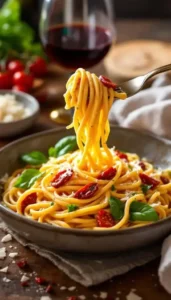


Pappardelle al Cinghiale: A Hearty Taste of Tuscany’s Wild Side
Make authentic Pappardelle al Cinghiale with this hearty wild boar ragù recipe—slow-cooked, rich, and full of flavor. Try it tonight!
Ingredients
For the Marinade
-
1.5 lbs wild boar shoulder or leg (cut into 1-inch cubes)
-
1 teaspoon kosher salt
-
½ teaspoon freshly ground black pepper
For the Sauce
-
4 oz pancetta or guanciale (diced)
-
1 medium yellow onion (finely chopped)
-
1 large carrot (finely chopped)
-
1 celery stalk celery (finely chopped)
-
3 cloves garlic (minced)
-
2 tablespoons tomato paste
-
1 ½ cups dry red wine
-
28 oz canned San Marzano tomatoes (hand-crushed)
-
1 cup beef or game stock
-
2 sprigs rosemary
-
4 leaves sage
-
2 leaves bay leaves
-
2 whole cloves (optional)
-
¼ cup extra-virgin olive oil
For Serving
-
1 lb fresh pappardelle
-
Grated Pecorino Romano
Instructions
-
Pat the 1.5 lbs (680g) wild boar dry and season with 1 teaspoon kosher salt and ½ teaspoon freshly ground black pepper.01
-
Sear meat in batches in 2 tbsp of the ¼ cup (60ml) extra-virgin olive oil over medium-high heat. Transfer to a plate.02
-
Render the 4 oz (115g) pancetta until crisp; remove, leaving fat in the pot.03
-
Sauté the 1 medium yellow onion, 1 large carrot, and 1 celery stalk until soft. Add the 3 minced garlic cloves and cook 1 minute.04
-
Stir in the 2 tablespoons tomato paste and cook 2–3 minutes until rusty-red.05
-
Deglaze with the 1 ½ cups (360ml) dry red wine, scraping up browned bits. Simmer until reduced by half.06
-
Return meat and pancetta to the pot. Add the 28 oz (800g) crushed tomatoes, 1 cup (240ml) beef or game stock, 2 rosemary sprigs, 4 sage leaves, and 2 bay leaves. Simmer 2.5–3 hours.07
-
Cook the 1 lb (450g) fresh pappardelle in salted water until al dente. Reserve 1 cup pasta water.08
-
Toss pasta with ragù, adding pasta water as needed. Finish with olive oil and Pecorino.09
Not what you're looking for?