This Asian Beef and Noodles recipe delivers savory, slightly sweet, and deeply satisfying umami flavor in a single bowl. It’s a quick, fuss-free weeknight hero featuring tender beef, chewy noodles, and a glossy aromatic sauce. You’ll love how the entire dish comes alive with vibrant colors and textures.
Love Asian Beef and Noodles? So do we! If you're into Dinner Ideas or curious about Burgers, you'll find plenty of inspiration below.



Why You’ll Love This Asian Beef and Noodles
- Fast & fuss-free: Ready in about 30 minutes with straightforward steps.
- Perfect flavor balance: Savory soy, sweet honey, ginger heat, and garlic depth.
- Highly adaptable: Swap proteins or load up on your favorite veggies.
- Great leftovers: Flavors meld overnight and reheat beautifully.
Ingredients & Tools
- 450 g flank steak or sirloin, thinly sliced against the grain
- 225 g dried lo mein noodles or udon noodles
- 3 tbsp soy sauce (or tamari for gluten-free)
- 2 tbsp oyster sauce
- 1 tbsp honey or brown sugar
- 1 tbsp rice vinegar
- 2 tsp sesame oil
- 4 cloves garlic, minced
- 1 tbsp fresh ginger, grated
- 2 spring onions, sliced (white and green parts separated)
- 1 tbsp vegetable oil, for cooking
- 1 tsp cornstarch
- 2 tbsp water
- Optional garnish: toasted sesame seeds, extra spring onion greens, red chili flakes
Tools: A large skillet or wok, a medium pot for boiling noodles, a small bowl for the sauce, and a set of tongs.
Notes: Fresh ginger and garlic make a world of difference. Slice beef against the grain for melt-in-your-mouth texture.
Nutrition (per serving)
| Calories: | 520 kcal |
| Protein: | 32 g |
| Fat: | 16 g |
| Carbs: | 58 g |
| Fiber: | 3 g |
Serves: 4 | Prep Time: 15 minutes | Cook Time: 15 minutes | Total Time: 30 minutes
Before You Start: Tips & Ingredient Notes
- Slice your beef when it’s partially frozen. This is my number one tip for getting those paper-thin, restaurant-quality slices. Pop the beef in the freezer for about 20-30 minutes before you plan to slice it—it firms up just enough to make cutting against the grain a breeze.
- Don’t skip the cornstarch slurry. That little mixture of cornstarch and water is what gives the sauce its beautiful, glossy consistency that clings to every noodle and piece of beef. Without it, the sauce can be a bit thin and runny.
- Have all your ingredients prepped and ready to go. This is a stir-fry, which means things move quickly once you start cooking. Having your sauce mixed, your aromatics minced, and your beef sliced and waiting means you won’t be scrambling and risk overcooking anything.
- Use the right noodles. Lo mein or udon noodles have the perfect chewy texture that stands up to the rich sauce and beef. If you substitute with a different type, just be mindful of the cooking time—you want them al dente, as they’ll cook a bit more in the wok.
How to Make Asian Beef and Noodles
Step 1: Start by preparing your noodles according to the package directions. You’ll want to cook them until they’re just al dente—they’re going to spend a little more time in the wok later, so you don’t want them mushy. Once they’re cooked, drain them thoroughly and toss with just a tiny drizzle of sesame oil to prevent sticking. Set them aside while you work on the rest.
Step 2: While the noodles are cooking, let’s make the sauce. In a small bowl, whisk together the soy sauce, oyster sauce, honey (or brown sugar), rice vinegar, and that one teaspoon of sesame oil. The aroma at this stage is already incredible—savory, sweet, and tangy all at once. Now, in a separate tiny bowl, make your slurry by mixing the cornstarch with two tablespoons of water until it’s completely smooth with no lumps.
Step 3: Pat your thinly sliced beef completely dry with paper towels—this is crucial for getting a good sear instead of steaming the meat. Heat your large skillet or wok over high heat until it’s seriously hot. Add the vegetable oil and swirl it around. Working in two batches to avoid crowding the pan, add the beef slices in a single layer. Let them sear for about 60-90 seconds per side without moving them too much. You’re looking for a nice brown crust. Remove the beef to a clean plate; it will not be cooked through yet, and that’s perfectly fine.
Step 4: Reduce the heat to medium. In the same skillet, add the white parts of your spring onions, the minced garlic, and grated ginger. Stir-fry for just 30-60 seconds until incredibly fragrant—be careful not to burn the garlic, or it’ll turn bitter. You’ll notice the scent filling your kitchen… it’s the best part.
Step 5: Pour your prepared sauce into the skillet. It will sizzle and bubble up immediately. Let it simmer for about a minute, then give your cornstarch slurry another quick stir (it settles) and add it to the sauce. Stir continuously, and you’ll see the sauce thicken up beautifully and become glossy within a minute or so.
Step 6: Now, add the cooked noodles and the seared beef (along with any accumulated juices) back into the skillet. Using a pair of tongs, toss everything together vigorously, making sure every strand of noodle and every piece of beef is coated in that glorious sauce. Let it all heat through for another minute or two until the beef is cooked to your liking and the noodles have absorbed some of the flavor.
Step 7: Turn off the heat and stir in most of the green parts of your spring onions, reserving a few for garnish. Give everything one final toss. Your Asian Beef and Noodles are now ready to serve immediately while they’re hot and perfect.
Storage & Freshness Guide
- Fridge: Store in an airtight container for up to 3 days.
- Freezer: Freeze for up to 1 month; thaw in fridge before reheating.
- Reviving: Reheat in a skillet with a splash of water to loosen sauce.
Serving Suggestions
Complementary Dishes
- A simple cucumber salad — The cool, crisp, and slightly tangy crunch of a quick-pickled cucumber salad provides a refreshing contrast to the rich, savory noodles.
- Steamed broccoli or bok choy — A side of simply steamed greens adds a lovely pop of color and a healthy element that balances the meal beautifully.
- Vegetable spring rolls — The crispy texture and light filling of spring rolls make them a fantastic starter or side that doesn’t overpower the main event.
Drinks
- Jasmine iced tea — The floral, delicate notes of jasmine tea are a wonderful palate cleanser that cuts through the richness of the dish without competing.
- A light lager or pilsner — The crisp, clean finish of a cold beer is a classic pairing for stir-fries, effervescent enough to refresh your taste buds between bites.
- Ginger ale with a lime wedge — The spicy-sweet fizz of ginger ale complements the ginger in the dish and adds a fun, non-alcoholic option.
Something Sweet
- Mango with sticky rice — The sweet, creamy mango and the fragrant, chewy coconut rice are a traditional and utterly satisfying way to end an Asian-inspired meal.
- Lychee sorbet — A few scoops of light, floral lychee sorbet are incredibly refreshing and provide a clean, cool finish that feels just right.
- Fortune cookies and green tea — It’s a classic for a reason—the slight sweetness of the cookie and the earthy, slightly bitter tea are a simple, comforting combo.
Top Mistakes to Avoid
- Overcrowding the pan when searing the beef. If you add all the beef at once, the pan temperature drops drastically, and the meat will steam and release its juices instead of developing a beautiful, caramelized crust. I’ve messed this up before too, and it makes a world of difference to cook in batches.
- Overcooking the beef. Because the beef is sliced so thinly, it cooks incredibly fast. Searing it for just a minute or two per side is all you need—it will finish cooking when you toss it back in with the sauce. Overcooked beef becomes tough and chewy.
- Using bottled, pre-minced garlic and ginger. I know it’s convenient, but the flavor is simply not as bright or potent as fresh. Taking the extra minute to mince a few cloves of garlic and grate a knob of ginger will elevate your dish from good to fantastic.
- Skipping the step of tossing the noodles with a bit of oil. If you don’t, you’ll end up with one big, sticky noodle clump that’s impossible to toss evenly with the sauce. A little sesame oil goes a long way here.
Expert Tips
- Tip: For an extra layer of flavor, marinate your sliced beef in a tablespoon of the soy sauce and a teaspoon of the cornstarch for 15-20 minutes before cooking. This not only adds flavor but also helps tenderize the meat and gives it a velvety texture.
- Tip: If you want to add vegetables like bell peppers or carrots, stir-fry them in the skillet after you’ve cooked the aromatics and before you add the sauce. You want them to be tender-crisp to maintain some texture in the final dish.
- Tip: Love a little heat? Add a teaspoon of Sriracha or a sprinkle of red pepper flakes to the sauce mixture. It adds a lovely, slow-building warmth that plays nicely with the other flavors.
- Tip: To make this dish ahead of time, you can prep all the components—slice the beef, mix the sauce, chop the aromatics—and store them separately in the fridge. When you’re ready to eat, the actual cooking will take less than 10 minutes.
FAQs
Can I use a different type of meat?
Absolutely! This recipe is very adaptable. Thinly sliced chicken breast or thigh would work wonderfully, as would peeled shrimp (add them at the end, as they cook very quickly). For a vegetarian version, firm tofu or tempeh are great options—just press the tofu well and pan-fry it until golden before proceeding.
My sauce didn’t thicken. What happened?
The most common culprit is that the cornstarch slurry wasn’t mixed thoroughly enough before adding, or it was added to a sauce that wasn’t hot enough. Make sure your slurry is lump-free and that the sauce is at a gentle simmer when you add it. If it’s still too thin, you can mix another half teaspoon of cornstarch with a tablespoon of water and add it in, simmering until it thickens.
Can I make this gluten-free?
Yes, easily! Simply use tamari instead of regular soy sauce, and ensure your oyster sauce is a gluten-free brand (or substitute with hoisin sauce, but note it will be sweeter). Use rice noodles or another gluten-free noodle of your choice, and you’re all set.
How should I store and reheat leftovers?
Store any leftovers in an airtight container in the refrigerator for up to 3 days. To reheat, I recommend a skillet over medium heat with a tiny splash of water to loosen the sauce. The microwave can work, but it tends to make the noodles a bit rubbery. Stir frequently until heated through.
What does “slicing against the grain” mean?
It means cutting perpendicular to the long muscle fibers you can see running through the meat. When you slice against these fibers, you’re shortening them, which makes the beef much more tender and easier to chew. If you slice with the grain, the beef can be unpleasantly tough and stringy, even if it’s cooked perfectly.



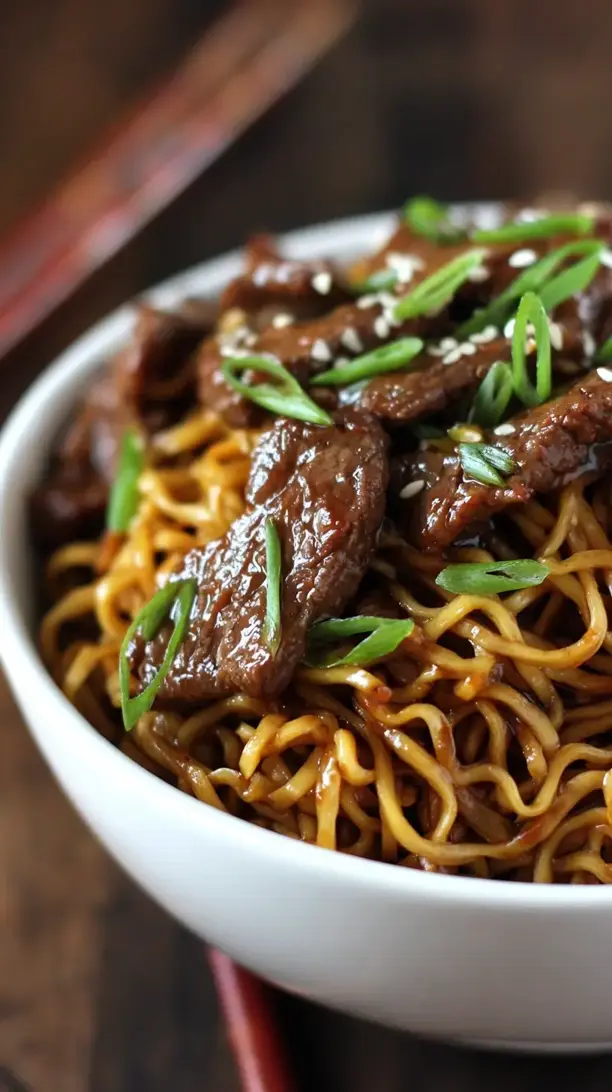
Asian Beef And Noodles
Make this easy Asian Beef and Noodles recipe in just 30 minutes! Tender beef, chewy noodles, and a glossy savory sauce. Get the simple recipe and cook tonight!
Ingredients
For the main ingredients:
-
450 g flank steak or sirloin (thinly sliced against the grain)
-
225 g dried lo mein noodles or udon noodles
-
3 tbsp soy sauce (or tamari for gluten-free)
-
2 tbsp oyster sauce
-
1 tbsp honey or brown sugar
-
1 tbsp rice vinegar
-
2 tsp sesame oil
-
4 cloves garlic (minced)
-
1 tbsp fresh ginger (grated)
-
2 spring onions (sliced (white and green parts separated))
-
1 tbsp vegetable oil (for cooking)
-
1 tsp cornstarch
-
2 tbsp water
-
toasted sesame seeds (extra spring onion greens, red chili flakes)
Instructions
-
Start by preparing your noodles according to the package directions. You’ll want to cook them until they’re just al dente—they’re going to spend a little more time in the wok later, so you don’t want them mushy. Once they’re cooked, drain them thoroughly and toss with just a tiny drizzle of sesame oil to prevent sticking. Set them aside while you work on the rest.01
-
While the noodles are cooking, let’s make the sauce. In a small bowl, whisk together the soy sauce, oyster sauce, honey (or brown sugar), rice vinegar, and that one teaspoon of sesame oil. The aroma at this stage is already incredible—savory, sweet, and tangy all at once. Now, in a separate tiny bowl, make your slurry by mixing the cornstarch with two tablespoons of water until it’s completely smooth with no lumps.02
-
Pat your thinly sliced beef completely dry with paper towels—this is crucial for getting a good sear instead of steaming the meat. Heat your large skillet or wok over high heat until it’s seriously hot. Add the vegetable oil and swirl it around. Working in two batches to avoid crowding the pan, add the beef slices in a single layer. Let them sear for about 60-90 seconds per side without moving them too much. You’re looking for a nice brown crust. Remove the beef to a clean plate; it will not be cooked through yet, and that’s perfectly fine.03
-
Reduce the heat to medium. In the same skillet, add the white parts of your spring onions, the minced garlic, and grated ginger. Stir-fry for just 30-60 seconds until incredibly fragrant—be careful not to burn the garlic, or it’ll turn bitter. You’ll notice the scent filling your kitchen… it’s the best part.04
-
Pour your prepared sauce into the skillet. It will sizzle and bubble up immediately. Let it simmer for about a minute, then give your cornstarch slurry another quick stir (it settles) and add it to the sauce. Stir continuously, and you’ll see the sauce thicken up beautifully and become glossy within a minute or so.05
-
Now, add the cooked noodles and the seared beef (along with any accumulated juices) back into the skillet. Using a pair of tongs, toss everything together vigorously, making sure every strand of noodle and every piece of beef is coated in that glorious sauce. Let it all heat through for another minute or two until the beef is cooked to your liking and the noodles have absorbed some of the flavor.06
-
Turn off the heat and stir in most of the green parts of your spring onions, reserving a few for garnish. Give everything one final toss. Your Asian Beef and Noodles are now ready to serve immediately while they’re hot and perfect.07
Not what you're looking for?