
This Asparagus and Gruyere Strata is the ultimate make-ahead brunch centerpiece. Layers of crusty bread soak in a savory custard with tender asparagus and nutty Gruyere cheese. It bakes up golden and puffed, perfect for a relaxed yet impressive meal.
Love Asparagus and Gruyere Strata? So do we! If you're into Savory Breakfast or curious about Breakfast & Brunch, you'll find plenty of inspiration below.


Why You’ll Love This Asparagus and Gruyere Strata
Make-ahead marvel: Assemble the night before, then just bake and serve.
Sublime flavor combo: Earthy asparagus pairs perfectly with rich, nutty Gruyere.
Versatile & forgiving: Use stale bread and customize add-ins easily.
Dreamy texture: Creamy interior with a golden-brown, crisp top.
Ingredients & Tools
- 1 lb asparagus, tough ends trimmed
- 8 cups day-old crusty bread, like a French baguette or sourdough, cut into 1-inch cubes
- 2 cups Gruyere cheese, grated (about 8 oz)
- 1 medium yellow onion, finely chopped
- 6 large eggs
- 2 cups whole milk
- 1 cup heavy cream
- 2 tbsp Dijon mustard
- 1 tsp kosher salt
- 1/2 tsp black pepper, freshly ground
- 1/4 tsp freshly grated nutmeg
- 2 tbsp unsalted butter
- 2 tbsp fresh chives, chopped (for garnish)
Tools: A 9×13-inch baking dish, a large skillet, a large mixing bowl, and a whisk.
Notes: Using day-old, sturdy bread is non-negotiable here—it soaks up the custard without turning to mush. And don’t be shy with the Gruyere; its distinct flavor is what makes this strata so memorable.
Nutrition (per serving)
| Calories: | 420 kcal |
| Protein: | 20 g |
| Fat: | 27 g |
| Carbs: | 24 g |
| Fiber: | 2 g |
Serves: 8 | Prep Time: 25 minutes | Cook Time: 50 minutes | Total Time: 1 hour 15 minutes (plus overnight resting)
Before You Start: Tips & Ingredient Notes
- What’s the best bread to use? A sturdy, crusty loaf like sourdough, ciabatta, or a French baguette is ideal. Its firm structure holds up to the custard soak much better than soft sandwich bread, which can become gummy.
- Can I use a different cheese? While Gruyere is classic, you can substitute with Swiss, Emmental, or even a sharp white cheddar. The goal is a cheese that melts well and has a pronounced flavor to stand up to the eggs and asparagus.
- Do I have to let it rest overnight? You don’t *have* to, but you really, really should. A minimum of 4 hours is essential, but overnight is best. This resting period allows the bread to fully absorb the custard, resulting in a uniformly creamy texture without any dry spots.
- How do I prepare the asparagus? Simply snap off the tough, woody ends—they’ll break naturally where the tender part begins. A quick blanch (a one-minute dip in boiling water) before chopping helps set its vibrant green color and makes it perfectly tender.
How to Make Asparagus and Gruyere Strata
Step 1: Start by prepping your vegetables. Bring a pot of salted water to a boil. While it heats, snap the tough ends off your asparagus. Blanch the asparagus spears in the boiling water for just 60 seconds, then immediately transfer them to a bowl of ice water to stop the cooking. This keeps them bright green and crisp-tender. Once cool, chop them into 1-inch pieces. In a large skillet, melt the butter over medium heat and sauté the chopped onion until it’s soft and translucent, about 5-7 minutes. You’ll notice a sweet aroma—that’s exactly what you’re looking for.
Step 2: Now, let’s build the custard. In your large mixing bowl, whisk the eggs vigorously until they are well beaten and uniform in color. Add the whole milk, heavy cream, Dijon mustard, salt, pepper, and that lovely pinch of nutmeg. Whisk it all together until the mixture is completely smooth and homogenous. The Dijon adds a subtle depth that cuts through the richness—you won’t taste it as mustard, just a wonderful savory note.
Step 3: It’s assembly time! Grease your 9×13-inch baking dish. Spread half of the bread cubes in an even layer on the bottom. Scatter half of the sautéed onions, half of the blanched asparagus, and half of the grated Gruyere cheese over the bread. Repeat the layers with the remaining bread, onions, asparagus, and cheese. You’re creating little pockets of flavor throughout the strata.
Step 4: Slowly and evenly pour the custard mixture over the entire layered bread and vegetable creation. You’ll want to make sure every bit of bread gets some love. Use a spatula to gently press down on the top layer, helping the bread submerge and start soaking up that delicious liquid. This is a key step for a perfectly creamy result.
Step 5: Cover the baking dish tightly with plastic wrap and refrigerate it for at least 4 hours, but ideally overnight. This is the magic step—the patience pays off. When you’re ready to bake, take the strata out of the fridge about 30 minutes before it goes in the oven to take the chill off.
Step 6: Preheat your oven to 350°F (175°C). Remove the plastic wrap and bake the strata, uncovered, for 45 to 55 minutes. You’re looking for a beautifully puffed, deep golden-brown top, and a center that is fully set (a knife inserted in the center should come out clean). Let it rest for about 10 minutes before slicing—this allows the structure to firm up just enough for perfect, neat slices. Garnish with those fresh chives for a pop of color and a mild oniony flavor.
Storage & Freshness Guide
- Fridge: Cool completely, cover tightly, and refrigerate for up to 3 days.
- Freezer: Slice, wrap individually, and freeze for up to 1 month.
- Reviving: Reheat covered in a 325°F oven until warmed through.
Serving Suggestions
Complementary Dishes
- A simple mixed greens salad with a lemony vinaigrette — The bright, acidic dressing cuts through the richness of the strata beautifully and adds a fresh, crisp element to your plate.
- Oven-roasted cherry tomatoes — Their burst-in-your-mouth sweetness and slight tang provide a wonderful flavor and textural contrast to the creamy, savory main dish.
- Crispy roasted potatoes or hash browns — For a truly decadent brunch spread, you can’t go wrong with more carbs. The crispy exterior and soft interior are a perfect match.
Drinks
- A dry sparkling wine or Prosecco — The bubbles and acidity are a classic brunch pairing that cleanses the palate between each rich, cheesy bite.
- A freshly squeezed grapefruit juice — Its bracing bitterness and citrus notes stand up to the strong flavors of Gruyere and egg in a really delightful way.
- A hot cup of strong English Breakfast tea — The bold, malty flavor of the tea complements the savory strata and just feels right for a leisurely weekend morning.
Something Sweet
- Fresh berry compote with a dollop of whipped cream — The sweet and tart berries provide the perfect finish after the savory main course, without being too heavy.
- Lemon poppy seed muffins — Their bright, citrusy flavor is a lovely, light counterpoint and they’re easy to pick up and enjoy with your fingers.
- Dark chocolate-covered strawberries — Elegant, simple, and a guaranteed crowd-pleaser. The combination of fruit and chocolate feels special without requiring any baking.
Top Mistakes to Avoid
- Using fresh, soft bread. This is the number one strata sin. Soft bread will disintegrate into a mushy, paste-like texture. Stale, crusty bread is your best friend here, as it soaks up the custard while maintaining its structure.
- Skipping the pressing step after pouring the custard. Gently pressing the top layer of bread ensures every cube gets saturated. If you skip this, you might end up with dry, crunchy bits in your final dish, which is not what we’re going for.
- Not letting it rest before baking. Rushing the soak time means the custard won’t penetrate the bread fully. The result is a strata with a wet, eggy bottom and a dry, bready top. Patience is truly a key ingredient.
- Overbaking. You want the center to be just set. An overbaked strata can become rubbery and dry. Start checking at the 45-minute mark—it should be puffed and golden, and a knife should come out clean.
Expert Tips
- Tip: Grate your own cheese. Pre-shredded bags contain anti-caking agents like potato starch, which can prevent your cheese from melting as smoothly and seamlessly. A block of Gruyere and a box grater will give you a far superior, silkier melt.
- Tip: Add a layer of flavor with fresh herbs. A tablespoon of fresh thyme or tarragon, mixed in with the layers, can add a wonderful aromatic depth. Tarragon, in particular, has a slight anise flavor that pairs wonderfully with eggs and asparagus.
- Tip: For a richer strata, swap some milk for more cream. If you’re feeling indulgent, you can use 1 cup of milk and 2 cups of cream. The texture becomes incredibly lush and almost decadent—perfect for a truly special occasion.
- Tip: Test for doneness with a thermometer. For absolute precision, the internal temperature of your strata should read 160°F (71°C) in the center. This takes the guesswork out and guarantees a perfectly cooked dish every single time.
FAQs
Can I make this Asparagus and Gruyere Strata completely ahead of time and just reheat it?
You absolutely can! The strata reheats remarkably well. Once baked and cooled, cover it tightly and refrigerate for up to 3 days. To reheat, cover with foil and warm in a 325°F (165°C) oven for 20-25 minutes, or until heated through. You can also reheat individual slices in the microwave for a quick breakfast, though the oven method will preserve the texture of the top crust better.
I don’t have a 9×13-inch dish. What else can I use?
No problem! A deep 10-inch cast-iron skillet or a 3-quart oval baking dish works beautifully. The key is that the vessel should hold about 3 quarts. If your dish is significantly smaller, the strata might overflow; if it’s larger, the layers will be too thin and it will bake faster and potentially dry out. Just keep an eye on the baking time if you have to make a substitution.
Can I add meat to this strata?
Of course! Cooked, crumbled breakfast sausage or diced ham are fantastic additions. Just make sure any meat you add is fully cooked and cooled before layering it in. About 1 to 1.5 cups of your chosen protein is a good amount—sprinkle it in with the vegetable layers. It makes the dish even heartier.
My strata is still liquid in the middle but the top is getting too brown. What do I do?
This is a common oven quirk! Simply tent the dish loosely with a piece of aluminum foil. This will shield the top from further browning while allowing the center to continue cooking through. Check it every 5-10 minutes until the center is set. It’s an easy fix for an uneven oven.
Can I freeze a baked strata?
You can, though the texture of the custard can become a little grainy upon thawing. For the best results, freeze individual slices. Let the baked strata cool completely, then slice and wrap each piece tightly in plastic wrap and then in foil. Thaw in the refrigerator overnight and reheat, covered, in a 325°F oven until warm all the way through. It won’t be *quite* as perfect as fresh, but it’s still a great freezer meal for a busy morning.



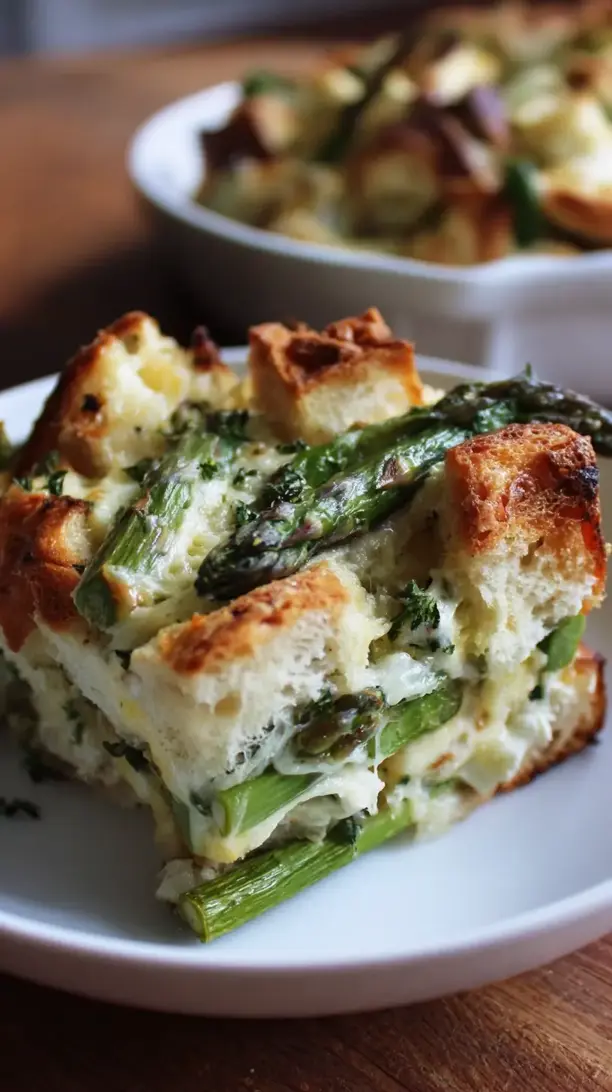
Asparagus And Gruyere Strata
Make this easy Asparagus and Gruyere Strata for a perfect make-ahead brunch. Layers of bread, asparagus, and cheese bake into a golden delight. Get the recipe now!
Ingredients
For the Strata
-
1 lb asparagus (tough ends trimmed)
-
8 cups day-old crusty bread (like a French baguette or sourdough, cut into 1-inch cubes)
-
2 cups Gruyere cheese (grated (about 8 oz))
-
1 medium yellow onion (finely chopped)
-
6 large eggs
-
2 cups whole milk
-
1 cup heavy cream
-
2 tbsp Dijon mustard
-
1 tsp kosher salt
-
1/2 tsp black pepper (freshly ground)
-
1/4 tsp freshly grated nutmeg
-
2 tbsp unsalted butter
-
2 tbsp fresh chives (chopped (for garnish))
Instructions
-
Start by prepping your vegetables. Bring a pot of salted water to a boil. While it heats, snap the tough ends off your asparagus. Blanch the asparagus spears in the boiling water for just 60 seconds, then immediately transfer them to a bowl of ice water to stop the cooking. This keeps them bright green and crisp-tender. Once cool, chop them into 1-inch pieces. In a large skillet, melt the butter over medium heat and sauté the chopped onion until it’s soft and translucent, about 5-7 minutes. You’ll notice a sweet aroma—that’s exactly what you’re looking for.01
-
Now, let's build the custard. In your large mixing bowl, whisk the eggs vigorously until they are well beaten and uniform in color. Add the whole milk, heavy cream, Dijon mustard, salt, pepper, and that lovely pinch of nutmeg. Whisk it all together until the mixture is completely smooth and homogenous. The Dijon adds a subtle depth that cuts through the richness—you won't taste it as mustard, just a wonderful savory note.02
-
It’s assembly time! Grease your 9x13-inch baking dish. Spread half of the bread cubes in an even layer on the bottom. Scatter half of the sautéed onions, half of the blanched asparagus, and half of the grated Gruyere cheese over the bread. Repeat the layers with the remaining bread, onions, asparagus, and cheese. You’re creating little pockets of flavor throughout the strata.03
-
Slowly and evenly pour the custard mixture over the entire layered bread and vegetable creation. You’ll want to make sure every bit of bread gets some love. Use a spatula to gently press down on the top layer, helping the bread submerge and start soaking up that delicious liquid. This is a key step for a perfectly creamy result.04
-
Cover the baking dish tightly with plastic wrap and refrigerate it for at least 4 hours, but ideally overnight. This is the magic step—the patience pays off. When you’re ready to bake, take the strata out of the fridge about 30 minutes before it goes in the oven to take the chill off.05
-
Preheat your oven to 350°F (175°C). Remove the plastic wrap and bake the strata, uncovered, for 45 to 55 minutes. You’re looking for a beautifully puffed, deep golden-brown top, and a center that is fully set (a knife inserted in the center should come out clean). Let it rest for about 10 minutes before slicing—this allows the structure to firm up just enough for perfect, neat slices. Garnish with those fresh chives for a pop of color and a mild oniony flavor.06
Not what you're looking for?


