
This Baked Haddock recipe delivers a quick, elegant, and satisfying low-carb dinner. The mild, flaky fish pairs beautifully with a simple herby butter topping and fresh lemon. You’ll love the comforting aroma and restaurant-quality result with minimal effort.
Looking for Baked Haddock inspiration? You'll love what we have! Explore more Dinner Ideas recipes or discover our Dessert Recipes favorites.



Why You’ll Love This Baked Haddock
Effortless Elegance: Looks sophisticated but is wonderfully straightforward.
Flaky & Moist: Gentle baking ensures tender, juicy bites every time.
Endlessly Adaptable: Easily tweak the herb blend or topping.
Light Yet Satisfying: Rich, buttery notes with bright, vibrant lemon.
Ingredients & Tools
- 4 (150 g each) haddock fillets, skinless
- 3 tbsp unsalted butter, melted
- 2 tbsp fresh parsley, finely chopped
- 1 tbsp fresh dill, finely chopped
- 1 large lemon (you’ll use juice and zest)
- 2 cloves garlic, minced
- 1/4 tsp paprika (smoked or sweet)
- Salt and black pepper to taste
- Optional: 2 tbsp grated Parmesan cheese or 1 tbsp capers, rinsed
Tools: A baking sheet, parchment paper or a light greasing of oil, a small bowl, a microplane or zester, and a pastry brush is helpful but not essential.
Notes: Using fresh herbs and real lemon zest makes a big difference. Don’t skip the paprika—it adds golden color and warm depth.
Nutrition (per serving)
| Calories: | 215 kcal |
| Protein: | 28 g |
| Fat: | 10 g |
| Carbs: | 2 g |
| Fiber: | 0.5 g |
Serves: 4 | Prep Time: 10 minutes | Cook Time: 15 minutes | Total Time: 25 minutes
Before You Start: Tips & Ingredient Notes
- Check for Pin Bones. Even skinless fillets can sometimes have a few tiny pin bones left. Just run your fingers lightly over the surface—if you feel any, use clean tweezers or pliers to pull them straight out.
- Pat Your Fish Dry. This is a non-negotiable step for a beautifully seared-looking top and to prevent a watery bake. Use paper towels and gently press down on both sides of the fillets.
- Fresh vs. Dried Herbs. I really recommend fresh herbs for this recipe as their flavor is much more vibrant. If you must use dried, use one-third the amount, but know the final dish will have a different, more muted character.
- Zest Your Lemon First. It’s infinitely easier to zest a whole, un-juiced lemon. Do this before you cut it in half to squeeze for the juice—you’ll thank me later.
How to Make Baked Haddock
Step 1: Preheat your oven to 400°F (200°C). This is the perfect temperature for cooking fish—hot enough to cook it quickly and give the topping some color, but not so hot that it dries out. While it heats up, line a rimmed baking sheet with parchment paper. This isn’t just for easy cleanup; it also helps prevent the delicate fish from sticking and breaking apart when you try to serve it.
Step 2: Prepare the herby butter sauce. In a small bowl, combine the melted butter, minced garlic, chopped parsley, chopped dill, the zest from half the lemon, paprika, and a good pinch of salt and pepper. Stir it all together until it’s a fragrant, unified mixture. You’ll notice the aroma is just incredible—savory, buttery, and fresh all at once.
Step 3: Prepare the haddock fillets. Place them on the prepared baking sheet and pat them very dry with paper towels. This is the secret to a good texture. Season both sides lightly with a little more salt and pepper. This base layer of seasoning ensures every bite is perfectly seasoned, not just the top.
Step 4: Apply the butter topping. Using a pastry brush or just a spoon, generously coat the top of each haddock fillet with the herby butter mixture. Make sure to get an even layer, scooping up any garlic and herbs that sink to the bottom of the bowl. You want all that flavor right on the fish.
Step 5: Bake to perfection. Place the baking sheet in the preheated oven and bake for 12-15 minutes. The exact time will depend on the thickness of your fillets. You’re looking for the fish to be completely opaque all the way through and to flake easily with a fork. The topping should be bubbling slightly and look golden.
Step 6: The final touch. As soon as you take the baking sheet out of the oven, squeeze the juice from half of your zested lemon over the top of all the fillets. This last-minute hit of fresh acidity brightens the entire dish and makes the flavors pop. Let it rest for just a minute or two before serving—this allows the juices to redistribute.
Storage & Freshness Guide
- Fridge: Cool completely, store in an airtight container for up to 2 days.
- Freezer: Wrap tightly or freeze in a single layer, then transfer to a bag; best within 1 month.
- Reviving: Reheat gently in a 300°F oven until warm; avoid microwaving to prevent sogginess.
Serving Suggestions
Complementary Dishes
- Garlic Sautéed Spinach — The slight bitterness of the greens is a perfect counterpoint to the rich, buttery fish, and it cooks in minutes.
- Lemon Herb Cauliflower Rice — It echoes the flavors in the haddock and soaks up any extra buttery sauce beautifully on the plate.
- Simple Arugula Salad — A pile of peppery arugula with a light vinaigrette adds a fresh, crisp element that cuts through the richness.
Drinks
- A Crisp Sauvignon Blanc — Its citrusy notes are a classic pairing with white fish and will complement the lemon in the dish perfectly.
- Sparkling Water with Cucumber — For a non-alcoholic option, this provides a clean, refreshing palate cleanser between bites.
Something Sweet
- Mixed Berry Compote — A warm, slightly sweet compote over a dollop of Greek yogurt feels light but satisfyingly dessert-like.
Top Mistakes to Avoid
- Overcooking the Fish. Haddock goes from perfectly moist to dry and tough in a matter of minutes. It continues to cook a bit after it comes out of the oven, so err on the side of slightly underdone. I’ve messed this up before too, and it’s a sad dinner.
- Skipping the Drying Step. If the fillets are wet, they’ll steam rather than bake properly, and the delicious butter topping can slide right off. A dry surface is key for adhesion and texture.
- Using Cold Butter. Your melted butter needs to be liquid to properly combine with the herbs and coat the fish. If it’s solid, you’ll get clumps and an uneven distribution of flavor.
- Crowding the Pan. Give the fillets some space on the baking sheet. If they’re too close together, they’ll steam each other and you’ll lose that lovely, slightly roasted edge.
Expert Tips
- Tip: For an extra-crispy, golden top, switch your oven to broil for the last 1-2 minutes of cooking. Watch it like a hawk, though—it can burn in a flash. This gives you a fantastic textural contrast.
- Tip: If your haddock fillets are dramatically different thicknesses, you can fold the thinner ends under slightly to create a more uniform shape. This helps everything cook at the same rate.
- Tip: Don’t waste the other half of the lemon! Serve it at the table cut into wedges so everyone can add an extra squeeze to their own portion if they like. Fresh lemon juice is a game-changer.
- Tip: To make this a complete sheet-pan meal, add asparagus spears or cherry tomatoes to the baking sheet around the fish. They’ll roast in the buttery drippings and be absolutely delicious.
FAQs
Can I use frozen haddock for this recipe?
Absolutely, yes. The key is to thaw it completely and safely first. The best way is to move it from the freezer to the refrigerator the night before. Once it’s thawed, pat it extremely dry with paper towels, as frozen fish tends to release more moisture. You might need to add an extra minute or two to the baking time if it’s still a bit chilly in the center.
What can I use instead of haddock?
This method works beautifully with any similar mild, flaky white fish. Cod is the most direct substitute and behaves almost identically. You could also use pollock, hake, or even tilapia, though cooking times may vary slightly depending on the thickness of the fillets you choose.
How can I tell when the haddock is perfectly cooked?
The most reliable method is the “flake test.” Gently press the tines of a fork into the thickest part of the fillet and twist slightly. The fish should separate easily into clean, opaque flakes. It should also feel firm to the touch, not soft or jelly-like. If you see any translucent, raw-looking areas, it needs more time.
Can I prepare the butter topping ahead of time?
You can mix the melted butter, herbs, garlic, and spices a few hours in advance and keep it covered at room temperature. I wouldn’t recommend doing it much further ahead than that, as the garlic flavor can become too sharp and the herbs might wilt excessively.
My topping sank into the fish and looks pale. What happened?
This usually points to one of two things: the fish wasn’t patted dry enough (a wet surface breaks down the butter), or your oven temperature was a bit low. A properly hot oven will set the topping quickly, creating a lovely golden layer on top of the fish rather than letting it soak in.



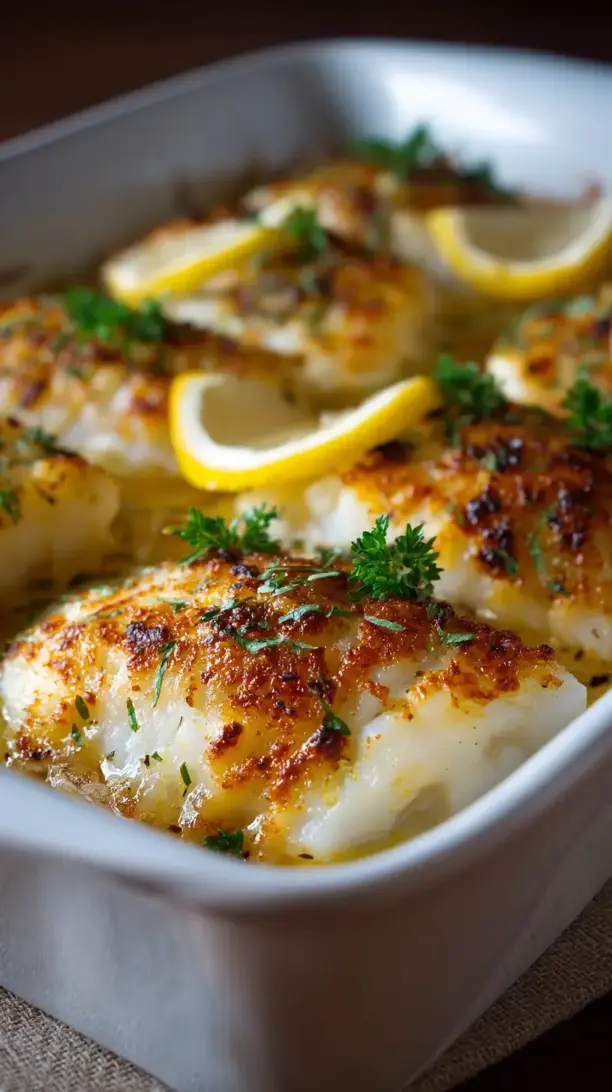
Baked Haddock
Make perfect Baked Haddock with this easy recipe! Flaky fish with herby butter topping cooks in 15 minutes. Get the foolproof method for a healthy, elegant dinner tonight!
Ingredients
For the Ingredients
-
4 haddock fillets (150 g each, skinless)
-
3 tbsp unsalted butter (melted)
-
2 tbsp fresh parsley (finely chopped)
-
1 tbsp fresh dill (finely chopped)
-
1 large lemon (you'll use juice and zest)
-
2 cloves garlic (minced)
-
1/4 tsp paprika (smoked or sweet)
-
Salt and black pepper (to taste)
-
2 tbsp grated Parmesan cheese (Optional)
-
1 tbsp capers (rinsed, Optional)
Instructions
-
Preheat your oven to 400°F (200°C). While it heats up, line a rimmed baking sheet with parchment paper.01
-
Prepare the herby butter sauce. In a small bowl, combine the melted butter, minced garlic, chopped parsley, chopped dill, the zest from half the lemon, paprika, and a good pinch of salt and pepper. Stir it all together until it’s a fragrant, unified mixture.02
-
Prepare the haddock fillets. Place them on the prepared baking sheet and pat them very dry with paper towels. Season both sides lightly with a little more salt and pepper.03
-
Apply the butter topping. Using a pastry brush or just a spoon, generously coat the top of each haddock fillet with the herby butter mixture. Make sure to get an even layer, scooping up any garlic and herbs that sink to the bottom of the bowl.04
-
Bake to perfection. Place the baking sheet in the preheated oven and bake for 12-15 minutes. The exact time will depend on the thickness of your fillets. You’re looking for the fish to be completely opaque all the way through and to flake easily with a fork. The topping should be bubbling slightly and look golden.05
-
The final touch. As soon as you take the baking sheet out of the oven, squeeze the juice from half of your zested lemon over the top of all the fillets. Let it rest for just a minute or two before serving—this allows the juices to redistribute.06
Not what you're looking for?