This Baked Honey Mustard Salmon recipe is both elegant and incredibly easy. The sweet-and-savory glaze caramelizes beautifully, creating a gorgeous crust that seals in moisture. It’s a foolproof dish that comes together quickly with simple pantry ingredients.
If you're looking for the perfect Baked Honey Mustard Salmon, you're in the right place. Whether you love Dinner Ideas or want to explore our Chicken collection, we've got you covered.


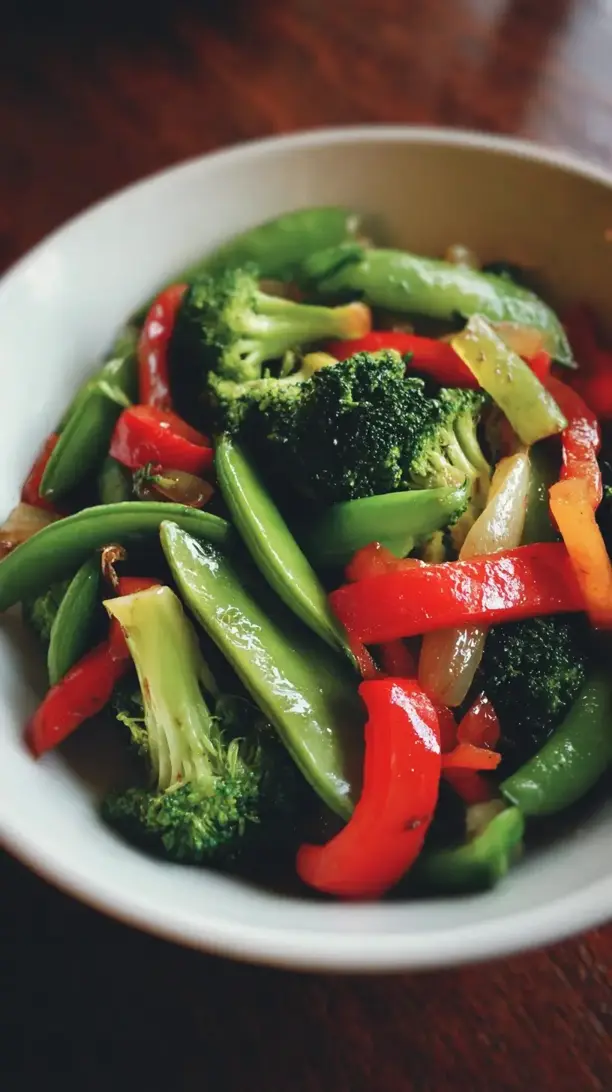
Why You’ll Love This Baked Honey Mustard Salmon
- Quick & Easy: Ready in about 20 minutes with minimal hands-on work.
- Perfect Flavor Balance: Sweet honey and tangy mustard create a complex, crowd-pleasing taste.
- Healthy & Nourishing: Packed with omega-3s and protein for a feel-good meal.
- Versatile Serving: Pairs beautifully with salads, grains, or roasted veggies.
Ingredients & Tools
- 4 salmon fillets (about 150-180 g each), skin-on or skinless
- 3 tablespoons honey
- 2 tablespoons Dijon mustard
- 1 tablespoon whole grain mustard
- 2 cloves garlic, minced
- 1 tablespoon olive oil
- 1 tablespoon fresh lemon juice
- 1/2 teaspoon smoked paprika
- 1/4 teaspoon black pepper
- 1/4 teaspoon salt (or to taste)
- 1 tablespoon fresh parsley, chopped (for garnish)
- Lemon wedges for serving
Tools: A small bowl for mixing, a baking sheet, parchment paper or aluminum foil, and a pastry brush (helpful but not essential).
Notes: Using both Dijon and whole grain mustard gives the sauce wonderful depth and texture. Don’t skip the fresh lemon juice—it brightens the entire dish.
Nutrition (per serving)
| Calories: | 320 kcal |
| Protein: | 35 g |
| Fat: | 15 g |
| Carbs: | 14 g |
| Fiber: | 1 g |
Serves: 4 | Prep Time: 10 minutes | Cook Time: 12-15 minutes | Total Time: 25 minutes
Before You Start: Tips & Ingredient Notes
- What’s the best salmon to use? I recommend skin-on fillets for this recipe, as the skin helps protect the delicate flesh from drying out and gets wonderfully crispy. However, skinless works perfectly fine too—just keep a very close eye on the cooking time.
- Can I use only one type of mustard? You can, but the two-mustard combo is what makes this sauce special. If you must use just one, go with Dijon for its consistent, sharp flavor. If you only have yellow mustard, just know the flavor profile will be quite different—a little more acidic and less complex.
- Is the garlic absolutely necessary? Honestly, yes. The minced garlic melds into the sweet glaze and creates a savory backbone that keeps the dish from being cloying. If you’re in a real pinch, a quarter teaspoon of garlic powder can stand in, but fresh is best.
- How do I know when the salmon is done? The trick is to look for an internal temperature of 125°F (52°C) for medium-rare or 135°F (57°C) for medium, measured at the thickest part. It will also flake easily with a fork. Remember, it continues to cook a bit after you take it out of the oven!
How to Make Baked Honey Mustard Salmon
Step 1: Preheat your oven to 400°F (200°C). This is the perfect temperature for getting a nicely caramelized glaze without burning the sugars in the honey. While the oven is heating up, line a baking sheet with parchment paper or a small piece of foil—this makes cleanup an absolute dream and prevents the glaze from sticking and creating a mess.
Step 2: Pat the salmon fillets completely dry with paper towels. This is a small but crucial step! A dry surface helps the glaze stick to the fish rather than sliding off, and it also promotes better browning. Place the dried fillets on your prepared baking sheet, spacing them out evenly so the heat can circulate around each piece.
Step 3: Now, let’s make that glorious glaze. In your small bowl, combine the honey, Dijon mustard, whole grain mustard, minced garlic, olive oil, lemon juice, smoked paprika, salt, and pepper. Whisk it all together until it’s smooth and well-combined. You’ll notice the color is a rich, golden brown and the texture is beautifully thick and glossy.
Step 4: Using a pastry brush or the back of a spoon, generously coat the top and sides of each salmon fillet with the honey mustard mixture. Be sure to reserve about a third of the glaze—we’ll use this for a final brush right after baking to add an extra layer of fresh, vibrant flavor. Don’t drown the fish, just a nice, even layer will do.
Step 5: Place the baking sheet in the preheated oven and bake for 12 to 15 minutes. The exact time will depend on the thickness of your fillets. You’re looking for the salmon to be opaque and flake easily when pressed gently with a fork. The glaze should be bubbling and have darkened slightly around the edges—that’s the caramelization we love.
Step 6: Carefully remove the baking sheet from the oven. Immediately brush the reserved fresh glaze over the hot salmon. This last-minute addition makes a world of difference, adding a punch of bright, uncooked mustard and honey flavor that hasn’t been mellowed by the heat. Garnish with the chopped fresh parsley and serve immediately with lemon wedges on the side for squeezing over the top.
Storage & Freshness Guide
- Fridge: Store leftovers in an airtight container for up to 2 days.
- Freezer: Not recommended, as the texture of the cooked salmon and glaze may suffer.
- Reviving: Reheat gently in a 275°F (135°C) oven or covered skillet with a splash of water.
Serving Suggestions
Complementary Dishes
- Garlic Herb Roasted Asparagus — The earthy, savory notes of roasted asparagus are a classic and perfect partner for the sweet and tangy salmon.
- Lemon Parmesan Quinoa — This light and fluffy grain soaks up any extra glaze on your plate and adds a lovely, cheesy, citrusy element.
- Simple Arugula Salad — A bed of peppery arugula with a light vinaigrette provides a fresh, crisp contrast to the rich, flaky fish.
Drinks
- A Crisp Sauvignon Blanc — The wine’s citrusy and herbal notes cut through the richness of the salmon and complement the mustard beautifully.
- Sparkling Water with Lemon — For a non-alcoholic option, the bubbles and citrus are incredibly refreshing and help cleanse the palate between bites.
- A Light Pale Ale — The slight bitterness and carbonation of a pale ale can stand up to the strong flavors without overwhelming the delicate fish.
Something Sweet
- Lemon Sorbet — Its sharp, clean citrus flavor is the perfect palate-cleanser after a rich meal and continues the lemon theme from the main course.
- Almond Shortbread Cookies — These buttery, nutty cookies are a simple, not-too-sweet treat that feels elegant and satisfying.
- Fresh Berry Parfait — Layers of yogurt, honey, and fresh mixed berries feel light and healthy, rounding out the meal on a bright note.
Top Mistakes to Avoid
- Mistake: Using a dark baking sheet without parchment. Dark pans conduct heat more aggressively and can cause the sugary glaze to burn on the bottom before the salmon is cooked through. The parchment creates a protective, non-stick barrier.
- Mistake: Skipping the step of patting the salmon dry. A wet surface will steam the fish rather than letting it roast, and the glaze will slide right off. You’ll miss out on that beautiful caramelized crust.
- Mistake: Baking at too low a temperature. A low-and-slow approach is great for some things, but here you need a hot oven to quickly cook the salmon and caramelize the honey without drying it out. I’ve messed this up before too, and you end up with steamed, pale fish.
- Mistake: Overbaking the salmon. Salmon continues to cook from residual heat after it leaves the oven (carryover cooking). If you bake it until it’s perfectly flaky in the oven, it will be overdone by the time it gets to the table. Pull it out when it’s *almost* done.
Expert Tips
- Tip: Bring the salmon to room temperature. If you have 15-20 extra minutes, let the salmon sit out on the counter before baking. This helps it cook more evenly, preventing a overcooked outside and a cold, undercooked center.
- Tip: Make extra glaze. The honey mustard mixture is so good you’ll want to have extra on hand. Double the batch and keep half in a jar in the fridge—it’s amazing on chicken, as a sandwich spread, or as a dipping sauce for roasted potatoes.
- Tip: Use the broiler for a final crisp. For an extra-restaurant-quality finish, switch your oven to broil for the last 1-2 minutes of cooking. Watch it like a hawk! This will blister and darken the glaze, giving it an incredible texture.
- Tip: Add a pinch of chili flakes. If you like a little heat, a pinch of red chili flakes in the glaze adds a wonderful, subtle warmth that plays so well with the sweetness of the honey.
FAQs
Can I make this Baked Honey Mustard Salmon ahead of time?
You can prepare the glaze up to 3 days in advance and store it in an airtight container in the fridge. I don’t recommend glazing the salmon and letting it sit for more than 30 minutes before baking, as the salt and acid in the glaze can start to “cook” the surface of the fish (a process called denaturing), resulting in a weird, grainy texture. Your best bet is to have everything prepped and ready to assemble right before baking.
What’s the best way to store and reheat leftovers?
Store any leftover salmon in an airtight container in the refrigerator for up to 2 days. The best way to reheat it is gently, either in a 275°F (135°C) oven for about 10-15 minutes until warmed through, or in a covered skillet with a tiny splash of water over low heat. Avoid the microwave if you can—it will make the fish rubbery and overcooked very quickly.
My glaze is too runny. How can I thicken it?
If your glaze seems a bit thin, don’t worry! You can thicken it by simmering it gently in a small saucepan for 2-3 minutes, which will cook off some of the liquid. Alternatively, a tiny pinch of cornstarch (about 1/4 teaspoon) mixed with a teaspoon of cold water and then whisked into the glaze before you simmer it will do the trick beautifully.
Can I use frozen salmon for this recipe?
Absolutely, but it’s crucial to thaw it completely first. The best way is to move it from the freezer to the fridge the night before. If you’re in a hurry, seal it in a plastic bag and submerge it in cold water, changing the water every 30 minutes. Cooking frozen salmon will release a lot of water, which will prevent the glaze from sticking and make the fish steam instead of roast.
Is there a good substitute for honey?
Yes! Maple syrup is a fantastic one-to-one substitute and will give you a deeper, earthier sweetness. Agave nectar also works well. If you’re avoiding refined sugars altogether, a sugar-free maple-flavored syrup can work in a pinch, though the final flavor and caramelization will be less pronounced.


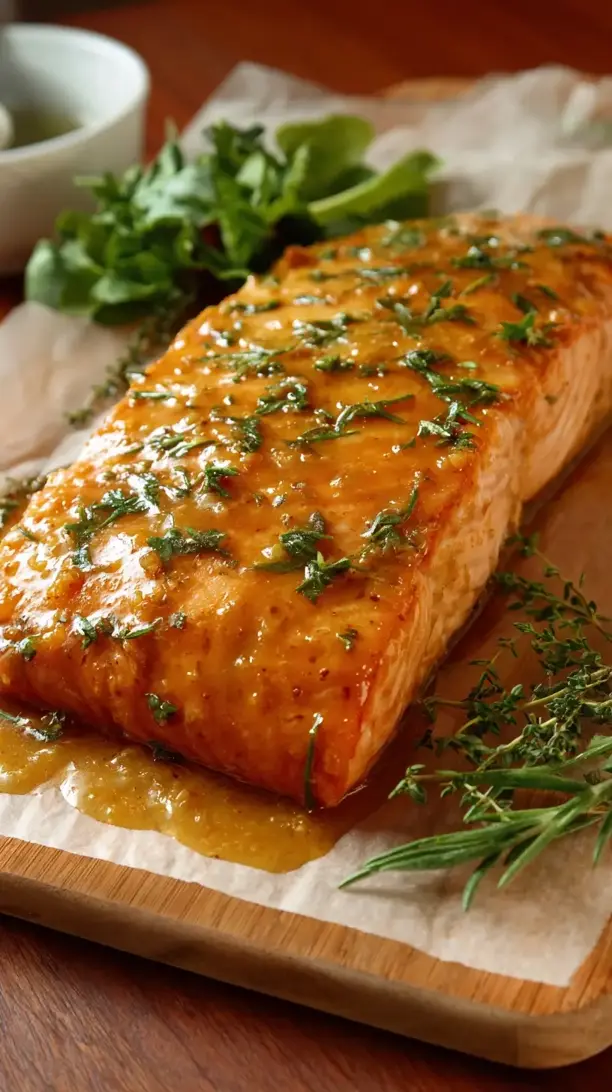
Baked Honey Mustard Salmon
Make perfect Baked Honey Mustard Salmon in 20 minutes! This easy, healthy recipe features a sweet & tangy glaze. Get the foolproof method and serve tonight!
Ingredients
For the salmon and glaze:
-
4 salmon fillets (about 150-180 g each, skin-on or skinless)
-
3 tablespoons honey
-
2 tablespoons Dijon mustard
-
1 tablespoon whole grain mustard
-
2 cloves garlic (minced)
-
1 tablespoon olive oil
-
1 tablespoon fresh lemon juice
-
1/2 teaspoon smoked paprika
-
1/4 teaspoon black pepper
-
1/4 teaspoon salt (or to taste)
-
1 tablespoon fresh parsley (chopped (for garnish))
-
1 Lemon wedges (for serving)
Instructions
-
Preheat your oven to 400°F (200°C). While the oven is heating up, line a baking sheet with parchment paper or a small piece of foil.01
-
Pat the salmon fillets completely dry with paper towels. Place the dried fillets on your prepared baking sheet, spacing them out evenly.02
-
In your small bowl, combine the honey, Dijon mustard, whole grain mustard, minced garlic, olive oil, lemon juice, smoked paprika, salt, and pepper. Whisk it all together until it’s smooth and well-combined.03
-
Using a pastry brush or the back of a spoon, generously coat the top and sides of each salmon fillet with the honey mustard mixture. Be sure to reserve about a third of the glaze.04
-
Place the baking sheet in the preheated oven and bake for 12 to 15 minutes. You’re looking for the salmon to be opaque and flake easily when pressed gently with a fork. The glaze should be bubbling and have darkened slightly around the edges.05
-
Carefully remove the baking sheet from the oven. Immediately brush the reserved fresh glaze over the hot salmon. Garnish with the chopped fresh parsley and serve immediately with lemon wedges on the side for squeezing over the top.06
Not what you're looking for?