Baked salmon is a weeknight hero—fancy enough for guests but simple enough for any busy evening. This method delivers moist, flaky fillets with a caramelized exterior and minimal effort. Trust the process for perfect baked salmon every time.
Love Baked Salmon? So do we! If you're into Dinner Ideas or curious about Appetizer Recipes, you'll find plenty of inspiration below.



Why You’ll Love This Baked Salmon
- Forgiving method: Gentle baking offers a wider window for perfection.
- Endless flavors: Easily swap herbs, spices, or marinades to customize.
- Crowd-pleasing: Light yet satisfying, loved by adults and kids alike.
- Quick & easy: Ready in under 20 minutes with minimal prep.
Ingredients & Tools
- 4 salmon fillets (about 150-180 g each), skin-on or skinless
- 2 tbsp olive oil
- 1 tsp kosher salt
- 1/2 tsp freshly ground black pepper
- 2 lemons (one for juice, one for slices)
- 3 garlic cloves, minced
- 1 tbsp fresh dill, chopped (or 1 tsp dried)
- 1 tsp smoked paprika (optional, for a hint of warmth)
Tools: A rimmed baking sheet, parchment paper or aluminum foil, a small bowl, a pastry brush (optional but helpful)
Notes: Good-quality salmon makes a difference—look for bright color and fresh, ocean-like smell. Olive oil helps seasoning stick and promotes a lightly crisped top.
Nutrition (per serving)
| Calories: | 280 kcal |
| Protein: | 35 g |
| Fat: | 14 g |
| Carbs: | 2 g |
| Fiber: | 0.5 g |
Serves: 4 | Prep Time: 5 minutes | Cook Time: 12-15 minutes | Total Time: 20 minutes
Before You Start: Tips & Ingredient Notes
- What type of salmon should I use? I prefer Atlantic or King salmon for their rich fat content and flaky texture, but really, any variety will work. If using frozen, thaw it completely in the refrigerator overnight—this prevents excess moisture from steaming the fish instead of baking it.
- Should I keep the skin on? I recommend it, even if you don’t plan to eat it. The skin acts as a protective layer, keeping the bottom of the fillet incredibly moist. It’s also much easier to remove after cooking if you choose to.
- Is it okay to use dried herbs instead of fresh? Absolutely. Dried dill or parsley works just fine, though the flavor will be a bit more muted. If you’re using dried, just rub it between your palms first to wake up the oils before adding it to the mix.
- Why bring the salmon to room temperature? Letting the fillets sit out for about 15 minutes before baking helps them cook more evenly. You’ll avoid that dreaded cold center while the edges are already done.
How to Make Baked Salmon
Step 1: Start by preheating your oven to 400°F (200°C). This is the sweet spot for salmon—hot enough to cook it quickly and give it a nice exterior, but not so hot that it seizes up. Line a rimmed baking sheet with parchment paper or foil for the world’s easiest cleanup. Pat your salmon fillets completely dry with paper towels. This is a non-negotiable step; any surface moisture will steam the fish and prevent that lovely, slightly caramelized top we’re after.
Step 2: In a small bowl, combine the olive oil, minced garlic, salt, pepper, and your chosen herbs and spices. If you’re using the smoked paprika, add it now. The mixture should be fragrant and paste-like. Using a pastry brush or the back of a spoon, generously coat the top and sides of each salmon fillet with this mixture. Don’t be shy—this is where all the flavor comes from. You’ll notice the oil will make the seasonings cling perfectly to the fish.
Step 3: Thinly slice one of the lemons and arrange the slices on the prepared baking sheet. Place the seasoned salmon fillets directly on top of the lemon slices. This isn’t just for presentation—the lemon lifts the fish slightly, allowing hot air to circulate underneath for more even cooking, and it infuses a subtle citrus aroma from the bottom up.
Step 4: Place the baking sheet in the preheated oven. Now, the most important part: do not open the oven door! Trust the process. Bake for 12-15 minutes. The exact time will depend on the thickness of your fillets. A good rule of thumb is about 4-5 minutes per ½ inch of thickness. The salmon is done when it flakes easily with a fork but is still slightly translucent in the very center—it will continue to cook from residual heat after you pull it out.
Step 5: Carefully remove the baking sheet from the oven. Squeeze the juice from the remaining lemon over the top of the hot fillets. The fresh acid will brighten all the flavors and make the entire dish pop. Let the salmon rest for 2-3 minutes on the baking sheet before serving. This allows the juices to redistribute, ensuring every single bite is moist and flavorful.
Storage & Freshness Guide
- Fridge: Store cooled leftovers in an airtight container for up to 2 days.
- Freezer: Not recommended—texture becomes watery upon thawing.
- Reviving: Reheat gently in a 275°F oven with a splash of water, covered, for 15 minutes.
Serving Suggestions
Complementary Dishes
- Garlic Mashed Potatoes — The creamy, rich potatoes are a dreamy contrast to the flaky, lean fish.
- Roasted Asparagus — It cooks at the same temperature as the salmon, making it the perfect, easy side.
- Quinoa Pilaf — A light, nutty base that soaks up any delicious juices from the salmon.
Drinks
- A Crisp Sauvignon Blanc — Its citrusy notes mirror the lemon in the dish and cut through the richness beautifully.
- Sparkling Water with Cucumber — A refreshing, non-alcoholic option that cleanses the palate between bites.
- Light-bodied Pinot Noir — A red that’s bold enough to stand up to the fish but won’t overpower its delicate flavor.
Something Sweet
- Lemon Sorbet — A bright, palate-cleansing dessert that continues the citrus theme in a refreshing way.
- Almond Tuiles — Their delicate, nutty crunch is a lovely, light finish to the meal.
- Fresh Berry Parfait — Layers of yogurt and berries feel indulgent but won’t leave you feeling too heavy.
Top Mistakes to Avoid
- Mistake: Not patting the salmon dry. Any moisture left on the surface will create steam in the oven, which prevents browning and can make the texture a bit mushy instead of firm and flaky.
- Mistake: Overcooking. This is the most common error. Salmon cooks quickly and continues to cook after it’s out of the oven. Pull it out when it’s still slightly underdone in the very center for a perfectly moist result.
- Mistake: Skipping the rest time. I know it’s tempting to dig right in, but letting the salmon rest for a few minutes allows the protein fibers to relax and reabsorb their juices. If you cut into it immediately, those precious juices will just run out onto the plate.
- Mistake: Using a cold baking sheet. Always preheat your oven fully before putting the salmon in. A hot oven from the start is crucial for that initial burst of heat that seals in flavor.
Expert Tips
- Tip: Use a thermometer for perfection. For foolproof results, insert an instant-read thermometer into the thickest part of a fillet. You’re aiming for 125-130°F (52-54°C) for medium-rare, or 135-140°F (57-60°C) for medium. This takes all the guesswork out.
- Tip: Create a flavor pocket. If your fillets are thick, make a few shallow slashes on the top side before seasoning. This lets the garlic and herb mixture penetrate deeper into the fish.
- Tip: Broil for the last minute. If you love a more caramelized, restaurant-style top, switch your oven to broil for the final 60-90 seconds. Watch it closely though—it can go from golden to burnt in a flash!
- Tip: Make cleanup even easier. If you line your baking sheet with foil first, then parchment on top, you get the non-stick benefits of parchment without any potential drips sticking to the pan.
FAQs
Can I prepare the salmon ahead of time?
You can season the salmon up to 30 minutes before baking and keep it covered in the refrigerator. I wouldn’t go much longer than that, as the salt will start to draw out moisture and “cook” the fish (a process called denaturing), which can affect the final texture. For the best results, season it just before it goes into the oven.
How do I know when the salmon is done without a thermometer?
The most reliable visual cue is the texture. Gently press the top of the fillet with a fork or your finger. It should feel firm but still have a little give, and it will flake apart easily. You can also peek at the thickest part—the flesh should be opaque and only slightly translucent in the very center. Remember, it keeps cooking after it comes out!
Why did my salmon release a white substance?
Don’t worry, that white stuff is completely harmless! It’s a protein called albumin that coagulates and is pushed out of the muscle fibers as the fish cooks. It’s more prominent when the salmon is overcooked or cooked at a very high temperature. Using our gentler baking method and not overcooking will minimize its appearance.
Can I use this method for a whole side of salmon?
Absolutely. A whole side will just need a slightly longer bake time. Keep the oven temperature the same and start checking for doneness around the 18-20 minute mark. Use the same flakiness and temperature tests to determine when it’s perfectly cooked.
What’s the best way to store and reheat leftovers?
Store cooled leftovers in an airtight container in the fridge for up to 2 days. To reheat, place it in a baking dish with a splash of water or broth, cover with foil, and warm it in a 275°F (135°C) oven for about 15 minutes. This gentle method helps prevent it from drying out. You can also flake it cold over a salad—it’s delicious!


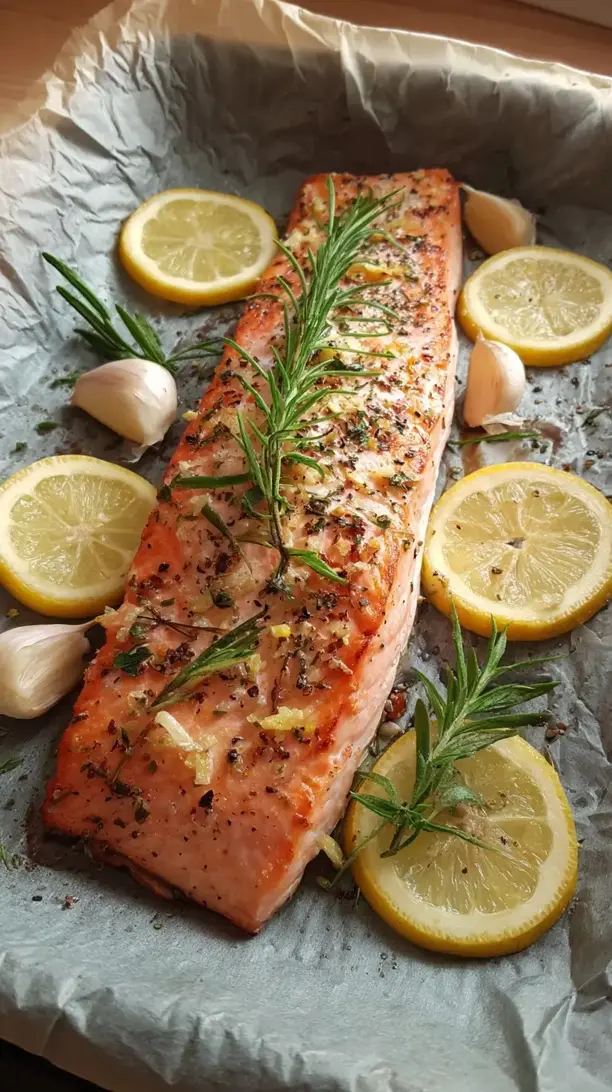
Baked Salmon
Learn how to make perfect, flaky Baked Salmon in under 20 minutes. This easy, foolproof recipe is a healthy and delicious weeknight dinner. Get the recipe now!
Ingredients
For the Ingredients & Tools
-
4 salmon fillets (about 150-180 g each, skin-on or skinless)
-
2 tbsp olive oil
-
1 tsp kosher salt
-
1/2 tsp freshly ground black pepper
-
2 lemons (one for juice, one for slices)
-
3 garlic cloves (minced)
-
1 tbsp fresh dill (chopped (or 1 tsp dried))
-
1 tsp smoked paprika (optional, for a hint of warmth)
Instructions
-
Start by preheating your oven to 400°F (200°C). This is the sweet spot for salmon—hot enough to cook it quickly and give it a nice exterior, but not so hot that it seizes up. Line a rimmed baking sheet with parchment paper or foil for the world’s easiest cleanup. Pat your salmon fillets completely dry with paper towels. This is a non-negotiable step; any surface moisture will steam the fish and prevent that lovely, slightly caramelized top we’re after.01
-
In a small bowl, combine the olive oil, minced garlic, salt, pepper, and your chosen herbs and spices. If you’re using the smoked paprika, add it now. The mixture should be fragrant and paste-like. Using a pastry brush or the back of a spoon, generously coat the top and sides of each salmon fillet with this mixture. Don’t be shy—this is where all the flavor comes from. You’ll notice the oil will make the seasonings cling perfectly to the fish.02
-
Thinly slice one of the lemons and arrange the slices on the prepared baking sheet. Place the seasoned salmon fillets directly on top of the lemon slices. This isn’t just for presentation—the lemon lifts the fish slightly, allowing hot air to circulate underneath for more even cooking, and it infuses a subtle citrus aroma from the bottom up.03
-
Place the baking sheet in the preheated oven. Now, the most important part: do not open the oven door! Trust the process. Bake for 12-15 minutes. The exact time will depend on the thickness of your fillets. A good rule of thumb is about 4-5 minutes per ½ inch of thickness. The salmon is done when it flakes easily with a fork but is still slightly translucent in the very center—it will continue to cook from residual heat after you pull it out.04
-
Carefully remove the baking sheet from the oven. Squeeze the juice from the remaining lemon over the top of the hot fillets. The fresh acid will brighten all the flavors and make the entire dish pop. Let the salmon rest for 2-3 minutes on the baking sheet before serving. This allows the juices to redistribute, ensuring every single bite is moist and flavorful.05
Not what you're looking for?