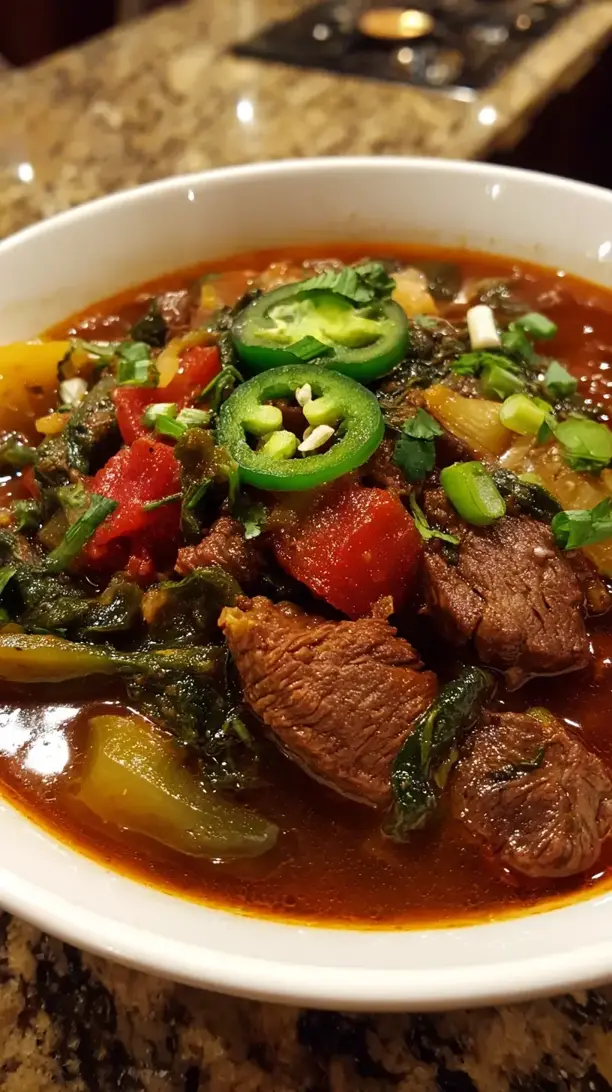
This Beef and Poblano Pepper Stew is a deeply comforting, soul-warming meal. The poblano peppers bring a subtle earthy heat and smokiness that melds perfectly with tender beef. It’s a truly special dish perfect for a lazy weekend.
Craving a delicious Beef and Poblano Pepper Stew? You've come to the right spot! From Savory Combo Recipes favorites to amazing Chicken Thigh Recipes recipes, there's something here for everyone.


Why You’ll Love This Beef and Poblano Pepper Stew
Deep, complex flavors: The slow simmer transforms simple ingredients into something extraordinary.
Ultimate comfort food: Cozy and hearty with a unique poblano twist.
Fantastic leftovers: Flavors meld and intensify overnight.
Forgiving and flexible: Easy to adapt with ingredients you have on hand.
Ingredients & Tools
- 1.5 kg beef chuck roast, cut into 4 cm cubes
- 4 large poblano peppers
- 1 large yellow onion, diced
- 4 cloves garlic, minced
- 2 medium carrots, peeled and chopped
- 2 stalks celery, chopped
- 800 g canned diced tomatoes, with their juices
- 1 litre beef stock
- 2 tbsp tomato paste
- 2 tsp ground cumin
- 1 tsp dried oregano
- 1 bay leaf
- 3 tbsp olive oil, divided
- Salt and freshly ground black pepper to taste
- Fresh cilantro or parsley for garnish (optional)
Tools: A large, heavy-bottomed pot or Dutch oven, tongs, a sharp knife, and a cutting board.
Notes: Chuck roast has perfect marbling for tenderness. Don’t skip searing the meat—it creates a flavorful fond.
Nutrition (per serving)
| Calories: | 480 kcal |
| Protein: | 42 g |
| Fat: | 24 g |
| Carbs: | 22 g |
| Fiber: | 5 g |
Serves: 6 | Prep Time: 25 minutes | Cook Time: 2 hours 30 minutes | Total Time: 2 hours 55 minutes
Before You Start: Tips & Ingredient Notes
- Don’t rush the sear. This is arguably the most important step for building flavor. You want a deep, brown crust on the beef, which requires patience and not crowding the pot. That crust equals flavor you’ll taste in every single bite.
- What exactly is a poblano pepper? They are dark green, heart-shaped chili peppers that are relatively mild. They have a wonderful earthy, slightly sweet flavor with just a hint of heat. If you can’t find them, Anaheim peppers are a good substitute, though they are a bit milder.
- To roast or not to roast the poblanos? I highly recommend charring the skins of the poblanos before adding them. It adds a fantastic smoky depth that elevates the entire stew. It’s an extra step, but honestly, it’s worth every second.
- Why beef chuck? This cut is from the shoulder of the cow and is full of connective tissue. When cooked low and slow, that tissue breaks down into gelatin, resulting in incredibly tender, juicy meat that won’t dry out. Leaner cuts will become tough.
How to Make Beef and Poblano Pepper Stew
Step 1: Prepare the Poblano Peppers. First, let’s deal with our star ingredient. Turn a gas burner on to medium-high and place the whole poblano peppers directly on the grate. Use tongs to turn them every couple of minutes until the skin is blistered and charred black all over. If you don’t have a gas stove, you can do this under your oven’s broiler. Once charred, place them in a bowl and cover it with plastic wrap—the steam will help loosen the skin. After 10-15 minutes, you should be able to easily rub off the blackened skin under running water. Then, remove the stems and seeds and slice the peppers into strips.
Step 2: Sear the Beef. Pat your beef cubes completely dry with paper towels—this is key for getting a good sear, not a steam. Season them generously with salt and pepper. Heat 2 tablespoons of olive oil in your heavy-bottomed pot or Dutch oven over medium-high heat. Working in batches to avoid crowding, add the beef and sear for about 3-4 minutes per side, until you have a beautiful dark brown crust. Transfer the seared beef to a plate and set it aside.
Step 3: Sauté the Aromatics. Reduce the heat to medium and add the remaining tablespoon of oil to the same pot. You’ll notice all those browned bits from the beef at the bottom—that’s pure flavor! Add the diced onion, carrots, and celery. Sauté for about 6-8 minutes, until the vegetables have softened and the onion is translucent. Add the minced garlic, cumin, and oregano, and cook for just one more minute until incredibly fragrant.
Step 4: Build the Stew Base. Stir in the tomato paste and cook for another minute, allowing it to darken slightly. This helps cook out any raw flavor and sweetens it up. Now, pour in the diced tomatoes with their juices and the beef stock, using your spoon to scrape up all the delicious fond from the bottom of the pot. Return the seared beef and any accumulated juices back to the pot. Add the bay leaf and the prepared poblano strips. Give everything a good stir.
Step 5: The Long, Slow Simmer. Bring the stew to a gentle boil, then immediately reduce the heat to low. Cover the pot with a lid, leaving it slightly ajar to allow some steam to escape. Let it simmer gently for 2 to 2.5 hours. You’ll know it’s done when the beef is fork-tender and practically falls apart when pressed. Stir it occasionally to make sure nothing is sticking to the bottom.
Step 6: Final Adjustments and Serve. Once the beef is perfectly tender, taste the stew and adjust the seasoning with more salt and pepper if needed. The flavors should be rich, savory, and deeply satisfying. Remove and discard the bay leaf. Ladle the hot stew into deep bowls and garnish with a sprinkle of fresh cilantro or parsley for a burst of color and freshness.
Storage & Freshness Guide
- Fridge: Cool completely, store in an airtight container for up to 4 days.
- Freezer: Freeze in portions for up to 3 months. Thaw in fridge before reheating.
- Reviving: Reheat gently on stove, adding a splash of broth if needed.
Serving Suggestions
Complementary Dishes
- Crusty bread or warm cornbread — Essential for sopping up every last drop of the delicious, rich broth. The slight sweetness of cornbread is a particularly wonderful contrast.
- Creamy polenta or mashed potatoes — A soft, creamy bed for the stew to sit on creates the ultimate comfort food experience, balancing the robust flavors beautifully.
- A simple green salad with a lime vinaigrette — The bright, acidic dressing cuts through the richness of the stew and provides a refreshing, crisp counterpoint.
Drinks
- A dark Mexican lager or amber ale — The malty, slightly toasted notes in the beer complement the smoky-savory character of the poblanos and beef without overpowering them.
- A glass of bold Zinfandel or Malbec — These fruity, full-bodied red wines have enough structure to stand up to the hearty stew and enhance its deep flavors.
- Sparkling water with a lime wedge — A simple, refreshing non-alcoholic option that cleanses the palate between bites and highlights the stew’s subtle heat.
Something Sweet
- Flan or caramel custard — The cool, creamy, and sweet finish is a classic and perfect way to end a meal featuring these deep, savory flavors.
- Churros with a chocolate dipping sauce — The warm cinnamon sugar and rich chocolate provide a fun, festive, and utterly delicious contrast.
- A simple mango sorbet — Its bright, fruity, and clean taste is a light and refreshing palate cleanser after the hearty main course.
Top Mistakes to Avoid
- Mistake: Crowding the pot when searing the beef. If you add too much beef at once, the pot’s temperature plummets and the meat steams instead of sears. You’ll miss out on all that beautiful browning that forms the flavor base of your stew. I’ve messed this up before too, and the difference in the final dish is noticeable.
- Mistake: Skipping the poblano roasting step. While you can technically just chop and add raw poblanos, you’ll be missing the incredible smoky dimension that charring the skin provides. It’s a simple step that adds a huge payoff in flavor complexity.
- Mistake: Boiling the stew instead of simmering it. A gentle simmer is what you’re after. A rolling boil will make the beef tough and chewy, as the high heat causes the muscle fibers to contract violently. Low and slow is the only way to achieve that fall-apart tenderness.
- Mistake: Underseasoning. Stews need a generous hand with salt and pepper, especially at the beginning. Season your beef well before searing and don’t be shy about tasting and adjusting at the end. The flavors need to be bold to stand up to the long cooking process.
Expert Tips
- Tip: Make it a day ahead. Stews are famously better the next day. Cook it, let it cool completely, and store it in the fridge overnight. The fat will rise to the top and solidify, making it easy to skim off for a leaner stew, and the flavors will have magically deepened.
- Tip: Thicken it up if you like. If you prefer a thicker, gravy-like consistency, mix a tablespoon of cornstarch with two tablespoons of cold water to make a slurry. Stir this into the simmering stew during the last 10 minutes of cooking, and it will thicken beautifully.
- Tip: Don’t discard the pepper seeds (if you like heat). For a spicier stew, you can add some of the poblano seeds to the pot. The membranes that hold the seeds carry a lot of the pepper’s capsaicin, so this is an easy way to control the heat level to your liking.
- Tip: Use a wooden spoon to scrape the fond. When deglazing the pot with the tomatoes and stock, a flat-edged wooden spoon is your best friend for getting every last bit of the flavorful browned bits up from the bottom without scratching your pot.
FAQs
Can I make this stew in a slow cooker?
Absolutely! This recipe adapts wonderfully to a slow cooker. Just follow the steps to sear the beef and sauté the vegetables in a skillet first to build that crucial flavor base. Then, transfer everything to your slow cooker, add the remaining ingredients, and cook on low for 7-8 hours or on high for 4-5 hours. The result will be just as tender and delicious.
How can I store and reheat leftovers?
Let the stew cool to room temperature before storing it in an airtight container in the refrigerator, where it will keep beautifully for up to 4 days. To reheat, gently warm it in a pot on the stove over low heat, adding a splash of water or stock if it has thickened too much. You can also reheat single portions in the microwave, stirring every minute.
My stew is too thin. How can I fix it?
No worries, this is an easy fix! The simplest way is to create a cornstarch slurry (equal parts cornstarch and cold water, mixed until smooth) and stir it into the simmering stew. Let it cook for a few more minutes until thickened. Alternatively, you can mash some of the potatoes or carrots against the side of the pot to naturally thicken the broth.
Can I use a different cut of beef?
You can, but stick to tough, well-marbled cuts that are meant for slow cooking. Beef brisket or short ribs would work well. Avoid lean cuts like sirloin or round steak, as they will become tough and dry during the long cooking process. The magic is in the marbling and connective tissue of the chuck roast.
Is this stew spicy?
Poblano peppers are generally quite mild, typically registering between 1,000-2,000 Scoville Heat Units (for comparison, a jalapeño is 2,500-8,000). They provide a wonderful earthy flavor with just a subtle, background warmth rather than overt spiciness. It’s a family-friendly level of heat that should be enjoyable for almost everyone.



Beef And Poblano Pepper Stew
Make this rich and comforting Beef and Poblano Pepper Stew for a cozy weekend meal. Tender beef meets smoky poblanos in this easy recipe. Get the full recipe now!
Ingredients
For the Stew
-
1.5 kg beef chuck roast (cut into 4 cm cubes)
-
4 poblano peppers (large)
-
1 yellow onion (large, diced)
-
4 cloves garlic (minced)
-
2 carrots (medium, peeled and chopped)
-
2 stalks celery (chopped)
-
800 g canned diced tomatoes (with their juices)
-
1 litre beef stock
-
2 tbsp tomato paste
-
2 tsp ground cumin
-
1 tsp dried oregano
-
1 bay leaf
-
3 tbsp olive oil (divided)
-
Salt and freshly ground black pepper (to taste)
-
Fresh cilantro or parsley (for garnish (optional))
Instructions
-
Prepare the Poblano Peppers. First, let's deal with our star ingredient. Turn a gas burner on to medium-high and place the whole poblano peppers directly on the grate. Use tongs to turn them every couple of minutes until the skin is blistered and charred black all over. If you don’t have a gas stove, you can do this under your oven’s broiler. Once charred, place them in a bowl and cover it with plastic wrap—the steam will help loosen the skin. After 10-15 minutes, you should be able to easily rub off the blackened skin under running water. Then, remove the stems and seeds and slice the peppers into strips.01
-
Sear the Beef. Pat your beef cubes completely dry with paper towels—this is key for getting a good sear, not a steam. Season them generously with salt and pepper. Heat 2 tablespoons of olive oil in your heavy-bottomed pot or Dutch oven over medium-high heat. Working in batches to avoid crowding, add the beef and sear for about 3-4 minutes per side, until you have a beautiful dark brown crust. Transfer the seared beef to a plate and set it aside.02
-
Sauté the Aromatics. Reduce the heat to medium and add the remaining tablespoon of oil to the same pot. You’ll notice all those browned bits from the beef at the bottom—that’s pure flavor! Add the diced onion, carrots, and celery. Sauté for about 6-8 minutes, until the vegetables have softened and the onion is translucent. Add the minced garlic, cumin, and oregano, and cook for just one more minute until incredibly fragrant.03
-
Build the Stew Base. Stir in the tomato paste and cook for another minute, allowing it to darken slightly. This helps cook out any raw flavor and sweetens it up. Now, pour in the diced tomatoes with their juices and the beef stock, using your spoon to scrape up all the delicious fond from the bottom of the pot. Return the seared beef and any accumulated juices back to the pot. Add the bay leaf and the prepared poblano strips. Give everything a good stir.04
-
The Long, Slow Simmer. Bring the stew to a gentle boil, then immediately reduce the heat to low. Cover the pot with a lid, leaving it slightly ajar to allow some steam to escape. Let it simmer gently for 2 to 2.5 hours. You’ll know it’s done when the beef is fork-tender and practically falls apart when pressed. Stir it occasionally to make sure nothing is sticking to the bottom.05
-
Final Adjustments and Serve. Once the beef is perfectly tender, taste the stew and adjust the seasoning with more salt and pepper if needed. The flavors should be rich, savory, and deeply satisfying. Remove and discard the bay leaf. Ladle the hot stew into deep bowls and garnish with a sprinkle of fresh cilantro or parsley for a burst of color and freshness.06
Not what you're looking for?