There’s something magical about perfectly fried fish with a shatteringly crisp, golden beer batter. This Beer Batter Fish recipe delivers pub-style perfection with a surprisingly simple method. The secret lies in cold beer, the right flour mix, and precise oil temperature for a light, non-greasy crunch.
If you're looking for the perfect Beer Batter Fish, you're in the right place. Whether you love Dinner Ideas or want to explore our Burgers collection, we've got you covered.



Why You’ll Love This Beer Batter Fish
- Unbeatable Crispy Texture: The carbonation creates thousands of tiny bubbles for a shatteringly light crust.
- Surprisingly Simple Ingredients: Most components are pantry staples—the magic is in the method.
- It Cooks in Minutes: Active work is minimal; each piece fries quickly for fast satisfaction.
- Endlessly Customizable: A fantastic base for different spices, onion rings, or zucchini fries.
Ingredients & Tools
- 500 g firm white fish fillets (like cod, haddock, or pollock), skinless and cut into large chunks
- 120 g all-purpose flour
- 60 g cornstarch
- 1 tsp baking powder
- 1 tsp smoked paprika
- 1/2 tsp garlic powder
- 1 tsp fine sea salt, plus extra for seasoning
- 1/4 tsp freshly ground black pepper
- 240 ml very cold, light-bodied beer (like a lager or pilsner)
- 1 litre neutral oil for frying (like vegetable, canola, or peanut oil)
- 1 lemon, cut into wedges for serving
Tools: A large, heavy-bottomed pot or Dutch oven, a deep-fry or candy thermometer, a wire rack set over a baking sheet, tongs, and a whisk.
Notes: The cornstarch is the real hero here—it’s what gives the batter that extra crispiness and a beautiful pale golden color. And don’t skip the thermometer; it’s the single most important tool for ensuring your fish fries instead of steams.
Nutrition (per serving)
| Calories: | 420 kcal |
| Protein: | 28 g |
| Fat: | 22 g |
| Carbs: | 24 g |
| Fiber: | 1 g |
Serves: 4 | Prep Time: 15 minutes | Cook Time: 15 minutes | Total Time: 30 minutes
Before You Start: Tips & Ingredient Notes
- Keep Everything Cold. The secret to a light batter is using ice-cold beer. I sometimes even pop my bowl of dry ingredients in the freezer for 10 minutes beforehand. A cold batter hitting hot oil creates the most vigorous reaction for maximum crispiness.
- Choosing Your Fish. You want a firm, flaky white fish that can hold up to frying. Cod is the classic for a reason, but haddock, pollock, or halibut work beautifully. Just make sure the pieces are of a similar thickness for even cooking.
- Don’t Over-mix the Batter. A few lumps in your batter are not just okay—they’re desirable! Over-mixing develops the gluten in the flour, which can lead to a tough, chewy coating instead of a delicate, crispy one.
- Pat Your Fish Dry. This might seem like a small step, but it’s crucial. Any surface moisture on the fish will create steam, which can prevent the batter from adhering properly and make it soggy. A quick pat with a paper towel makes all the difference.
How to Make Beer Batter Fish
Step 1: Prep Your Station. First things first, set up your frying station. Pour the oil into your heavy-bottomed pot—you want it to be about 3 inches deep. Attach your thermometer and begin heating the oil over medium-high heat until it reaches 375°F (190°C). While it heats, line a baking sheet with a wire rack. This is key because placing the fried fish directly on paper towels can trap steam and make the bottom soggy. The rack allows air to circulate, keeping everything crisp.
Step 2: Prepare the Fish. Take your fish fillets and pat them thoroughly dry with paper towels. This is your last defense against sogginess, so be diligent. Season the fish pieces lightly on both sides with a little extra salt and pepper. This layers the flavor right into the fish itself, not just the coating.
Step 3: Make the Beer Batter. In a large mixing bowl, whisk together the all-purpose flour, cornstarch, baking powder, smoked paprika, garlic powder, salt, and pepper. Now, take your very cold beer and pour it into the dry ingredients. Use a whisk and stir gently—just until the ingredients are combined. You’ll notice the batter will be a bit lumpy and should have the consistency of thick paint. That’s perfect. Do not whisk it smooth.
Step 4: The Frying Process. Once your oil is at a steady 375°F, you’re ready to fry. Working with one or two pieces at a time (don’t crowd the pot!), spear a piece of fish with a fork, dunk it completely into the batter, and let the excess drip off for a second. Carefully lower it into the hot oil. You should see an immediate, lively sizzle. Fry for 4-6 minutes, turning occasionally with tongs, until the coating is a deep, golden brown and incredibly crisp.
Step 5: Drain and Rest. As each piece is done, use your tongs to lift it out, letting any excess oil drip back into the pot, and then transfer it to the wire rack. Don’t be tempted to put it on a paper towel-lined plate! Sprinkle immediately with a tiny pinch of flaky sea salt. This is the time when the salt will best adhere to the hot, oily surface. Let the fish rest for a minute or two on the rack—this allows the crust to set and become even crisper.
Step 6: Serve Immediately. Beer batter fish is truly at its peak within minutes of leaving the oil. The contrast between the steaming, flaky fish and the shattering crust is what it’s all about. Serve it straight away with lemon wedges for squeezing over the top and your favorite dipping sauces.
Storage & Freshness Guide
- Fridge: Store leftovers in an airtight container for up to 2 days.
- Freezer: Freeze on a parchment-lined sheet, then transfer to a freezer bag for up to 1 month.
- Reviving: Reheat in a 400°F (200°C) oven or air fryer until hot and crisp.
Serving Suggestions
Complementary Dishes
- Classic Chips (French Fries) — It’s the ultimate pairing for a reason. The soft, fluffy interior and crispy exterior of homemade chips are the perfect textural companion to the fish.
- Creamy Coleslaw — The cool, crisp, and slightly tangy slaw cuts through the richness of the fried fish beautifully, balancing the whole meal.
- Mushy Peas — A British pub classic that might sound odd but is absolutely delicious. Their soft, savory flavor is a wonderful contrast to the crunchy fish.
Drinks
- A Crisp Lager — You used it in the batter, so why not drink it too? The clean, bubbly nature of a cold lager cleanses the palate perfectly between bites.
- Iced Tea with Lemon — For a non-alcoholic option, the brisk tannins and citrus notes are a fantastic counterpoint to the oily, fried goodness.
Something Sweet
- Lemon Sorbet — After a rich meal, a few scoops of bright, sharp, and refreshing lemon sorbet feel like a perfect palate-cleansing finale.
- Sticky Toffee Pudding — If you’re going all-in on the British comfort food theme, this warm, date-filled sponge cake with a rich toffee sauce is the ultimate indulgence.
Top Mistakes to Avoid
- Mistake: Letting the oil temperature drop. Adding too many cold pieces of fish at once will cause the oil temperature to plummet. The fish will absorb oil instead of sealing instantly, leading to a greasy result. Fry in small, manageable batches.
- Mistake: Using a batter that’s too thin or too thick. If it’s too thin, it will slide right off the fish. If it’s too thick, you’ll get a doughy, uncooked coating. Aim for a consistency that thickly coats the back of a spoon.
- Mistake: Skipping the wire rack. I’ve messed this up before too, thinking paper towels were enough. They trap steam and create a soggy bottom on your beautifully fried fish. The wire rack is a non-negotiable for maximum crunch.
- Mistake: Overcrowding the pot. This is the most common error. Crowding lowers the oil temp and causes the pieces to steam and stick together. Give each piece its own space to bubble and brown beautifully.
Expert Tips
- Tip: Do a test fry. Before you commit your first piece of fish, drop a tiny spoonful of batter into the oil. If it immediately sizzles and floats to the top, turning golden brown, your oil is ready. This also gives you a chance to taste the seasoning of the batter.
- Tip: Use a “glue” for extra adhesion. For an absolutely foolproof bond between fish and batter, you can dust your dry fish pieces very lightly with a little extra flour or cornstarch before dipping them in the wet batter. It acts like a primer.
- Tip: Keep cooked fish warm. If you’re frying in batches, place the finished fish on the wire rack set inside a 200°F (95°C) oven. This keeps them warm and crisp without continuing to cook them.
- Tip: Season the batter right after frying. Salting the fish immediately after it comes out of the oil is a chef’s move. The heat helps the salt crystals stick and melt slightly, giving you a perfectly seasoned bite every time.
FAQs
Can I make this recipe without beer? What’s a good substitute?
Absolutely! If you prefer not to use alcohol, the best substitute is chilled club soda or seltzer water. The carbonation works in the same way to create a light, airy batter. You could also use a non-alcoholic beer to keep the flavor profile very similar. Just make sure whatever you use is ice-cold for the best results.
Why did my batter turn out soggy and not crispy?
Sogginess almost always comes back to oil temperature. If the oil isn’t hot enough, the batter absorbs oil instead of sealing. It could also be from overcrowding the pot or not letting the excess batter drip off properly. Another culprit is placing the fried fish on a flat surface like a plate—always use a wire rack to allow steam to escape.
What type of beer is best for beer batter?
You want a light-bodied, fairly neutral lager or pilsner. These beers provide great carbonation without imparting an overpowering bitter or malty flavor. A stout or a very hoppy IPA can make the batter taste bitter. A simple, crisp lager is your safest and most delicious bet.
Can I prepare the batter ahead of time?
I wouldn’t recommend it. The carbonation in the beer is what gives the batter its lift, and that starts to go flat the longer it sits. For the crispiest results, mix your batter right before you’re ready to fry. You can, however, mix your dry ingredients ahead of time to streamline the process.
How do I know when the fish is cooked through?
The visual cue is a deep, golden-brown crust. For a more precise check, the internal temperature of the fish should read 145°F (63°C) on an instant-read thermometer. Alternatively, you can carefully flake a piece open with a fork—the flesh should be opaque and flake easily, with no translucency.



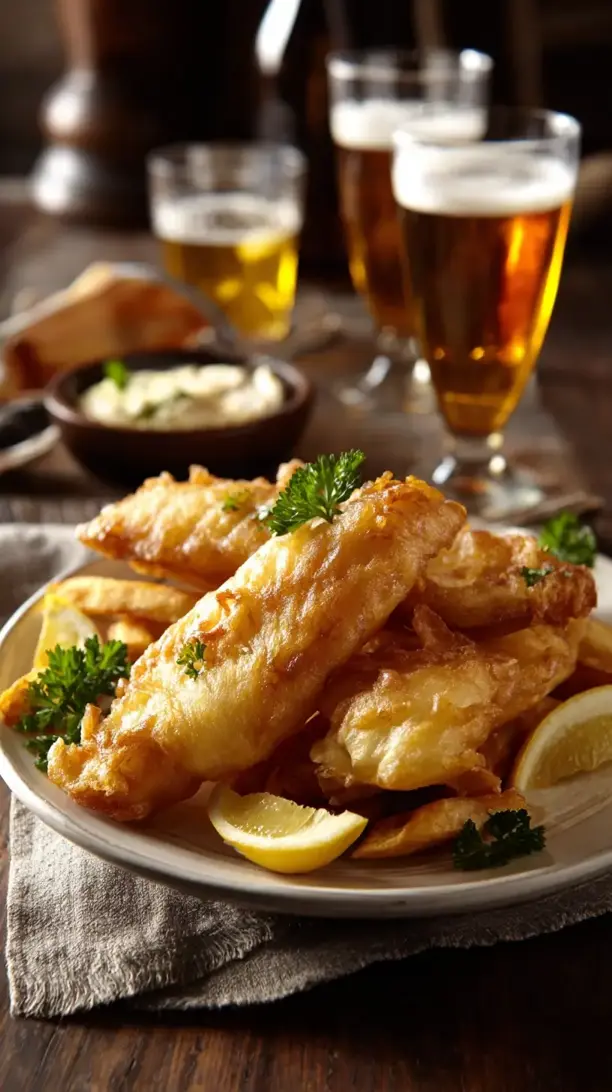
Beer Batter Fish
Make perfect pub-style Beer Batter Fish at home! Our easy recipe guarantees a light, crispy, non-greasy crust every time. Get the secret to golden fried fish now!
Ingredients
For the Fish and Batter
-
500 g firm white fish fillets (like cod, haddock, or pollock, skinless and cut into large chunks)
-
120 g all-purpose flour
-
60 g cornstarch
-
1 tsp baking powder
-
1 tsp smoked paprika
-
0.5 tsp garlic powder
-
1 tsp fine sea salt (plus extra for seasoning)
-
0.25 tsp freshly ground black pepper
-
240 ml very cold, light-bodied beer (like a lager or pilsner)
-
1 litre neutral oil for frying (like vegetable, canola, or peanut oil)
-
1 lemon (cut into wedges for serving)
Instructions
-
First things first, set up your frying station. Pour the oil into your heavy-bottomed pot—you want it to be about 3 inches deep. Attach your thermometer and begin heating the oil over medium-high heat until it reaches 375°F (190°C). While it heats, line a baking sheet with a wire rack. This is key because placing the fried fish directly on paper towels can trap steam and make the bottom soggy. The rack allows air to circulate, keeping everything crisp.01
-
Take your fish fillets and pat them thoroughly dry with paper towels. This is your last defense against sogginess, so be diligent. Season the fish pieces lightly on both sides with a little extra salt and pepper. This layers the flavor right into the fish itself, not just the coating.02
-
In a large mixing bowl, whisk together the all-purpose flour, cornstarch, baking powder, smoked paprika, garlic powder, salt, and pepper. Now, take your very cold beer and pour it into the dry ingredients. Use a whisk and stir gently—just until the ingredients are combined. You’ll notice the batter will be a bit lumpy and should have the consistency of thick paint. That’s perfect. Do not whisk it smooth.03
-
Once your oil is at a steady 375°F, you're ready to fry. Working with one or two pieces at a time (don't crowd the pot!), spear a piece of fish with a fork, dunk it completely into the batter, and let the excess drip off for a second. Carefully lower it into the hot oil. You should see an immediate, lively sizzle. Fry for 4-6 minutes, turning occasionally with tongs, until the coating is a deep, golden brown and incredibly crisp.04
-
As each piece is done, use your tongs to lift it out, letting any excess oil drip back into the pot, and then transfer it to the wire rack. Don’t be tempted to put it on a paper towel-lined plate! Sprinkle immediately with a tiny pinch of flaky sea salt. This is the time when the salt will best adhere to the hot, oily surface. Let the fish rest for a minute or two on the rack—this allows the crust to set and become even crisper.05
-
Beer batter fish is truly at its peak within minutes of leaving the oil. The contrast between the steaming, flaky fish and the shattering crust is what it's all about. Serve it straight away with lemon wedges for squeezing over the top and your favorite dipping sauces.06
Not what you're looking for?