
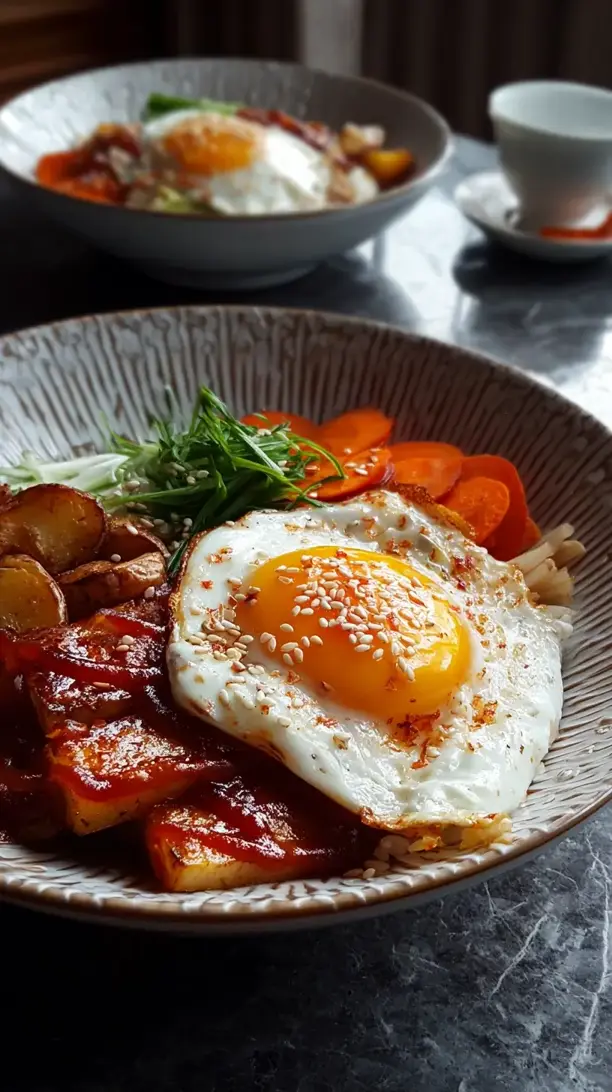
This Breakfast Bibimbap Bowl transforms a Korean classic into a vibrant morning meal. Crispy potatoes replace rice, topped with quick-pickled veggies, a runny egg, and spicy gochujang sauce. It’s a fun, hands-on breakfast that’s as delicious as it is beautiful.
If you're looking for the perfect Breakfast Bibimbap Bowl, you're in the right place. Whether you love Savory Breakfast or want to explore our Dessert Recipes collection, we've got you covered.



Why You’ll Love This Breakfast Bibimbap Bowl
Flavor & texture party: Crispy potatoes, tender veggies, creamy yolk, and spicy-sweet sauce in every bite.
Incredibly versatile: Easily swap veggies based on what you have on hand.
Fancy yet approachable: Impressive brunch look with simple, stress-free steps.
Balanced & energizing: Filling combo of carbs, protein, and fats prevents mid-morning slump.
Ingredients & Tools
- 2 medium russet potatoes, cut into ½-inch cubes
- 1 tablespoon olive or avocado oil
- 1 teaspoon smoked paprika
- 2 large eggs
- 1 cup fresh spinach
- ½ cup shiitake or cremini mushrooms, sliced
- 1 small carrot, julienned or grated
- ½ small cucumber, thinly sliced
- 1 tablespoon rice vinegar
- 1 teaspoon sugar
- 1 teaspoon sesame oil
- 1 tablespoon gochujang (Korean chili paste)
- 1 teaspoon soy sauce or tamari
- 1 teaspoon maple syrup or honey
- 1 clove garlic, minced
- To garnish: toasted sesame seeds, sliced green onion
Tools: A large skillet (non-stick is great for the eggs), a medium mixing bowl, a small bowl for the sauce.
Notes: Don’t sweat imperfect veggie prep—rustic charm is key. Find gochujang in the Asian aisle for its unique fermented flavor.
Nutrition (per serving)
| Calories: | 420 kcal |
| Protein: | 15 g |
| Fat: | 18 g |
| Carbs: | 52 g |
| Fiber: | 7 g |
Serves: 2 | Prep Time: 20 minutes | Cook Time: 25 minutes | Total Time: 45 minutes
Before You Start: Tips & Ingredient Notes
- Get your mise en place ready. This recipe comes together quickly once the cooking starts, so having all your veggies prepped and your sauce mixed makes the process smooth and enjoyable.
- What if I can’t find gochujang? While nothing replicates its flavor exactly, you can make a decent substitute by mixing 1 tbsp sriracha with ½ tsp soy sauce and a tiny pinch of sugar. It’ll be different, but still tasty!
- Don’t overcrowd the potatoes. For the crispiest results, give your potato cubes plenty of space in the pan. If you crowd them, they’ll steam and become soft. If your skillet is small, cook them in two batches.
- The quick-pickle is a game-changer. Taking just five minutes to toss the cucumber and carrot with a little vinegar and sugar adds a crucial hit of acidity that brightens up the whole bowl. Don’t skip this simple step!
How to Make Breakfast Bibimbap Bowl
Step 1: Crisp Up the Potatoes. Start with your potato cubes. Pat them completely dry with a paper towel — this is the secret to a good sear. Heat the oil in your large skillet over medium-high heat. Add the potatoes in a single layer and sprinkle with the smoked paprika, salt, and pepper. Let them cook without moving for about 5-7 minutes to get a golden-brown crust on one side. Then, toss them and continue cooking for another 10-12 minutes, until they’re tender on the inside and crispy all over. You’ll know they’re ready when you can easily pierce one with a fork.
Step 2: Quick-Pickle Your Veggies. While the potatoes are working, combine the sliced cucumber and julienned carrot in your medium bowl. Add the rice vinegar, sugar, and a pinch of salt. Toss everything together until the veggies are evenly coated. Let this sit for at least 5 minutes. You’ll notice them softening slightly and becoming wonderfully tangy. This little step adds so much freshness and cuts through the richness of the egg and potatoes.
Step 3: Wilt the Spinach & Sauté the Mushrooms. Once the potatoes are done, transfer them to a plate. In the same skillet (no need to wash it!), add the sliced mushrooms. Sauté for 3-4 minutes until they’ve released their water and started to brown. Push the mushrooms to one side and add the fresh spinach to the other. It will look like a lot, but it wilts down incredibly. Drizzle the sesame oil over the spinach and toss it with the mushrooms for just a minute until the spinach is dark green and wilted. Season with a tiny pinch of salt.
Step 4: Fry the Eggs to Perfection. Wipe out the skillet quickly with a paper towel and place it back over medium heat. Add a small knob of butter or a drizzle of oil. Crack your eggs into the skillet. For the classic bibimbap experience, you want a runny yolk. Cook for 2-3 minutes until the whites are set but the yolk is still jiggly. If you like, you can cover the skillet for the last 30 seconds to set the very top of the whites.
Step 5: Make the Gochujang Sauce. In your small bowl, whisk together the gochujang, soy sauce, maple syrup, and minced garlic. It will form a thick, pungent, and incredibly flavorful paste. If you prefer a thinner, more drizzly sauce, you can add a teaspoon of warm water and whisk again. Give it a taste — it should be spicy, a little sweet, and deeply savory.
Step 6: Assemble Your Beautiful Bowls. Now for the fun part! Divide the crispy potatoes between two bowls. Artfully arrange the wilted spinach and mushrooms, and the quick-pickled carrots and cucumbers around the edges. Carefully place a fried egg right in the center of each bowl. Drizzle that glorious red gochujang sauce over everything and finish with a generous sprinkle of toasted sesame seeds and green onion.
Step 7: The Grand Finale — Mix It Up! The most important step! Right before eating, take your spoon or chopsticks and break the egg yolk, mixing everything together thoroughly. The yolk and sauce will coat every component, creating a unified, saucy, and utterly delicious dish. Dig in immediately while it’s warm!
Storage & Freshness Guide
- Fridge: Store components separately in airtight containers for up to 2 days.
- Freezer: Not recommended; potatoes and veggies become mushy upon thawing.
- Reviving: Reheat potatoes in an air fryer or oven to restore crispiness; fry eggs fresh.
Serving Suggestions
Complementary Dishes
- A simple side of kimchi — The fermented, spicy crunch of kimchi adds another layer of complexity and probiotics, making the whole meal feel even more authentic and gut-friendly.
- Miso soup — A warm, savory cup of miso soup on the side is incredibly comforting and complements the bold flavors of the bowl without stealing the spotlight.
- Seasoned roasted seaweed (gim) — Crumble a few sheets of roasted seaweed over the top for an extra hit of umami and a delightful crispy texture.
Drinks
- Iced barley tea (boricha) — This nutty, caffeine-free Korean tea is refreshing and cleansing, perfectly balancing the spice and richness of the gochujang sauce.
- A crisp, dry rosé — If you’re feeling fancy for a weekend brunch, a chilled glass of rosé has the acidity and berry notes to cut through the dish’s richness beautifully.
- Sparkling water with a citrus twist — The bubbles and citrus are a simple, non-alcoholic way to refresh your palate between bites of the flavorful bowl.
Something Sweet
- Hotteok (Korean sweet pancakes) — These chewy, filled pancakes are a classic Korean street food that provides a sweet and satisfying end to your meal.
- A scoop of green tea ice cream — The slightly bitter, earthy flavor of matcha is a sophisticated and delightful contrast to the spicy and savory notes of the bibimbap.
- Fresh fruit with a drizzle of honey — Sometimes simple is best. A bowl of sliced strawberries, oranges, or melon offers a light, sweet, and healthy finish.
Top Mistakes to Avoid
- Mistake: Skipping the step of drying the potatoes. Any surface moisture will cause the potatoes to steam instead of fry, leading to soggy, soft cubes instead of the crispy texture you’re after. A quick pat with a paper towel makes all the difference.
- Mistake: Overcooking the egg. The magic of a bibimbap bowl is in the runny yolk that acts as a sauce when you mix everything. A hard, fully-cooked yolk just doesn’t provide the same luxurious, cohesive effect.
- Mistake: Not tasting the sauce as you go. Gochujang brands can vary in spice level and saltiness. Always taste your sauce and adjust it to your liking—maybe a touch more maple syrup for sweetness or a splash of water to thin it out.
- Mistake: Forgetting to mix the bowl at the end. I know it looks pretty all arranged, but bibimbap literally means “mixed rice.” The whole point is to combine all the components so every bite has a bit of everything. Embrace the delicious mess!
Expert Tips
- Tip: Par-cook your potatoes for extra crispiness. For the ultimate crispy exterior and fluffy interior, you can microwave your cubed potatoes for 3-4 minutes before adding them to the hot skillet. This renders out some of the internal moisture, allowing the outside to get super crispy without burning.
- Tip: Use the back of a spoon to spread the gochujang. If your sauce is very thick, instead of drizzling, place a dollop on the side of the bowl and use the back of your spoon to smear it in a pretty pattern. It looks professional and makes it easier to mix in.
- Tip: Add a splash of mirin to your quick-pickle. For a more complex, rounded acidity in your pickled veggies, add a teaspoon of mirin (sweet rice wine) along with the rice vinegar. It adds a subtle sweetness and depth that’s just wonderful.
- Tip: Make components ahead for a faster morning. You can cook the potatoes, pickle the veggies, and mix the sauce the night before. In the morning, you just need to reheat the potatoes, sauté the spinach/mushrooms, and fry the eggs for a nearly-instant gourmet breakfast.
FAQs
Can I make this recipe vegan?
Absolutely! The main adjustment is the egg. Omit it or use a firm tofu scramble seasoned with a bit of turmeric and black salt for an “eggy” flavor. For the sauce, just make sure your gochujang is vegan (most are, but check for hidden ingredients like honey or fish powder) and use maple syrup instead of honey. You’ll still get a fantastically flavorful and satisfying bowl.
What can I use instead of potatoes?
If you’d prefer to keep it more traditional or just want a change, cooked short-grain white or brown rice is the classic base. For a low-carb option, cauliflower rice works wonderfully—just be sure to sauté it to drive off excess moisture. Even quinoa would be a great, protein-packed alternative.
My gochujang sauce is too spicy! How can I tone it down?
No problem, this is a common issue. The easiest fix is to dilute it. Add more maple syrup for sweetness and a splash of water or even a teaspoon of tahini or mayonnaise. The fat in the tahini or mayo will help mellow out the spice level significantly while adding creaminess.
Can I meal prep these bowls?
You can, with a little strategy. Keep the components separate in airtight containers. The potatoes will lose some crispiness but will reheat well in an air fryer or toaster oven. The pickled veggies will hold up great. I’d recommend cooking the spinach and mushrooms fresh, as they can get watery, and frying the eggs fresh is a must for that runny yolk.
Is there a way to add more protein?
Of course! This bowl is a perfect canvas for protein. Thinly sliced and sautéed beef (bulgogi-style) is a classic addition. For a simpler option, just add some seasoned ground pork or turkey. For a plant-based boost, marinated and pan-fried tofu or tempeh would be absolutely delicious mixed in.



Breakfast Bibimbap Bowl
Make a delicious Breakfast Bibimbap Bowl with crispy potatoes, a runny egg, and spicy gochujang. A fun, balanced, and energizing morning meal. Get the easy recipe now!
Ingredients
For the Bowl:
-
2 medium russet potatoes (cut into ½-inch cubes)
-
1 tablespoon olive or avocado oil
-
1 teaspoon smoked paprika
-
2 large eggs
-
1 cup fresh spinach
-
½ cup shiitake or cremini mushrooms (sliced)
-
1 small carrot (julienned or grated)
-
½ small cucumber (thinly sliced)
-
1 tablespoon rice vinegar
-
1 teaspoon sugar
-
1 teaspoon sesame oil
-
1 tablespoon gochujang (Korean chili paste)
-
1 teaspoon soy sauce or tamari
-
1 teaspoon maple syrup or honey
-
1 clove garlic (minced)
-
To garnish (toasted sesame seeds, sliced green onion)
Instructions
-
Start with your potato cubes. Pat them completely dry with a paper towel — this is the secret to a good sear. Heat the oil in your large skillet over medium-high heat. Add the potatoes in a single layer and sprinkle with the smoked paprika, salt, and pepper. Let them cook without moving for about 5-7 minutes to get a golden-brown crust on one side. Then, toss them and continue cooking for another 10-12 minutes, until they’re tender on the inside and crispy all over. You’ll know they’re ready when you can easily pierce one with a fork.01
-
While the potatoes are working, combine the sliced cucumber and julienned carrot in your medium bowl. Add the rice vinegar, sugar, and a pinch of salt. Toss everything together until the veggies are evenly coated. Let this sit for at least 5 minutes. You’ll notice them softening slightly and becoming wonderfully tangy. This little step adds so much freshness and cuts through the richness of the egg and potatoes.02
-
Once the potatoes are done, transfer them to a plate. In the same skillet (no need to wash it!), add the sliced mushrooms. Sauté for 3-4 minutes until they’ve released their water and started to brown. Push the mushrooms to one side and add the fresh spinach to the other. It will look like a lot, but it wilts down incredibly. Drizzle the sesame oil over the spinach and toss it with the mushrooms for just a minute until the spinach is dark green and wilted. Season with a tiny pinch of salt.03
-
Wipe out the skillet quickly with a paper towel and place it back over medium heat. Add a small knob of butter or a drizzle of oil. Crack your eggs into the skillet. For the classic bibimbap experience, you want a runny yolk. Cook for 2-3 minutes until the whites are set but the yolk is still jiggly. If you like, you can cover the skillet for the last 30 seconds to set the very top of the whites.04
-
In your small bowl, whisk together the gochujang, soy sauce, maple syrup, and minced garlic. It will form a thick, pungent, and incredibly flavorful paste. If you prefer a thinner, more drizzly sauce, you can add a teaspoon of warm water and whisk again. Give it a taste — it should be spicy, a little sweet, and deeply savory.05
-
Divide the crispy potatoes between two bowls. Artfully arrange the wilted spinach and mushrooms, and the quick-pickled carrots and cucumbers around the edges. Carefully place a fried egg right in the center of each bowl. Drizzle that glorious red gochujang sauce over everything and finish with a generous sprinkle of toasted sesame seeds and green onion.06
-
Right before eating, take your spoon or chopsticks and break the egg yolk, mixing everything together thoroughly. The yolk and sauce will coat every component, creating a unified, saucy, and utterly delicious dish. Dig in immediately while it’s warm!07
Not what you're looking for?


