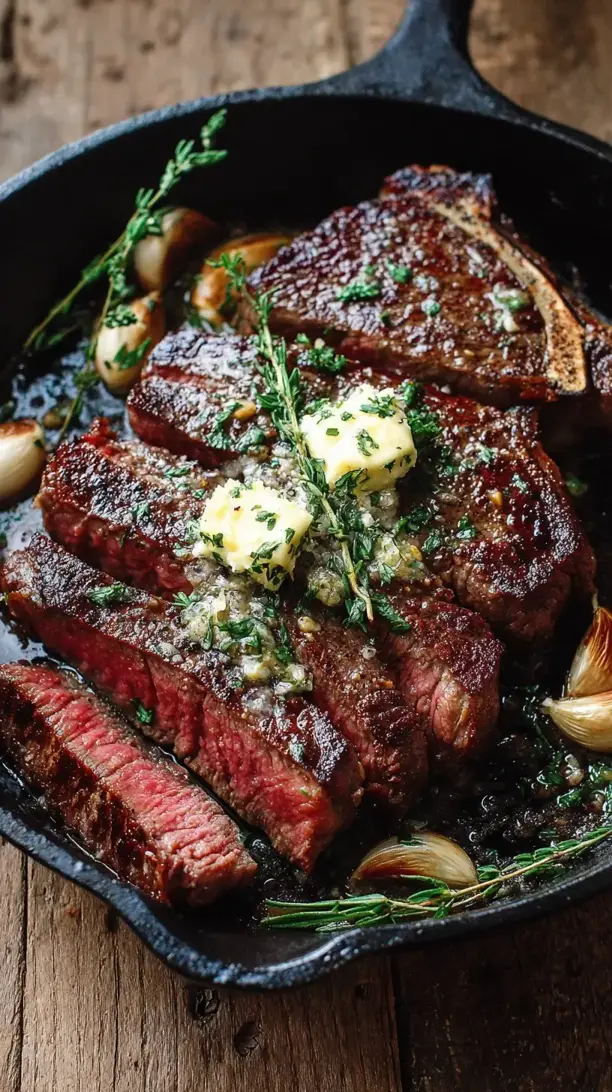
Cooking a cast iron steak is a restaurant-quality experience you can master at home. The hot skillet creates an unbeatable crust while locking in juices for a tender result. This cast iron steak method is simple, rewarding, and delivers incredible flavor every time.
Craving a delicious Cast Iron Steak? You've come to the right spot! From Dinner Ideas favorites to amazing Chicken Recipes recipes, there's something here for everyone.



Why You’ll Love This Cast Iron Steak
- Unbeatable Crust: Cast iron gets screaming hot for a dark, crispy sear.
- Juicy Results: Proper technique locks in moisture for tender bites.
- Surprisingly Simple: Just a good steak, a heavy pan, and basic seasonings.
- Total Control: Cook indoors to easily hit your perfect doneness.
Ingredients & Tools
- 1–2 thick-cut steaks (like ribeye or New York strip, about 1.5 to 2 inches thick)
- 1 tbsp high-smoke-point oil (avocado, grapeseed, or refined avocado oil)
- 2 tbsp unsalted butter
- 3 cloves garlic, lightly smashed
- 2–3 fresh thyme or rosemary sprigs
- Kosher salt and freshly cracked black pepper to taste
Tools: A 10 or 12-inch cast iron skillet, tongs, an instant-read thermometer, and a well-ventilated kitchen (or a good hood fan)!
Notes: A thicker steak gives you more time to build a crust before the inside overcooks, and using a high-smoke-point oil prevents excessive smoke.
Nutrition (per serving)
| Calories: | 580 kcal |
| Protein: | 48 g |
| Fat: | 42 g |
| Carbs: | 1 g |
| Fiber: | 0 g |
Serves: 2 | Prep Time: 10 minutes | Cook Time: 10-15 minutes | Total Time: 25 minutes (plus resting)
Before You Start: Tips & Ingredient Notes
- Pat that steak DRY. This is arguably the most important step for a good crust. Any surface moisture will steam the steak instead of searing it. Use paper towels and really press down to get it bone-dry.
- Let it come to room temperature. Take your steak out of the fridge about 30-45 minutes before cooking. A cold steak straight from the fridge will cook unevenly, leaving you with an overcooked exterior and a cold center.
- Don’t be shy with the salt. Season your steak generously with kosher salt just before it goes into the pan. The salt draws out a little moisture which then dissolves and helps form an incredible crust. You can season with pepper before or after—your choice!
- Choose your fat wisely. Using an oil with a high smoke point, like avocado or grapeseed, is crucial. Olive oil will burn and smoke excessively, giving your steak a bitter flavor. Save the good olive oil for finishing!
How to Make Cast Iron Steak
Step 1: Start by preparing your steak. Unwrap it and pat it thoroughly dry on all sides with paper towels. You’ll be surprised how much moisture comes off. Let it sit on the counter for 30-45 minutes to take the chill off. Just before cooking, season all sides very generously with kosher salt and freshly cracked black pepper. Don’t forget the edges!
Step 2: Preheat your cast iron skillet over medium-high heat for a good 5 minutes. You want it seriously hot. To test, you can flick a few drops of water into the pan—they should skitter and evaporate almost instantly. Once hot, add your high-smoke-point oil and swirl it around to coat the bottom. It should shimmer and look thin.
Step 3: Carefully lay the steak(s) away from you into the hot pan. You should hear an immediate, aggressive sizzle—that’s the sound of success. Do not touch it or move it for a full 2-3 minutes. This is how you build that beautiful, dark crust. You might see some smoke, which is normal, so make sure your vent is on high.
Step 4: After 2-3 minutes, use your tongs to peek underneath. You’re looking for a deep brown, caramelized crust. If it’s ready, flip the steak. You should notice a significant color change. Cook on the second side for another 2-3 minutes, again without moving it, to build the crust on the other side.
Step 5: Now, reduce the heat to medium. This is where we add flavor and control the internal temperature. Add the butter, smashed garlic cloves, and herb sprigs to the pan. The butter will melt and foam. Tilt the pan slightly towards you and, using a spoon, continuously baste the top of the steak with the hot, fragrant butter for 1-2 minutes.
Step 6: Check for doneness. The best way is to use an instant-read thermometer. For medium-rare, you’re aiming for an internal temperature of 130-135°F (54-57°C). Remember, the temperature will rise another 5-10 degrees while resting. If you need more time, you can sear the fatty edge of the steak by holding it with tongs for 30-60 seconds.
Step 7: Once your steak has reached the desired temperature, immediately transfer it to a cutting board or a warm plate. Do not slice into it yet! Let it rest for at least 5-10 minutes. This allows the frantic muscle fibers to relax and reabsorb all the juices. If you cut it now, all those precious juices will end up on the board, not in your mouth.
Step 8: After the steak has rested, slice it against the grain. You’ll notice the fibers running in one direction; cutting perpendicular to them makes the steak much more tender to eat. Serve immediately, spooning a little of the reserved pan butter from the cutting board over the top.
Storage & Freshness Guide
- Fridge: Store leftovers in an airtight container for up to 3 days.
- Freezer: Wrap tightly and freeze for up to 3 months. Thaw in fridge before reheating.
- Reviving: Reheat in a hot skillet for 60-90 seconds per side to restore crust.
Serving Suggestions
Complementary Dishes
- Creamy Garlic Spinach — The rich, buttery steak pairs wonderfully with the sharp, earthy flavor of wilted garlicky greens. It’s a classic combo for a reason.
- Simple Arugula Salad with Lemon Vinaigrette — The peppery arugula and bright, acidic dressing cut through the richness of the steak perfectly, cleansing the palate between bites.
- Roasted Asparagus with Parmesan — A little char on the asparagus from a hot oven complements the crust on the steak, and the salty parmesan adds another layer of umami.
Drinks
- A Bold Cabernet Sauvignon — The tannins in a good Cabernet stand up beautifully to the fat and robust flavor of a cast iron seared steak, creating a harmonious balance.
- Smoky Bourbon on the Rocks — The caramel and vanilla notes in a quality bourbon echo the sweet, charred notes from the steak’s crust, making for a surprisingly sophisticated pairing.
- Sparkling Water with Lime — For a non-alcoholic option, the crisp bubbles and citrus help reset your taste buds, ensuring you enjoy every single bite of that steak to the fullest.
Something Sweet
- Dark Chocolate Espresso Mousse — The deep, bitter notes of dark chocolate and coffee are a fantastic way to end the meal, complementing the savory, umami-rich steak without being overly sweet.
- Berries with Whipped Cream — A light, fresh dessert that feels like a perfect, simple finale. The bright acidity of the berries is a lovely contrast after such a rich main course.
- Cheese Plate with Walnuts and Honey — Extend the savory journey with a selection of sharp cheeses,



Cast Iron Steak
Learn how to cook the perfect Cast Iron Steak with a crispy crust and juicy interior. This simple method delivers restaurant-quality results. Get the recipe now!
Ingredients
For the Ingredients
-
1-2 thick-cut steaks (like ribeye or New York strip, about 1.5 to 2 inches thick)
-
1 tbsp high-smoke-point oil (avocado, grapeseed, or refined avocado oil)
-
2 tbsp unsalted butter
-
3 cloves garlic (lightly smashed)
-
2-3 sprigs fresh thyme or rosemary
-
Kosher salt and freshly cracked black pepper (to taste)
Instructions
-
Start by preparing your steak. Unwrap it and pat it thoroughly dry on all sides with paper towels. You’ll be surprised how much moisture comes off. Let it sit on the counter for 30-45 minutes to take the chill off. Just before cooking, season all sides very generously with kosher salt and freshly cracked black pepper. Don’t forget the edges!01
-
Preheat your cast iron skillet over medium-high heat for a good 5 minutes. You want it seriously hot. To test, you can flick a few drops of water into the pan—they should skitter and evaporate almost instantly. Once hot, add your high-smoke-point oil and swirl it around to coat the bottom. It should shimmer and look thin.02
-
Carefully lay the steak(s) away from you into the hot pan. You should hear an immediate, aggressive sizzle—that’s the sound of success. Do not touch it or move it for a full 2-3 minutes. This is how you build that beautiful, dark crust. You might see some smoke, which is normal, so make sure your vent is on high.03
-
After 2-3 minutes, use your tongs to peek underneath. You’re looking for a deep brown, caramelized crust. If it’s ready, flip the steak. You should notice a significant color change. Cook on the second side for another 2-3 minutes, again without moving it, to build the crust on the other side.04
-
Now, reduce the heat to medium. This is where we add flavor and control the internal temperature. Add the butter, smashed garlic cloves, and herb sprigs to the pan. The butter will melt and foam. Tilt the pan slightly towards you and, using a spoon, continuously baste the top of the steak with the hot, fragrant butter for 1-2 minutes.05
-
Check for doneness. The best way is to use an instant-read thermometer. For medium-rare, you’re aiming for an internal temperature of 130-135°F (54-57°C). Remember, the temperature will rise another 5-10 degrees while resting. If you need more time, you can sear the fatty edge of the steak by holding it with tongs for 30-60 seconds.06
-
Once your steak has reached the desired temperature, immediately transfer it to a cutting board or a warm plate. Do not slice into it yet! Let it rest for at least 5-10 minutes. This allows the frantic muscle fibers to relax and reabsorb all the juices. If you cut it now, all those precious juices will end up on the board, not in your mouth.07
-
After the steak has rested, slice it against the grain. You’ll notice the fibers running in one direction; cutting perpendicular to them makes the steak much more tender to eat. Serve immediately, spooning a little of the reserved pan butter from the cutting board over the top.08
Not what you're looking for?