
This Cheesy Polenta with Poached Eggs is pure comfort in a bowl. Creamy, cheesy polenta topped with a perfectly runny poached egg creates a sublime texture and flavor contrast. It’s luxurious enough for brunch yet simple enough for a weeknight.
If you're looking for the perfect Cheesy Polenta with Poached Eggs, you're in the right place. Whether you love Savory Breakfast or want to explore our Burgers collection, we've got you covered.



Why You’ll Love This Cheesy Polenta with Poached Eggs
- Comfort in a bowl: Creamy polenta and silky poached egg feel like a warm hug.
- Surprisingly simple: Easy techniques yield an impressive-looking dish.
- Endlessly adaptable: Customize with different cheeses, herbs, or toppings.
- Perfect any time: Works for brunch, lunch, or a light dinner.
Ingredients & Tools
- 1 cup coarse polenta (not instant)
- 4 cups water or vegetable broth
- 1 tsp fine sea salt
- 1 cup grated Parmesan cheese
- 1/2 cup shredded Gruyère cheese
- 3 tbsp unsalted butter
- 1/4 cup heavy cream or whole milk
- 4 large fresh eggs
- 1 tbsp white vinegar
- To taste freshly ground black pepper
- For garnish fresh chives or parsley, chopped
Tools: Medium heavy-bottomed saucepan, whisk, slotted spoon, small bowl for cracking eggs, medium pot for poaching
Notes: Use coarse polenta for best texture; vinegar helps poached eggs hold shape.
Nutrition (per serving)
| Calories: | 520 kcal |
| Protein: | 24 g |
| Fat: | 28 g |
| Carbs: | 40 g |
| Fiber: | 3 g |
Serves: 4 | Prep Time: 10 minutes | Cook Time: 25 minutes | Total Time: 35 minutes
Before You Start: Tips & Ingredient Notes
- Use coarse polenta, not instant. Instant polenta cooks faster but lacks the deep, corn flavor and satisfying texture that coarse polenta provides. Trust me, the extra few minutes of stirring are worth it.
- Freshness of eggs matters for poaching. The fresher the egg, the tighter the white will hold around the yolk, giving you that beautiful, compact poached egg. If your eggs are older, that’s okay—just be extra gentle.
- Grate your own cheese. Pre-shredded cheese often contains anti-caking agents that can make your polenta a bit grainy. Grating your own Parmesan and Gruyère ensures a beautifully smooth, melty result.
- Have everything measured and ready. Once you start making the polenta and poaching the eggs, things move quickly. Having your ingredients prepped (mise en place, as the French say) makes the process so much smoother.
How to Make Cheesy Polenta with Poached Eggs
Step 1: Start by making the polenta. In a medium, heavy-bottomed saucepan, bring the water or broth and salt to a rolling boil. Gradually whisk in the polenta in a slow, steady stream—this helps prevent lumps from forming. You’ll notice the mixture will thicken almost immediately.
Step 2: Reduce the heat to low and let the polenta simmer gently. You’ll need to stir it frequently with a wooden spoon or whisk, scraping the bottom and sides to prevent sticking. It should bubble softly—if it’s sputtering too much, your heat is too high. Cook for about 20-25 minutes, until the polenta is tender and has lost its gritty texture.
Step 3: While the polenta is cooking, start preparing for the poached eggs. Fill a medium pot with about 3 inches of water, add the white vinegar, and bring it to a gentle simmer over medium heat. You’re looking for tiny bubbles rising to the surface, not a rolling boil. Crack each egg into its own small bowl or ramekin—this makes them easier to slide into the water later.
Step 4: Once the polenta is creamy and tender, turn off the heat. Stir in the butter, grated cheeses, and heavy cream. Keep stirring until everything is melted and beautifully incorporated. The polenta should be luxuriously smooth and cheesy. Taste and adjust seasoning with more salt or pepper if needed. Cover the pot to keep it warm.
Step 5: Time to poach the eggs. Using a spoon, create a gentle whirlpool in the simmering water. Carefully slide one egg from its bowl into the center of the vortex. The swirling water will help the white wrap neatly around the yolk. Cook for about 3-4 minutes for a runny yolk. You can poach two eggs at a time if your pot is large enough.
Step 6: Using a slotted spoon, carefully lift each poached egg from the water. Let any excess water drain off, and you can gently blot the bottom of the spoon on a clean kitchen towel. The white should be set, but the yolk will still feel soft when pressed lightly.
Step 7: To serve, divide the warm, cheesy polenta among four bowls. Make a slight well in the center of each portion and carefully place a poached egg on top. Season with a generous grind of black pepper and a sprinkle of fresh chives or parsley. Serve immediately—that first break of the yolk is the best part!
Storage & Freshness Guide
- Fridge: Store leftover polenta and poached eggs separately for up to 2 days.
- Freezer: Polenta freezes well for up to 1 month; poached eggs don’t freeze well.
- Reviving: Reheat polenta with a splash of liquid; reheat eggs in hot water.
Serving Suggestions
Complementary Dishes
- Sautéed garlic mushrooms — Their earthy, savory flavor adds a wonderful umami depth that complements the richness of the polenta and egg.
- Crispy pancetta or bacon — The salty, crunchy texture provides a fantastic contrast to the creamy elements of the dish.
- Simple arugula salad with lemon vinaigrette — The peppery greens and bright acidity help cut through the richness and refresh the palate.
Drinks
- A crisp, dry white wine like Sauvignon Blanc — Its acidity and citrus notes balance the creaminess of the polenta and the richness of the egg yolk beautifully.
- Sparkling water with a twist of lemon — The bubbles and citrus cleanse the palate between bites, making each spoonful taste fresh and new.
- Bloody Mary — For a brunch setting, the spicy, savory cocktail is a classic and bold pairing that stands up to the dish’s flavors.
Something Sweet
- Fresh fruit salad with mint — The natural sweetness and juiciness of the fruit provide a light, refreshing finish after the savory main.
- Lemon ricotta cookies — Their tender texture and bright, zesty flavor are a lovely, not-too-heavy way to end the meal.
- Dark chocolate espresso beans — Just a few of these offer a bitter, sophisticated counterpoint to the meal’s creaminess.
Top Mistakes to Avoid
- Adding the polenta to cold water. Always start with boiling liquid to ensure the polenta cooks evenly and doesn’t become grainy or clumpy.
- Not stirring the polenta enough. Polenta loves to stick and can form a skin or burn on the bottom of the pan if neglected. Frequent stirring is non-negotiable for creaminess.
- Using rapidly boiling water for poaching. A violent boil will tear the delicate egg white apart. A gentle simmer is key for those picture-perfect poached eggs.
- Overcooking the poached eggs. Remember, the eggs will continue to cook a little from



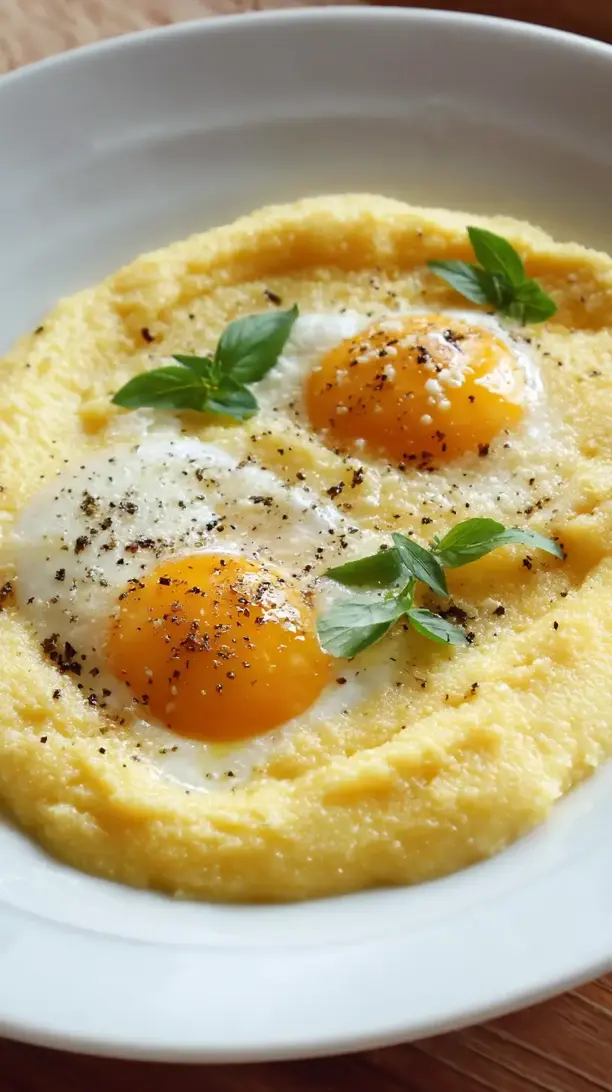
Cheesy Polenta With Poached Eggs
Make this easy Cheesy Polenta with Poached Eggs for a comforting brunch or weeknight dinner. Creamy, cheesy, and topped with a runny egg. Get the recipe now!
Ingredients
For the Polenta:
-
1 cup coarse polenta (not instant)
-
4 cups water or vegetable broth
-
1 tsp fine sea salt
-
1 cup grated Parmesan cheese
-
1/2 cup shredded Gruyère cheese
-
3 tbsp unsalted butter
-
1/4 cup heavy cream or whole milk
For the Poached Eggs:
-
4 large fresh eggs
-
1 tbsp white vinegar
-
freshly ground black pepper (to taste)
-
fresh chives or parsley, chopped (for garnish)
Instructions
-
Start by making the polenta. In a medium, heavy-bottomed saucepan, bring the water or broth and salt to a rolling boil. Gradually whisk in the polenta in a slow, steady stream—this helps prevent lumps from forming. You’ll notice the mixture will thicken almost immediately.01
-
Reduce the heat to low and let the polenta simmer gently. You’ll need to stir it frequently with a wooden spoon or whisk, scraping the bottom and sides to prevent sticking. It should bubble softly—if it’s sputtering too much, your heat is too high. Cook for about 20-25 minutes, until the polenta is tender and has lost its gritty texture.02
-
While the polenta is cooking, start preparing for the poached eggs. Fill a medium pot with about 3 inches of water, add the white vinegar, and bring it to a gentle simmer over medium heat. You’re looking for tiny bubbles rising to the surface, not a rolling boil. Crack each egg into its own small bowl or ramekin—this makes them easier to slide into the water later.03
-
Once the polenta is creamy and tender, turn off the heat. Stir in the butter, grated cheeses, and heavy cream. Keep stirring until everything is melted and beautifully incorporated. The polenta should be luxuriously smooth and cheesy. Taste and adjust seasoning with more salt or pepper if needed. Cover the pot to keep it warm.04
-
Time to poach the eggs. Using a spoon, create a gentle whirlpool in the simmering water. Carefully slide one egg from its bowl into the center of the vortex. The swirling water will help the white wrap neatly around the yolk. Cook for about 3-4 minutes for a runny yolk. You can poach two eggs at a time if your pot is large enough.05
-
Using a slotted spoon, carefully lift each poached egg from the water. Let any excess water drain off, and you can gently blot the bottom of the spoon on a clean kitchen towel. The white should be set, but the yolk will still feel soft when pressed lightly.06
-
To serve, divide the warm, cheesy polenta among four bowls. Make a slight well in the center of each portion and carefully place a poached egg on top. Season with a generous grind of black pepper and a sprinkle of fresh chives or parsley. Serve immediately—that first break of the yolk is the best part!07
Not what you're looking for?


