
This Chicken Carbonara recipe adds tender, seasoned chicken to the classic Italian pasta for a complete, satisfying meal. It’s luxuriously creamy thanks to an emulsion of eggs, cheese, and starchy pasta water, and comes together in about 30 minutes. This Chicken Carbonara is a crowd-pleaser that’s perfect for both weeknights and special occasions.
Looking for Chicken Carbonara inspiration? You'll love what we have! Explore more Chicken Recipes recipes or discover our Chicken Thigh Recipes favorites.



Why You’ll Love This Chicken Carbonara
- Complete meal: Protein, carbs, and creamy sauce in one pan.
- Dreamy texture: Silky sauce, tender chicken, and crispy pancetta.
- Indulgent yet balanced: Satisfying richness without feeling heavy.
- Quick to make: On the table in about 30 minutes.
Ingredients & Tools
- 400 g spaghetti or linguine
- 2 large boneless, skinless chicken breasts (about 500 g), sliced into thin strips
- 150 g pancetta, diced
- 3 large eggs
- 100 g Pecorino Romano cheese, finely grated (plus extra for serving)
- 2 cloves garlic, minced
- 1 tsp black pepper, freshly ground
- 1 tbsp olive oil
- Salt to taste
- Handful fresh parsley, chopped (for garnish)
Tools: Large pot for boiling pasta, large skillet or frying pan, mixing bowl, whisk, tongs.
Notes: High-quality pancetta and real Pecorino Romano provide an authentic, salty umami backbone. Don’t skip the fresh black pepper.
Nutrition (per serving)
| Calories: | 680 kcal |
| Protein: | 42 g |
| Fat: | 28 g |
| Carbs: | 62 g |
| Fiber: | 3 g |
Serves: 4 | Prep Time: 15 minutes | Cook Time: 15 minutes | Total Time: 30 minutes
Before You Start: Tips & Ingredient Notes
- Have everything prepped and ready to go. Carbonara comes together fast once you start cooking, so measure your cheese, whisk your eggs, and slice your chicken before heating the pan. This is a recipe where mise en place is your best friend.
- Why Pecorino Romano over Parmigiano-Reggiano? Pecorino is made from sheep’s milk, giving it a sharper, saltier, and more robust flavor than Parmesan. It stands up wonderfully to the pancetta and creates a more authentic carbonara sauce.
- Don’t overcook the chicken. Since you’re slicing it into thin strips, it will cook quickly. You’re aiming for a golden-brown sear on the outside while keeping the inside juicy and tender. Overcooking is the number one enemy of chicken breast.
- Reserve that pasta water! The starchy, salty water is the key to making your sauce silky and helping it cling to the pasta. Always scoop out at least a cup before you drain the pasta.
How to Make Chicken Carbonara
Step 1: Start by bringing a large pot of generously salted water to a rolling boil for your pasta. While that’s heating up, whisk the three eggs in a medium bowl. Add the finely grated Pecorino Romano and most of the black pepper (save a little for garnish), and whisk until the mixture is smooth and well-combined. Set this cheesy egg mixture aside near your stove—you’ll need it soon.
Step 2: Place your large skillet over medium heat and add the diced pancetta. Cook it, stirring occasionally, for about 5-7 minutes until it’s crispy and has rendered its fat. Use a slotted spoon to remove the pancetta from the pan, leaving the delicious rendered fat behind. This pancetta fat will now be your cooking oil for the chicken, infusing it with incredible flavor.
Step 3: Add the tablespoon of olive oil to the pancetta fat in the skillet. Increase the heat to medium-high and add your sliced chicken strips and minced garlic. Season the chicken with a pinch of salt. Cook, stirring frequently, for 4-6 minutes until the chicken is cooked through and has a nice golden color. The garlic will become fragrant—be careful not to let it burn. Remove the skillet from the heat and stir the crispy pancetta back in.
Step 4: By now, your pasta water should be boiling. Cook the spaghetti according to package instructions until it is al dente—it should still have a slight bite to it. Just before draining, carefully scoop out about one cup of the starchy pasta water. This is liquid gold for your sauce.
Step 5: Working quickly, drain the pasta and immediately add it to the skillet with the chicken and pancetta. Toss everything together so the pasta gets coated in the flavorful fats. The residual heat from the pan and the pasta will be perfect for the next step.
Step 6: This is the most crucial part: tempering the eggs. Take your bowl of egg and cheese mixture and slowly pour it over the hot pasta, while tossing continuously and vigorously. The goal is to coat every strand without the eggs scrambling. If the sauce seems too thick, add a splash of the reserved pasta water, one tablespoon at a time, until it becomes glossy and clings to the pasta beautifully.
Step 7: Your sauce should now be creamy, smooth, and incredibly luxurious. Give it a final taste and adjust seasoning with more salt or pepper if needed. Serve immediately, garnished with the remaining black pepper, a sprinkle of extra Pecorino Romano, and the fresh chopped parsley for a pop of color and freshness.
Storage & Freshness Guide
- Fridge: Store in an airtight container for up to 3 days.
- Freezer: Not recommended; the sauce may separate upon thawing.
- Reviving: Reheat gently in a skillet with a splash of water or milk, stirring constantly.
Serving Suggestions
Complementary Dishes
- A simple arugula salad — The peppery, fresh greens with a light lemon vinaigrette cut through the richness of the pasta perfectly.
- Garlic bread or focaccia — For mopping up every last bit of that creamy sauce from your plate—because you won’t want to leave any behind.
- Sautéed green beans with almonds — They add a lovely crunch and a vibrant green element that makes the whole plate look and taste more balanced.
Drinks
- A crisp Italian white wine like Pinot Grigio — Its bright acidity and citrus notes cleanse the palate between bites of the creamy, savory pasta.
- A light-bodied Sangiovese red — If you prefer red, this one has enough acidity to stand up to the dish without overpowering the delicate sauce.
- Sparkling water with a lemon wedge — The bubbles and citrus are a non-alcoholic way to refresh your palate and complement the meal.
Something Sweet
- Lemon sorbet — It’s incredibly refreshing and light, acting as a perfect palate cleanser after a rich and savory main course.
- Tiramisu — Stick with the Italian theme and end the meal with this classic, coffee-soaked dessert.
- Panna Cotta with a berry coulis — The smooth, cool creaminess of the panna cotta provides a lovely contrast in texture and temperature.
Top Mistakes to Avoid
- Adding cream to the sauce. A traditional carbonara sauce gets its creaminess solely from the emulsification of eggs, cheese, and pasta water. Adding cream makes it a different, much heavier dish and masks the beautiful, sharp flavor of the Pecorino.
- Pouring the egg mixture into a piping hot pan. If the pan is too hot, the eggs will scramble instantly instead of forming a silky sauce. Always take the pan off the heat before adding the pasta and egg mixture.
- Using pre-grated cheese. Pre-grated cheese often contains anti-caking agents like potato starch or cellulose, which can prevent it from melting smoothly into your sauce, leaving you with a grainy texture.
- Skipping the pasta water. Without the starchy pasta water, your sauce will likely be too thick and clumpy, and it won’t coat the pasta properly. It’s the essential ingredient for achieving that restaurant-quality gloss.
Expert Tips
- Tip: Let your eggs come to room temperature before you start. Cold eggs are more likely to cause temperature shock when they hit the warm pasta, increasing the risk of scrambling. Room temp eggs blend into the sauce much more smoothly.
- Tip: Use tongs to mix the pasta and sauce. They are perfect for lifting, twisting, and tossing the pasta, ensuring every single strand gets evenly coated in that luxurious sauce.
- Tip: If you’re nervous about scrambling the eggs, you can create a double boiler effect. Take the pan completely off the heat, add the egg mixture, and if you need a little more warmth to thicken the sauce, place the pan over the pot of hot (but not boiling) pasta water while you toss.
- Tip: For an even deeper flavor, marinate your chicken strips in the minced garlic and a teaspoon of olive oil for 15-30 minutes before cooking. This simple step infuses the chicken from the inside out.
FAQs
Can I use bacon instead of pancetta?
Absolutely, you can. Pancetta is Italian cured pork belly that isn’t smoked, while bacon is typically smoked. Using bacon will give your carbonara a smokier, more American-style flavor, which is still delicious. Just be mindful that bacon can be saltier, so adjust your seasoning accordingly. If using bacon, I’d recommend a thicker cut that you can dice yourself.
How do I reheat carbonara without the sauce breaking?
Reheating carbonara can be tricky! The best method is to do it gently. Place your leftovers in a skillet over very low heat. Add a splash of water or, even better, a little milk, and stir constantly until it’s just warmed through. Avoid the microwave if you can, as it tends to overcook the eggs and make the sauce greasy.
Can I make this dish ahead of time?
Honestly, carbonara is best served immediately after it’s made. The sauce can become thick and gummy as it sits. If you must prep, you can cook the pancetta and chicken and have your egg mixture ready in the fridge, but the final assembly should be done just before serving for the best texture and flavor.
What can I use if I don’t have Pecorino Romano?
A good-quality Parmigiano-Reggiano (Parmesan) is the next best thing. It will result in a slightly nuttier, less salty sauce, but it’s still fantastic. You could also use a 50/50 mix of the two cheeses. Just avoid the pre-grated stuff in a canister for the best melting results.
My sauce turned out too watery. What happened?
This usually means you added a bit too much pasta water. Next time, add the water more gradually, just a tablespoon or two at a time, until you reach the desired consistency. If it’s already too late for this batch, you can try tossing it over very low heat for another minute to help it thicken up, but be very careful not to scramble the eggs.


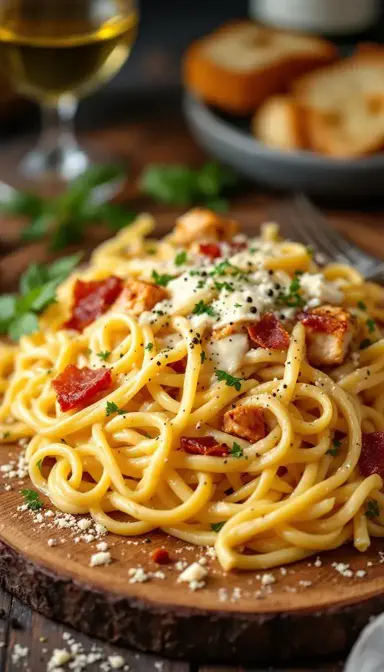
Chicken Carbonara
Make the best Chicken Carbonara in just 30 minutes! This easy recipe features a creamy, no-cream sauce, tender chicken, and crispy pancetta. Get the recipe now!
Ingredients
For the pasta and sauce:
-
400 g spaghetti or linguine
-
3 large eggs
-
100 g Pecorino Romano cheese (finely grated (plus extra for serving))
-
1 tsp black pepper (freshly ground)
For the chicken and pancetta:
-
2 large boneless, skinless chicken breasts (about 500 g, sliced into thin strips)
-
150 g pancetta (diced)
-
2 cloves garlic (minced)
-
1 tbsp olive oil
-
Salt (to taste)
For garnish:
-
1 handful fresh parsley (chopped (for garnish))
Instructions
-
Start by bringing a large pot of generously salted water to a rolling boil for your pasta. While that’s heating up, whisk the three eggs in a medium bowl. Add the finely grated Pecorino Romano and most of the black pepper (save a little for garnish), and whisk until the mixture is smooth and well-combined. Set this cheesy egg mixture aside near your stove—you’ll need it soon.01
-
Place your large skillet over medium heat and add the diced pancetta. Cook it, stirring occasionally, for about 5-7 minutes until it’s crispy and has rendered its fat. Use a slotted spoon to remove the pancetta from the pan, leaving the delicious rendered fat behind. This pancetta fat will now be your cooking oil for the chicken, infusing it with incredible flavor.02
-
Add the tablespoon of olive oil to the pancetta fat in the skillet. Increase the heat to medium-high and add your sliced chicken strips and minced garlic. Season the chicken with a pinch of salt. Cook, stirring frequently, for 4-6 minutes until the chicken is cooked through and has a nice golden color. The garlic will become fragrant—be careful not to let it burn. Remove the skillet from the heat and stir the crispy pancetta back in.03
-
By now, your pasta water should be boiling. Cook the spaghetti according to package instructions until it is al dente—it should still have a slight bite to it. Just before draining, carefully scoop out about one cup of the starchy pasta water. This is liquid gold for your sauce.04
-
Working quickly, drain the pasta and immediately add it to the skillet with the chicken and pancetta. Toss everything together so the pasta gets coated in the flavorful fats. The residual heat from the pan and the pasta will be perfect for the next step.05
-
This is the most crucial part: tempering the eggs. Take your bowl of egg and cheese mixture and slowly pour it over the hot pasta, while tossing continuously and vigorously. The goal is to coat every strand without the eggs scrambling. If the sauce seems too thick, add a splash of the reserved pasta water, one tablespoon at a time, until it becomes glossy and clings to the pasta beautifully.06
-
Your sauce should now be creamy, smooth, and incredibly luxurious. Give it a final taste and adjust seasoning with more salt or pepper if needed. Serve immediately, garnished with the remaining black pepper, a sprinkle of extra Pecorino Romano, and the fresh chopped parsley for a pop of color and freshness.07
Not what you're looking for?


