There’s something incredibly satisfying about that perfect crunch—the kind that echoes when you bite into tender, juicy chicken. That’s the magic of a well-made Chicken Katsu, a comforting crowd-pleaser that’s surprisingly straightforward. This homemade version uses a clever low-carb breading method for an iconic crispy crust without traditional flour and panko.
Nothing beats a great Chicken Katsu. Whether you're a fan of Dinner Ideas or want to try something from our Chicken Recipes selection, keep scrolling!


Why You’ll Love This Chicken Katsu
- Unbeatable Crunch: Almond flour and pork rinds create a shatteringly crisp crust.
- Simple to Master: Just a few easy steps: pound, dredge, and fry.
- Meal Prep Hero: Delicious hot or cold, perfect for lunches and snacks.
- Incredibly Versatile: A blank canvas for katsu curry, sandwiches, or salads.
Ingredients & Tools
- 2 large boneless, skinless chicken breasts (about 450-500 g total)
- 1 cup finely ground blanched almond flour
- 2 large eggs
- 1.5 cups plain pork rinds, finely crushed
- 1 tsp garlic powder
- 1/2 tsp fine sea salt
- 1/4 tsp black pepper
- 1/2 cup avocado oil or other high-smoke-point oil, for frying
- For the Katsu Sauce: 3 tbsp sugar-free ketchup, 1.5 tbsp coconut aminos, 1 tsp Worcestershire sauce, 1/2 tsp Dijon mustard
Tools: A heavy skillet (cast iron is ideal), three shallow bowls for dredging, a meat mallet or rolling pin, paper towels, and a wire rack for cooling.
Notes: The almond flour provides a sturdy base, while finely crushed pork rinds create an airy, ultra-crispy finish.
Nutrition (per serving)
| Calories: | 485 kcal |
| Protein: | 42 g |
| Fat: | 32 g |
| Carbs: | 6 g |
| Fiber: | 3 g |
Serves: 2 | Prep Time: 15 minutes | Cook Time: 10 minutes | Total Time: 25 minutes
Before You Start: Tips & Ingredient Notes
- Pound that chicken evenly. This is arguably the most important step for perfect katsu. An even thickness ensures the chicken cooks through at the same rate the crust turns golden brown. No more burnt outside and raw inside!
- Get your pork rinds super fine. You can pulse them in a food processor or seal them in a bag and go at them with a rolling pin. The finer the crumbs, the better they’ll adhere and the crispier your final crust will be.
- Don’t be shy with the seasoning. Season every layer—the chicken itself, the almond flour, and the pork rind crumbs. This builds depth of flavor right into the crust, so every bite is perfectly seasoned.
- Set up your dredging station in order. Having your bowls lined up—almond flour, beaten egg, pork rinds—makes the process smooth and keeps one hand dry for handling the chicken and one hand wet for the egg, minimizing mess.
How to Make Chicken Katsu
Step 1: Prepare the Chicken. Place one chicken breast at a time between two sheets of plastic wrap or inside a large zip-top bag. Using the flat side of a meat mallet or a heavy rolling pin, gently but firmly pound the chicken until it’s an even 1/2-inch thickness throughout. This tenderizes the meat and creates the classic katsu cutlet shape. Pat the chicken completely dry with paper towels—this is crucial for the breading to stick properly.
Step 2: Create Your Dredging Station. In your first shallow bowl, combine the almond flour, garlic powder, salt, and pepper, and whisk it together with a fork. In the second bowl, beat the two eggs until no streaks of white remain. Place your finely crushed pork rinds in the third and final bowl. Line them up in that order on your counter for a seamless workflow.
Step 3: Bread the Cutlets. Take one pounded chicken cutlet and dredge it thoroughly in the seasoned almond flour, pressing gently to make sure it’s fully coated. Shake off any excess. Next, dip it into the beaten egg, allowing the excess to drip back into the bowl. Finally, press the cutlet firmly into the crushed pork rinds, coating both sides completely. You really want to press it in to ensure a good, thick layer of crunch. Place the finished cutlet on a clean plate and repeat with the second breast.
Step 4: Heat the Oil and Fry. Pour the avocado oil into your heavy skillet until it’s about 1/4-inch deep. Heat it over medium-high heat until it shimmers. To test if it’s ready, you can drop a small piece of the pork rind coating in; it should sizzle vigorously immediately. Carefully lay one breaded cutlet into the hot oil. It should sizzle loudly the moment it touches the oil—that’s how you know you’ve got the temperature right.
Step 5: Cook to Golden Perfection. Fry the first cutlet for about 3-4 minutes per side, until the crust is a deep, golden brown and incredibly crisp. Avoid the temptation to move it around too much; let it fry undisturbed to build that perfect crust. Use tongs to carefully flip it over and cook for another 3-4 minutes on the second side. You’ll notice the color deepen beautifully.
Step 6: Drain and Rest. Once cooked, transfer the finished katsu to a wire rack set over a baking sheet—this allows air to circulate and keeps the bottom from getting soggy. Do not place it directly on paper towels, as the steam can get trapped and soften your hard-earned crunch. Let it rest for a couple of minutes before slicing; this allows the juices to redistribute throughout the chicken.
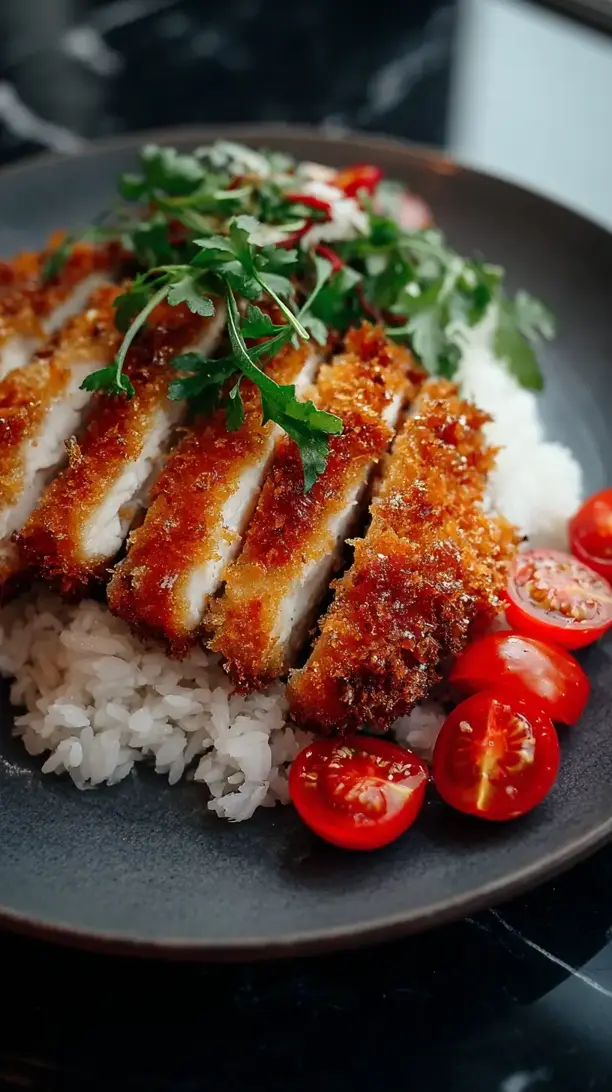
Step 7: Make the Sauce and Serve. While the chicken rests, whisk together all the katsu sauce ingredients in a small bowl: the sugar-free ketchup, coconut aminos, Worcestershire sauce, and Dijon mustard. Taste and adjust if you like it a bit more tangy or savory. To serve, slice the rested katsu against the grain into 1-inch thick strips and drizzle generously with the sauce.
Storage & Freshness Guide
- Fridge: Store cooled katsu in an airtight container for up to 3 days.
- Freezer: Freeze fully cooked katsu on a parchment-lined tray, then transfer to a freezer bag for up to 2 months.
- Reviving: Reheat in an air fryer or oven at 375°F (190°C) for 3–5 minutes to restore crispiness.
Serving Suggestions
Complementary Dishes
- A simple shredded cabbage salad — The fresh, crisp crunch of the cabbage provides a wonderful textural and flavor contrast to the rich, fried chicken, cleansing the palate between bites.
- Cauliflower rice “stir-fry” with broccoli and carrots — This turns your katsu into a more complete, bowl-style meal, soaking up any extra sauce beautifully with its hearty, vegetable-forward base.
- Miso-glazed roasted asparagus — The umami depth from the miso pairs wonderfully with the savory chicken, adding a elegant, green component to your plate.
Drinks
- Iced green tea with a squeeze of lemon — Its clean, slightly bitter notes cut through the richness of the fried food perfectly, making each bite of katsu taste fresh and new.
- A dry, crisp sake or a light lager — If you’re indulging, the effervescence and crisp finish are a classic pairing that lifts the fat and enhances the savory flavors.
Something Sweet
- A few fresh raspberries with a dollop of whipped cream — The bright, tart berries are a fantastic, low-carb way to finish the meal, offering a light and refreshing contrast.
- A square of very dark chocolate (85% or higher) — Let it melt slowly on your tongue; the deep, bitter cocoa is a sophisticated endnote that satisfies the sweet tooth without being overwhelming.
Top Mistakes to Avoid
- Mistake: Not pounding the chicken evenly. This leads to uneven cooking—the thin parts will be overdone and tough while the thick center might still be raw. An even cutlet is non-negotiable for perfect katsu.
- Mistake: Using oil that isn’t hot enough. If the oil doesn’t sizzle aggressively upon contact, the breading will soak up the oil instead of sealing, resulting in a greasy, sad cutlet instead of a light, crisp one.
- Mistake: Crowding the pan. Frying both cutlets at once will drop the oil temperature drastically. Fry them one at a time to maintain that consistent, high heat needed for a perfect fry.
- Mistake: Slicing immediately after frying. I know it’s tempting, but if you slice it right away, all the precious juices will run out onto the cutting board, leaving you with drier chicken. A brief rest is essential.
Expert Tips
- Tip: Use a wire rack for cooling, not paper towels. This is a game-changer for crispy foods. The rack allows steam to escape from all sides, preventing the bottom from getting soft and soggy from condensation.
- Tip: Double-bread for extra crunch. For an even thicker, more resilient crust, after the first round of egg and pork rinds, do a quick second dip in the egg and another press into the pork rinds. It creates a phenomenal, restaurant-style crunch.
- Tip: Re-crisp in the air fryer or oven. If you have leftovers, reheat them in an air fryer at 375°F (190°C) for 3-4 minutes or a conventional oven. This will bring back the crunch far better than a microwave ever could.
- Tip: Make a double batch of the sauce. It’s so good you’ll want extra for drizzling over your side dishes, or even as a dip for other things like roasted vegetables or cauliflower fritters.
FAQs
Can I bake this chicken katsu instead of frying it?
You absolutely can! For a baked version, place the breaded cutlets on a wire rack set over a baking sheet and spray them generously with avocado or olive oil cooking spray. Bake at 400°F (200°C) for about 15-18 minutes, flipping halfway through, until golden brown and cooked through. The crust will be a bit different—lighter and less shatteringly crisp—but it’s still a delicious and healthier alternative.
What can I use if I don’t have pork rinds?
If you don’t eat pork or can’t find them, crushed plain parmesan crisps are a fantastic substitute. You can also use more almond flour mixed with a tablespoon of nutritional yeast for a cheesy flavor, though the texture will be denser and more like a coating than a light, airy crust.
How do I know when the chicken is fully cooked?
The best way is to use an instant-read thermometer. Insert it into the thickest part of the chicken, and it should read 165°F (74°C). Visually, the juices should run clear, and the meat should be white all the way through with no pinkness. The crust will be a deep, appetizing golden brown.
Can I make this ahead of time?
You can bread the chicken cutlets ahead of time and keep them in the refrigerator on a parchment-lined tray for up to 4 hours before frying. I don’t recommend freezing the breaded raw cutlets, as the crust can become soggy when it thaws. It’s best cooked fresh, but leftovers reheat surprisingly well.
Is tonkatsu sauce traditionally low-carb?
No, traditional tonkatsu sauce is quite high in sugar. That’s why we make our own quick version with sugar-free ketchup and coconut aminos. It delivers that familiar tangy, sweet, and savory flavor profile without the carb load, making it the perfect companion for your low-carb katsu.


Chicken Katsu
Learn how to make perfect, crispy Chicken Katsu at home with this easy recipe. Get that iconic crunch with a low-carb twist. Try this delicious recipe today!
Ingredients
For the Chicken Katsu:
-
2 large boneless, skinless chicken breasts (about 450-500 g total)
-
1 cup finely ground blanched almond flour
-
2 large eggs
-
1.5 cups plain pork rinds, finely crushed
-
1 tsp garlic powder
-
0.5 tsp fine sea salt
-
0.25 tsp black pepper
-
0.5 cup avocado oil or other high-smoke-point oil (for frying)
For the Katsu Sauce:
-
3 tbsp sugar-free ketchup
-
1.5 tbsp coconut aminos
-
1 tsp Worcestershire sauce
-
0.5 tsp Dijon mustard
Instructions
-
Place one chicken breast at a time between two sheets of plastic wrap or inside a large zip-top bag. Using the flat side of a meat mallet or a heavy rolling pin, gently but firmly pound the chicken until it’s an even 1/2-inch thickness throughout. Pat the chicken completely dry with paper towels.01
-
In your first shallow bowl, combine the almond flour, garlic powder, salt, and pepper, and whisk it together with a fork. In the second bowl, beat the two eggs until no streaks of white remain. Place your finely crushed pork rinds in the third and final bowl.02
-
Take one pounded chicken cutlet and dredge it thoroughly in the seasoned almond flour, pressing gently to make sure it's fully coated. Shake off any excess. Next, dip it into the beaten egg, allowing the excess to drip back into the bowl. Finally, press the cutlet firmly into the crushed pork rinds, coating both sides completely. Place the finished cutlet on a clean plate and repeat with the second breast.03
-
Pour the avocado oil into your heavy skillet until it’s about 1/4-inch deep. Heat it over medium-high heat until it shimmers. Carefully lay one breaded cutlet into the hot oil.04
-
Fry the first cutlet for about 3-4 minutes per side, until the crust is a deep, golden brown and incredibly crisp. Use tongs to carefully flip it over and cook for another 3-4 minutes on the second side.05
-
Once cooked, transfer the finished katsu to a wire rack set over a baking sheet. Let it rest for a couple of minutes before slicing.06
-
While the chicken rests, whisk together all the katsu sauce ingredients in a small bowl: the sugar-free ketchup, coconut aminos, Worcestershire sauce, and Dijon mustard. To serve, slice the rested katsu against the grain into 1-inch thick strips and drizzle generously with the sauce.07
Not what you're looking for?