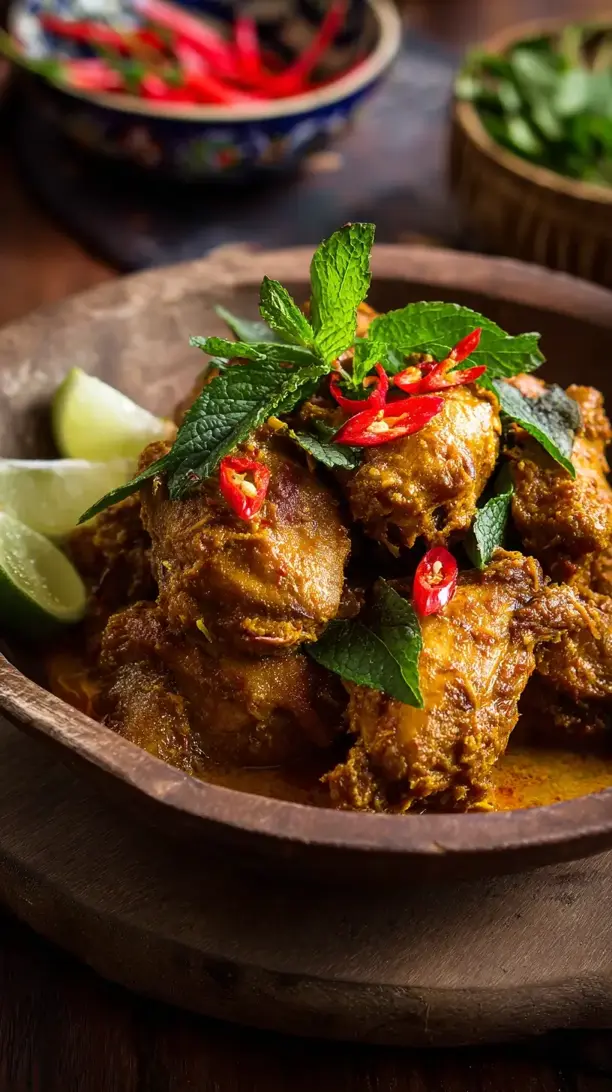
Chicken Rendang is a slow-simmered masterpiece from West Sumatra, where chicken braises in a complex, aromatic paste until the sauce reduces and clings to the meat. This dish rewards patience with incredible layers of flavor—warm chilies, sweet coconut, and a deep, toasty finish. It turns an ordinary dinner into a memorable occasion.
If you're looking for the perfect Chicken Rendang, you're in the right place. Whether you love Chicken Recipes or want to explore our Chicken Breast Recipes collection, we've got you covered.


Why You’ll Love This Chicken Rendang
- Incredible depth: Layers of spice, herbaceous aromatics, and a rich, caramelized finish.
- Satisfying project: Toasting spices and watching the sauce transform is as rewarding as eating it.
- Amazing aroma: Your kitchen will fill with the comforting scent of lemongrass, galangal, and coconut.
- Surprisingly versatile: Great with rice, in flatbreads, over vegetables, or in grain bowls.
Ingredients & Tools
- 1 kg chicken thighs, bone-in and skin-on for maximum flavor
- 400 ml thick coconut milk
- 2 lemongrass stalks, bruised
- 4 kaffir lime leaves, torn
- 1 turmeric leaf, torn (optional, but lovely)
- 2 tsp tamarind paste
- 1 tbsp palm sugar, grated
- 2 tsp salt
- 4 tbsp coconut oil
For the Spice Paste (Bumbu):
- 8 shallots, peeled
- 5 cloves garlic, peeled
- 4 cm ginger, peeled
- 4 cm galangal, peeled
- 3 lemongrass stalks, white parts only
- 10-12 dried red chilies, soaked in hot water
- 1 tsp shrimp paste
- 1 tsp coriander seeds, toasted
- 1/2 tsp cumin seeds, toasted
Notes: Don’t skip toasting the coriander and cumin—it unlocks their essential oils for a nutty aroma.
Tools: A heavy-based pot or Dutch oven, a spice grinder or powerful blender, and a sturdy spatula.
Nutrition (per serving)
| Calories: | 485 kcal |
| Protein: | 35 g |
| Fat: | 36 g |
| Carbs: | 12 g |
| Fiber: | 2 g |
Serves: 4 | Prep Time: 30 minutes | Cook Time: 1 hour 30 minutes | Total Time: 2 hours
Before You Start: Tips & Ingredient Notes
- Why bone-in, skin-on chicken? The bones and skin add an immense amount of flavor and collagen to the sauce, making it richer and more unctuous. You can remove the skin before serving if you prefer, but cooking with it is key.
- Can’t find galangal or kaffir lime leaves? Galangal has a sharp, citrusy-piney flavor that’s hard to replicate, but extra ginger can work in a pinch. For kaffir lime leaves, a little extra lime zest provides a faint echo of that signature aroma, though the flavor profile will shift.
- Don’t rush the paste. You really want to blend it until it’s as smooth as possible. A gritty paste won’t break down properly and can result in a less cohesive final sauce. A little extra time here pays off massively.
- Understanding the stages of rendang. It starts as a soupy curry (gulai), then thickens into a saucy braise (kalio), and finally becomes the dark, dry-ish rendang we know and love. Patience is your best tool.
How to Make Chicken Rendang
Step 1: Prepare the Spice Paste. Start by toasting the coriander and cumin seeds in a dry pan over medium heat for just a minute or two until they’re fragrant. Be careful not to burn them! Combine the toasted seeds with all the other paste ingredients—shallots, garlic, ginger, galangal, lemongrass, soaked chilies, and shrimp paste—in a blender. Add a splash of water to help it along and blend until you have a completely smooth, vibrant paste. This might take a few minutes, so be patient.
Step 2: Fry the Paste. Heat the coconut oil in your heavy-based pot over medium heat. Add the blended spice paste and fry it, stirring almost constantly, for about 8-10 minutes. You’ll notice the color will darken and the raw smell will disappear, replaced by a deeply aromatic, cooked fragrance. The oil might start to separate a little around the edges—this is a good sign, meaning the paste is properly fried.
Step 3: Brown the Chicken. Push the fried paste to one side of the pot and add the chicken thighs, skin-side down. Let them sear for 3-4 minutes until the skin is golden brown and crispy. You’re not cooking them through, just building flavor and texture. Flip them over to briefly sear the other side.
Step 4: The First Simmer. Now, pour in the coconut milk and add the bruised lemongrass stalks, torn kaffir lime leaves, and turmeric leaf if using. Stir everything together, making sure the chicken is submerged. Bring it to a very gentle simmer, then reduce the heat to low, cover the pot, and let it cook for about 30 minutes. The chicken will become tender and start to absorb all those wonderful flavors.
Step 5: Reduce the Sauce. After 30 minutes, remove the lid. Add the tamarind paste, palm sugar, and salt. Stir well. Now, let it continue to simmer uncovered, stirring occasionally. You’ll see the sauce slowly thicken and change color from a light golden brown to a deeper, richer shade over the next 30-40 minutes.
Step 6: The “Kerisik” Stage. This is the final, crucial phase. The sauce will become very thick and oily. You need to stir almost constantly now to prevent it from sticking and burning. Keep cooking and stirring for another 10-15 minutes until the sauce is dark brown, almost black, and clings tightly to the chicken. The oil will be visibly separated. This is the signature dry rendang texture.
Step 7: Rest and Serve. Turn off the heat and let the rendang sit for at least 10 minutes before serving. This resting time allows the flavors to settle and meld together even more beautifully. Taste and adjust seasoning with a little more salt if needed.
Storage & Freshness Guide
- Fridge: Store in an airtight container for up to 4 days; flavors deepen over time.
- Freezer: Freeze for up to 3 months in a sealed container; thaw overnight in fridge.
- Reviving: Reheat gently on stovetop with a splash of water to loosen sauce.
Serving Suggestions
Complementary Dishes
- Steamed Jasmine Rice — The fluffy, fragrant rice is the perfect neutral canvas to soak up every last bit of the rich, complex rendang sauce.
- Simple Cucumber Salad — Sliced cucumbers with a splash of rice vinegar and a pinch of salt provide a crisp, cool, and acidic contrast that cuts through the rendang’s richness beautifully.
- Stir-fried Green Beans — Quickly sautéed green beans with garlic and a dash of soy sauce add a vibrant green element and a different texture to the meal.
Drinks
- Iced Lemongrass Tea — The subtle, citrusy notes of lemongrass tea are incredibly refreshing and complement the spices in the rendang without competing with them.
- A Light Lager — A crisp, cold lager helps cleanse the palate between bites of the flavorful, fatty chicken, making each mouthful taste as exciting as the first.
Something Sweet
- Mango with Sticky Rice — The classic Southeast Asian dessert. The sweet, creamy coconut rice and juicy, ripe mango are a heavenly follow-up to the savory, spiced main course.
- Pandan Coconut Custard — The delicate, vanilla-like flavor of pandan and the creamy texture of the custard offer a gentle, fragrant sweetness that feels like a perfect, light ending.
Top Mistakes to Avoid
- Mistake: Not frying the spice paste long enough. If you rush this step, your rendang will have a raw, harsh taste from the onions and garlic. That initial fry is what develops the deep, rounded base flavor.
- Mistake: Cooking on too high a heat. A rolling boil will cause the coconut milk to split and become greasy rather than emulsifying into a thick, creamy sauce. A gentle, patient simmer is the only way.
- Mistake: Stirring too much during the final stage. I know it sounds counterintuitive, but once the sauce is very thick, constant stirring can make the chicken fall apart. Gentle, occasional folds are better to preserve the texture.
- Mistake: Skipping the rest. Serving it straight from the pot means the flavors haven’t had a chance to fully integrate. That 10-minute wait makes a noticeable difference in the harmony of the dish.
Expert Tips
- Tip: Make a double batch of the spice paste. It freezes beautifully in an ice cube tray. Having pre-made paste on hand cuts the prep time in half for your next rendang craving.
- Tip: Use a splatter screen. When you’re frying the paste, it can spit and sputter quite a bit. A splatter screen over your pot will save you from a major stovetop cleanup.
- Tip: Let the fat render. When you sear the chicken, be patient and let the skin render its fat properly. This not only gives you crispy skin but also adds more flavorful chicken fat to the sauce.
- Tip: The “kerisik” shortcut. For an extra layer of nutty flavor and texture, you can toast 3 tablespoons of desiccated coconut in a dry pan until dark brown, then grind it into a paste and stir it in during the final 10 minutes of cooking.
FAQs
Can I use chicken breast instead of thighs?
You can, but I really don’t recommend it. Chicken breast doesn’t have the same fat content or connective tissue, so it’s very likely to become dry and stringy during the long cooking process. Thighs stay juicy and tender, standing up to the braising time much better. If you must use breast, reduce the total cooking time significantly and add it later in the process.
My rendang is too spicy. How can I fix it?
The heat level can be intense! To tame it, stir in a tablespoon or two of full-fat yogurt or coconut cream right at the end, just before serving. The dairy/fat will help mellow the capsaicin. You can also serve it with extra plain rice and that cooling cucumber salad to help balance the heat on your palate.
How do I store and reheat leftovers?
Leftover rendang is a gift! Store it in an airtight container in the fridge for up to 4 days. The flavors actually deepen. To reheat, do it gently on the stovetop over low heat with a tiny splash of water to loosen it up. Avoid the microwave, as it can make the chicken rubbery and heat it unevenly.
Can I make this dish ahead of time?
Absolutely, and it’s often even better the next day. Let it cool completely after cooking, then store it in the fridge. Gently reheat it before serving. This make-ahead quality makes it a fantastic option for dinner parties or busy weeks.
Why is my rendang not darkening in color?
This almost always comes down to patience and heat management. If you’re rushing and have the heat too high, the liquid evaporates before the sauce has a chance to caramelize properly. The dark color comes from the slow caramelization of the coconut milk and spices. Keep it on a low, steady simmer, and trust the process—it will get there.


Chicken Rendang
Learn how to make authentic Chicken Rendang with this step-by-step recipe. Aromatic, rich, and deeply flavorful. Get the full recipe and tips now!
Ingredients
For the Main Ingredients:
-
1 kg chicken thighs (bone-in and skin-on)
-
400 ml thick coconut milk
-
2 lemongrass stalks (bruised)
-
4 kaffir lime leaves (torn)
-
1 turmeric leaf (torn (optional, but lovely))
-
2 tsp tamarind paste
-
1 tbsp palm sugar (grated)
-
2 tsp salt
-
4 tbsp coconut oil
For the Spice Paste (Bumbu):
-
8 shallots (peeled)
-
5 garlic (peeled)
-
4 cm ginger (peeled)
-
4 cm galangal (peeled)
-
3 lemongrass stalks (white parts only)
-
10-12 dried red chilies (soaked in hot water)
-
1 tsp shrimp paste
-
1 tsp coriander seeds (toasted)
-
0.5 tsp cumin seeds (toasted)
Instructions
-
Start by toasting the coriander and cumin seeds in a dry pan over medium heat for just a minute or two until they’re fragrant. Combine the toasted seeds with all the other paste ingredients—shallots, garlic, ginger, galangal, lemongrass, soaked chilies, and shrimp paste—in a blender. Add a splash of water to help it along and blend until you have a completely smooth, vibrant paste.01
-
Heat the coconut oil in your heavy-based pot over medium heat. Add the blended spice paste and fry it, stirring almost constantly, for about 8-10 minutes. You’ll notice the color will darken and the raw smell will disappear, replaced by a deeply aromatic, cooked fragrance.02
-
Push the fried paste to one side of the pot and add the chicken thighs, skin-side down. Let them sear for 3-4 minutes until the skin is golden brown and crispy. Flip them over to briefly sear the other side.03
-
Pour in the coconut milk and add the bruised lemongrass stalks, torn kaffir lime leaves, and turmeric leaf if using. Stir everything together, making sure the chicken is submerged. Bring it to a very gentle simmer, then reduce the heat to low, cover the pot, and let it cook for about 30 minutes.04
-
After 30 minutes, remove the lid. Add the tamarind paste, palm sugar, and salt. Stir well. Now, let it continue to simmer uncovered, stirring occasionally. You’ll see the sauce slowly thicken and change color from a light golden brown to a deeper, richer shade over the next 30-40 minutes.05
-
The sauce will become very thick and oily. You need to stir almost constantly now to prevent it from sticking and burning. Keep cooking and stirring for another 10-15 minutes until the sauce is dark brown, almost black, and clings tightly to the chicken. The oil will be visibly separated.06
-
Turn off the heat and let the rendang sit for at least 10 minutes before serving. Taste and adjust seasoning with a little more salt if needed.07
Not what you're looking for?