
This Chicken Thigh Fried Rice is a quick, satisfying weeknight meal that transforms humble ingredients into something spectacular. Juicy chicken thighs and day-old rice create unbeatable texture and flavor. It’s a one-pan wonder that comes together faster than delivery.
Looking for Chicken Thigh Fried Rice inspiration? You'll love what we have! Explore more Chicken Thigh Recipes recipes or discover our Chicken Breast Recipes favorites.



Why You’ll Love This Chicken Thigh Fried Rice
Juicy chicken thighs: More forgiving and flavorful than breast meat.
Clean-out-the-fridge meal: Adaptable and reduces food waste.
Faster than delivery: Ready in under 10 minutes once prepped.
Restaurant-quality comfort: Glossy, well-seasoned grains feel fancy.
Ingredients & Tools
- 450 g boneless, skinless chicken thighs, cut into 1-inch pieces
- 3 cups cooked and cooled jasmine rice (preferably day-old)
- 2 large eggs, lightly beaten
- 1 medium yellow onion, finely diced
- 2 cloves garlic, minced
- 1 tbsp fresh ginger, grated
- 1 cup frozen peas and carrots, thawed
- 3 tbsp soy sauce (or tamari)
- 1 tbsp oyster sauce
- 1 tsp sesame oil
- 2 tbsp vegetable or canola oil, divided
- 2 green onions, thinly sliced, for garnish
Tools: A large wok or a very large, heavy-bottomed skillet (12-inch minimum), a good spatula, and a set of measuring spoons.
Notes: Using day-old rice is non-negotiable for the best texture. The soy and oyster sauce combo provides signature umami depth.
Nutrition (per serving)
| Calories: | 420 kcal |
| Protein: | 25 g |
| Fat: | 16 g |
| Carbs: | 42 g |
| Fiber: | 3 g |
Serves: 4 | Prep Time: 15 minutes | Cook Time: 10 minutes | Total Time: 25 minutes
Before You Start: Tips & Ingredient Notes
- Why day-old rice? Freshly cooked rice is too moist and steamy, which will cause your fried rice to become mushy and clump together. Using rice that’s been chilled overnight dries out the surface moisture, allowing each grain to fry up separately and achieve that perfect, distinct texture.
- Can I use chicken breast instead? You can, but you’ll lose the incredible juiciness and richer flavor that thighs provide. If you do swap, be extra careful not to overcook the breast meat, as it can become dry and tough very quickly in a hot wok.
- Get your mise en place ready. Fried rice cooks in a flash, and there’s no time to chop or measure once you start. Have every single ingredient prepped, measured, and within arm’s reach of the stove before you turn on the heat.
- Don’t skip the oyster sauce. It’s the secret weapon for depth of flavor, adding a complex, savory-sweet note that soy sauce alone can’t provide. If you’re vegetarian, look for a mushroom-based vegetarian “oyster” sauce—it works wonderfully.
How to Make Chicken Thigh Fried Rice
Step 1: Start by ensuring your chicken thighs are patted dry and cut into uniform, 1-inch pieces. This helps them cook evenly. Heat 1 tablespoon of vegetable oil in your wok or large skillet over high heat until it shimmers. Add the chicken in a single layer and let it sear undisturbed for about 1-2 minutes to get a good, golden-brown color. Then, stir and cook for another 3-4 minutes until the chicken is cooked through. You’ll notice those delicious browned bits (fond) forming on the bottom of the pan—that’s pure flavor! Remove the chicken to a clean plate, leaving any drippings behind.
Step 2: Reduce the heat to medium-high and add the remaining tablespoon of oil to the same pan. Pour in your lightly beaten eggs. Let them set for about 30 seconds before you start to scramble them gently with your spatula. You’re aiming for large, soft curds. Just before they’re fully set, push the eggs to one side of the pan. They’ll finish cooking from residual heat, keeping them tender.
Step 3: To the empty side of the pan, add the diced onion. Stir-fry for about 1 minute until it just starts to turn translucent. Now add the minced garlic and grated ginger, and stir everything together for just 30 seconds until incredibly fragrant—be careful not to burn it! The aroma at this stage is just… heavenly.
Step 4: Now, it’s time for the rice. Crumble the cold rice into the pan with your fingers, breaking up any large clumps. Increase the heat back to high. Toss and press the rice into the hot pan, allowing it to fry for a minute or two. You should hear a slight sizzling sound. This is where you develop that wonderful, slightly chewy “wok hei” texture in the grains.
Step 5: Add the thawed peas and carrots back to the pan, along with the cooked chicken and any accumulated juices. Toss everything together to combine and heat through, about 1-2 minutes. The vibrant colors of the veggies will start to pop against the white rice.
Step 6: The final flourish! Drizzle the soy sauce and oyster sauce over the rice. Using your spatula, toss and fold the rice continuously for another 1-2 minutes, ensuring every grain is evenly coated and glossy. The sauce should sizzle and reduce slightly, clinging to the ingredients. Turn off the heat and drizzle the sesame oil over the top, giving it one final toss. Garnish with a generous amount of sliced green onions and serve immediately while it’s piping hot.
Storage & Freshness Guide
- Fridge: Store in an airtight container for 3-4 days.
- Freezer: Not recommended; rice becomes grainy and watery when thawed.
- Reviving: Reheat in a lightly oiled skillet over medium heat, tossing frequently, to restore crisp texture.
Serving Suggestions
Complementary Dishes
- A simple cucumber salad — The cool, crisp, and slightly tangy crunch of quick-pickled cucumbers provides a refreshing contrast to the rich, savory notes of the fried rice, cleansing the palate between bites.
- Steamed or roasted broccoli — An easy, healthy side that soaks up any extra sauce beautifully, adding a different texture and a pop of green to your plate without competing for flavor.
- Store-bought or homemade potstickers — Because who doesn’t love dumplings? Their crispy bottom and juicy filling make this feel like a full-blown, celebratory feast with minimal extra effort.
Drinks
- Jasmine green tea — Its delicate, floral aroma is a classic pairing that complements the dish without overpowering it, and the warmth is wonderfully soothing.
- A crisp lager or pilsner — The light, effervescent bubbles and clean finish of a cold beer cut through the richness of the dish perfectly, making each mouthful taste fresh again.
- Sparkling water with lime — For a non-alcoholic option, the sharp fizz and citrus zing are fantastic for resetting your taste buds, enhancing the overall dining experience.
Something Sweet
- Mango with sticky rice — This iconic dessert brings sweet, creamy, and chewy textures that follow the meal’s theme while providing a delightful, tropical finish.
- Fortune cookies and orange wedges — A fun, traditional way to end the meal; the bright citrus and sweet cookie are a light, simple treat that feels just right.
- A scoop of coconut or green tea ice cream — The cool, creamy sweetness is a dreamy contrast to the hot, savory fried rice, ending your meal on a high note.
Top Mistakes to Avoid
- Mistake: Using warm, freshly cooked rice. This is the number one reason for gummy, clumpy fried rice. The excess steam turns the dish into a sticky mess instead of allowing individual grains to fry up nicely.
- Mistake: Overcrowding the pan. If you add too much at once, the temperature drops, and you end up steaming the ingredients instead of frying them. You lose that essential “wok hei” or breath of the wok.
- Mistake: Burning the garlic and ginger. They cook in seconds. If you add them too early or over high heat without other ingredients, they’ll turn bitter and can ruin the entire batch with a burnt, acrid flavor.
- Mistake: Stirring constantly. You need to let the rice sit and press against the hot surface for brief moments to get a little color and that characteristic slightly chewy, fried texture. Constant stirring just steams it.
Expert Tips
- Tip: Use a pressing and tossing motion. Instead of just stirring, press the rice down into the hot pan with your spatula, let it sit for 15-20 seconds, then toss. This mimics the action of a restaurant wok and gives you those perfectly fried grains.
- Tip: For extra flavor, marinate the chicken. Toss your cubed chicken thighs with a teaspoon of soy sauce and a pinch of cornstarch for 15 minutes before cooking. The cornstarch gives the exterior a velvety texture and helps it stay super juicy.
- Tip: Add a pinch of MSG (Accent). If you really want to elevate the umami to restaurant levels, a tiny pinch of MSG in the sauce stage works wonders. It’s not necessary, but it’s a chef’s secret for a reason.
- Tip: Reheat leftovers in a skillet. To bring back the magic, never microwave leftover fried rice. Reheat it in a lightly oiled skillet over medium heat, tossing frequently. It will crisp right back up, almost tasting fresh-made.
FAQs
Can I use brown rice instead of white rice?
Absolutely! Brown rice works well, but it has a chewier texture and more moisture, so the final dish will be a bit different. The key is to make sure it’s thoroughly cooled and dried out, just like white rice. You might need to fry it for a minute or two longer to get the right texture. I find that short-grain brown rice can be a bit too sticky, so long-grain or jasmine brown rice is your best bet here.
My fried rice turned out soggy. What happened?
This almost always comes down to the rice being too wet. Either it was freshly cooked and still steamy, or your frozen veggies weren’t thawed and patted dry, releasing excess water into the pan. Another culprit is adding too much sauce at once, which can steam the rice instead of coating it. Next time, ensure your rice is cold and your veggies are dry, and add the sauces in a steady drizzle while tossing constantly.
Can I make this vegetarian?
Of course, and it’s delicious! Simply swap the chicken thighs for a plant-based protein like cubed firm tofu or tempeh, and use a vegetarian oyster sauce (usually made from mushrooms). You might want to increase the quantity of vegetables, too—some sliced mushrooms would add a wonderful meaty texture and umami flavor that complements the dish beautifully.
How long will leftovers keep in the fridge?
Stored in an airtight container, your chicken thigh fried rice will keep well for 3-4 days. Reheat it thoroughly in a skillet, as mentioned, for the best texture and food safety. I don’t recommend freezing it, as the rice can become unpleasantly grainy and watery upon thawing.
What other vegetables can I add?
This recipe is incredibly flexible! Finely diced bell peppers, corn kernels, chopped green beans, or even baby spinach (added at the very end) are all fantastic additions. Just remember the rule for hard veggies like carrots or broccoli: chop them small so they cook quickly, and for frozen veggies, always thaw and drain them to prevent sogginess.



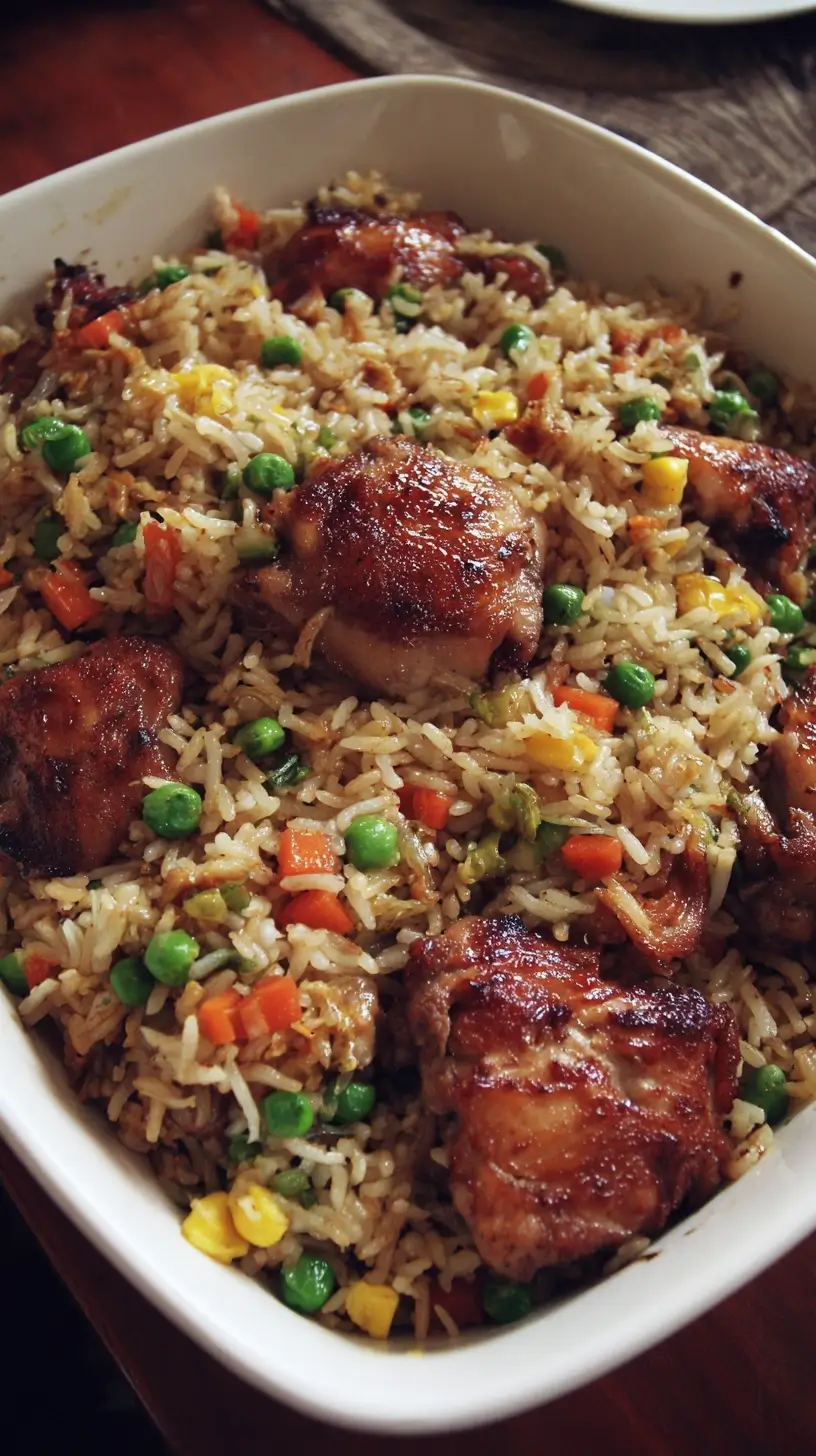
Chicken Thigh Fried Rice
Make the best Chicken Thigh Fried Rice at home! This easy one-pan recipe uses juicy thighs and day-old rice for perfect texture. Get the quick recipe now!
Ingredients
For the Ingredients
-
450 g boneless, skinless chicken thighs (cut into 1-inch pieces)
-
3 cups cooked and cooled jasmine rice (preferably day-old)
-
2 large eggs (lightly beaten)
-
1 medium yellow onion (finely diced)
-
2 cloves garlic (minced)
-
1 tbsp fresh ginger (grated)
-
1 cup frozen peas and carrots (thawed)
-
3 tbsp soy sauce (or tamari)
-
1 tbsp oyster sauce
-
1 tsp sesame oil
-
2 tbsp vegetable or canola oil (divided)
-
2 green onions (thinly sliced, for garnish)
Instructions
-
Start by ensuring your chicken thighs are patted dry and cut into uniform, 1-inch pieces. This helps them cook evenly. Heat 1 tablespoon of vegetable oil in your wok or large skillet over high heat until it shimmers. Add the chicken in a single layer and let it sear undisturbed for about 1–2 minutes to get a good, golden-brown color. Then, stir and cook for another 3–4 minutes until the chicken is cooked through. You’ll notice those delicious browned bits (fond) forming on the bottom of the pan—that’s pure flavor! Remove the chicken to a clean plate, leaving any drippings behind.01
-
Reduce the heat to medium-high and add the remaining tablespoon of oil to the same pan. Pour in your lightly beaten eggs. Let them set for about 30 seconds before you start to scramble them gently with your spatula. You’re aiming for large, soft curds. Just before they’re fully set, push the eggs to one side of the pan. They’ll finish cooking from residual heat, keeping them tender.02
-
To the empty side of the pan, add the diced onion. Stir-fry for about 1 minute until it just starts to turn translucent. Now add the minced garlic and grated ginger, and stir everything together for just 30 seconds until incredibly fragrant—be careful not to burn it! The aroma at this stage is just… heavenly.03
-
Now, it’s time for the rice. Crumble the cold rice into the pan with your fingers, breaking up any large clumps. Increase the heat back to high. Toss and press the rice into the hot pan, allowing it to fry for a minute or two. You should hear a slight sizzling sound. This is where you develop that wonderful, slightly chewy "wok hei" texture in the grains.04
-
Add the thawed peas and carrots back to the pan, along with the cooked chicken and any accumulated juices. Toss everything together to combine and heat through, about 1–2 minutes. The vibrant colors of the veggies will start to pop against the white rice.05
-
The final flourish! Drizzle the soy sauce and oyster sauce over the rice. Using your spatula, toss and fold the rice continuously for another 1–2 minutes, ensuring every grain is evenly coated and glossy. The sauce should sizzle and reduce slightly, clinging to the ingredients. Turn off the heat and drizzle the sesame oil over the top, giving it one final toss. Garnish with a generous amount of sliced green onions and serve immediately while it’s piping hot.06
Not what you're looking for?


