
This Chicken Thigh Stew is a deeply comforting, one-pot meal perfect for chilly evenings. The magic lies in using bone-in, skin-on chicken thighs, which stay incredibly juicy and absorb all the wonderful flavors from the vegetables, herbs, and rich broth. It’s a humble, hearty recipe that asks for little effort but rewards you with immense flavor and satisfaction.
Love Chicken Thigh Stew? So do we! If you're into Chicken Thigh Recipes or curious about Chicken Breast Recipes, you'll find plenty of inspiration below.



Why You’ll Love This Chicken Thigh Stew
Deep flavor: A slow simmer transforms simple ingredients into a rich, complex stew.
Fall-apart chicken: Bone-in, skin-on thighs become incredibly tender and juicy.
Flexible recipe: Easily adapt with pantry staples and different vegetables.
Fantastic leftovers: The flavors deepen overnight, making it a perfect make-ahead meal.
Ingredients & Tools
- 1.5 kg (about 3.3 lbs) bone-in, skin-on chicken thighs
- 2 tbsp olive oil
- 1 large yellow onion, diced
- 2 medium carrots, peeled and chopped into 1-inch chunks
- 2 celery stalks, chopped
- 1 leek, white and light green parts only, thoroughly washed and sliced
- 4 cloves garlic, minced
- 3 tbsp tomato paste
- 1/2 cup (120 ml) dry white wine (like Sauvignon Blanc)
- 4 cups (1 liter) chicken stock, preferably low-sodium
- 2 bay leaves
- 4-5 sprigs fresh thyme
- 1.5 cups (200 g) baby potatoes, halved if large
- Kosher salt and freshly ground black pepper
- 2 tbsp chopped fresh parsley, for garnish
Tools: A large, heavy-bottomed pot or Dutch oven (this is key for even heat distribution), a pair of sturdy tongs, and a wooden spoon.
Notes: Don’t skip the wine—it adds a lovely acidity that brightens the stew. Using a good, flavorful chicken stock makes a world of difference.
Nutrition (per serving)
| Calories: | 480 kcal |
| Protein: | 35 g |
| Fat: | 25 g |
| Carbs: | 22 g |
| Fiber: | 4 g |
Serves: 6 | Prep Time: 20 minutes | Cook Time: 1 hour 30 minutes | Total Time: 1 hour 50 minutes
Before You Start: Tips & Ingredient Notes
- Why bone-in, skin-on thighs? This is non-negotiable for the best flavor and texture. The skin gets beautifully crispy when you sear it, and the bones release gelatin as they cook, which gives the stew a luxurious, silky body that you just can’t get from boneless meat.
- Don’t rush the sear. Getting a good, deep golden-brown color on the chicken skin is your first step to building a flavor foundation. That fond—the browned bits left in the pot—is pure flavor gold. Be patient and let the skin really crisp up.
- Low-sodium stock is your friend. Since the liquid reduces as the stew simmers, using a low-sodium stock gives you complete control over the final seasoning. You can always add more salt, but you can’t take it out!
- Prep your veggies uniformly. Try to chop your carrots, celery, and potatoes into similar-sized pieces. This ensures they all cook at the same rate, so you don’t end up with some mushy vegetables and some undercooked ones.
How to Make Chicken Thigh Stew
Step 1: Pat the chicken thighs completely dry with paper towels. This is crucial for getting that crisp, golden skin. Generously season both sides with salt and pepper. Place your heavy-bottomed pot or Dutch oven over medium-high heat and add the olive oil. Once the oil is shimmering, carefully add the chicken thighs, skin-side down. You might need to do this in two batches to avoid overcrowding the pot. Let them cook, without moving them, for 6-8 minutes, until the skin is deeply golden and crispy. Flip and cook for another 2 minutes on the other side, then transfer them to a plate. You’ll notice all those beautiful browned bits stuck to the bottom of the pot—that’s your flavor base!
Step 2: Reduce the heat to medium. To the same pot, add the diced onion, carrots, celery, and leek. Sprinkle with a pinch of salt—this helps them release their moisture. Sauté, stirring occasionally and scraping up the browned bits from the bottom, for about 8-10 minutes, until the vegetables have softened and the onions are translucent. Add the minced garlic and cook for just one more minute, until fragrant. You don’t want the garlic to burn.
Step 3: Push the vegetables to the side to create a little clear spot in the center of the pot. Add the tomato paste to that spot and let it cook for a minute or two, stirring it in that one area. You’ll see its color darken slightly and it will smell sweet and rich—this step, called “toasting” the tomato paste, deepens its flavor immensely. Now, pour in the white wine to deglaze the pot, using your wooden spoon to scrape up any remaining browned bits. Let it bubble and reduce by about half, which should take 2-3 minutes.
Step 4: Pour in the chicken stock, and add the bay leaves and thyme sprigs. Nestle the seared chicken thighs back into the pot, along with any juices that have accumulated on the plate. The liquid should come about three-quarters of the way up the chicken. Bring everything to a gentle boil, then immediately reduce the heat to low, cover the pot with a lid, and let it simmer gently for 30 minutes.
Step 5: After 30 minutes, uncover the pot and add the halved baby potatoes. Give everything a gentle stir, submerging the potatoes in the liquid. Cover again and continue to simmer for another 30-40 minutes, or until the potatoes are fork-tender and the chicken is practically falling off the bone. The aroma in your kitchen at this point will be absolutely divine.
Step 6: Carefully remove the chicken thighs from the stew and place them on a clean plate or cutting board. Using two forks, shred the meat, discarding the skin and bones. You can leave the meat in larger chunks or shred it finely—it’s up to you! Return the shredded chicken to the pot. Discard the bay leaves and thyme stems. Give the stew a final taste and adjust the seasoning with more salt and pepper if needed. Stir in half of the chopped parsley.
Step 7: Ladle the hot stew into deep bowls. The broth should be rich and glossy, the vegetables tender but not mushy, and the chicken incredibly succulent. Garnish with the remaining fresh parsley for a pop of color and freshness. Serve immediately and enjoy the warmth and comfort in every single spoonful.
Storage & Freshness Guide
- Fridge: Cool completely and store in an airtight container for 3-4 days.
- Freezer: Freeze for up to 3 months. Thaw overnight in the fridge before reheating.
- Reviving: Reheat gently on the stovetop, adding a splash of broth or water if needed.
Serving Suggestions
Complementary Dishes
- Crusty, buttered sourdough bread — It’s absolutely essential for sopping up every last drop of that delicious, savory broth. The chewy texture and slight tang are a perfect match.
- A simple, crisp green salad with a lemony vinaigrette — The bright, acidic dressing provides a refreshing contrast that cuts through the richness of the stew beautifully.
- Buttery egg noodles or creamy polenta — For an even heartier meal, serve the stew over a bed of either. The stew becomes a luxurious sauce for the noodles or polenta.
Drinks
- A glass of unoaked Chardonnay or a light Pinot Noir — The Chardonnay has enough body to stand up to the stew, while a Pinot Noir complements the earthy notes without overpowering them.
- A dark, malty ale or amber lager — The caramel notes in the beer mirror the sweetness of the cooked carrots and onions, creating a really harmonious pairing.
- Sparkling water with a squeeze of lemon — A non-alcoholic option that still provides a crisp, clean finish to reset your palate between bites.
Something Sweet
- Warm apple crumble with vanilla ice cream — The warm, spiced apples and cool, creamy ice cream are a classic, comforting end to a hearty meal.
- Dark chocolate pots de crème — Rich, silky, and not too heavy, these little chocolate pots feel indulgent but won’t leave you feeling overstuffed.
- Simple shortbread cookies — Their buttery simplicity is the perfect, gentle finish after a flavorful and savory stew.
Top Mistakes to Avoid
- Mistake: Not patting the chicken dry before searing. Moisture is the enemy of browning. If the skin is wet, it will steam instead of sear, and you’ll miss out on that crucial crispy texture and deep flavor.
- Mistake: Crowding the pot when browning the chicken. If you put too many thighs in at once, the pot temperature drops and they end up steaming in their own juices. I’ve messed this up before too… give them space for the best sear.
- Mistake: Boiling the stew instead of simmering it. A rolling boil will make the chicken tough and can cause the vegetables to break down into mush. You want a gentle, lazy bubble for tender, perfect results.
- Mistake: Skipping the deglazing step with wine. Those browned bits are packed with flavor. Deglazing with wine not only lifts them off the pot but also adds a layer of acidity that balances the richness of the stew.
Expert Tips
- Tip: Make it a day ahead. Stews almost always taste better the next day. Let it cool completely and store it in the fridge overnight. The fat will rise to the top and solidify, making it easy to skim off for a leaner stew, and the flavors will be even more married and intense.
- Tip: Thicken it up if you like. If you prefer a thicker, gravy-like consistency, mix one tablespoon of cornstarch with two tablespoons of cold water to create a slurry. Stir this into the simmering stew during the last 5 minutes of cooking.
- Tip: Add frozen peas for a pop of color and sweetness. Stir in a cup of frozen peas during the last 5 minutes of cooking. They’ll heat through perfectly and add a lovely bright green color and a sweet flavor contrast.
- Tip: Use the carcass for stock. If you have a leftover chicken carcass from another meal, toss it in the pot with the stew for an even more intense chicken flavor. Just remember to fish it out before serving.
FAQs
Can I make this stew in a slow cooker?
Absolutely! Follow the recipe through Step 3, sautéing the vegetables and deglazing the pot on the stovetop. Then, transfer everything (including the seared chicken) to your slow cooker, add the stock and potatoes, and cook on LOW for 6-7 hours or on HIGH for 3-4 hours. The result will be just as tender and flavorful.
Can I use boneless, skinless chicken thighs?
You can, but you’ll sacrifice a significant amount of flavor and body. The stew will be leaner and the broth won’t be as rich or silky. If you do use them, brown them well on all sides and consider adding a teaspoon of unflavored gelatin to the stock to mimic the body that the bones usually provide.
How long will leftovers keep?
Stored in an airtight container in the refrigerator, this stew will keep beautifully for 3-4 days. The flavors continue to develop, so leftovers are a real treat. You can also freeze it for up to 3 months. Just thaw overnight in the fridge before reheating gently on the stovetop.
My stew is a bit too thin. How can I fix it?
The easiest fix is the cornstarch slurry mentioned in the tips. Alternatively, you can mash a few of the cooked potatoes against the side of the pot and stir them back in—they’ll act as a natural thickener. If you have a little more time, you can uncover the pot and let the stew simmer for an extra 10-15 minutes to reduce and concentrate the liquid.
What can I use instead of white wine?
No problem! You can simply replace the wine with an additional 1/2 cup of chicken stock. For a bit of acidity, you could also add a tablespoon of fresh lemon juice or apple cider vinegar at the very end of cooking, right before you serve, to brighten the flavors.



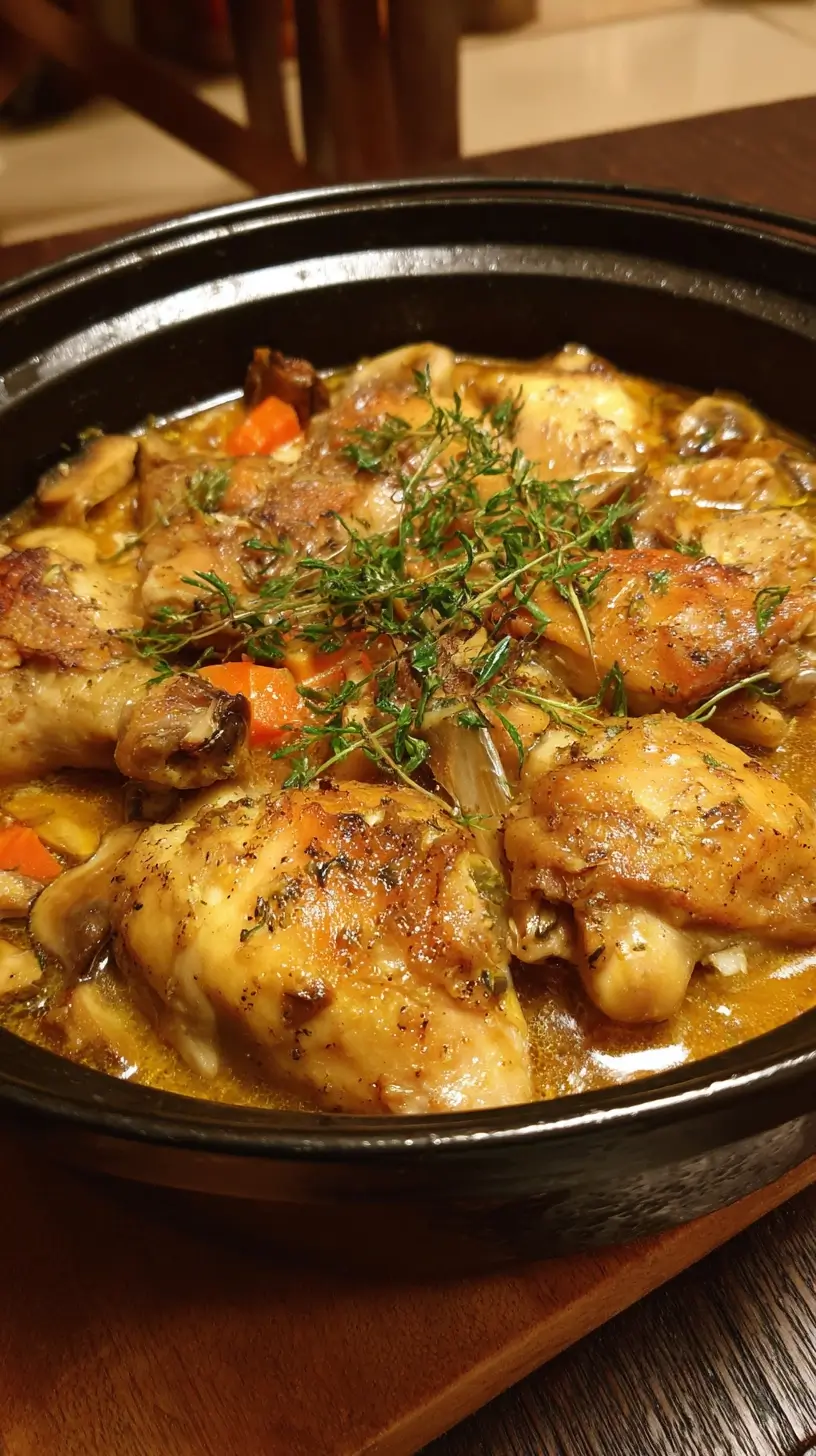
Chicken Thigh Stew
Make the best Chicken Thigh Stew with this easy one-pot recipe. Tender, juicy chicken in a rich, flavorful broth. Get the simple, comforting recipe now!
Ingredients
For the Stew
-
1.5 kg bone-in, skin-on chicken thighs
-
2 tbsp olive oil
-
1 large yellow onion (diced)
-
2 medium carrots (peeled and chopped into 1-inch chunks)
-
2 celery stalks (chopped)
-
1 leek (white and light green parts only, thoroughly washed and sliced)
-
4 cloves garlic (minced)
-
3 tbsp tomato paste
-
0.5 cup dry white wine (like Sauvignon Blanc)
-
4 cups chicken stock (preferably low-sodium)
-
2 bay leaves
-
4-5 sprigs fresh thyme
-
1.5 cups baby potatoes (halved if large)
-
Kosher salt and freshly ground black pepper
-
2 tbsp chopped fresh parsley (for garnish)
Instructions
-
Pat the chicken thighs completely dry with paper towels. Generously season both sides with salt and pepper. Place your heavy-bottomed pot or Dutch oven over medium-high heat and add the olive oil. Once the oil is shimmering, carefully add the chicken thighs, skin-side down. You might need to do this in two batches to avoid overcrowding the pot. Let them cook, without moving them, for 6-8 minutes, until the skin is deeply golden and crispy. Flip and cook for another 2 minutes on the other side, then transfer them to a plate.01
-
Reduce the heat to medium. To the same pot, add the diced onion, carrots, celery, and leek. Sprinkle with a pinch of salt. Sauté, stirring occasionally and scraping up the browned bits from the bottom, for about 8-10 minutes, until the vegetables have softened and the onions are translucent. Add the minced garlic and cook for just one more minute, until fragrant.02
-
Push the vegetables to the side to create a little clear spot in the center of the pot. Add the tomato paste to that spot and let it cook for a minute or two, stirring it in that one area. Now, pour in the white wine to deglaze the pot, using your wooden spoon to scrape up any remaining browned bits. Let it bubble and reduce by about half, which should take 2-3 minutes.03
-
Pour in the chicken stock, and add the bay leaves and thyme sprigs. Nestle the seared chicken thighs back into the pot, along with any juices that have accumulated on the plate. Bring everything to a gentle boil, then immediately reduce the heat to low, cover the pot with a lid, and let it simmer gently for 30 minutes.04
-
After 30 minutes, uncover the pot and add the halved baby potatoes. Give everything a gentle stir, submerging the potatoes in the liquid. Cover again and continue to simmer for another 30-40 minutes, or until the potatoes are fork-tender and the chicken is practically falling off the bone.05
-
Carefully remove the chicken thighs from the stew and place them on a clean plate or cutting board. Using two forks, shred the meat, discarding the skin and bones. Return the shredded chicken to the pot. Discard the bay leaves and thyme stems. Give the stew a final taste and adjust the seasoning with more salt and pepper if needed. Stir in half of the chopped parsley.06
-
Ladle the hot stew into deep bowls. Garnish with the remaining fresh parsley. Serve immediately.07
Not what you're looking for?


