
This Chicken Thigh Udon recipe delivers a deeply comforting bowl of chewy udon noodles and tender chicken thighs in a savory, umami-rich broth. It’s surprisingly easy to pull together on a busy weeknight and wonderfully adaptable. The aroma that fills your kitchen is absolutely incredible.
Nothing beats a great Chicken Thigh Udon. Whether you're a fan of Chicken Thigh Recipes or want to try something from our Appetizers & Snacks selection, keep scrolling!



Why You’ll Love This Chicken Thigh Udon
- Incredibly forgiving: Chicken thighs stay juicy even with extra simmering.
- Deeply savory broth: Dashi base offers clean umami without heaviness.
- Pantry-friendly meal: Easily adapt with whatever veggies you have.
- Perfect texture contrast: Chewy noodles, melt-in-your-mouth chicken, and crisp veggies.
Ingredients & Tools
- 4 boneless, skinless chicken thighs (about 500 g)
- 2 portions (400 g) fresh or frozen udon noodles
- 1 liter dashi stock (see notes below for substitutions)
- 3 tbsp soy sauce
- 2 tbsp mirin
- 1 tbsp sake (optional, but recommended)
- 1 tsp granulated sugar
- 2 spring onions, thinly sliced
- 1 large carrot, julienned or thinly sliced
- 100 g spinach or bok choy
- 2 soft-boiled eggs (optional, for serving)
- 1 sheet nori, shredded (for garnish)
- To taste: shichimi togarashi (Japanese seven-spice)
Tools: A medium-sized pot or Dutch oven, a slotted spoon, and a fine-mesh skimmer (useful for any foam).
Notes: If you can’t find pre-made dashi, simmer kombu and bonito flakes in water for 10 minutes, then strain. Light chicken or vegetable broth works in a pinch.
Nutrition (per serving)
| Calories: | 520 kcal |
| Protein: | 35 g |
| Fat: | 12 g |
| Carbs: | 65 g |
| Fiber: | 5 g |
Serves: 2 | Prep Time: 10 minutes | Cook Time: 20 minutes | Total Time: 30 minutes
Storage & Freshness Guide
- Fridge: Store broth, noodles, and toppings separately for up to 2 days.
- Freezer: Broth freezes well for 1 month; noodles and chicken don’t freeze ideally.
- Reviving: Reheat broth separately, add a splash of water if too thick.
Serving Suggestions
Complementary Dishes
- Simple Cucumber Sunomono — A light, vinegared cucumber salad cuts through the richness of the soup and provides a refreshing, crisp contrast.
- Gyoza (Pan-Fried Dumplings) — The crispy, savory filling of pork or vegetable gyoza is a classic and utterly delicious pairing with any noodle soup.
- Quick-Pickled Radishes — Their sharp, tangy bite helps to cleanse the palate between slurps of the savory udon broth.
Drinks
- Cold Japanese Lager — The crisp, clean bubbles of a beer like Asahi or Sapporo are fantastic for cutting through the umami and refreshing your taste buds.
- Sencha Green Tea — A warm cup of slightly astringent sencha complements the soup’s flavors beautifully without overpowering them.
- Yuzu Sparkling Water — For a non-alcoholic option, the bright, citrusy notes of yuzu provide a lovely, effervescent lift to the meal.
Something Sweet
- Matcha Ice Cream — The slight bitterness of matcha is a perfect follow-up to the savory soup, and its cool, creamy texture is a wonderful finale.
- Mochi — These soft, chewy rice cakes, often filled with sweet red bean paste, offer a delightful textural echo to the udon noodles in dessert form.
- Dorayaki — These sweet red bean pancakes are a classic Japanese treat that feel special and satisfying without being too heavy after a big bowl of noodles.
Before You Start: Tips & Ingredient Notes
- Why chicken thighs? They are the undisputed champion for soups and stews. Their higher fat content means they stay incredibly moist and tender even with a bit of overcooking, unlike breast meat which can become stringy and dry. Trust me on this one.
- Fresh, frozen, or dried udon? For the best texture, seek out fresh or frozen udon noodles. They have a wonderfully chewy, soft bite that dried udon can’t quite replicate. If you must use dried, just cook them separately according to the package directions and add them at the end to avoid clouding your beautiful broth.
- Don’t skip the mirin. This sweet rice wine is a key player in balancing the salty soy sauce. It gives the broth a subtle sweetness and a lovely glossy sheen. If you’re in a real bind, a tiny pinch of sugar mixed with a teaspoon of dry white wine can stand in, but it’s not quite the same.
- Prep your toppings in advance. This dish comes together fast once you start cooking. Having your veggies sliced, your eggs boiled, and your garnishes ready to go will make the process feel seamless and stress-free.
How to Make Chicken Thigh Udon
Step 1: Start by preparing your broth. Pour the dashi into your pot and bring it to a gentle simmer over medium heat. While it’s heating, add the soy sauce, mirin, sake (if using), and sugar. Stir until the sugar dissolves completely. You’ll notice the aroma immediately becomes more complex and inviting—that’s the magic starting!
Step 2: Carefully add the whole chicken thighs to the simmering broth. Let them cook for about 10-12 minutes. You might see a little foam or scum rise to the top; just skim that off with a spoon for a clearer, cleaner-tasting soup. The chicken is done when it’s cooked through and tender—you can check by piercing the thickest part with a fork; the juices should run clear.
Step 3: Once the chicken is cooked, remove it from the broth with a slotted spoon and set it on a cutting board to rest for a minute. Letting it rest ensures all those lovely juices get redistributed throughout the meat, making it even more succulent when you slice it.
Step 4: While the chicken rests, it’s noodle time! Add your fresh or frozen udon noodles directly to the bubbling broth. They’ll only need 2-3 minutes to cook through and become perfectly chewy. If you’re using pre-cooked fresh udon, they might only need a minute just to heat through.
Step 5: Now, slice your rested chicken thighs. I like to cut them into bite-sized strips, about half an inch thick. This makes them easy to eat with the noodles and ensures you get a bit of chicken in every single bite.
Step 6: Time for the veggies. Turn the heat down to low and add your carrot and spinach (or bok choy) to the broth. We’re just wilting them here, which should take no more than 1-2 minutes. You want them to retain a bit of crunch and their vibrant color, so don’t let them boil away into mush.
Step 7: The final assembly! Divide the hot noodles and broth between two deep bowls. Artfully arrange the sliced chicken on top, followed by the softened vegetables. Garnish generously with the sliced spring onions and shredded nori. If you’re using them, halve your soft-boiled eggs and nestle them in, yolk-side up. A final sprinkle of shichimi togarashi adds a lovely kick. Serve immediately—this is best enjoyed piping hot!
Top Mistakes to Avoid
- Mistake: Boiling the broth aggressively after adding the soy sauce and mirin. A rolling boil can sometimes make the broth taste slightly bitter and can toughen the chicken. A gentle simmer is the key to a clear, delicate flavor.
- Mistake: Overcooking the vegetables. Tossing your spinach and carrots in right at the end is crucial. You just want to wilt them. Letting them simmer for too long will make them mushy and leach all their color into your beautiful broth.
- Mistake: Using dried udon and cooking them directly in the soup. Dried udon releases a lot of starch and will turn your clear, elegant broth into a cloudy, thick potage. Always cook them separately if using dried.
- Mistake: Skipping the garnishes. The spring onions, nori, and togarashi aren’t just for looks! They add essential layers of texture, freshness, and heat that elevate the dish from good to absolutely restaurant-worthy.
Expert Tips
- Tip: Make a double batch of broth and freeze it. The dashi-based broth freezes beautifully. Having it on hand means you can have a bowl of udon on the table in the time it takes to cook the noodles and sear some chicken—a true 15-minute meal.
- Tip: Sear the chicken thighs first for a deeper flavor. For an extra layer of complexity, pat the chicken thighs dry and sear them in a hot pan with a little oil until golden brown on both sides before adding them to the broth to simmer. This adds a rich, roasted note.
- Tip: Grate a little fresh ginger into the broth. Just a teaspoon of freshly grated ginger added with the seasonings will give the soup a wonderful, warming zing that cuts through the richness beautifully.
- Tip: Don’t throw out leftover broth. Any extra broth is liquid gold! Use it as a base for a quick miso soup the next day, or to cook rice in for an incredibly flavorful side dish.
FAQs
Can I use chicken breast instead of thighs?
You can, but I really don’t recommend it for this recipe. Chicken breast has very little fat, so it tends to become dry and stringy when simmered in broth. Thighs are much more forgiving and stay juicy. If you must use breast, cut it into very small, thin pieces and add them at the very end, cooking for just 3-4 minutes until done through.
My broth tastes a bit flat. How can I fix it?
This is a common issue! The easiest fix is to add an extra splash of soy sauce for saltiness or a dash of mirin for sweetness and depth. You can also add a small piece of kombu (dried kelp) and let it steep in the hot broth for 5-10 minutes (remove it before serving). A tiny pinch of MSG or dashi powder will also work wonders for boosting that umami punch.
Can I make this vegetarian?
Absolutely! Simply omit the chicken and use a robust vegetable dashi. For protein, you can add pan-fried tofu cubes or sliced mushrooms like shiitake or king oyster—they add a wonderful meaty texture and soak up the broth beautifully. The cooking method remains exactly the same.
How do I store and reheat leftovers?
It’s best to store the noodles, broth, and toppings separately if you can. The noodles will continue to absorb the broth and become very soft overnight. To reheat, bring the broth to a boil, then add the components. If everything is stored together, add a splash of water or extra broth when reheating to loosen it up.
What’s the best way to soft-boil an egg for the topping?
My foolproof method: bring a pot of water to a rolling boil. Gently lower room-temperature eggs into the water and set a timer for 6.5 minutes. When the time is up, immediately transfer them to an ice bath to stop the cooking. This gives you a set white and a gloriously jammy, custardy yolk every single time.



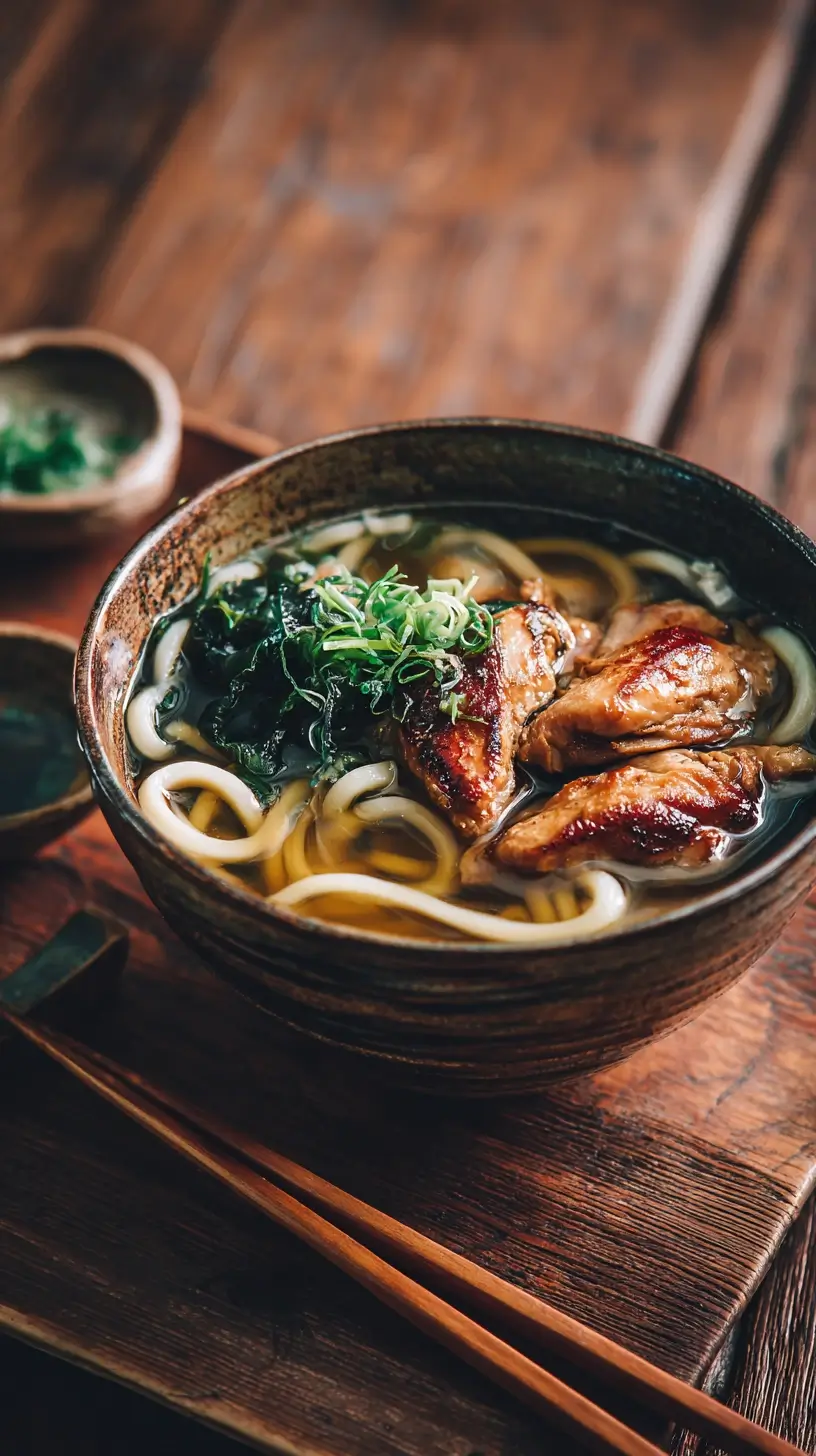
Chicken Thigh Udon
Make this easy Chicken Thigh Udon recipe for a comforting, savory Japanese noodle soup in just 30 minutes. Get the step-by-step guide and cook it tonight!
Ingredients
For the Ingredients & Tools
-
4 boneless, skinless chicken thighs (about 500 g)
-
2 portions fresh or frozen udon noodles (400 g)
-
1 liter dashi stock (see notes below for substitutions)
-
3 tbsp soy sauce
-
2 tbsp mirin
-
1 tbsp sake (optional, but recommended)
-
1 tsp granulated sugar
-
2 spring onions (thinly sliced)
-
1 large carrot (julienned or thinly sliced)
-
100 g spinach or bok choy
-
2 soft-boiled eggs (optional, for serving)
-
1 sheet nori (shredded, for garnish)
-
shichimi togarashi (to taste, Japanese seven-spice)
Instructions
-
Start by preparing your broth. Pour the dashi into your pot and bring it to a gentle simmer over medium heat. While it’s heating, add the soy sauce, mirin, sake (if using), and sugar. Stir until the sugar dissolves completely. You’ll notice the aroma immediately becomes more complex and inviting—that’s the magic starting!01
-
Carefully add the whole chicken thighs to the simmering broth. Let them cook for about 10-12 minutes. You might see a little foam or scum rise to the top; just skim that off with a spoon for a clearer, cleaner-tasting soup. The chicken is done when it’s cooked through and tender—you can check by piercing the thickest part with a fork; the juices should run clear.02
-
Once the chicken is cooked, remove it from the broth with a slotted spoon and set it on a cutting board to rest for a minute. Letting it rest ensures all those lovely juices get redistributed throughout the meat, making it even more succulent when you slice it.03
-
While the chicken rests, it’s noodle time! Add your fresh or frozen udon noodles directly to the bubbling broth. They’ll only need 2-3 minutes to cook through and become perfectly chewy. If you’re using pre-cooked fresh udon, they might only need a minute just to heat through.04
-
Now, slice your rested chicken thighs. I like to cut them into bite-sized strips, about half an inch thick. This makes them easy to eat with the noodles and ensures you get a bit of chicken in every single bite.05
-
Time for the veggies. Turn the heat down to low and add your carrot and spinach (or bok choy) to the broth. We’re just wilting them here, which should take no more than 1-2 minutes. You want them to retain a bit of crunch and their vibrant color, so don’t let them boil away into mush.06
-
The final assembly! Divide the hot noodles and broth between two deep bowls. Artfully arrange the sliced chicken on top, followed by the softened vegetables. Garnish generously with the sliced spring onions and shredded nori. If you’re using them, halve your soft-boiled eggs and nestle them in, yolk-side up. A final sprinkle of shichimi togarashi adds a lovely kick. Serve immediately—this is best enjoyed piping hot!07
Not what you're looking for?


