
This creamy seafood chowder is pure comfort in a bowl, with a velvety broth that lets the delicate seafood shine. It’s surprisingly simple to make and wonderfully adaptable to whatever seafood looks best. The aroma alone is pure magic.
Nothing beats a great Creamy Seafood Chowder. Whether you're a fan of Soup Recipes or want to try something from our Appetizer Recipes selection, keep scrolling!



Why You’ll Love This Creamy Seafood Chowder
- Comforting & Luxurious: Silky broth and tender seafood create pure bliss.
- Deep, Complex Flavor: Bacon, veggies, and white wine build a fantastic base.
- Simple to Master: Straightforward process with layered steps.
- Wonderfully Adaptable: Use your favorite seafood mix.
Ingredients & Tools
- 4 slices thick-cut bacon, chopped
- 1 large yellow onion, finely diced
- 2 celery stalks, finely diced
- 2 medium carrots, peeled and finely diced
- 3 cloves garlic, minced
- 1/3 cup all-purpose flour
- 1/2 cup dry white wine (like Sauvignon Blanc)
- 4 cups fish or seafood stock
- 2 medium potatoes, peeled and diced into 1/2-inch cubes
- 1 tsp fresh thyme leaves
- 1 bay leaf
- 1 cup heavy cream (or half-and-half for a lighter option)
- 1 lb mixed seafood (I use 1/2 lb firm white fish like cod or haddock, cubed; 1/4 lb raw shrimp, peeled and deveined; 1/4 lb bay scallops)
- Salt and freshly ground black pepper to taste
- 2 tbsp fresh parsley, chopped (for garnish)
Tools: A large, heavy-bottomed pot or Dutch oven is essential.
Notes: Using a good-quality seafood stock is a game-changer here—it really forms the backbone of the flavor. And don’t skip the bacon; it provides a smoky, savory base fat that makes all the difference.
Nutrition (per serving)
| Calories: | 480 kcal |
| Protein: | 28 g |
| Fat: | 25 g |
| Carbs: | 32 g |
| Fiber: | 4 g |
Serves: 6 | Prep Time: 20 minutes | Cook Time: 35 minutes | Total Time: 55 minutes
Before You Start: Tips & Ingredient Notes
- Get your mise en place ready. Chop all your vegetables and have your seafood measured out before you start cooking. Things move quickly at the beginning, and being prepared makes the process smooth and enjoyable.
- What’s the best seafood to use? You want a mix of textures and flavors. Firm white fish holds its shape, shrimp adds sweetness, and scallops bring a lovely tenderness. Feel free to add clams or mussels in the shell for a dramatic presentation!
- Don’t be scared of the flour. We’re making a quick roux with the bacon fat and vegetable juices. Cooking the flour for a minute or two until it’s bubbly is crucial—it gets rid of the raw flour taste and helps thicken the chowder beautifully.
- Why use wine? The white wine deglazes the pot, lifting all the delicious browned bits from the bacon and veggies. It adds a layer of acidity that prevents the chowder from tasting too heavy or one-dimensional.
How to Make Creamy Seafood Chowder
Step 1: In your large heavy-bottomed pot or Dutch oven, cook the chopped bacon over medium heat until it’s crispy and has rendered its fat. This should take about 5-7 minutes. Use a slotted spoon to remove the bacon and set it aside on a paper towel-lined plate. You’ll notice we’re leaving that glorious bacon fat in the pot—that’s our cooking gold.
Step 2: Add the diced onion, celery, and carrots to the hot bacon fat. Sauté them, stirring occasionally, until they have softened and the onion is becoming translucent, about 6-8 minutes. You’ll hear a gentle sizzle—that’s the sound of flavor building. Stir in the minced garlic and cook for just one more minute until it becomes fragrant. Be careful not to burn the garlic!
Step 3: Sprinkle the flour evenly over the vegetable mixture. Stir constantly for about two minutes. You’re cooking the raw taste out of the flour and creating a roux. The mixture will look pasty and clumpy, which is exactly what you want. It’s the foundation for our creamy, thickened broth.
Step 4: Now, pour in the white wine. It will sizzle and steam dramatically—this is good! Use your spoon to scrape up all the browned bits stuck to the bottom of the pot. Those bits are packed with flavor. Let the wine simmer and reduce for about 2 minutes, until the sharp alcohol smell has cooked off.
Step 5: Gradually whisk in the fish stock. Adding it slowly while whisking prevents any lumps from forming in your roux. Once all the stock is incorporated, add the diced potatoes, fresh thyme, and the bay leaf. Bring the chowder to a simmer, then reduce the heat to low, cover, and let it cook for about 15-20 minutes, until the potatoes are just fork-tender.
Step 6: This is the home stretch! Stir in the heavy cream and return the soup to a gentle simmer—do not let it boil vigorously now that the cream is in. Season with salt and a generous amount of black pepper. Taste the broth at this stage; it should be perfectly seasoned, as the seafood won’t add much salt.
Step 7: Gently add your mixed seafood to the pot. Start with the firmest fish (like cod), then the scallops, and finally the shrimp, as they cook the fastest. Let them poach in the simmering broth for 3-4 minutes, just until the fish is opaque and flakes easily, the shrimp are pink and curled, and the scallops are firm. Overcooking will make the seafood rubbery, so be vigilant!
Step 8: Turn off the heat. Remove the bay leaf and discard it. Stir in the reserved crispy bacon and most of the fresh parsley, saving a little for garnish. Give it one final taste and adjust seasoning if needed. The chowder will thicken slightly as it stands. Ladle it into warm bowls, garnish with the remaining parsley, and serve immediately.
Storage & Freshness Guide
- Fridge: Cool completely and store in an airtight container for up to 2 days.
- Freezer: Not recommended, as cream-based soups can separate and seafood becomes mushy.
- Reviving: Gently reheat on the stovetop over low heat, stirring occasionally.
Serving Suggestions
Complementary Dishes
- A simple green salad with a sharp vinaigrette — The crisp, acidic greens provide a refreshing counterpoint to the rich, creamy soup and help cleanse the palate between bites.
- Crusty, warm sourdough bread or oyster crackers — Essential for dipping and scooping up every last bit of that delicious broth from the bottom of the bowl. It’s a non-negotiable for the full experience.
- Garlic butter sautéed green beans or asparagus — A simple, vibrant side vegetable adds color to the plate and a different texture that complements the softness of the chowder.
Drinks
- A crisp, chilled glass of Sauvignon Blanc or Pinot Grigio — The bright, citrusy notes and acidity in the wine cut through the creaminess of the chowder beautifully, enhancing the seafood flavors.
- A light, citrus-forward pale ale — For the beer lovers, the hoppy bitterness and citrus undertones work surprisingly well with the rich soup, acting much like the lemon wedge you might squeeze on top.
Something Sweet
- Lemon sorbet or a simple lemon tart — The sharp, clean taste of lemon is the perfect finish, continuing the citrus theme and leaving your palate feeling refreshed after a rich meal.
- Classic vanilla panna cotta with a berry compote — It’s cool, creamy, and not too heavy. The sweet-tart berries provide a lovely contrast that feels elegant and satisfying.
Top Mistakes to Avoid
- Overcooking the seafood. This is the number one mistake! Seafood cooks very quickly and becomes tough and rubbery if left in the hot broth for too long. Add it last and just cook until it’s *just* done.
- Boiling the soup after adding the cream. A vigorous boil can cause the cream to separate or curdle, giving your chowder a grainy texture. Keep it at a gentle simmer once the dairy is in.
- Underseasoning the broth. Potatoes and cream absorb a lot of salt. Make sure you taste and season the broth well *before* adding the seafood, as they will release their own subtle salts.
- Using a thin, flimsy pot. A heavy-bottomed pot distributes heat evenly, preventing the flour and dairy from scorching on the bottom. I’ve messed this up before too, and it can ruin the whole batch with a burnt taste.
Expert Tips
- Tip: For an even deeper flavor, you can use a splash of sherry instead of white wine, or add a tablespoon of tomato paste when you’re cooking the vegetables. It adds a subtle sweetness and beautiful color.
- Tip: If your chowder is thicker than you’d like, simply thin it out with a little extra stock or cream. If it’s too thin, you can make a quick slurry by mixing a tablespoon of cornstarch with two tablespoons of cold water and stirring it into the simmering soup.
- Tip: For the absolute best texture, pat your raw seafood dry with a paper towel before adding it to the pot. This helps it sear slightly and poach nicely instead of releasing excess water into your chowder.
- Tip: Chowder always tastes better the next day! If you have the time, make it a day ahead and gently reheat it. The flavors have more time to meld and become even more harmonious.
FAQs
Can I make this chowder ahead of time?
Absolutely, and it often tastes even better! Prepare the chowder completely, but leave out the seafood. Let the base cool, then store it in the fridge for up to two days. When you’re ready to serve, gently reheat the base, and then poach your fresh seafood in the hot soup just before serving. This guarantees perfectly cooked seafood and a vibrant flavor.
Can I freeze creamy seafood chowder?
I don’t recommend freezing this particular chowder. Cream-based soups have a tendency to separate and become grainy upon thawing. The texture of the potatoes and seafood will also suffer, becoming mushy and watery. It’s truly a dish best enjoyed fresh or within 2-3 days of making it.
What can I use if I don’t have white wine?
No problem at all! You can simply omit it and use an extra 1/2 cup of fish stock to deglaze the pan. For a bit of acidity, you could also add a tablespoon of fresh lemon juice at the very end, right before serving, to brighten everything up.
My chowder is too thin. How can I thicken it?
The easiest fix is to make a cornstarch slurry. Mix one tablespoon of cornstarch with two tablespoons of cold water until smooth. Stir this into your simmering chowder and let it cook for a minute or two until it thickens. You can also mash a few of the cooked potato pieces against the side of the pot to naturally thicken the broth.
Can I make a lighter version of this chowder?
You can! For a lighter take, use half-and-half or even whole milk instead of heavy cream. You could also use a little less bacon or turkey bacon. Just be aware that the final result will be less rich and the broth might be a bit thinner, but it will still be delicious and flavorful.



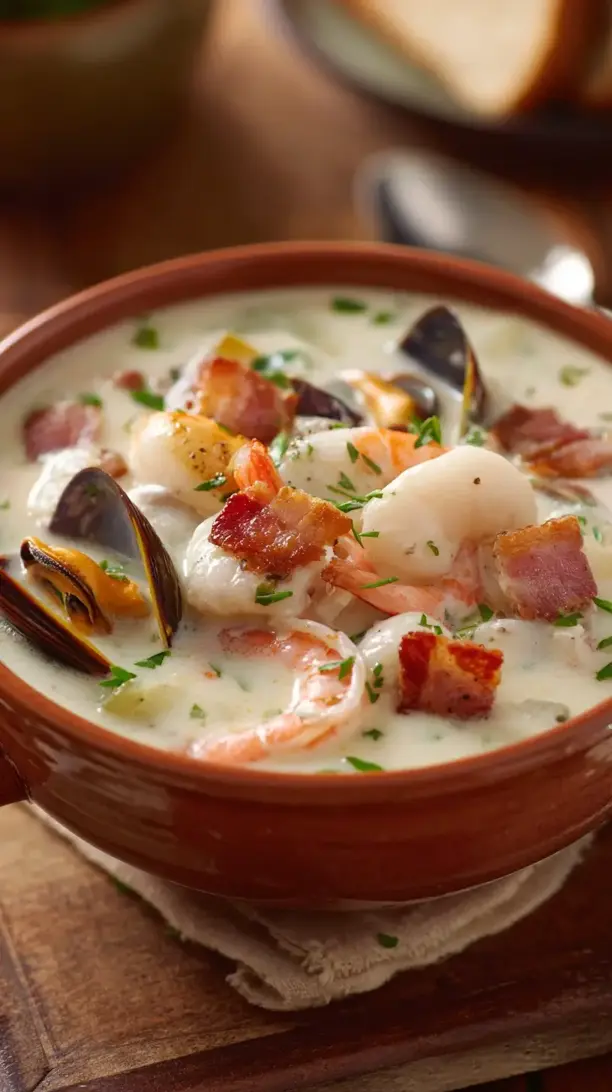
Creamy Seafood Chowder
Make the best Creamy Seafood Chowder with this easy recipe. A rich, velvety broth with tender shrimp, scallops, and fish. Get the step-by-step guide now!
Ingredients
For the Ingredients
-
4 slices thick-cut bacon (chopped)
-
1 large yellow onion (finely diced)
-
2 stalks celery (finely diced)
-
2 medium carrots (peeled and finely diced)
-
3 cloves garlic (minced)
-
1/3 cup all-purpose flour
-
1/2 cup dry white wine (like Sauvignon Blanc)
-
4 cups fish or seafood stock
-
2 medium potatoes (peeled and diced into 1/2-inch cubes)
-
1 tsp fresh thyme leaves
-
1 bay leaf
-
1 cup heavy cream (or half-and-half for a lighter option)
-
1 lb mixed seafood (I use 1/2 lb firm white fish like cod or haddock, cubed; 1/4 lb raw shrimp, peeled and deveined; 1/4 lb bay scallops)
-
Salt and freshly ground black pepper (to taste)
-
2 tbsp fresh parsley (chopped, for garnish)
Instructions
-
In your large heavy-bottomed pot or Dutch oven, cook the chopped bacon over medium heat until it’s crispy and has rendered its fat. This should take about 5-7 minutes. Use a slotted spoon to remove the bacon and set it aside on a paper towel-lined plate. You’ll notice we’re leaving that glorious bacon fat in the pot—that’s our cooking gold.01
-
Add the diced onion, celery, and carrots to the hot bacon fat. Sauté them, stirring occasionally, until they have softened and the onion is becoming translucent, about 6-8 minutes. You’ll hear a gentle sizzle—that’s the sound of flavor building. Stir in the minced garlic and cook for just one more minute until it becomes fragrant. Be careful not to burn the garlic!02
-
Sprinkle the flour evenly over the vegetable mixture. Stir constantly for about two minutes. You’re cooking the raw taste out of the flour and creating a roux. The mixture will look pasty and clumpy, which is exactly what you want. It’s the foundation for our creamy, thickened broth.03
-
Now, pour in the white wine. It will sizzle and steam dramatically—this is good! Use your spoon to scrape up all the browned bits stuck to the bottom of the pot. Those bits are packed with flavor. Let the wine simmer and reduce for about 2 minutes, until the sharp alcohol smell has cooked off.04
-
Gradually whisk in the fish stock. Adding it slowly while whisking prevents any lumps from forming in your roux. Once all the stock is incorporated, add the diced potatoes, fresh thyme, and the bay leaf. Bring the chowder to a simmer, then reduce the heat to low, cover, and let it cook for about 15-20 minutes, until the potatoes are just fork-tender.05
-
This is the home stretch! Stir in the heavy cream and return the soup to a gentle simmer—do not let it boil vigorously now that the cream is in. Season with salt and a generous amount of black pepper. Taste the broth at this stage; it should be perfectly seasoned, as the seafood won't add much salt.06
-
Gently add your mixed seafood to the pot. Start with the firmest fish (like cod), then the scallops, and finally the shrimp, as they cook the fastest. Let them poach in the simmering broth for 3-4 minutes, just until the fish is opaque and flakes easily, the shrimp are pink and curled, and the scallops are firm. Overcooking will make the seafood rubbery, so be vigilant!07
-
Turn off the heat. Remove the bay leaf and discard it. Stir in the reserved crispy bacon and most of the fresh parsley, saving a little for garnish. Give it one final taste and adjust seasoning if needed. The chowder will thicken slightly as it stands. Ladle it into warm bowls, garnish with the remaining parsley, and serve immediately.08
Not what you're looking for?