This Creamy Veggie Orzo Skillet is a comforting one-pan meal that comes together with minimal fuss. The orzo cooks right in the pan, absorbing all the delicious vegetable juices and creamy sauce for maximum flavor. It’s a versatile and satisfying dish perfect for busy weeknights.
Looking for Creamy Veggie Orzo Skillet inspiration? You'll love what we have! Explore more Dinner Ideas recipes or discover our Christmas Cookie favorites.



Why You’ll Love This Creamy Veggie Orzo Skillet
- One-pan wonder: Everything cooks in a single skillet for easy cleanup.
- Creamy yet light: Velvety texture from broth, cream cheese, and orzo starch.
- Highly adaptable: Swap veggies based on what you have available.
- Quick hands-on time: Mostly simmers on its own after initial prep.
Ingredients & Tools
- 1 tbsp olive oil
- 1 medium yellow onion, finely diced
- 2 cloves garlic, minced
- 1 cup orzo pasta
- 3 cups vegetable broth
- 1 cup cremini mushrooms, sliced
- 1 medium zucchini, diced
- 1/2 cup sun-dried tomatoes, chopped
- 4 oz cream cheese, softened and cubed
- 1/2 cup grated Parmesan cheese
- 1 tsp dried Italian seasoning
- 1/4 cup fresh basil, chopped
- Salt and black pepper to taste
Tools: A large (12-inch) oven-safe skillet is ideal, along with a wooden spoon and a measuring cup.
Notes: The quality of your broth really makes a difference here, as the orzo absorbs its flavor so completely. And don’t skip the fresh basil at the end—that pop of herbal freshness cuts through the richness perfectly.
Nutrition (per serving)
| Calories: | 380 kcal |
| Protein: | 14 g |
| Fat: | 16 g |
| Carbs: | 46 g |
| Fiber: | 4 g |
Serves: 4 | Prep Time: 15 minutes | Cook Time: 20 minutes | Total Time: 35 minutes
Before You Start: Tips & Ingredient Notes
- Don’t skimp on the skillet size. A 12-inch skillet is really the minimum you’ll want to use. This gives the orzo and vegetables plenty of room to cook evenly without steaming or becoming mushy. A crowded pan is the enemy of a good sear.
- Why soften the cream cheese? Taking the time to let your cream cheese come to room temperature and then cubing it is a small step with a big payoff. It will melt into the sauce smoothly and seamlessly, preventing any unpleasant little lumps from forming.
- Toast the orzo for maximum flavor. You’ll see this in the first step, but giving the dry orzo a minute or two in the hot pan until it’s lightly golden and smells nutty adds a wonderful depth of flavor that you just can’t get otherwise.
- Use a broth you enjoy drinking. Since the orzo cooks directly in the liquid, the broth is the primary flavor base for the entire dish. A bland or overly salty broth will result in a bland or overly salty final skillet. Taste it first!
How to Make Creamy Veggie Orzo Skillet
Step 1: Start by heating the olive oil in your large skillet over medium heat. Add the diced onion and cook, stirring occasionally, until it becomes soft and translucent, which should take about 4-5 minutes. You’ll notice the kitchen starting to smell amazing. Now, add the minced garlic and stir for just 30 seconds until it’s fragrant—be careful not to let it burn, as burnt garlic can turn bitter.
Step 2: Add the dry orzo pasta to the skillet. This is the toasting step! Stir constantly for about 2-3 minutes. The orzo will turn a light golden color and you’ll get a lovely, nutty aroma. This simple trick deepens the flavor of the pasta immensely, giving the whole dish a more complex base.
Step 3: Now, pour in the vegetable broth. Use your wooden spoon to scrape up any delicious browned bits from the bottom of the pan—that’s pure flavor! Bring the liquid to a lively simmer, then reduce the heat to medium-low. Stir in the sliced mushrooms, diced zucchini, and sun-dried tomatoes. The vegetables will cook perfectly in the simmering broth along with the orzo.
Step 4: Cover the skillet and let it simmer gently for about 10-12 minutes. It’s important to resist the urge to stir too often, as this can break up the vegetables and make the orzo sticky. You can take a quick peek halfway through to ensure nothing is sticking to the bottom. The orzo should be tender and most of the liquid should be absorbed.
Step 5: Uncover the skillet. The mixture will look a bit wet still, which is perfect. Now, add the cubed, softened cream cheese, the grated Parmesan, and the dried Italian seasoning. Stir continuously until the cream cheese has completely melted into the sauce, creating a beautifully creamy and cohesive texture that coats every grain of orzo and every piece of vegetable.
Step 6: Take the skillet off the heat. Now, stir in the vast majority of your fresh, chopped basil, reserving a little for a pretty garnish on top. Taste the dish—this is crucial! Season with salt and a good grind of black pepper until it’s just right for you. The Parmesan and broth add salt, so you may not need much extra.
Step 7: Let the skillet sit for about 3-5 minutes off the heat before serving. This allows the sauce to thicken up a little more as it cools slightly and gives the flavors one last chance to meld together beautifully. Serve it up hot, garnished with that last bit of fresh basil and an extra sprinkle of Parmesan if you’re feeling indulgent.
Storage & Freshness Guide
- Fridge: Store in an airtight container for 3–4 days.
- Freezer: Not recommended; sauce may separate and pasta can turn mushy.
- Reviving: Reheat gently with a splash of broth or water to loosen the sauce.
Serving Suggestions
Complementary Dishes
- A simple arugula salad with a lemon vinaigrette — The peppery arugula and sharp, citrusy dressing provide a fantastic contrast to the rich, creamy orzo, cleansing the palate between bites.
- Garlic herb roasted chicken thighs — For those wanting a little extra protein, the crispy, savory skin and juicy meat of roasted chicken pair wonderfully with the vegetarian skillet, making a more complete feast.
- Crusty, warmed sourdough bread — You’ll want something to scoop up every last bit of that delicious sauce, and a thick slice of good bread is the perfect tool for the job.
Drinks
- A crisp, unoaked Chardonnay — The wine’s bright acidity and notes of green apple cut through the creaminess of the dish beautifully, enhancing the herbal notes without overpowering them.
- Sparkling water with a twist of lemon — The bubbles and citrus are incredibly refreshing and help balance the richness, making each mouthful of the skillet taste new again.
- A light Italian lager — The clean, crisp finish of a good lager acts as a perfect palate cleanser, making it a classic and effortless pairing for this kind of comfort food.
Something Sweet
- Dark chocolate espresso truffles — Just one or two of these intense, rich bites after the meal provides a satisfyingly bitter-sweet end without feeling too heavy.
- Lemon sorbet — This is the ultimate palate-cleanser. Its sharp, citrusy zing is a wonderfully light and refreshing way to finish after the creamy, savory main course.
- Almond biscotti — The crunchy, nutty cookies are perfect for a little dunking into a cup of coffee or tea, offering a simple, not-too-sweet finale.
Top Mistakes to Avoid
- Mistake: Using a pan that’s too small. If the orzo and vegetables are piled on top of each other, they’ll steam instead of simmer properly. This leads to mushy veggies and gummy, clumpy orzo rather than distinct, tender pieces in a creamy sauce.
- Mistake: Adding cold, hard cream cheese. I’ve messed this up before too, and it results in little white specks throughout your sauce that never fully incorporate. Taking the extra five minutes to let it soften on the counter makes all the difference for a silky-smooth texture.
- Mistake: Stirring the orzo too much while it cooks. Constant stirring agitates the orzo and releases too much starch, which can turn your beautiful skillet into a thick, pasty mess. Trust the process and let it simmer undisturbed.
- Mistake: Skipping the tasting step at the end. Seasoning is not a one-size-fits-all process. The saltiness of your broth and Parmesan can vary, so you absolutely must taste and adjust with salt and pepper at the very end to make it perfect for you.
Expert Tips
- Tip: Brown the mushrooms separately for deeper flavor. If you have an extra minute, sauté the mushrooms in a pat of butter in a separate pan until they’re beautifully browned before adding them in Step 3. This caramelization adds a meaty, umami depth that is just incredible.
- Tip: Add a splash of white wine. After toasting the orzo, deglaze the pan with about a quarter cup of dry white wine. Let it reduce by half before adding the broth. This introduces a lovely layer of acidity and complexity that brightens the entire dish.
- Tip: Wilt in some spinach at the end. For an extra veggie boost and a pop of color, stir in a couple of large handfuls of fresh baby spinach right after you turn off the heat. The residual heat will wilt it perfectly without making it slimy.
- Tip: Make it ahead for easy lunches. This skillet reheats surprisingly well. Store it in an airtight container in the fridge and add a tiny splash of broth or water when reheating to loosen the sauce back up to its creamy consistency.
FAQs
Can I make this Creamy Veggie Orzo Skillet dairy-free?
Absolutely! You can create a wonderfully creamy dairy-free version. Simply replace the cream cheese with a similar amount of plain, unsweetened cashew cream or a store-bought vegan cream cheese alternative. For the Parmesan, use a sprinkle of nutritional yeast, which will give you that savory, cheesy flavor without any dairy. The texture will be just as rich and satisfying.
My orzo is still hard after the cooking time. What happened?
This usually means your skillet was at too high of a heat, causing the liquid to evaporate before the orzo had a chance to fully cook through. No worries! Just add another half cup of warm broth or water, cover the skillet again, and let it cook for another 3-5 minutes on low heat until the orzo is tender.
Can I use a different type of pasta?
You can, but the cooking method will change. Orzo works so well because it’s small and cooks quickly by absorbing liquid, much like a risotto. If you use a larger pasta like penne, you’d need to boil it separately until al dente, and then stir it into a separately prepared creamy vegetable sauce. It becomes a different, though still delicious, recipe.
How long do the leftovers keep?
Stored in an airtight container in the refrigerator, the leftovers will keep beautifully for 3-4 days. The orzo will continue to absorb liquid, so when reheating, do it gently on the stove over low heat with a small splash of broth or water to bring back the saucy consistency.
Can I freeze this dish?
I wouldn’t recommend it, honestly. Cream-based sauces and pasta don’t tend to freeze and thaw well. The sauce can separate and become grainy, and the pasta often turns unpleasantly mushy. This is a dish best enjoyed fresh or kept for a few days in the fridge.



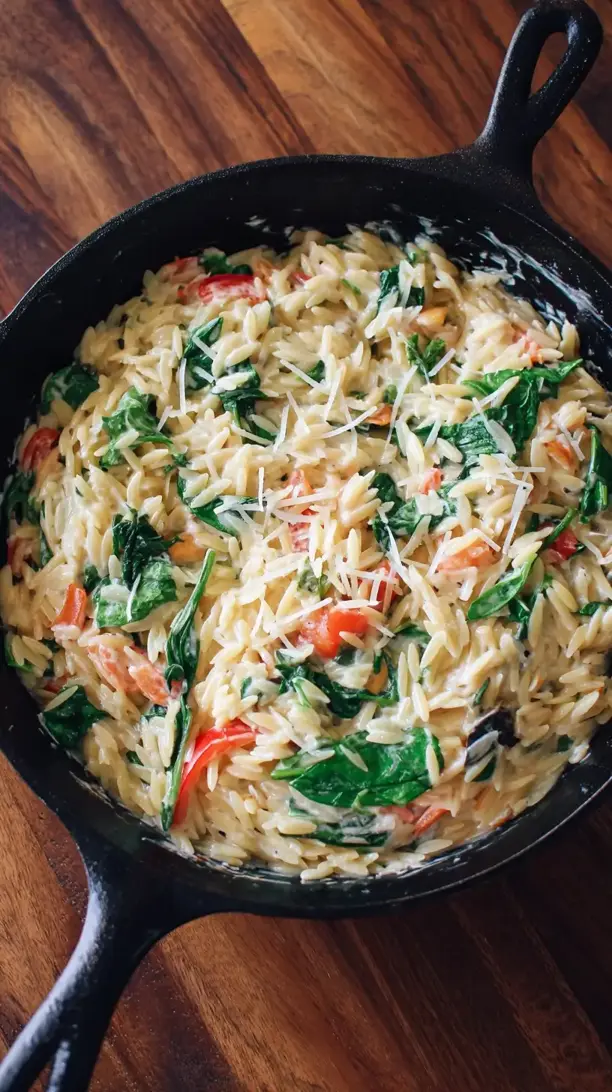
Creamy Veggie Orzo Skillet
Make this easy Creamy Veggie Orzo Skillet for a delicious one-pan meal ready in 35 minutes. Perfect for a quick, satisfying dinner. Get the recipe!
Ingredients
For the Ingredients
-
1 tbsp olive oil
-
1 medium yellow onion (finely diced)
-
2 cloves garlic (minced)
-
1 cup orzo pasta
-
3 cups vegetable broth
-
1 cup cremini mushrooms (sliced)
-
1 medium zucchini (diced)
-
1/2 cup sun-dried tomatoes (chopped)
-
4 oz cream cheese (softened and cubed)
-
1/2 cup grated Parmesan cheese
-
1 tsp dried Italian seasoning
-
1/4 cup fresh basil (chopped)
-
Salt and black pepper (to taste)
Instructions
-
Start by heating the olive oil in your large skillet over medium heat. Add the diced onion and cook, stirring occasionally, until it becomes soft and translucent, which should take about 4-5 minutes. You’ll notice the kitchen starting to smell amazing. Now, add the minced garlic and stir for just 30 seconds until it’s fragrant—be careful not to let it burn, as burnt garlic can turn bitter.01
-
Add the dry orzo pasta to the skillet. This is the toasting step! Stir constantly for about 2-3 minutes. The orzo will turn a light golden color and you’ll get a lovely, nutty aroma. This simple trick deepens the flavor of the pasta immensely, giving the whole dish a more complex base.02
-
Now, pour in the vegetable broth. Use your wooden spoon to scrape up any delicious browned bits from the bottom of the pan—that’s pure flavor! Bring the liquid to a lively simmer, then reduce the heat to medium-low. Stir in the sliced mushrooms, diced zucchini, and sun-dried tomatoes. The vegetables will cook perfectly in the simmering broth along with the orzo.03
-
Cover the skillet and let it simmer gently for about 10-12 minutes. It’s important to resist the urge to stir too often, as this can break up the vegetables and make the orzo sticky. You can take a quick peek halfway through to ensure nothing is sticking to the bottom. The orzo should be tender and most of the liquid should be absorbed.04
-
Uncover the skillet. The mixture will look a bit wet still, which is perfect. Now, add the cubed, softened cream cheese, the grated Parmesan, and the dried Italian seasoning. Stir continuously until the cream cheese has completely melted into the sauce, creating a beautifully creamy and cohesive texture that coats every grain of orzo and every piece of vegetable.05
-
Take the skillet off the heat. Now, stir in the vast majority of your fresh, chopped basil, reserving a little for a pretty garnish on top. Taste the dish—this is crucial! Season with salt and a good grind of black pepper until it’s just right for you. The Parmesan and broth add salt, so you may not need much extra.06
-
Let the skillet sit for about 3-5 minutes off the heat before serving. This allows the sauce to thicken up a little more as it cools slightly and gives the flavors one last chance to meld together beautifully. Serve it up hot, garnished with that last bit of fresh basil and an extra sprinkle of Parmesan if you're feeling indulgent.07
Not what you're looking for?