This Easy Lasagna Pasta Skillet delivers all the comforting flavor of classic lasagna in under 30 minutes. Everything cooks in one pan, from the savory meat sauce to the tender pasta and bubbly cheese topping. It’s a weeknight hero that feels indulgent yet is incredibly simple to make.
Looking for Easy Lasagna Pasta Skillet inspiration? You'll love what we have! Explore more Dinner Ideas recipes or discover our Chicken Breast Recipes favorites.


Why You’ll Love This Easy Lasagna Pasta Skillet
- One-pan wonder: Everything cooks in a single skillet for easy cleanup.
- 30-minute meal: Skip the layering and baking for a quick, satisfying dinner.
- Perfect texture: Pasta cooks al dente in the sauce, topped with gooey, browned cheese.
- Forgiving & adaptable: Swap meats or add veggies to make it your own.
Ingredients & Tools
- 1 tbsp olive oil
- 1 medium yellow onion, finely diced
- 3 cloves garlic, minced
- 1 lb (450 g) ground beef (80/20 blend is ideal for flavor)
- 1 (24 oz / 680 g) jar of your favorite marinara or tomato-basil sauce
- 2 cups (480 ml) beef or chicken broth
- 8 oz (225 g) mafaldine or campanelle pasta
- 1 tsp dried oregano
- 1/2 tsp red pepper flakes (optional, for a little heat)
- 1 cup (240 g) whole milk ricotta cheese
- 1 1/2 cups (170 g) shredded low-moisture, part-skim mozzarella cheese
- 1/4 cup (25 g) freshly grated Parmesan cheese
- Salt and freshly ground black pepper to taste
- Fresh basil or parsley for garnish
Tools: A large (12-inch) oven-safe skillet is essential here, along with a wooden spoon and a measuring cup.
Notes: Use a marinara sauce you enjoy, and don’t skip the broth—it’s key for cooking the pasta directly in the skillet.
Nutrition (per serving)
| Calories: | 520 kcal |
| Protein: | 32 g |
| Fat: | 22 g |
| Carbs: | 45 g |
| Fiber: | 4 g |
Serves: 4 | Prep Time: 10 minutes | Cook Time: 20 minutes | Total Time: 30 minutes
Before You Start: Tips & Ingredient Notes
- Check your skillet’s handle. Before you get started, make sure your skillet’s handle is oven-safe. If it has a rubber or plastic component, you’ll need to transfer the mixture to a baking dish before the broiling step.
- Why mafaldine or campanelle? These pasta shapes are fantastic because their ruffled edges and nooks hold onto the sauce and meat beautifully. If you can’t find them, rotini or medium shell pasta work well, too.
- Don’t drain the fat. After browning the beef, leave that rendered fat in the skillet. It’s packed with flavor and will help build a richer, more robust sauce base.
- Freshly grate your mozzarella. It might be tempting to use the pre-shredded stuff, but it’s coated with anti-caking agents that prevent it from melting as smoothly. A block of low-moisture mozzarella that you shred yourself will give you that dreamy, stretchy cheese pull.
How to Make Easy Lasagna Pasta Skillet
Step 1: Start by heating the olive oil in your large, oven-safe skillet over medium heat. Add the diced onion and cook for about 4-5 minutes, until it becomes soft and translucent. You’ll notice a lovely sweet aroma starting to develop. Now, stir in the minced garlic and cook for just another minute—until it’s fragrant but not browned. This initial step builds a fantastic flavor foundation.
Step 2: Add the ground beef to the skillet, breaking it up with your wooden spoon. Cook it until it’s no longer pink, which should take about 5-6 minutes. As I mentioned, don’t drain the fat! Season the meat generously with salt, black pepper, dried oregano, and those optional red pepper flakes if you’re using them. The kitchen should smell incredible right about now.
Step 3: Pour in the entire jar of marinara sauce and the beef broth. Give everything a really good stir, scraping up any of those tasty browned bits from the bottom of the pan. This is called deglazing, and it’s a little trick that adds a ton of depth to your sauce. Bring the mixture to a lively simmer.
Step 4: Once it’s simmering, stir in the uncooked pasta. Make sure all the pieces are submerged in the liquid. Reduce the heat to medium-low, cover the skillet with a lid (or a baking sheet if you don’t have one that fits), and let it cook for about 12-14 minutes. Stir it halfway through to prevent sticking. The pasta should be tender and most of the liquid absorbed.
Step 5: While the pasta is cooking, preheat your oven’s broiler to high. Also, take this time to mix your ricotta with a pinch of salt and pepper in a small bowl—this little seasoning goes a long way in making the ricotta layer pop.
Step 6: Once the pasta is cooked, turn off the stove heat. Take dollops of the seasoned ricotta and dot them evenly across the top of the pasta mixture. You don’t need to spread it perfectly; little pockets of creamy ricotta are what we’re after.
Step 7: Now for the cheese blanket! Sprinkle the shredded mozzarella and grated Parmesan evenly over the entire surface. Be generous—this is what creates that gorgeous, golden crust.
Step 8: Carefully transfer the oven-safe skillet to the broiler. Broil for 2-4 minutes, but watch it like a hawk! You’re looking for the cheese to be completely melted, bubbly, and spotted with beautiful golden-brown patches. Oven broilers vary wildly in intensity, so this can happen very quickly.
Step 9: Remove the skillet from the oven—remember, the handle will be extremely hot! Let the skillet rest for about 5 minutes. This allows the sauce to thicken up just a bit more and makes serving much easier. Garnish with fresh basil or parsley before diving in.
Storage & Freshness Guide
- Fridge: Store in an airtight container for up to 3 days.
- Freezer: Freeze for up to 2 months; texture may soften upon thawing.
- Reviving: Reheat in the oven at 350°F to restore cheese melt and pasta texture.
Serving Suggestions
Complementary Dishes
- A simple arugula salad — The peppery bite of arugula dressed lightly with lemon vinaigrette cuts through the richness of the pasta beautifully.
- Garlic breadsticks — For the ultimate comfort meal, you can’t go wrong with something warm and bready to scoop up every last bit of sauce.
- Roasted green beans with almonds — Their crisp-tender texture and nutty flavor provide a lovely contrast and a touch of green on the plate.
Drinks
- A medium-bodied Chianti — The classic pairing for lasagna works perfectly here, with its bright acidity and cherry notes complementing the tomato sauce.
- Sparkling water with lemon — For a non-alcoholic option, the effervescence is wonderfully palate-cleansing between each rich, cheesy bite.
Something Sweet
- Affogato — A scoop of vanilla gelato or ice cream with a shot of hot espresso poured over it is a sophisticated yet simple way to end the meal.
- Dark chocolate almond clusters — They’re rich, a little salty, and provide just the right amount of sweetness without being too heavy.
Top Mistakes to Avoid
- Using a skillet that’s not oven-safe. This seems obvious, but it’s a common pitfall. If your skillet has a plastic handle, the broiler will melt it. Always double-check before you start cooking.
- Overcooking the pasta. Remember that the pasta will continue to cook a little bit even after you turn off the heat, especially when it goes under the broiler. Aim for al dente when you check it at the 12-minute mark.
- Walking away during the broiling step. I’ve messed this up before too… the broiler is incredibly powerful and can go from perfectly golden to completely burnt in a matter of seconds. Stay put and keep an eye on it!
- Skipping the rest time. I know it’s tempting to dig right in, but letting the skillet sit for five minutes allows the sauce to thicken and set, making for much cleaner servings.
Expert Tips
- Tip: For an even deeper flavor, use half ground beef and half Italian sausage. The fennel and spices in the sausage add another layer of complexity that’s just fantastic.
- Tip: If your sauce seems a bit too thick before you add the cheese, splash in a little more broth or even some water. The consistency should be like a thick, coating sauce, not a soup.
- Tip: To make this ahead, complete all the steps up until the broiling. Let the skillet cool, then cover and refrigerate. When you’re ready to eat, you may need to add a tiny bit of broth to loosen it up, then proceed with the broiling step, adding a few extra minutes since it’s starting from cold.
- Tip: For a beautiful presentation, use a small cookie scoop to place the ricotta dollops. It creates neat, uniform mounds that look very professional.
FAQs
Can I make this recipe gluten-free?
Absolutely! The beauty of this skillet method is its adaptability. Simply swap the regular pasta for your favorite gluten-free pasta. Just be sure to check the cooking time on the package, as it can vary. You might need to adjust the amount of broth slightly, as some GF pastas absorb liquid differently. The end result will be just as delicious and comforting.
What can I use if I don’t have an oven-safe skillet?
No problem at all. Just cook everything as directed in your regular skillet on the stovetop. When you get to the broiling step, carefully transfer the entire mixture to a lightly greased baking dish. Top it with the cheeses and broil it in that dish instead. You’ll have one more pan to wash, but the final result is identical.
Is it possible to make this vegetarian?
Of course! For a vegetarian version, simply omit the ground beef and use a plant-based ground “meat” alternative, or add in about 2 cups of chopped mushrooms when you cook the onions. Mushrooms provide a wonderful, meaty texture and umami flavor that works wonderfully in this context.
How do I store and reheat leftovers?
Store any leftovers in an airtight container in the refrigerator for up to 3 days. The best way to reheat it is in the oven or a toaster oven at 350°F (175°C) until warmed through. This helps revive the texture of the pasta and re-melts the cheese nicely. Microwaving can make the pasta a bit mushy.
Can I freeze this lasagna pasta skillet?
You can, but with a caveat. Pasta dishes with dairy-based sauces don’t always freeze and thaw with perfect texture. The ricotta may become a bit grainy and the pasta can soften. If you do freeze it, let it cool completely, transfer to a freezer-safe container, and use within 2 months. Thaw in the fridge overnight before reheating gently in the oven.



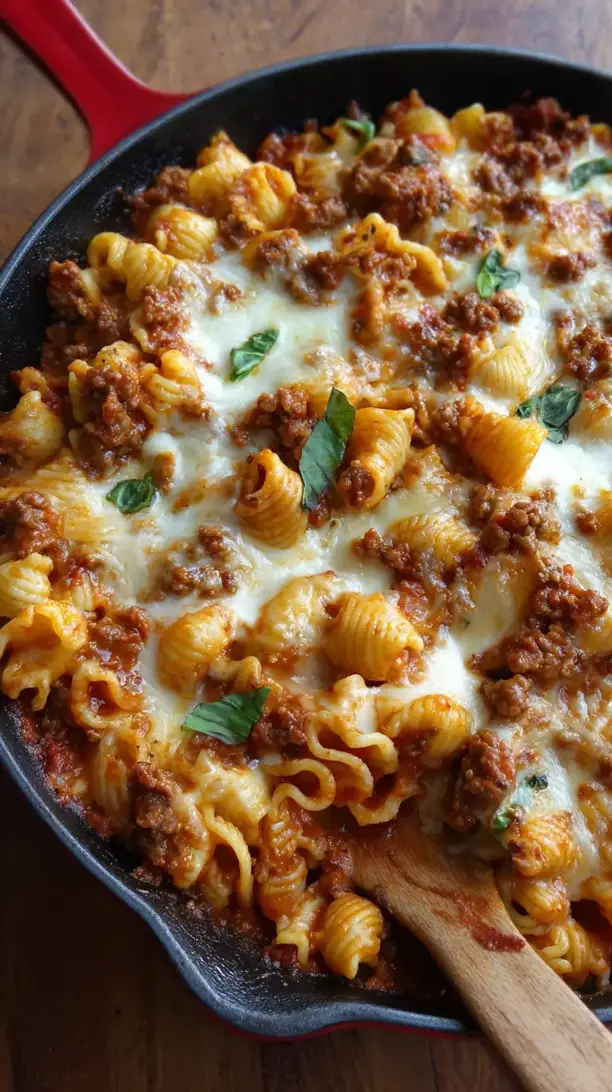
Easy Lasagna Pasta Skillet
Make this Easy Lasagna Pasta Skillet in just 30 minutes! All the classic flavors with minimal cleanup. Get the simple one-pan recipe now!
Ingredients
For the Ingredients
-
1 tbsp olive oil
-
1 medium yellow onion (finely diced)
-
3 cloves garlic (minced)
-
1 lb ground beef (80/20 blend is ideal for flavor)
-
1 jar marinara or tomato-basil sauce (24 oz / 680 g)
-
2 cups beef or chicken broth (480 ml)
-
8 oz mafaldine or campanelle pasta (225 g)
-
1 tsp dried oregano
-
1/2 tsp red pepper flakes (optional, for a little heat)
-
1 cup whole milk ricotta cheese (240 g)
-
1 1/2 cups shredded low-moisture, part-skim mozzarella cheese (170 g)
-
1/4 cup freshly grated Parmesan cheese (25 g)
-
Salt and freshly ground black pepper (to taste)
-
Fresh basil or parsley (for garnish)
Instructions
-
Start by heating the olive oil in your large, oven-safe skillet over medium heat. Add the diced onion and cook for about 4-5 minutes, until it becomes soft and translucent. You’ll notice a lovely sweet aroma starting to develop. Now, stir in the minced garlic and cook for just another minute—until it’s fragrant but not browned. This initial step builds a fantastic flavor foundation.01
-
Add the ground beef to the skillet, breaking it up with your wooden spoon. Cook it until it’s no longer pink, which should take about 5-6 minutes. As I mentioned, don’t drain the fat! Season the meat generously with salt, black pepper, dried oregano, and those optional red pepper flakes if you’re using them. The kitchen should smell incredible right about now.02
-
Pour in the entire jar of marinara sauce and the beef broth. Give everything a really good stir, scraping up any of those tasty browned bits from the bottom of the pan. This is called deglazing, and it’s a little trick that adds a ton of depth to your sauce. Bring the mixture to a lively simmer.03
-
Once it’s simmering, stir in the uncooked pasta. Make sure all the pieces are submerged in the liquid. Reduce the heat to medium-low, cover the skillet with a lid (or a baking sheet if you don’t have one that fits), and let it cook for about 12-14 minutes. Stir it halfway through to prevent sticking. The pasta should be tender and most of the liquid absorbed.04
-
While the pasta is cooking, preheat your oven's broiler to high. Also, take this time to mix your ricotta with a pinch of salt and pepper in a small bowl—this little seasoning goes a long way in making the ricotta layer pop.05
-
Once the pasta is cooked, turn off the stove heat. Take dollops of the seasoned ricotta and dot them evenly across the top of the pasta mixture. You don’t need to spread it perfectly; little pockets of creamy ricotta are what we’re after.06
-
Now for the cheese blanket! Sprinkle the shredded mozzarella and grated Parmesan evenly over the entire surface. Be generous—this is what creates that gorgeous, golden crust.07
-
Carefully transfer the oven-safe skillet to the broiler. Broil for 2-4 minutes, but watch it like a hawk! You’re looking for the cheese to be completely melted, bubbly, and spotted with beautiful golden-brown patches. Oven broilers vary wildly in intensity, so this can happen very quickly.08
-
Remove the skillet from the oven—remember, the handle will be extremely hot! Let the skillet rest for about 5 minutes. This allows the sauce to thicken up just a bit more and makes serving much easier. Garnish with fresh basil or parsley before diving in.09
Not what you're looking for?