Honey Balsamic Chicken combines sweet honey and tangy balsamic vinegar into a glossy, irresistible glaze. This easy weeknight hero feels fancy but comes together with minimal fuss. The sticky sauce clings to juicy chicken thighs for a perfectly balanced meal.
Nothing beats a great Honey Balsamic Chicken. Whether you're a fan of Dinner Ideas or want to try something from our Appetizer Recipes selection, keep scrolling!


Why You’ll Love This Honey Balsamic Chicken
- Balanced flavor: Sweet honey and tangy balsamic create a rich, never-cloying sauce.
- Versatile & forgiving: Adapts easily to chicken breasts, herb swaps, or added heat.
- Gorgeous glossy finish: Sauce reduces to a shiny, restaurant-quality glaze.
- Minimal active time: Sear the chicken, then let the oven do the work.
Ingredients & Tools
- 4 bone-in, skin-on chicken thighs
- 2 tbsp olive oil
- 1/3 cup balsamic vinegar
- 1/4 cup honey
- 3 garlic cloves, minced
- 1 tsp fresh thyme leaves
- 1/2 cup chicken broth
- 1 tbsp soy sauce
- Salt and freshly ground black pepper
Tools: Oven-safe skillet, whisk, measuring spoons/cups
Notes: Use good-quality balsamic vinegar (avoid “balsamic glaze”). Soy sauce adds umami depth.
Nutrition (per serving)
| Calories: | 385 kcal |
| Protein: | 28 g |
| Fat: | 18 g |
| Carbs: | 24 g |
| Fiber: | 0.5 g |
Serves: 4 | Prep Time: 10 minutes | Cook Time: 30 minutes | Total Time: 40 minutes
Before You Start: Tips & Ingredient Notes
- Why bone-in, skin-on chicken thighs? They stay incredibly juicy during baking and the skin becomes wonderfully crispy, adding great texture. If you use breasts, reduce the cooking time by 5–7 minutes to prevent drying out.
- Can I use dried herbs instead of fresh? Absolutely—use 1/2 teaspoon of dried thyme. Fresh herbs provide a brighter flavor, but dried will still work nicely, especially when simmered in the sauce.
- What type of balsamic vinegar is best? Look for a moderately priced, aged balsamic vinegar. Cheap, overly acidic versions can make the sauce taste harsh, while very expensive ones are better reserved for drizzling.
- Why add soy sauce? It deepens the savory profile and enhances the overall umami character of the glaze without making it taste overtly salty or soy-forward.
How to Make Honey Balsamic Chicken
Step 1: Preheat your oven to 375°F (190°C). Pat the chicken thighs completely dry with paper towels—this is crucial for getting that crispy, golden skin. Season both sides generously with salt and pepper. You’ll notice that drying the skin helps it render fat more effectively, leading to better browning and less sticking.
Step 2: Heat the olive oil in a large, oven-safe skillet over medium-high heat. Once the oil is shimmering, place the chicken thighs in the pan skin-side down. Cook for 5–7 minutes without moving them, until the skin is deeply golden and releases easily from the pan. Flip and cook for another 2–3 minutes on the other side. The chicken won’t be fully cooked yet—that’s intentional, as it will finish in the oven.
Step 3: Remove the chicken from the skillet and set it aside on a plate. Reduce the heat to medium and pour off all but about 1 tablespoon of the rendered fat. Add the minced garlic and sauté for about 30 seconds until fragrant—be careful not to burn it, or it will turn bitter.
Step 4: To the same skillet, add the balsamic vinegar, honey, chicken broth, soy sauce, and thyme. Whisk everything together, scraping up any browned bits from the bottom of the pan—those bits are packed with flavor! Bring the mixture to a simmer and let it cook for 2–3 minutes, until it slightly thickens. You’ll notice the sharp vinegar smell mellowing out as it cooks.
Step 5: Return the chicken thighs to the skillet, skin-side up, nestling them into the sauce. Spoon a little of the sauce over the top of each piece. Carefully transfer the skillet to the preheated oven and bake for 18–22 minutes, or until the chicken reaches an internal temperature of 165°F (74°C) and the sauce has reduced to a thick, glossy glaze.
Step 6: Remove the skillet from the oven—remember, the handle will be extremely hot! Let the chicken rest in the skillet for 5 minutes before serving. This allows the juices to redistribute, keeping the meat tender. The sauce will continue to thicken slightly as it cools. Serve the chicken with the reduced glaze spooned generously over the top.
Storage & Freshness Guide
- Fridge: Store leftovers in an airtight container for up to 3 days.
- Freezer: Freeze chicken and sauce in a sealed container for up to 2 months.
- Reviving: Reheat in a covered oven-safe dish at 325°F (160°C) for 15–20 minutes; add a splash of broth if needed.
Serving Suggestions
Complementary Dishes
- Creamy mashed potatoes — The smooth, buttery potatoes are the perfect canvas for soaking up the rich, tangy glaze.
- Roasted asparagus — Its slight bitterness and crisp-tender texture provide a lovely contrast to the sweet and savory chicken.
- Simple arugula salad — A fresh, peppery salad with a light lemon vinaigrette cuts through the richness and cleanses the palate.
Drinks
- A light-bodied Pinot Noir — Its red fruit notes and mild acidity complement the sweet and tangy profile of the dish without overpowering it.
- Sparkling water with lemon — The effervescence and citrus are refreshing and help balance the sticky-sweet glaze between bites.
Something Sweet
- Lemon sorbet — Its bright, clean citrus flavor is a palate-cleansing finish that feels light and refreshing after the savory main course.
- Dark chocolate truffles — A few pieces of high-cocoa chocolate provide a bittersweet, elegant end to the meal that doesn’t feel too heavy.
Top Mistakes to Avoid
- Mistake: Not patting the chicken dry before searing. Moisture on the skin creates steam, which prevents proper browning and crispiness. You’ll end up with pale, rubbery skin instead of that golden, crackly texture.
- Mistake: Moving the chicken too soon in the pan. Let it sear undisturbed to develop a crust—if you try to lift it early, the skin will tear and stick. Wait until it releases naturally.
- Mistake: Using a non-oven-safe skillet. If your skillet has a plastic handle, you’ll risk melting it in the oven. If you don’t have an oven-safe pan, transfer everything to a baking dish before baking.
- Mistake: Skipping the deglazing step. Those browned bits at the bottom of the pan are flavor gold—if you don’t scrape them up, your sauce will lack depth and complexity.
Expert Tips
- Tip: Let the sauce reduce adequately before adding the chicken back in. This initial simmer helps concentrate the flavors and ensures the final glaze has the right sticky consistency instead of being watery.
- Tip: Use a digital meat thermometer. It takes the guesswork out of knowing when the chicken is done, preventing overcooked, dry meat. The target is 165°F (74°C) in the thickest part, not touching bone.
- Tip: Baste the chicken halfway through baking. Spooning the simmering sauce over the chicken helps build layers of flavor and keeps the surface moist and glossy.
- Tip: Make a double batch of the sauce. You can store extra glaze in the fridge for up to a week—it’s fantastic brushed on roasted vegetables, drizzled over pork chops, or even as a salad dressing base.
FAQs
Can I make this recipe with chicken breasts?
Yes, you can! Use two large boneless, skinless chicken breasts (about 1.5 lbs total). Pound them to an even thickness so they cook uniformly. Since breasts cook faster and can dry out, reduce the oven time to 12–15 minutes, and check the internal temperature early. The sauce might not reduce as much in the shorter time, so you can simmer it on the stovetop for a few extra minutes after baking if needed.
How do I store and reheat leftovers?
Store any leftover chicken and sauce in an airtight container in the refrigerator for up to 3 days. To reheat, place it in a covered oven-safe dish at 325°F (160°C) for 15–20 minutes until warmed through. Microwaving can make the chicken rubbery and split the sauce, so the oven method is preferred. You might need to add a splash of broth or water when reheating to loosen the glaze.
My sauce is too thin after baking. What happened?
This usually occurs if the skillet was too crowded, there was too much liquid to begin with, or the oven temperature was too low. Don’t worry—you can fix it! Simply transfer the chicken to a plate, simmer the sauce on the stovetop over medium heat for 3–5 minutes until it thickens to your liking, then pour it back over the chicken.
Can I prepare this dish ahead of time?
You can mix the sauce ingredients and marinate the chicken in them for up to 4 hours in the refrigerator—this actually enhances the flavor. However, I don’t recommend searing the chicken ahead of time, as the skin will lose its crispness. For the best texture, sear and bake just before serving.
Is there a substitute for honey?
Maple syrup is a great alternative—it will give a slightly deeper, earthier sweetness. Agave nectar also works, though it’s a bit thinner, so you may need to reduce the sauce a little longer. Avoid using granular sugar, as it can crystallize and won’t create the same smooth, sticky glaze.


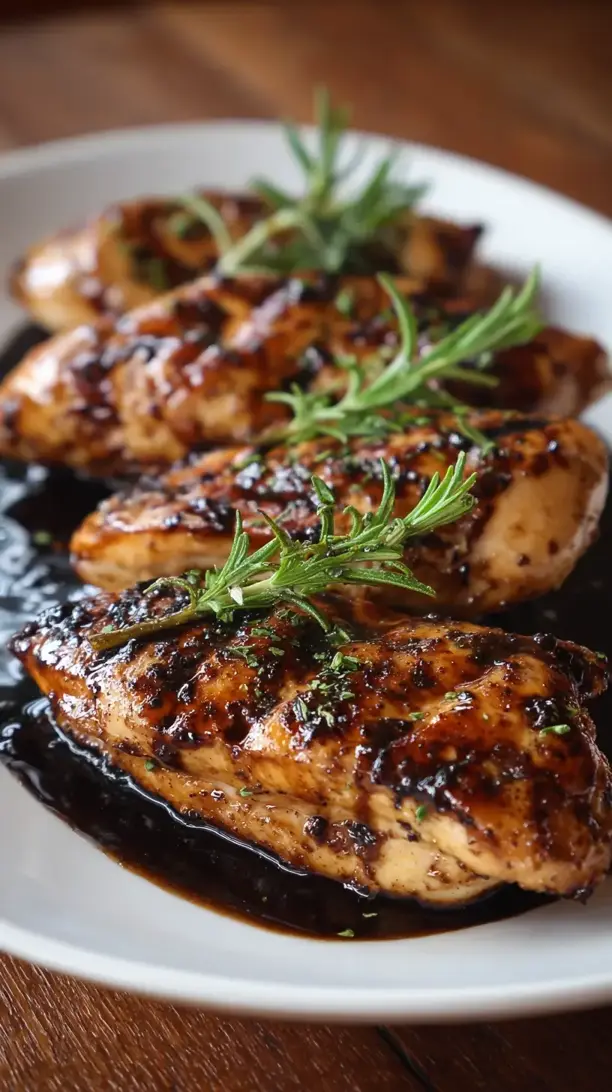
Honey Balsamic Chicken
Learn how to make easy Honey Balsamic Chicken with a sticky, sweet, and tangy glaze. Perfect for a quick, impressive weeknight dinner. Get the recipe now!
Ingredients
For the Ingredients
-
4 bone-in, skin-on chicken thighs
-
2 tbsp olive oil
-
1/3 cup balsamic vinegar
-
1/4 cup honey
-
3 garlic cloves (minced)
-
1 tsp fresh thyme leaves
-
1/2 cup chicken broth
-
1 tbsp soy sauce
-
Salt and freshly ground black pepper
Instructions
-
Preheat your oven to 375°F (190°C). Pat the chicken thighs completely dry with paper towels—this is crucial for getting that crispy, golden skin. Season both sides generously with salt and pepper.01
-
Heat the olive oil in a large, oven-safe skillet over medium-high heat. Once the oil is shimmering, place the chicken thighs in the pan skin-side down. Cook for 5–7 minutes without moving them, until the skin is deeply golden and releases easily from the pan. Flip and cook for another 2–3 minutes on the other side.02
-
Remove the chicken from the skillet and set it aside on a plate. Reduce the heat to medium and pour off all but about 1 tablespoon of the rendered fat. Add the minced garlic and sauté for about 30 seconds until fragrant—be careful not to burn it, or it will turn bitter.03
-
To the same skillet, add the balsamic vinegar, honey, chicken broth, soy sauce, and thyme. Whisk everything together, scraping up any browned bits from the bottom of the pan—those bits are packed with flavor! Bring the mixture to a simmer and let it cook for 2–3 minutes, until it slightly thickens.04
-
Return the chicken thighs to the skillet, skin-side up, nestling them into the sauce. Spoon a little of the sauce over the top of each piece. Carefully transfer the skillet to the preheated oven and bake for 18–22 minutes, or until the chicken reaches an internal temperature of 165°F (74°C) and the sauce has reduced to a thick, glossy glaze.05
-
Remove the skillet from the oven—remember, the handle will be extremely hot! Let the chicken rest in the skillet for 5 minutes before serving. Serve the chicken with the reduced glaze spooned generously over the top.06
Not what you're looking for?