
Sometimes the best lunches happen when you’re not really trying. These Hummus Veggie Wraps are fresh, satisfying, and endlessly customizable. They come together in about ten minutes with zero cooking required.
Nothing beats a great Hummus Veggie Wraps. Whether you're a fan of Snacks or want to try something from our Chicken selection, keep scrolling!


Why You’ll Love This Hummus Veggie Wraps
- Fresh & vibrant: Every bite is a mix of cool, crisp textures and bright flavors.
- Total creative freedom: The basic formula adapts to whatever vegetables you have on hand.
- Fast assembly: Ready in ten minutes—no cooking required.
- Travels beautifully: Wraps hold their structure perfectly in a lunchbox.
Ingredients & Tools
- 4 large flour tortillas or spinach wraps
- 1 cup classic hummus
- 1 medium cucumber, julienned or thinly sliced
- 1 large carrot, grated or julienned
- 1 red bell pepper, thinly sliced
- 2 cups fresh spinach or mixed greens
- 1/2 cup crumbled feta cheese (optional)
- 1/4 cup chopped fresh parsley or cilantro
- 2 tbsp lemon juice
- 1 tbsp olive oil
- Salt and black pepper to taste
Tools: A sharp knife, a cutting board, a vegetable peeler (for the carrots), and a clean kitchen towel or parchment paper for wrapping.
Notes: The quality of your hummus really makes a difference here—it’s the glue and the main flavor base. And don’t skip the fresh herbs; that little bit of parsley or cilantro adds a surprising pop that ties everything together beautifully.
Nutrition (per serving)
| Calories: | 320 kcal |
| Protein: | 11 g |
| Fat: | 14 g |
| Carbs: | 40 g |
| Fiber: | 8 g |
Serves: 4 | Prep Time: 15 minutes | Cook Time: 0 minutes | Total Time: 15 minutes
Before You Start: Tips & Ingredient Notes
- Can I use different vegetables? Absolutely. The beauty of this recipe is its flexibility. Thinly sliced radishes, shredded red cabbage, or even some corn kernels would be fantastic additions. Just aim for a mix of colors and textures.
- What’s the best way to slice the veggies? You want everything in thin, uniform strips (julienne) if possible. This isn’t just for looks—it makes the wrap much easier to roll and eat without everything tumbling out.
- Is there a secret to a tight roll? Yes, and it’s all about not overfilling. It’s tempting to pack in as much as possible, but a modest, even layer of fillings is the key to a wrap that holds its shape.
- My tortillas always crack when I roll them. This usually means they’re a little stale. A quick 10-second warm-up in the microwave (just until pliable) makes them much more cooperative and less likely to tear.
How to Make Hummus Veggie Wraps
Step 1: First, let’s get all our vegetables prepped. You’ll want to wash and dry everything thoroughly. Julienne the cucumber and carrot into thin matchsticks, and thinly slice the red bell pepper. If you’re grating the carrot, a coarse grate works well too. Place all your prepped veggies in a bowl. The goal here is uniformity—similar sizes mean every bite gets a bit of everything.
Step 2: Now, let’s add a little brightness to our vegetable mix. Drizzle the olive oil and lemon juice over the prepared cucumbers, carrots, and bell peppers. Toss everything gently with your hands or a spoon. Season with a pinch of salt and a crack of black pepper. This quick “dressing” isn’t just for flavor—it wakes up the vegetables and makes them taste even more vibrant.
Step 3: Time to set up our wrapping station. Lay a tortilla flat on your cutting board. If your tortillas are cold from the fridge, warm one at a time in a dry skillet for 15 seconds per side or in the microwave for 10 seconds. You’ll notice it becomes much more soft and pliable, which is essential for a crack-free roll.
Step 4: Spread a generous, even layer of hummus over the entire surface of the tortilla, leaving about a 1-inch border around the edges. This hummus layer acts as a delicious barrier that helps prevent the tortilla from getting soggy from the juicy vegetables. Don’t be shy with it!
Step 5: Now for the layering. Start with a handful of fresh spinach or greens, pressing them gently into the hummus. Then, arrange a portion of your dressed vegetable mixture in a horizontal line across the center of the tortilla. You want a compact row, not a scattered pile. Sprinkle with the crumbled feta and fresh herbs, if using.
Step 6: Here comes the rolling technique. Fold the left and right sides of the tortilla inward over the ends of the filling. Then, starting from the edge closest to you, tightly roll the tortilla away from you, tucking the filling in as you go. Apply gentle but firm pressure to create a snug, cylindrical wrap. The final product should feel secure and hold its shape.
Step 7: If you’re packing these for later, wrap them tightly in parchment paper or foil, twisting the ends like a candy wrapper. This helps them stay compact and makes for easy, mess-free transport. For immediate serving, you can slice them in half on a sharp diagonal—the cross-section looks gorgeous with all those colorful layers.
Storage & Freshness Guide
- Fridge: Wrap tightly in parchment and foil; store up to 24 hours.
- Freezer: Not recommended; vegetables become watery upon thawing.
- Reviving: If tortilla stiffens, let sit at room temperature for 10 minutes before eating.
Serving Suggestions
Complementary Dishes
- A simple quinoa salad — The nutty flavor and extra protein from quinoa make it a hearty side that complements the fresh, light nature of the wraps without overpowering them.
- Sweet potato fries — The slight sweetness and crispy texture are a fantastic contrast to the cool, creamy interior of the wrap. It’s a textural party on a plate.
- A tangy lentil soup — For a more substantial meal, a warm bowl of soup pairs wonderfully, especially on a cooler day. The earthy flavors of the lentils bridge the gap beautifully.
Drinks
- Sparkling water with lemon — The bubbles and citrus cleanse the palate between bites, making each mouthful of the wrap taste bright and new again.
- Iced green tea — Its mild, slightly grassy notes are a calming companion that doesn’t compete with the fresh vegetable flavors.
- A crisp Sauvignon Blanc — If you’re enjoying this for a light dinner, this wine’s citrus and herbal notes are a perfect match for the herbs and lemon in the wrap.
Something Sweet
- Fresh berry salad with a hint of mint — It’s light, refreshing, and continues the theme of a fresh, fruit-forward meal that doesn’t feel heavy.
- A few squares of dark chocolate — The bitter finish is a lovely, simple way to end the meal and satisfies that sweet tooth without being too much.
- Lemon sorbet — It’s like a continuation of the lemon zest in the wrap, but in a frozen, delightfully tart form that feels like a real treat.
Top Mistakes to Avoid
- Overfilling the tortilla. This is the number one reason wraps fall apart. It creates a bulky center that’s impossible to roll tightly, and the tortilla often tears. Less is more here.
- Using watery vegetables without prepping them. Ingredients like tomatoes can make the wrap soggy. If you use them, remove the seeds and juicy pulp first, or add them in moderation.
- Spreading the hummus to the very edge. Leaving that one-inch border is crucial. It gives the fillings a contained space and allows the edges to seal properly when you roll, preventing leaks.
- Using cold, stiff tortillas straight from the fridge. I’ve messed this up before too. A cold tortilla is brittle and will crack. Always warm it up first for a flexible, pliable base.
Expert Tips
- Tip: For ultimate structural integrity, mix a tablespoon of tahini into your hummus. It makes the spread a bit thicker and grippier, which helps hold all the vegetable pieces in place like culinary glue.
- Tip: If you’re making these for meal prep, keep the dressed vegetables separate from the hummus and tortillas until you’re ready to assemble and eat. This prevents any potential sogginess and keeps everything crisp.
- Tip: Add a layer of something leafy, like the spinach, directly onto the hummus *before* the heavier veggies. This creates a protective barrier that further guards the tortilla from moisture.
- Tip: For a flavor boost, use a flavored hummus. Roasted red pepper, lemon cilantro, or even a spicy harissa hummus can completely transform the character of the wrap with zero extra effort.
FAQs
Can I make these wraps ahead of time?
Yes, you absolutely can! For the best results, wrap them very tightly in parchment paper and then in foil or plastic wrap. They will hold well in the fridge for up to 24 hours. The key is the tight wrapping, which keeps air out and helps maintain the texture. If you’re planning further ahead, I’d recommend prepping the components separately and assembling the day you plan to eat them to ensure maximum crispness.
What’s a good substitute for hummus?
If you’re not a fan of hummus or have an allergy, there are several great alternatives. A thick, Greek yogurt-based tzatziki or a whipped feta dip would be delicious and provide a similar creamy base. For a dairy-free option, a thick avocado mash or even a white bean spread would work wonderfully. The main goal is to have a flavorful, spreadable component that acts as both flavor and moisture barrier.
My wrap is too thick to roll. What do I do?
Don’t panic! Simply remove some of the filling—it’s an easy fix. A good rule of thumb is that the layer of fillings should be no more than about half an inch thick. Once you’ve taken a bit out, try rolling again. You can always enjoy the extra veggies as a little side salad. It’s better to have a slightly less full wrap that holds together than a overstuffed one that falls apart.
Can I use corn tortillas instead of flour?
You can, but it requires a slight adjustment. Corn tortillas are smaller and more fragile. I’d recommend using two corn tortillas per wrap, warming them up, and overlapping them slightly to create a larger surface area. They still might be a bit more challenging to roll tightly than a large, flexible flour tortilla, but the flavor is a great gluten-free option.
How can I add more protein to this wrap?
This is a great way to make the wrap more substantial. Grilled chicken strips, chickpeas, canned tuna or salmon, or even sliced hard-boiled eggs are all excellent additions. If you’re using a wet protein like tuna, be sure to drain it well. For a plant-based boost, a sprinkle of sunflower seeds or hemp hearts adds great texture and protein.



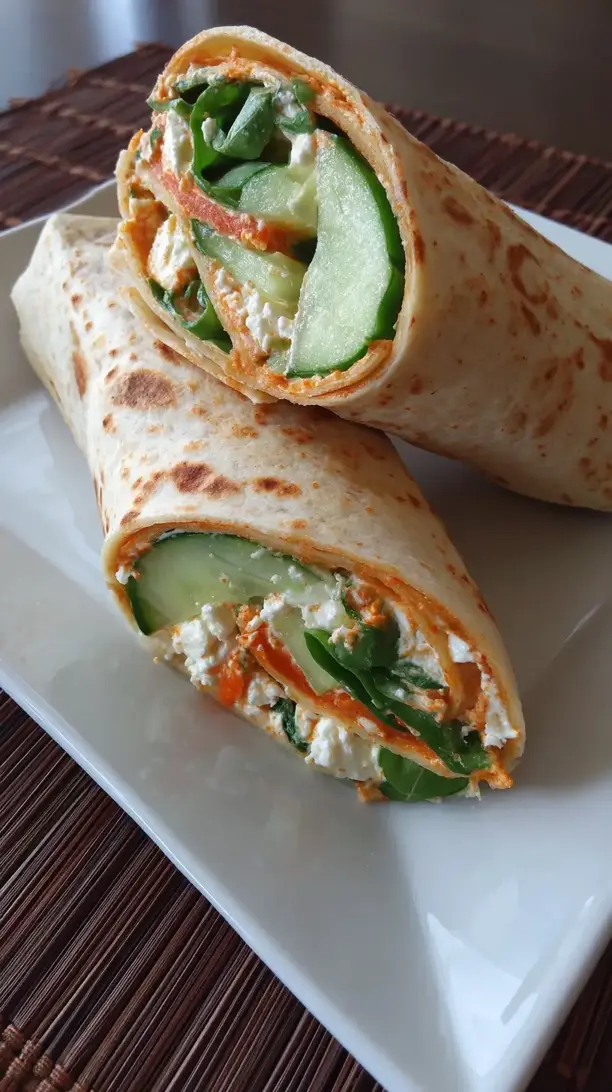
Hummus Veggie Wraps
Make fresh and easy Hummus Veggie Wraps in just 10 minutes! This no-cook recipe is perfect for a healthy lunch. Get the simple steps and customizations now.
Ingredients
For the Wraps
-
4 large flour tortillas or spinach wraps
-
1 cup classic hummus
-
1 medium cucumber (julienned or thinly sliced)
-
1 large carrot (grated or julienned)
-
1 red bell pepper (thinly sliced)
-
2 cups fresh spinach or mixed greens
-
1/2 cup crumbled feta cheese (optional)
-
1/4 cup chopped fresh parsley or cilantro
-
2 tbsp lemon juice
-
1 tbsp olive oil
-
Salt and black pepper (to taste)
Instructions
-
First, let’s get all our vegetables prepped. You’ll want to wash and dry everything thoroughly. Julienne the cucumber and carrot into thin matchsticks, and thinly slice the red bell pepper. If you’re grating the carrot, a coarse grate works well too. Place all your prepped veggies in a bowl. The goal here is uniformity—similar sizes mean every bite gets a bit of everything.01
-
Now, let’s add a little brightness to our vegetable mix. Drizzle the olive oil and lemon juice over the prepared cucumbers, carrots, and bell peppers. Toss everything gently with your hands or a spoon. Season with a pinch of salt and a crack of black pepper. This quick “dressing” isn’t just for flavor—it wakes up the vegetables and makes them taste even more vibrant.02
-
Time to set up our wrapping station. Lay a tortilla flat on your cutting board. If your tortillas are cold from the fridge, warm one at a time in a dry skillet for 15 seconds per side or in the microwave for 10 seconds. You’ll notice it becomes much more soft and pliable, which is essential for a crack-free roll.03
-
Spread a generous, even layer of hummus over the entire surface of the tortilla, leaving about a 1-inch border around the edges. This hummus layer acts as a delicious barrier that helps prevent the tortilla from getting soggy from the juicy vegetables. Don’t be shy with it!04
-
Now for the layering. Start with a handful of fresh spinach or greens, pressing them gently into the hummus. Then, arrange a portion of your dressed vegetable mixture in a horizontal line across the center of the tortilla. You want a compact row, not a scattered pile. Sprinkle with the crumbled feta and fresh herbs, if using.05
-
Here comes the rolling technique. Fold the left and right sides of the tortilla inward over the ends of the filling. Then, starting from the edge closest to you, tightly roll the tortilla away from you, tucking the filling in as you go. Apply gentle but firm pressure to create a snug, cylindrical wrap. The final product should feel secure and hold its shape.06
-
If you’re packing these for later, wrap them tightly in parchment paper or foil, twisting the ends like a candy wrapper. This helps them stay compact and makes for easy, mess-free transport. For immediate serving, you can slice them in half on a sharp diagonal—the cross-section looks gorgeous with all those colorful layers.07
Not what you're looking for?


