
Hungarian Goulash is a rich, paprika-forward beef stew that warms you from the inside out. This authentic one-pot wonder simmers low and slow for incredibly tender meat and deep flavor. It’s a comforting classic that tastes even better the next day.
Nothing beats a great Hungarian Goulash. Whether you're a fan of Stew or want to try something from our Crockpot Recipes selection, keep scrolling!



Why You’ll Love This Hungarian Goulash
- Deep, complex flavor: A handful of simple ingredients creates a rich and soul-warming profile.
- Ultimate comfort food: Tender beef in a velvety, paprika-kissed sauce feels like a warm hug.
- Versatile and forgiving: Welcomes your own tweaks with veggies or spices.
- Better the next day: Flavors marry and deepen overnight for easy meals.
Ingredients & Tools
- 2 tbsp olive oil or lard
- 1.5 kg beef chuck, cut into 2-inch cubes
- 2 large yellow onions, finely chopped
- 4 cloves garlic, minced
- 3 tbsp sweet Hungarian paprika
- 1 tsp caraway seeds, lightly crushed
- 1 large tomato, diced (or a 14 oz can of diced tomatoes)
- 1 yellow or green bell pepper, diced
- 4 cups beef broth
- 2 bay leaves
- Salt and black pepper to taste
- 2 tbsp tomato paste
- 1 lb potatoes, peeled and cubed (optional, for a heartier stew)
Tools: A large, heavy-bottomed pot or Dutch oven is essential.
Notes: The quality of your paprika is non-negotiable here—it’s the star of the show. Seek out genuine Hungarian sweet paprika for that authentic, vibrant flavor and color. Freshly bought is best, as paprika loses its potency over time.
Nutrition (per serving)
| Calories: | 480 kcal |
| Protein: | 42 g |
| Fat: | 24 g |
| Carbs: | 22 g |
| Fiber: | 5 g |
Serves: 6 | Prep Time: 20 minutes | Cook Time: 2 hours 30 minutes | Total Time: 2 hours 50 minutes
Before You Start: Tips & Ingredient Notes
- Don’t skip browning the beef. This step is crucial for building a deep, savory foundation. You’re not just cooking the meat; you’re creating fond—those little browned bits at the bottom of the pot—that will dissolve into the sauce and add incredible flavor.
- Why Hungarian paprika specifically? Hungarian paprika has a distinct, sweet, and complex flavor that’s different from Spanish or generic supermarket varieties. Using the real deal is the single most important factor for an authentic-tasting goulash.
- Low and slow is the way to go. Rushing the simmer will result in tough meat. A gentle, patient simmer allows the connective tissues in the beef chuck to break down slowly, transforming it into that melt-in-your-mouth texture we’re after.
- To potato or not to potato? Traditional Hungarian goulash often doesn’t include potatoes, serving it instead with egg noodles or dumplings. Adding potatoes makes it a heartier, all-in-one meal. The choice is yours!
How to Make Hungarian Goulash
Step 1: Pat your beef cubes completely dry with paper towels and season generously with salt and pepper. This is a small step, but it’s key for getting a proper sear. Heat the oil or lard in your heavy-bottomed pot over medium-high heat. Working in batches to avoid crowding the pan, sear the beef until a deep brown crust forms on all sides. This should take about 4-5 minutes per batch. Transfer the browned beef to a plate and set aside.
Step 2: Reduce the heat to medium and add the chopped onions to the same pot. You’ll notice all those delicious browned bits from the meat. Cook the onions, stirring occasionally, until they become soft, translucent, and just starting to take on a golden color, about 8-10 minutes. Add the minced garlic and cook for another minute until fragrant—be careful not to burn it!
Step 3: This is the magic moment. Remove the pot from the heat entirely. Stir in the 3 tablespoons of sweet Hungarian paprika and the crushed caraway seeds. Taking the pot off the heat prevents the paprika from burning, which would make it bitter. Stir constantly for about 30 seconds until the onions are coated and the spices are incredibly fragrant.
Step 4: Return the pot to medium heat. Add the tomato paste and stir it into the onion mixture, cooking for one minute to caramelize it slightly. Then, add the diced tomato and bell pepper, stirring to combine. Now, return the seared beef and any accumulated juices back to the pot. Pour in the beef broth—it should just about cover the meat and vegetables. Add the bay leaves and give everything a good stir, scraping the bottom of the pot to loosen all that flavorful fond.
Step 5: Bring the goulash to a gentle boil, then immediately reduce the heat to low. Cover the pot with a lid, leaving it slightly ajar to allow some steam to escape. Let it simmer gently for about 1 hour and 30 minutes. You should only see occasional small bubbles. Resist the urge to stir too often!
Step 6: If you’re adding potatoes, now is the time. Stir in the cubed potatoes, submerging them in the liquid. Continue to simmer, covered, for another 45 minutes to 1 hour, or until both the beef and potatoes are fork-tender. The sauce should have thickened nicely and taken on a beautiful, glossy, brick-red color.
Step 7: Finally, taste and adjust the seasoning. You’ll almost certainly need more salt and pepper. Remove the bay leaves before serving. The goulash should be rich, deeply savory, and aromatic. Let it rest for 5-10 minutes off the heat before dishing it up—this allows the flavors to settle perfectly.
Storage & Freshness Guide
- Fridge: Cool completely and store in an airtight container for up to 4 days.
- Freezer: Freeze in airtight containers or bags for up to 3 months.
- Reviving: Reheat gently on the stovetop, adding a splash of broth if needed.
Serving Suggestions
Complementary Dishes
- Buttered Egg Noodles or Spätzle — The classic pairing. The soft, neutral carbs are the perfect vehicle for sopping up every last bit of that incredible paprika sauce.
- Crusty Bread or Dinner Rolls — Absolutely non-negotiable for me. A thick, chewy slice of sourdough or a soft roll is essential for wiping your bowl clean.
- A Simple Cucumber Salad — A bright, acidic salad with a vinegar dressing cuts through the richness of the stew and provides a refreshing, crisp contrast.
Drinks
- A Robust Red Wine — A nice Hungarian red like a Bull’s Blood or a fruity Zinfandel stands up beautifully to the bold, smoky-sweet flavors of the goulash.
- A Dark Lager — The malty, slightly sweet notes of a dark lager complement the paprika and beef without overpowering the dish.
Something Sweet
- Somlói Galuska — This classic Hungarian trifle with chocolate, walnuts, and rum-soaked sponge cake is a decadent and authentic way to end the meal.
- Apple Strudel — The warm, spiced apples and flaky pastry provide a light, fruity finish that feels just right after a hearty stew.
Top Mistakes to Avoid
- Mistake: Burning the paprika. If you add the paprika directly to high heat, it will burn in seconds and turn bitter, ruining the entire pot. Always take the pot off the heat when you add it, just like we did in the recipe.
- Mistake: Using a lean cut of beef. Stew meat or sirloin will become tough and dry. You need a well-marbled, tough cut like chuck or shoulder that breaks down and becomes tender and juicy during the long, slow cook.
- Mistake: Boiling instead of simmering. A rolling boil will make the beef tough and chewy. You want the barest suggestion of bubbles—a gentle simmer is what melts the connective tissue. I’ve rushed this before and learned the hard way!
- Mistake: Not tasting at the end. Stews need a lot of seasoning. After hours of cooking, the flavors meld and you’ll be surprised how much salt and pepper it needs to truly sing. Always do a final taste test.
Expert Tips
- Tip: Make it a day ahead. The flavors in a stew like this deepen and improve immensely overnight. Cook it, let it cool, and store it in the fridge. Reheat it gently the next day for an even more incredible meal.
- Tip: Don’t be shy with the onions. They almost melt away during cooking, creating a natural thickness and sweetness in the sauce. They are the backbone of the flavor, so use the full two large onions.
- Tip: Deglaze with a splash of wine. After browning the meat and onions, add a splash of red wine to the pot and scrape up the fond before adding the paprika. It adds another layer of complexity.
- Tip: Thicken without flour. If you prefer a thicker sauce, mash a few of the cooked potato cubes against the side of the pot and stir them in. It thickens the goulash beautifully without making it taste pasty.
FAQs
What’s the difference between goulash and American goulash?
They share a name but are completely different dishes! Hungarian Goulash is a paprika-based beef stew, often with caraway and minimal tomato. American goulash (or “American Chop Suey”) is a quick, tomato-heavy pasta dish with ground beef and elbows macaroni—it’s a totally separate, weeknight-friendly comfort food.
Can I make this in a slow cooker?
Absolutely. Follow the steps through searing the beef and cooking the onions and spices in a skillet. Then, transfer everything to your slow cooker, add the broth and other ingredients, and cook on low for 7-8 hours or on high for 4-5 hours. Adding the potatoes in the last 2 hours on low is best so they don’t turn to mush.
My goulash is too thin. How can I thicken it?
The easiest way is to let it simmer uncovered for the last 15-20 minutes of cooking; the excess liquid will evaporate. Alternatively, you can create a slurry by mixing a tablespoon of cornstarch with two tablespoons of cold water and stirring it into the simmering stew. Let it cook for a few more minutes until thickened.
Can I freeze Hungarian Goulash?
It freezes beautifully! Let it cool completely, then transfer it to airtight containers or freezer bags, leaving a little space for expansion. It will keep for up to 3 months. Thaw in the fridge overnight and reheat gently on the stovetop, adding a splash of broth or water if needed.
Is hot paprika the same as sweet paprika?
They come from the same plant, but hot paprika includes some of the hotter seeds and membranes, giving it a kick. This recipe is designed for sweet (mild) paprika. If you want heat, you can substitute one teaspoon of the sweet paprika with hot paprika, but I’d recommend trying the sweet version first to experience the authentic flavor profile.



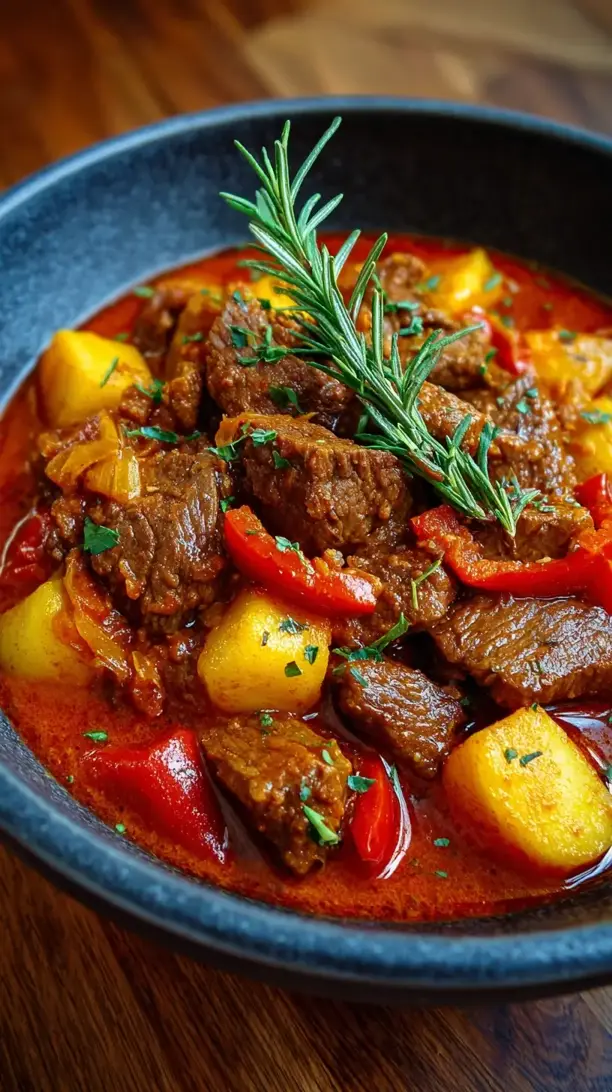
Hungarian Goulash
Learn how to make authentic Hungarian Goulash with this easy recipe. Tender beef, sweet paprika, and rich flavors in one pot. Get the step-by-step guide now!
Ingredients
For the Ingredients
-
2 tbsp olive oil or lard
-
1.5 kg beef chuck (cut into 2-inch cubes)
-
2 large yellow onions (finely chopped)
-
4 cloves garlic (minced)
-
3 tbsp sweet Hungarian paprika
-
1 tsp caraway seeds (lightly crushed)
-
1 large tomato (diced (or a 14 oz can of diced tomatoes))
-
1 yellow or green bell pepper (diced)
-
4 cups beef broth
-
2 bay leaves
-
Salt and black pepper (to taste)
-
2 tbsp tomato paste
-
1 lb potatoes (peeled and cubed (optional, for a heartier stew))
Instructions
-
Pat your beef cubes completely dry with paper towels and season generously with salt and pepper. Heat the oil or lard in your heavy-bottomed pot over medium-high heat. Working in batches to avoid crowding the pan, sear the beef until a deep brown crust forms on all sides. This should take about 4-5 minutes per batch. Transfer the browned beef to a plate and set aside.01
-
Reduce the heat to medium and add the chopped onions to the same pot. Cook the onions, stirring occasionally, until they become soft, translucent, and just starting to take on a golden color, about 8-10 minutes. Add the minced garlic and cook for another minute until fragrant—be careful not to burn it!02
-
Remove the pot from the heat entirely. Stir in the 3 tablespoons of sweet Hungarian paprika and the crushed caraway seeds. Stir constantly for about 30 seconds until the onions are coated and the spices are incredibly fragrant.03
-
Return the pot to medium heat. Add the tomato paste and stir it into the onion mixture, cooking for one minute to caramelize it slightly. Then, add the diced tomato and bell pepper, stirring to combine. Now, return the seared beef and any accumulated juices back to the pot. Pour in the beef broth—it should just about cover the meat and vegetables. Add the bay leaves and give everything a good stir, scraping the bottom of the pot to loosen all that flavorful fond.04
-
Bring the goulash to a gentle boil, then immediately reduce the heat to low. Cover the pot with a lid, leaving it slightly ajar to allow some steam to escape. Let it simmer gently for about 1 hour and 30 minutes. You should only see occasional small bubbles. Resist the urge to stir too often!05
-
If you’re adding potatoes, now is the time. Stir in the cubed potatoes, submerging them in the liquid. Continue to simmer, covered, for another 45 minutes to 1 hour, or until both the beef and potatoes are fork-tender. The sauce should have thickened nicely and taken on a beautiful, glossy, brick-red color.06
-
Finally, taste and adjust the seasoning. You’ll almost certainly need more salt and pepper. Remove the bay leaves before serving. Let it rest for 5-10 minutes off the heat before dishing it up—this allows the flavors to settle perfectly.07
Not what you're looking for?


