
This Italian Beef Stew is a rustic, deeply comforting one-pot meal. Simmered with chuck roast, red wine, and herbs, it delivers tender beef and rich, savory flavors. Perfect for cozy dinners, this Italian Beef Stew tastes even better the next day.
Nothing beats a great Italian Beef Stew. Whether you're a fan of Stew or want to try something from our Chicken Thigh Recipes selection, keep scrolling!



Why You’ll Love This Italian Beef Stew
- Complex flavors: Slow-simmered with wine, tomatoes, and herbs for a rich, savory broth.
- Fall-apart beef: Chuck roast becomes exceptionally tender and juicy.
- All-in-one meal: Packed with protein and vegetables for a complete dinner.
- Make-ahead friendly: Flavors deepen overnight, ideal for meal prep.
Ingredients & Tools
- 1.5 kg beef chuck roast, cut into 4 cm cubes
- 2 tbsp olive oil
- 1 large yellow onion, finely chopped
- 2 large carrots, peeled and chopped
- 2 celery stalks, chopped
- 4 cloves garlic, minced
- 180 ml dry red wine (like Chianti or Sangiovese)
- 800 g canned crushed tomatoes
- 500 ml beef broth
- 2 bay leaves
- 1 tbsp fresh rosemary, chopped
- 1 tbsp fresh thyme leaves
- 1 tsp dried oregano
- Salt and freshly ground black pepper, to taste
- 2 tbsp tomato paste
- 1 tbsp balsamic vinegar
Tools: A large, heavy-bottomed pot or Dutch oven, wooden spoon, sharp knife, and cutting board.
Notes: Using quality ingredients like a drinkable red wine and fresh herbs builds authentic Italian flavor.
Nutrition (per serving)
| Calories: | 420 kcal |
| Protein: | 35 g |
| Fat: | 18 g |
| Carbs: | 25 g |
| Fiber: | 6 g |
Serves: 6 | Prep Time: 20 minutes | Cook Time: 2 hours 30 minutes | Total Time: 2 hours 50 minutes
Before You Start: Tips & Ingredient Notes
- Choosing the right cut of beef is crucial. Chuck roast is ideal for stewing because it has a good amount of marbling. This fat renders down during the long cooking process, basting the meat from within and resulting in that fall-apart texture we all love.
- Don’t skip searing the beef. This step isn’t just for color—it creates a flavorful fond (those browned bits) on the bottom of the pot that will deglaze with the wine and build incredible depth in your stew. It’s a flavor powerhouse.
- Why use dry red wine? A dry Italian red wine like Chianti adds acidity and complexity without making the stew taste overly boozy or sweet. The alcohol cooks off, leaving behind a rich, rounded flavor that balances the tomatoes beautifully.
- Fresh vs. dried herbs. For the rosemary and thyme, fresh is definitely preferred here as they release their oils more gently during the long simmer. The dried oregano, however, holds up well and provides a more robust, earthy note.
How to Make Italian Beef Stew
Step 1: Pat the beef cubes completely dry with paper towels—this is key for getting a good sear. Season them generously on all sides with salt and pepper. Heat the olive oil in your large Dutch oven or heavy-bottomed pot over medium-high heat. Once the oil is shimmering, add the beef in a single layer, working in batches to avoid overcrowding. Sear for about 3-4 minutes per side, until a deep brown crust forms. Transfer the seared beef to a clean plate and set aside.
Step 2: Reduce the heat to medium. In the same pot, you’ll notice all those delicious browned bits left from the beef. Add the chopped onion, carrots, and celery (this is your soffritto). Sauté for about 6-8 minutes, stirring occasionally, until the vegetables have softened and the onion becomes translucent. Add the minced garlic and cook for another minute until fragrant—be careful not to burn it.
Step 3: Stir in the tomato paste and cook for about one minute, allowing it to coat the vegetables and deepen in color. This quick cook removes any raw, tinny taste from the paste. Now, pour in the red wine, using your wooden spoon to scrape up all the browned fond from the bottom of the pot. Let the wine simmer and reduce by about half, which should take 3-4 minutes.
Step 4: Return the seared beef and any accumulated juices back to the pot. Add the crushed tomatoes, beef broth, bay leaves, rosemary, thyme, and oregano. Give everything a good stir to combine. Bring the stew to a gentle boil, then immediately reduce the heat to low, cover the pot with a lid, and let it simmer gently.
Step 5: Let the stew simmer for about 2 to 2.5 hours. You’ll want to check on it occasionally, giving it a stir. The stew is ready when the beef is extremely tender and can be easily pulled apart with a fork. In the last 10 minutes of cooking, stir in the balsamic vinegar. This adds a subtle, sweet acidity that really brightens up the rich flavors of the stew.
Step 6: Once the beef is tender, taste the stew and adjust the seasoning with more salt and pepper if needed. Remove and discard the bay leaves. For a slightly thicker consistency, you can let the stew simmer uncovered for another 10-15 minutes. Let it rest for about 10 minutes off the heat before serving—this allows the flavors to settle beautifully.
Storage & Freshness Guide
- Fridge: Cool completely and store in an airtight container for 3–4 days.
- Freezer: Portion into airtight containers and freeze for up to 3 months.
- Reviving: Reheat gently on the stovetop, adding a splash of broth if needed.
Serving Suggestions
Complementary Dishes
- Creamy Polenta — The soft, creamy texture is a dream with the rich, chunky stew spooned over the top. It’s a classic Italian pairing that soaks up the sauce perfectly.
- Garlic Mashed Potatoes — For ultimate comfort, a fluffy bed of garlicky mash provides a wonderful, neutral base that lets the stew’s flavors shine.
- Crusty Rosemary Focaccia — There’s nothing better than a piece of warm, chewy focaccia to drag through the savory broth and clean your bowl.
Drinks
- Chianti Classico — A medium-bodied red with bright acidity that cuts through the richness of the beef and mirrors the wine used in the cooking.
- Dark Italian Lager — A malty, smooth lager like Moretti provides a refreshing contrast without overpowering the stew’s herbal notes.
- Sparkling Water with Lemon — A simple, bubbly palate cleanser that resets your taste buds between each delicious, hearty bite.
Something Sweet
- Tiramisu — The coffee-soaked ladyfingers and light mascarpone cream offer a cool, creamy finish that contrasts wonderfully with the savory stew.
- Panna Cotta with Berry Compote — A silky, smooth panna cotta with a tart fruit topping provides a light and elegant end to the meal.
- Amaretti Cookies — These classic Italian almond cookies are crunchy, sweet, and a little bitter—perfect for nibbling with an espresso after dinner.
Top Mistakes to Avoid
- Mistake: Crowding the pot when searing the beef. If you add too much beef at once, the pot’s temperature drops and the meat steams instead of searing. This prevents the formation of that crucial brown crust and the development of deep flavor. I’ve messed this up before too, and it makes a noticeable difference.
- Mistake: Skipping the deglazing step. After sautéing the vegetables, those browned bits on the bottom of the pot are pure flavor. If you don’t scrape them up with the wine, you’re leaving a ton of taste behind. It only takes a minute, but it’s a game-changer.
- Mistake: Boiling the stew instead of simmering. A gentle simmer is what slowly breaks down the tough connective tissues in the chuck roast, making it tender. A rolling boil will make the beef tough and can cause the vegetables to turn to mush.
- Mistake: Not tasting and adjusting seasoning at the end. The long cooking process can mellow out salt and acidity. Always do a final taste test and adjust with salt, pepper, or a splash of balsamic vinegar right before serving to make all the flavors pop.
Expert Tips
- Tip: Make it a day ahead. Stews are famously better the next day. Cook it, let it cool completely, and store it in the fridge overnight. The flavors meld together into something even more magical, and it makes dinner the next day effortless.
- Tip: Use a splash of vinegar for a flavor boost. If your stew tastes a little flat or too sweet from the tomatoes, a small splash of balsamic or red wine vinegar at the end can add a necessary acidic kick that brightens the entire dish.
- Tip: Thicken the stew without flour. If you prefer a thicker stew but want to keep it gluten-free, mash a few of the cooked carrot pieces against the side of the pot with a fork. They will dissolve into the broth and naturally thicken it.
- Tip: Freeze portions for easy future meals. This stew freezes exceptionally well. Portion it into airtight containers once completely cooled, and it will keep for up to 3 months. It’s a lifesaver on busy weeknights.
FAQs
Can I make this Italian Beef Stew in a slow cooker?
Absolutely! After searing the beef and sautéing the vegetables in a skillet (to build that fond), transfer everything to your slow cooker. Add the remaining ingredients except for the balsamic vinegar. Cook on low for 7-8 hours or on high for 4-5 hours. Stir in the balsamic vinegar during the last 30 minutes of cooking. The result will be just as tender and flavorful.
What can I use instead of red wine?
If you prefer not to cook with alcohol, you can substitute the red wine with an equal amount of additional beef broth mixed with one tablespoon of balsamic vinegar or red wine vinegar. This will mimic the acidity and depth that the wine provides, though the flavor profile will be slightly different.
My stew is too thin. How can I thicken it?
The easiest way is to let it simmer uncovered for an additional 15-20 minutes to allow some liquid to evaporate. Alternatively, you can make a quick slurry by mixing one tablespoon of cornstarch with two tablespoons of cold water. Stir this into the simmering stew and cook for a few minutes until it thickens.
Can I add other vegetables to this stew?
Of course! Diced potatoes, parsnips, or mushrooms would be wonderful additions. For root vegetables like potatoes, add them about halfway through the cooking time so they don’t become too soft. For mushrooms, sauté them with the other vegetables at the beginning to develop their flavor.
How long will leftovers keep in the refrigerator?
Store any cooled leftovers in an airtight container in the fridge. It will keep beautifully for 3 to 4 days. Reheat it gently on the stovetop over low heat, adding a splash of broth or water if it has thickened up too much.



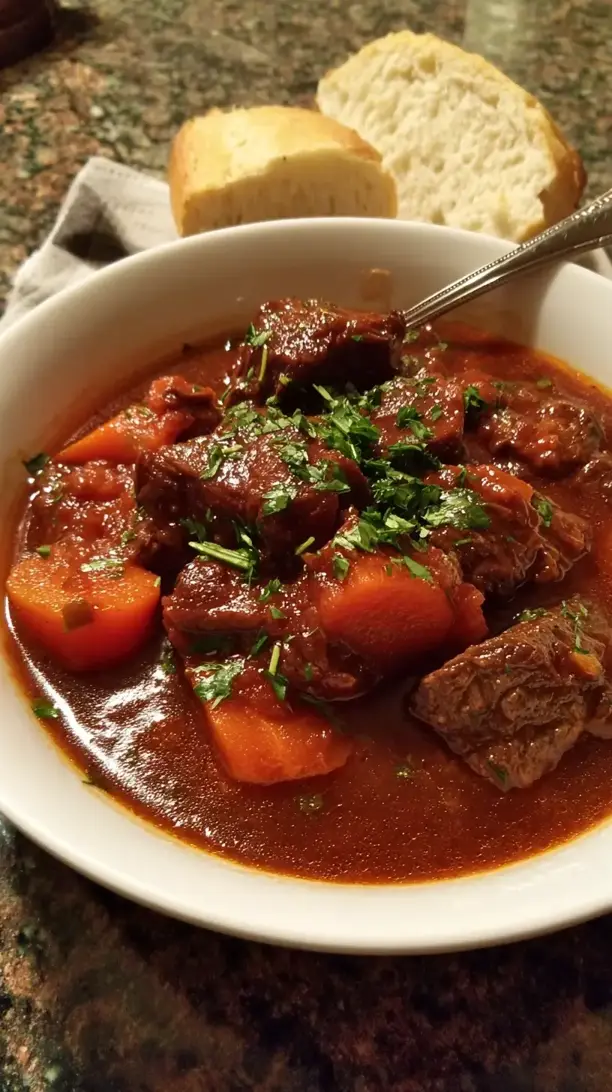
Italian Beef Stew
Make this rich, tender Italian Beef Stew with chuck roast, red wine, and herbs. Perfect for cozy dinners and even better the next day. Get the recipe now!
Ingredients
For the Ingredients
-
1.5 kg beef chuck roast (cut into 4 cm cubes)
-
2 tbsp olive oil
-
1 large yellow onion (finely chopped)
-
2 large carrots (peeled and chopped)
-
2 celery stalks (chopped)
-
4 cloves garlic (minced)
-
180 ml dry red wine (like Chianti or Sangiovese)
-
800 g canned crushed tomatoes
-
500 ml beef broth
-
2 bay leaves
-
1 tbsp fresh rosemary (chopped)
-
1 tbsp fresh thyme leaves
-
1 tsp dried oregano
-
Salt and freshly ground black pepper (to taste)
-
2 tbsp tomato paste
-
1 tbsp balsamic vinegar
Instructions
-
Pat the beef cubes completely dry with paper towels—this is key for getting a good sear. Season them generously on all sides with salt and pepper. Heat the olive oil in your large Dutch oven or heavy-bottomed pot over medium-high heat. Once the oil is shimmering, add the beef in a single layer, working in batches to avoid overcrowding. Sear for about 3-4 minutes per side, until a deep brown crust forms. Transfer the seared beef to a clean plate and set aside.01
-
Reduce the heat to medium. In the same pot, you’ll notice all those delicious browned bits left from the beef. Add the chopped onion, carrots, and celery (this is your soffritto). Sauté for about 6-8 minutes, stirring occasionally, until the vegetables have softened and the onion becomes translucent. Add the minced garlic and cook for another minute until fragrant—be careful not to burn it.02
-
Stir in the tomato paste and cook for about one minute, allowing it to coat the vegetables and deepen in color. This quick cook removes any raw, tinny taste from the paste. Now, pour in the red wine, using your wooden spoon to scrape up all the browned fond from the bottom of the pot. Let the wine simmer and reduce by about half, which should take 3-4 minutes.03
-
Return the seared beef and any accumulated juices back to the pot. Add the crushed tomatoes, beef broth, bay leaves, rosemary, thyme, and oregano. Give everything a good stir to combine. Bring the stew to a gentle boil, then immediately reduce the heat to low, cover the pot with a lid, and let it simmer gently.04
-
Let the stew simmer for about 2 to 2.5 hours. You’ll want to check on it occasionally, giving it a stir. The stew is ready when the beef is extremely tender and can be easily pulled apart with a fork. In the last 10 minutes of cooking, stir in the balsamic vinegar. This adds a subtle, sweet acidity that really brightens up the rich flavors of the stew.05
-
Once the beef is tender, taste the stew and adjust the seasoning with more salt and pepper if needed. Remove and discard the bay leaves. For a slightly thicker consistency, you can let the stew simmer uncovered for another 10-15 minutes. Let it rest for about 10 minutes off the heat before serving—this allows the flavors to settle beautifully.06
Not what you're looking for?


