
This Italian Breakfast Panini captures the magic of an Italian morning in one satisfying sandwich. Imagine crusty ciabatta, creamy mozzarella, salty prosciutto, and a perfectly cooked egg. It’s a simple yet special breakfast that feels like a warm hug.
Looking for Italian Breakfast Panini inspiration? You'll love what we have! Explore more Savory Breakfast recipes or discover our Appetizer Recipes favorites.
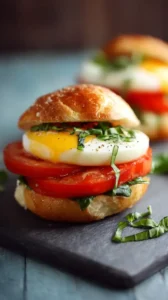

Why You’ll Love This Italian Breakfast Panini
- All-in-one breakfast: Protein, carbs, and veggies in a neat, portable package.
- Dreamy textures: Crisp, golden bread with a soft, melty, yolk-filled interior.
- Endlessly customizable: Swap prosciutto for pancetta or try a sharper cheese.
- Fancy yet simple: Impressive results with minimal effort and quality ingredients.
Ingredients & Tools
- 2 ciabatta rolls, or 1 small ciabatta loaf cut into two portions
- 4 thin slices of prosciutto di Parma
- 2 large eggs
- 4 slices of fresh mozzarella cheese
- 2 tbsp sun-dried tomatoes in oil, patted dry and roughly chopped
- 1 tbsp fresh basil leaves, torn
- 1 tbsp unsalted butter, softened
- 1 tsp olive oil
- Salt and freshly ground black pepper, to taste
Tools: Panini press or a heavy skillet (like cast iron) and a foil-wrapped brick for weight.
Notes: Quality ingredients shine here—fresh mozzarella and good prosciutto make a memorable difference.
Nutrition (per serving)
| Calories: | 520 kcal |
| Protein: | 28 g |
| Fat: | 25 g |
| Carbs: | 45 g |
| Fiber: | 2 g |
Serves: 2 | Prep Time: 10 minutes | Cook Time: 10 minutes | Total Time: 20 minutes
Before You Start: Tips & Ingredient Notes
- Why ciabatta? Its sturdy, airy structure and crisp crust are perfect for panini. It holds up to the pressure and fillings without getting soggy or falling apart. A soft roll just won’t give you the same satisfying crunch.
- Fresh vs. low-moisture mozzarella. For the best melt and creamy texture, fresh mozzarella is the winner. If you only have the low-moisture, pre-shredded kind, it will work, but the texture will be a bit more rubbery and less luxurious.
- Don’t skip the butter. Buttering the outside of the bread is the secret to that deep golden, restaurant-quality crust. It adds flavor and promotes even browning far better than olive oil alone on the bread’s surface.
- Have everything ready to go. This sandwich comes together fast once you start cooking the egg. Having your fillings prepped and your press heated means you can assemble quickly and get that perfect, runny yolk.
How to Make Italian Breakfast Panini
Step 1: Preheat your panini press to medium-high heat. If you’re using a skillet, place it over medium heat now so it gets nice and hot. While it heats, slice your ciabatta rolls in half horizontally, creating a top and a bottom. You’ll want a good, sturdy hinge so the fillings don’t fall out, so be careful not to cut all the way through.
Step 2: Gently spread the softened butter on the outer tops and bottoms of the ciabatta rolls. This is what will create that irresistible, buttery, golden crust. Be generous but even with it—you’ll notice the difference in the final color and flavor.
Step 3: Now, let’s cook the eggs. Heat the teaspoon of olive oil in a non-stick skillet over medium heat. Crack the eggs in, season with a pinch of salt and pepper, and cook until the whites are just set but the yolks are still completely runny. This should only take about 2-3 minutes. You’re not making a fully cooked fried egg here; the yolk will continue to set a little in the panini press.
Step 4: It’s assembly time! Open your buttered ciabatta rolls. Start by laying the slices of fresh mozzarella on the bottom half of each roll. The cheese acts as a protective barrier against the bread getting soggy from the egg. Next, drape two slices of prosciutto over the cheese on each sandwich.
Step 5: Carefully place your sunny-side-up egg on top of the prosciutto. The goal is to keep that yolk intact! Now, scatter the chopped sun-dried tomatoes and torn basil leaves over the egg. The tomatoes add a wonderful sweet-tangy punch that cuts through the richness beautifully.
Step 6: Close the sandwiches gently. Press down lightly to compact the fillings just a bit—this helps everything hold together. Place the sandwiches on the preheated panini press and close the lid. If using a skillet, place the sandwiches in the hot pan and press down firmly with your weighted brick or a second, smaller skillet.
Step 7: Cook for 4-6 minutes, until the bread is deeply golden and crisp with prominent grill marks, and the cheese is visibly melted and oozy. You might even see a little bit of cheesy goodness start to peek out the sides—that’s a great sign! The internal temperature will finish cooking the egg white fully while keeping the yolk deliciously jammy.
Step 8: Remove the panini from the press using a spatula. Let them rest for just one minute on a cutting board—this allows the fillings to settle slightly so they don’t all gush out on the first bite. Slice in half, serve immediately, and watch for that glorious yolk river.
Storage & Freshness Guide
- Fridge: Store assembled but uncooked panini (without egg) tightly wrapped for 1 day. Cooked panini are best eaten immediately.
- Freezer: Not recommended due to the egg and fresh mozzarella texture changes.
- Reviving: Reheat cooked panini in a toaster oven at 375°F for 5–7 minutes to restore crispness.
Serving Suggestions
Complementary Dishes
- A simple arugula salad — The peppery bite of arugula dressed with just a squeeze of lemon and a drizzle of olive oil provides a fresh, crisp contrast to the rich, savory panini.
- Roasted cherry tomatoes on the vine — Toss them with olive oil, salt, and herbs and roast until they burst. Their intense, sweet acidity is a perfect sidekick for the salty prosciutto and cheese.
- Seasonal fruit plate — A platter of fresh melon, berries, or figs offers a sweet, juicy, and refreshing element that cleanses the palate between bites of the hearty sandwich.
Drinks
- A freshly squeezed blood orange juice — Its vibrant color and unique sweet-tart flavor feel incredibly Italian and luxurious, making the whole meal feel like a special occasion.
- A proper cappuccino — The creamy, frothy coffee is a classic Italian breakfast pairing that stands up to the robust flavors of the panini without overpowering them.
- A chilled glass of Prosecco — For a true brunch celebration, the light, bubbly effervescence of Prosecco cuts through the richness of the sandwich beautifully. Cheers to that!
Something Sweet
- Almond biscotti for dipping — These crunchy, twice-baked cookies are meant for dunking into your coffee or juice, providing a lovely, not-too-sweet finish to the meal.
- A small bowl of lemon sorbet — Its bright, clean, and refreshing flavor is the perfect palate cleanser and a light way to end a rich breakfast.
- Cornetti (Italian croissants) — If you’re going all-in on the Italian theme, a plain or apricot-filled cornetto is the traditional pastry to enjoy after your savory course.
Top Mistakes to Avoid
- Overcooking the egg. If you cook the yolk solid in the skillet, you lose the wonderful saucy element that makes this panini so special. A runny yolk is non-negotiable for the best experience.
- Using a soggy bread. A soft, flimsy roll will collapse under the pressure and steam from the fillings, resulting in a messy, difficult-to-eat sandwich. Ciabatta’s sturdy crust is your best friend here.
- Skipping the preheat. A cold panini press or skillet won’t create that instant sear, which means your bread can steam and become tough before it gets crispy. Always let your cooking surface get properly hot.
- Overstuffing the sandwich. It’s tempting to add more of everything, but too many fillings will prevent the sandwich from pressing together properly and can lead to a structural failure mid-bite. I’ve messed this up before too… less is more!
Expert Tips
- Tip: For an extra flavor boost, rub the inside of the bread with the cut side of a garlic clove before adding the fillings. It adds a subtle, aromatic depth that’s just incredible.
- Tip: If you want to prep ahead, you can assemble the sandwiches the night before (without the egg), wrap them tightly in plastic, and refrigerate. In the morning, just cook your egg fresh and add it before pressing.
- Tip: No panini press? No problem. Use two cast iron skillets—one to cook in and the other, preheated, to place on top as a weight. The result is just as good, I promise.
- Tip: For a vegetarian version, simply omit the prosciutto and add a handful of sautéed spinach or mushrooms. You’ll still get a wonderfully satisfying and flavorful breakfast sandwich.
FAQs
Can I make this Italian Breakfast Panini without a panini press?
Absolutely, yes! A heavy-bottomed skillet, like cast iron, is a perfect substitute. Just preheat it, place your assembled sandwich inside, and then press down with another heavy skillet or a foil-wrapped brick. You’ll need to flip it halfway through cooking to get both sides golden and crisp. It might take a minute or two longer, but the result is just as delicious. The key is consistent, firm pressure.
What’s the best way to reheat a panini if I have leftovers?
Honestly, this sandwich is best enjoyed immediately. But if you must, reheating in an oven or toaster oven at 375°F (190°C) for about 5-7 minutes will help restore some of the crispness to the bread. Avoid the microwave—it will turn the bread rubbery and overcook the egg. The yolk will be fully set upon reheating, but it will still taste great.
Can I use a different type of cheese?
Of course! While fresh mozzarella is classic, other great melting cheeses work wonderfully. Fontina has a lovely nutty flavor, provolone offers a sharper bite, and even a young Taleggio would be decadent. The main goal is to use a cheese that melts well and complements the saltiness of the prosciutto.
My egg yolk broke during assembly. Is it ruined?
Not at all! It will still be delicious, just a bit messier. The broken yolk will soak into the bread and mingle with the other ingredients, creating a different but equally tasty texture. Consider it a “deconstructed” version. Just be a little more careful with the next one—using a wide spatula helps.
Can I make a larger batch for a crowd?
You sure can. The trick is to work in batches and keep the finished panini warm in a low oven (around 200°F or 95°C) on a wire rack. This keeps the bottom from getting soggy. I’d recommend prepping all your fillings and having a helper on egg duty to keep the assembly line moving smoothly. It’s a fantastic, impressive option for brunch parties.



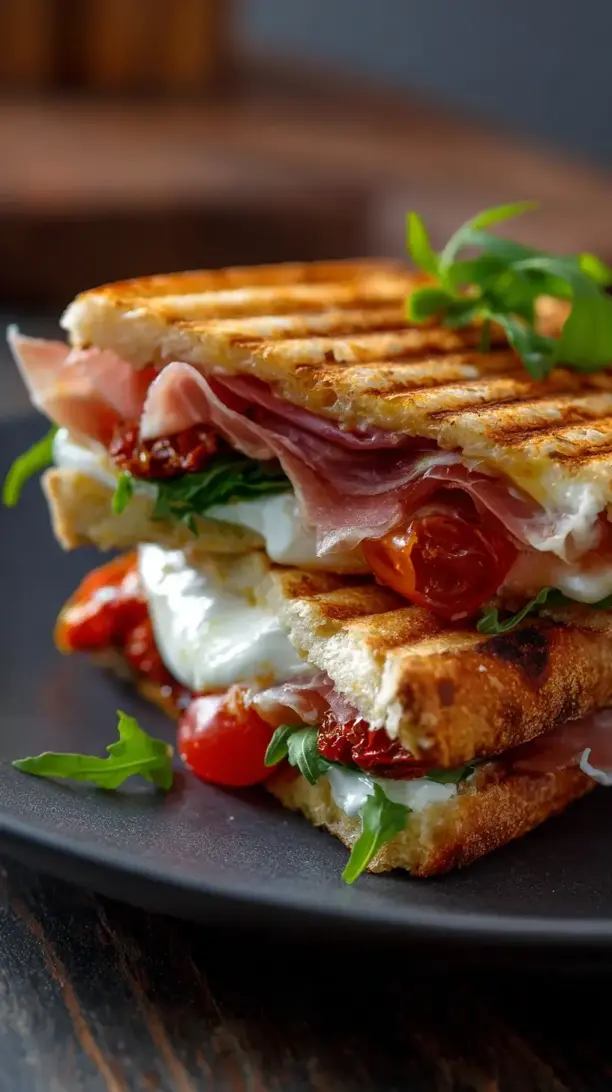
Italian Breakfast Panini
Make this easy Italian Breakfast Panini with ciabatta, prosciutto, mozzarella & a runny egg. Ready in 20 minutes! Get the recipe for this gourmet breakfast sandwich now.
Ingredients
For the Ingredients
-
2 ciabatta rolls (or 1 small ciabatta loaf cut into two portions)
-
4 slices prosciutto di Parma (thin)
-
2 large eggs
-
4 slices fresh mozzarella cheese
-
2 tbsp sun-dried tomatoes in oil (patted dry and roughly chopped)
-
1 tbsp fresh basil leaves (torn)
-
1 tbsp unsalted butter (softened)
-
1 tsp olive oil
-
Salt and freshly ground black pepper (to taste)
Instructions
-
Preheat your panini press to medium-high heat. If you're using a skillet, place it over medium heat now so it gets nice and hot. While it heats, slice your ciabatta rolls in half horizontally, creating a top and a bottom. You’ll want a good, sturdy hinge so the fillings don’t fall out, so be careful not to cut all the way through.01
-
Gently spread the softened butter on the outer tops and bottoms of the ciabatta rolls. This is what will create that irresistible, buttery, golden crust. Be generous but even with it—you’ll notice the difference in the final color and flavor.02
-
Now, let's cook the eggs. Heat the teaspoon of olive oil in a non-stick skillet over medium heat. Crack the eggs in, season with a pinch of salt and pepper, and cook until the whites are just set but the yolks are still completely runny. This should only take about 2-3 minutes. You’re not making a fully cooked fried egg here; the yolk will continue to set a little in the panini press.03
-
It’s assembly time! Open your buttered ciabatta rolls. Start by laying the slices of fresh mozzarella on the bottom half of each roll. The cheese acts as a protective barrier against the bread getting soggy from the egg. Next, drape two slices of prosciutto over the cheese on each sandwich.04
-
Carefully place your sunny-side-up egg on top of the prosciutto. The goal is to keep that yolk intact! Now, scatter the chopped sun-dried tomatoes and torn basil leaves over the egg. The tomatoes add a wonderful sweet-tangy punch that cuts through the richness beautifully.05
-
Close the sandwiches gently. Press down lightly to compact the fillings just a bit—this helps everything hold together. Place the sandwiches on the preheated panini press and close the lid. If using a skillet, place the sandwiches in the hot pan and press down firmly with your weighted brick or a second, smaller skillet.06
-
Cook for 4-6 minutes, until the bread is deeply golden and crisp with prominent grill marks, and the cheese is visibly melted and oozy. You might even see a little bit of cheesy goodness start to peek out the sides—that’s a great sign! The internal temperature will finish cooking the egg white fully while keeping the yolk deliciously jammy.07
-
Remove the panini from the press using a spatula. Let them rest for just one minute on a cutting board—this allows the fillings to settle slightly so they don’t all gush out on the first bite. Slice in half, serve immediately, and watch for that glorious yolk river.08
Not what you're looking for?


