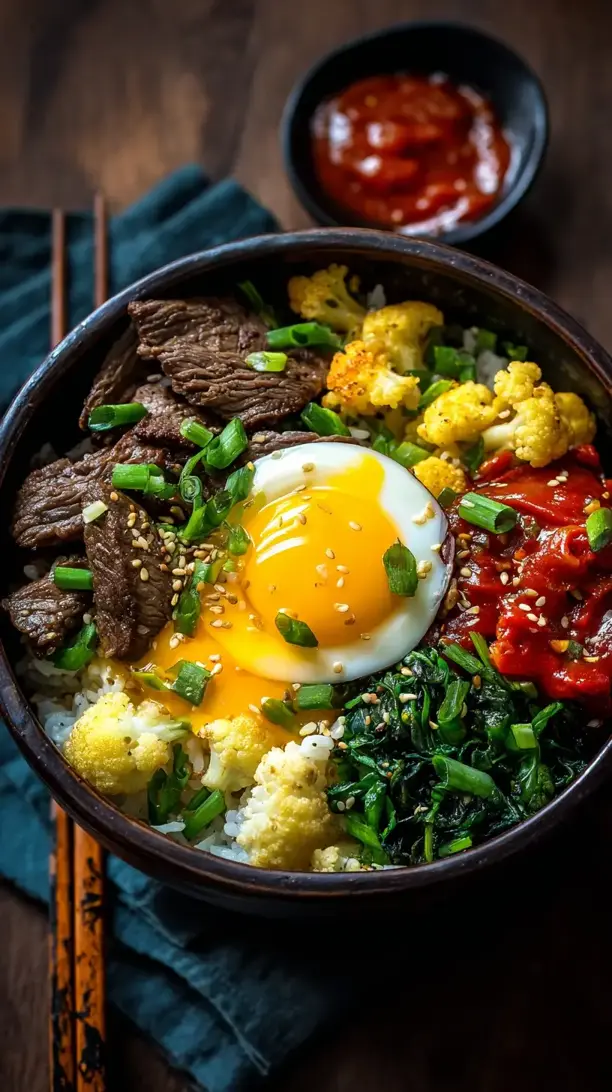
These Korean BBQ Beef Bowls deliver all the sizzle and flavor of traditional Korean BBQ right in your kitchen. Tender, thinly sliced beef is marinated in a sweet-salty sauce, seared until caramelized, and served over cauliflower rice with quick-pickled veggies and a fried egg. It’s a complete, restaurant-worthy meal that’s surprisingly simple to make.
If you're looking for the perfect Korean BBQ Beef Bowls, you're in the right place. Whether you love Dinner Ideas or want to explore our Christmas Cookie collection, we've got you covered.


Why You’ll Love This Korean BBQ Beef Bowls
Restaurant-Quality Flavor: Achieve iconic Korean BBQ taste without a grill or hard-to-find ingredients.
Textural Dream: Tender beef, crisp veggies, creamy egg, and light cauliflower rice create a satisfying bite.
Incredibly Adaptable: Swap cauliflower rice for regular rice or quinoa, adjust heat to taste.
Surprisingly Quick: Fast cooking after a brief marinade—perfect for busy weeknights.
Ingredients & Tools
- 500 g thinly sliced beef sirloin or ribeye
- 4 tbsp soy sauce (or tamari for gluten-free)
- 2 tbsp sesame oil
- 2 tbsp granulated erythritol
- 1 tbsp rice vinegar
- 3 cloves garlic, minced
- 1 tsp freshly grated ginger
- 1/2 medium onion, thinly sliced
- 1 medium carrot, julienned
- 1/2 English cucumber, thinly sliced
- 2 tbsp white vinegar
- 1 tsp erythritol
- 1/4 tsp salt
- 4 large eggs
- 1 head cauliflower, riced (or 4 cups pre-riced)
- 2 spring onions, sliced
- 1 tbsp toasted sesame seeds
Tools: A large skillet or wok, a medium bowl for marinating, a small bowl for the quick pickle, a box grater or food processor for the cauliflower.
Notes: Thinly sliced beef is key for quick cooking and sauce absorption; if not pre-sliced, freeze steak for 20 minutes for easier slicing. Don’t skip sesame oil—it adds authentic nutty aroma.
Nutrition (per serving)
| Calories: | 435 kcal |
| Protein: | 35 g |
| Fat: | 28 g |
| Carbs: | 12 g |
| Fiber: | 4 g |
Serves: 4 | Prep Time: 20 minutes (plus 30 minutes marinating) | Cook Time: 15 minutes | Total Time: 35 minutes (plus marinating)
Before You Start: Tips & Ingredient Notes
- Get your beef as thin as possible. This is the single most important step for tender beef. Thin slices cook in a flash and have more surface area to soak up the delicious marinade, resulting in a far more flavorful final dish.
- Don’t rush the marinade. I know, waiting is the hardest part. But giving the beef at least 30 minutes (or even up to 2 hours) in the fridge allows the flavors to truly penetrate the meat. It makes a noticeable difference in the depth of flavor.
- Prep your “rice” first. If you’re making your own cauliflower rice from a fresh head, get that done first. It can sit while you prepare everything else, and some people even prefer to spread it on a baking sheet to let some of the moisture evaporate for a fluffier texture.
- Embrace the quick pickle. The pickled veggies aren’t just a garnish; they’re a crucial element that cuts through the richness of the beef and egg. That little hit of acidity brightens the entire bowl and balances all the flavors perfectly.
How to Make Korean BBQ Beef Bowls
Step 1: Marinate the Beef. In a medium bowl, whisk together the soy sauce, sesame oil, erythritol, rice vinegar, minced garlic, and grated ginger. The aroma at this stage is already incredible—savory, nutty, and a little sweet. Add your thinly sliced beef to the bowl and use your hands (or tongs) to toss everything together, making sure every piece is thoroughly coated. Cover the bowl and pop it in the refrigerator to marinate for at least 30 minutes. This waiting period is when the magic happens, as the beef tenderizes and soaks up all that flavor.
Step 2: Create the Quick Pickle. While the beef is marinating, let’s tackle the veggies. In a small bowl, combine the sliced cucumber and julienned carrot. In a separate cup, mix the white vinegar, 1 tsp of erythritol, and salt, stirring until the sweetener and salt dissolve. Pour this liquid over the vegetables and toss to coat. Set this aside at room temperature, giving it an occasional stir. You’ll notice the vegetables will start to soften slightly and become beautifully tangy and crisp—this usually takes about 15-20 minutes.
Step 3: Prepare the Cauliflower Rice. If you’re starting with a whole head of cauliflower, cut it into florets and pulse them in a food processor until they reach a rice-like consistency. Be careful not to over-process, or you’ll end up with cauliflower mash! You can also use a box grater. Heat a large, dry skillet over medium heat and add the riced cauliflower. Sauté for 5-7 minutes, stirring frequently, until it’s tender but not mushy. Season with a pinch of salt, then transfer to a bowl and cover to keep warm.
Step 4: Cook the Beef. Wipe out the same skillet you used for the cauliflower (no need to wash it) and place it over medium-high heat. Add a tiny splash of a neutral oil if your pan isn’t non-stick. Once the pan is hot, use tongs to add the marinated beef in a single layer, reserving the leftover marinade in the bowl. Let the beef sear for about 2-3 minutes without moving it, so it gets a nice brown crust. Then, flip and cook for another 1-2 minutes until cooked through. The beef should be caramelized around the edges.
Step 5: Glaze the Beef. Pour the reserved marinade into the hot skillet with the beef. Be careful, as it might sizzle and steam. Let it bubble away for a minute or two, stirring constantly, until the sauce reduces and thickens, creating a gorgeous, sticky glaze that coats every piece of beef. The sauce should look glossy and dark. Turn off the heat.
Step 6: Fry the Eggs. While the beef is cooking its final minute, heat a separate non-stick skillet over medium heat with a little oil or butter. Crack the eggs into the pan and fry them to your liking. For these bowls, I highly recommend a sunny-side-up or over-easy egg, so the runny yolk can act as a extra sauce for the bowl.
Step 7: Assemble Your Bowls. This is the fun part! Divide the warm cauliflower rice among four bowls. Top with a generous portion of the glazed Korean BBQ beef. Drain the quick-pickled vegetables (they will have released a little liquid) and arrange them neatly on one side. Place your perfectly fried egg right in the center. Finally, garnish with sliced spring onions and a generous sprinkle of toasted sesame seeds for that final nutty crunch.
Storage & Freshness Guide
- Fridge: Store beef, cauliflower rice, and pickled veggies separately in airtight containers for up to 3 days.
- Freezer: Freeze cooked beef and cauliflower rice for up to 2 months; thaw in fridge before reheating.
- Reviving: Reheat beef and rice in a skillet over medium heat; fry a fresh egg when serving.
Serving Suggestions
Complementary Dishes
- A simple side of kimchi — Its spicy, fermented kick adds another layer of complexity and probiotics, making the whole meal feel even more authentic and vibrant.
- Sautéed garlicky spinach — A quick wilt of fresh spinach with a little garlic and sesame oil provides a lovely, tender green element that complements the rich beef beautifully.
- Seaweed salad — The briny, slightly sweet flavor and unique texture of a classic seaweed salad offer a refreshing contrast and a taste of the sea.
Drinks
- Iced barley tea (boricha) — This is a traditional, nutty, and caffeine-free Korean tea that is incredibly refreshing and helps cleanse the palate between bites of the flavorful beef.
- A crisp, dry rosé — The bright acidity and berry notes in a good rosé cut through the richness of the dish without overpowering any of the delicate flavors in the marinade.
- Sparkling water with a lemon wedge — Sometimes simplicity is best. The bubbles and citrus are a fantastic palate cleanser, making each bite of the bowl taste as exciting as the first.
Something Sweet
- A few fresh strawberries with whipped cream — The sweet, juicy berries and light, airy cream are a perfect, simple finish that doesn’t feel too heavy after a satisfying savory meal.
- Dark chocolate square with sea salt — Just a single piece of high-cocoa dark chocolate provides a rich, bittersweet endnote that contrasts wonderfully with the savory umami notes from dinner.
- Chia seed pudding with vanilla — A cool, creamy, and lightly sweet pudding is a delightful way to end the meal, offering a different texture and a subtle vanilla aroma.
Top Mistakes to Avoid
- Overcrowding the pan when cooking the beef. If you dump all the beef in at once, it will steam instead of sear. You need that hot surface contact to get the caramelization and those delicious crispy bits. Cook in batches if your pan is small.
- Using thick-cut beef. This is a quick-cook dish. If your beef slices are too thick, they’ll be tough and chewy by the time the inside is cooked, and they won’t absorb the marinade as well. Thin is always in for this recipe.
- Skipping the step of reducing the marinade. That reserved marinade is liquid gold! Boiling it in the pan with the cooked beef not only makes it safe to eat but also transforms it into a sticky, concentrated glaze that makes the dish.
- Overcooking the cauliflower rice. You’re aiming for a texture similar to cooked rice, not mush. Sauté it just until it’s tender-crisp. Overcooking will make it watery and sad.
Expert Tips
- Tip: Make a double batch of the marinade. It’s so good, you’ll want to have extra on hand. You can use it as a base for a salad dressing (just thin it with a little more vinegar) or as a quick marinade for chicken or tofu later in the week.
- Tip: Add a little heat. If you like spice, stir a teaspoon of gochujang (Korean chili paste) or a sprinkle of gochugaru (Korean chili flakes) into the beef marinade. It adds a wonderful, deep warmth that isn’t overly aggressive.
- Tip: Get creative with your toppings. These bowls are a canvas! Try adding sliced avocado for creaminess, a drizzle of sriracha mayo, or even some roasted seaweed strips (gim) for an extra crunch and hit of ocean flavor.
- Tip: Meal prep like a pro. You can marinate the beef and mix the quick pickle vegetables (without the vinegar mixture) up to a day ahead. Store them separately in the fridge. The vinegar mix can be combined and stored in a small jar, then poured over the veggies about 20 minutes before you plan to eat.
FAQs
Can I use a different cut of beef?
Absolutely. While sirloin or ribeye are ideal for their tenderness and flavor, flank steak or skirt steak also work wonderfully. Just remember the golden rule: slice it as thinly as possible against the grain. This is crucial for tougher cuts, as it severs the muscle fibers and guarantees a much more tender bite, even with a quick cook time.
I don’t have erythritol. What can I use instead?
No problem! You can use an equal amount of brown sugar substitute like Swerve, or even a tablespoon of maple syrup, though that will add a few extra carbs. The sweetener is there to balance the saltiness of the soy sauce and aid in caramelization, so a little bit of any granulated or liquid sweetener will do the trick.
How should I store and reheat leftovers?
Store all the components separately in airtight containers in the fridge for up to 3 days. The beef and cauliflower rice reheat best in a skillet over medium heat or in the microwave. The pickled veggies are best cold. I’d recommend frying a fresh egg when you’re ready to eat again, as reheated fried eggs can get a bit rubbery.
Is this recipe spicy?
The recipe as written is not spicy at all; it’s more savory, sweet, and umami-forward. The spice level is completely in your control. If you want heat, that’s where the gochujang or gochugaru come in. Start with a small amount—you can always add more, but you can’t take it out!
Can I make this with chicken or tofu?
Yes, both are excellent alternatives! For chicken, use thinly sliced chicken breast or thigh and follow the same marinating and cooking process. For tofu, use extra-firm tofu, press it well to remove water, cube it, and then marinate. You might want to pan-fry the tofu cubes a bit longer to get them crispy before adding the marinade to glaze.



Korean Bbq Beef Bowls
Make easy Korean BBQ Beef Bowls with tender marinated beef, cauliflower rice, and a fried egg. A flavorful, healthy weeknight meal ready in 35 minutes. Get the recipe!
Ingredients
For the Beef Marinade
-
500 g thinly sliced beef sirloin or ribeye
-
4 tbsp soy sauce (or tamari for gluten-free)
-
2 tbsp sesame oil
-
2 tbsp granulated erythritol
-
1 tbsp rice vinegar
-
3 cloves garlic (minced)
-
1 tsp freshly grated ginger
For the Quick Pickle
-
1/2 medium onion (thinly sliced)
-
1 medium carrot (julienned)
-
1/2 English cucumber (thinly sliced)
-
2 tbsp white vinegar
-
1 tsp erythritol
-
1/4 tsp salt
For the Bowls
-
4 large eggs
-
1 head cauliflower (riced (or 4 cups pre-riced))
-
2 spring onions (sliced)
-
1 tbsp toasted sesame seeds
Instructions
-
In a medium bowl, whisk together the soy sauce, sesame oil, erythritol, rice vinegar, minced garlic, and grated ginger. Add your thinly sliced beef to the bowl and use your hands (or tongs) to toss everything together, making sure every piece is thoroughly coated. Cover the bowl and pop it in the refrigerator to marinate for at least 30 minutes.01
-
While the beef is marinating, let’s tackle the veggies. In a small bowl, combine the sliced cucumber and julienned carrot. In a separate cup, mix the white vinegar, 1 tsp of erythritol, and salt, stirring until the sweetener and salt dissolve. Pour this liquid over the vegetables and toss to coat. Set this aside at room temperature, giving it an occasional stir.02
-
If you’re starting with a whole head of cauliflower, cut it into florets and pulse them in a food processor until they reach a rice-like consistency. Heat a large, dry skillet over medium heat and add the riced cauliflower. Sauté for 5-7 minutes, stirring frequently, until it’s tender but not mushy. Season with a pinch of salt, then transfer to a bowl and cover to keep warm.03
-
Wipe out the same skillet you used for the cauliflower (no need to wash it) and place it over medium-high heat. Add a tiny splash of a neutral oil if your pan isn't non-stick. Once the pan is hot, use tongs to add the marinated beef in a single layer, reserving the leftover marinade in the bowl. Let the beef sear for about 2-3 minutes without moving it, so it gets a nice brown crust. Then, flip and cook for another 1-2 minutes until cooked through.04
-
Pour the reserved marinade into the hot skillet with the beef. Let it bubble away for a minute or two, stirring constantly, until the sauce reduces and thickens, creating a gorgeous, sticky glaze that coats every piece of beef. Turn off the heat.05
-
While the beef is cooking its final minute, heat a separate non-stick skillet over medium heat with a little oil or butter. Crack the eggs into the pan and fry them to your liking.06
-
Divide the warm cauliflower rice among four bowls. Top with a generous portion of the glazed Korean BBQ beef. Drain the quick-pickled vegetables (they will have released a little liquid) and arrange them neatly on one side. Place your perfectly fried egg right in the center. Finally, garnish with sliced spring onions and a generous sprinkle of toasted sesame seeds.07
Not what you're looking for?