Kung Pao Chicken delivers a perfect balance of sweet, sour, spicy, and savory flavors in a quick, restaurant-quality stir-fry. This version features tender chicken, crunchy peanuts, and a glossy, addictive sauce. With high-heat cooking and layered aromatics, this Kung Pao Chicken is surprisingly approachable for a weeknight meal.
Looking for Kung Pao Chicken inspiration? You'll love what we have! Explore more Chicken Breast Recipes recipes or discover our Appetizer Recipes favorites.


Why You’ll Love This Kung Pao Chicken
- Flavor & texture symphony: Tender chicken, crunchy peanuts, and a glossy, balanced sauce create a party in your mouth.
- Faster than takeout: Once prepped, it cooks in minutes in a hot wok for a vibrant homemade meal.
- Highly adaptable: Easily adjust heat levels or add extra vegetables to suit your taste.
- Legendary sauce: A glossy, tangy-sweet coat with depth from soy sauces and a tingle of Sichuan pepper.
Ingredients & Tools
- 450 g boneless, skinless chicken thighs, cut into 1-inch cubes
- 1 tbsp Shaoxing wine
- 1 tsp cornstarch
- 1/2 tsp salt
- 3 tbsp light soy sauce
- 2 tbsp Chinkiang vinegar (or a good balsamic as a sub)
- 1 tbsp dark soy sauce
- 1 tbsp granulated sugar
- 2 tsp cornstarch
- 4 tbsp neutral oil (like vegetable or peanut), divided
- 6-8 dried red chilies, halved and seeds shaken out
- 1 tbsp Sichuan peppercorns, lightly toasted
- 4 garlic cloves, finely minced
- 1 tbsp fresh ginger, finely minced
- 4 spring onions, whites and greens separated, cut into 1-inch pieces
- 80 g roasted, unsalted peanuts
Tools: A large wok or a very large, heavy-bottomed skillet, and a small bowl for the sauce.
Notes: Don’t skip the dark soy sauce if you can help it—it gives the dish its beautiful, deep color and a more complex, malty flavor. And those Sichuan peppercorns? They’re non-negotiable for that authentic, tingling ma-la sensation.
Nutrition (per serving)
| Calories: | 420 kcal |
| Protein: | 28 g |
| Fat: | 26 g |
| Carbs: | 18 g |
| Fiber: | 3 g |
Serves: 4 | Prep Time: 20 minutes | Cook Time: 10 minutes | Total Time: 30 minutes
Before You Start: Tips & Ingredient Notes
- Mise en place is your best friend. Stir-frying is a fast process with no time for chopping or measuring mid-flow. Have every single ingredient measured, chopped, and within arm’s reach of your wok before you even turn on the heat.
- Why chicken thighs? Thighs have more fat and connective tissue than breasts, which means they stay incredibly juicy and tender during the high-heat cooking. They’re much more forgiving and pack a lot more flavor.
- Handle the dried chilies with care. I recommend cutting them in half and giving them a gentle tap to discard some of the seeds—this reduces the intense heat while keeping that wonderful chili aroma. And maybe wash your hands thoroughly afterward!
- Don’t be shy with the aromatics. The garlic, ginger, and spring onion whites form the flavor foundation of the dish. A generous hand here makes all the difference between a good stir-fry and a great one.
- Toast your Sichuan peppercorns. Just a quick 30-60 seconds in a dry pan until fragrant will wake up their citrusy, floral, and numbing qualities. It’s a small step with a huge payoff.
How to Make Kung Pao Chicken
Step 1: First, let’s marinate the chicken. In a medium bowl, combine the cubed chicken thighs with the Shaoxing wine, 1 teaspoon of cornstarch, and the salt. Use your hands to mix everything together until each piece of chicken is evenly coated. Let this sit for about 15 minutes while you prepare everything else. You’ll notice the wine helps tenderize the meat and removes any gaminess.
Step 2: While the chicken marinates, make your sauce. In a small bowl or a liquid measuring cup, whisk together the light soy sauce, Chinkiang vinegar, dark soy sauce, sugar, and the remaining 2 teaspoons of cornstarch until the sugar and cornstarch have completely dissolved. Having this ready to go is crucial for a seamless stir-fry later.
Step 3: Now, it’s time to cook. Place your wok or large skillet over high heat and let it get seriously hot—you should see a faint wisp of smoke. Add 2 tablespoons of the neutral oil and swirl it around to coat the surface. Immediately add the marinated chicken, spreading it out in a single layer. Let it sear undisturbed for about 60-90 seconds to get a nice color, then stir-fry for another 2-3 minutes until the chicken is just cooked through. Transfer it to a clean plate.
Step 4: Don’t wipe out the wok! Add the remaining 2 tablespoons of oil. Toss in the dried chilies and Sichuan peppercorns. Stir-fry for just 30 seconds until they become incredibly fragrant—be careful not to burn them, or they’ll turn bitter. This step infuses the oil with all that beautiful heat and aroma.
Step 5: Add the minced garlic, ginger, and the white parts of the spring onions to the flavored oil. Stir-fry constantly for about 45 seconds until they release their fragrance. You’ll notice the kitchen smelling absolutely incredible at this point.
Step 6: Return the cooked chicken to the wok, giving everything a good toss to combine. Now, give your prepared sauce a quick re-stir (the cornstarch may have settled) and pour it over the chicken. The sauce will bubble and thicken almost immediately. Stir constantly for about a minute until the sauce is glossy and clings to every piece of chicken.
Step 7: Turn off the heat. Now, stir in the green parts of the spring onions and the roasted peanuts. Give it one final, vigorous stir to incorporate everything. The residual heat will wilt the spring onion greens perfectly. Your Kung Pao Chicken is ready to serve immediately over a bed of fluffy steamed rice.
Storage & Freshness Guide
- Fridge: Cool completely and store in an airtight container for up to 3 days.
- Freezer: Freeze in a sealed container for up to 2 months; thaw overnight in fridge.
- Reviving: Reheat gently in a wok or skillet, adding a splash of water or broth to refresh the sauce.
Serving Suggestions
Complementary Dishes
- Simple Steamed Jasmine Rice — The fluffy, slightly sticky grains are the perfect neutral canvas to soak up every last drop of that incredible sauce.
- Stir-fried Bok Choy with Garlic — A quick, green vegetable side adds a fresh, crisp contrast and makes the meal feel wonderfully balanced.
- Chinese Cucumber Salad — The cool, tangy, and refreshing crunch of this salad is a fantastic palate cleanser between bites of the rich, spicy chicken.
Drinks
- A crisp, cold Lager — The clean, effervescent quality of a lager cuts through the richness and spice beautifully, making each bite taste new again.
- Jasmine Green Tea — Its delicate floral notes provide a soothing counterpoint to the dish’s bold, numbing heat, creating a really harmonious pairing.
Something Sweet
- Mango Pudding — The sweet, creamy, and tropical flavor of this classic dessert is a delightful and cooling way to finish your spicy meal.
- Lychee Sorbet — Light, fruity, and icy cold, it’s the ultimate refreshment that resets your taste buds after all those vibrant flavors.
Top Mistakes to Avoid
- Mistake: Crowding the wok. If you add too much chicken at once, it will steam instead of sear, resulting in a grey, rubbery texture. Cook in batches if necessary to ensure each piece gets proper contact with the hot surface.
- Mistake: Burning the garlic and aromatics. They cook in seconds. If you add them to oil that’s too hot or leave them for too long, they’ll burn and impart a bitter flavor that can ruin the whole dish. Keep things moving!
- Mistake: Skipping the velveting step. Marinating the chicken with a little cornstarch and wine is a classic Chinese technique called velveting. It creates a protective coating that keeps the chicken incredibly tender and juicy during the high-heat stir-fry.
- Mistake: Adding the peanuts too early. If you cook the peanuts in the sauce, they’ll lose their crunch and become soft and chewy. Stirring them in at the very end preserves their wonderful texture.
Expert Tips
- Tip: Use a metal wok spatula. Its curved edge is designed to follow the contour of a wok, allowing you to scoop, toss, and stir ingredients efficiently. A flat spatula or wooden spoon just doesn’t work as well for the constant motion required.
- Tip: Control your heat with liquid. If things in the wok are getting too hot too fast and you risk burning, simply slide the wok off the heat for a moment or add a tiny splash of water or stock down the side. This will instantly create steam and lower the temperature slightly.
- Tip: For a thicker sauce, let it rest. If you find your sauce isn’t as thick as you’d like after the initial stir, just turn off the heat and let the dish sit for a minute. The residual heat will continue to thicken the cornstarch without overcooking the chicken.
- Tip: Toast your own peanuts. While store-bought roasted peanuts work fine, toasting raw peanuts in a dry pan until golden and fragrant elevates their flavor to a whole new level, adding a deeper, nuttier dimension to the final dish.
FAQs
Can I make this with chicken breast instead?
You absolutely can, but you’ll need to be more careful with the cooking time. Chicken breast has less fat and can dry out much more quickly. I’d recommend cutting it into slightly larger cubes and reducing the initial searing time by about 30-45 seconds. Keep a very close eye on it, as it goes from perfectly cooked to dry in a flash.
What can I use if I don’t have Sichuan peppercorns?
Sichuan peppercorns provide that unique citrusy, numbing “ma-la” sensation that’s hard to replicate. If you can’t find them, you could add a bit of freshly cracked black pepper and a tiny pinch of citrus zest (like orange or lemon) to the sauce for a different kind of complexity. It won’t be the same, but it will still be delicious.
How can I make this dish less spicy?
The primary heat comes from the dried chilies. To reduce the spice level, simply use fewer chilies, and make sure to halve them and tap out most of the seeds—that’s where a lot of the capsaicin resides. You still get the wonderful aroma without the intense burn.
Can I prepare any components ahead of time?
Definitely! You can marinate the chicken and keep it covered in the fridge for up to 24 hours. You can also mix the sauce and chop all your aromatics a day in advance. Store them in separate airtight containers in the fridge. When you’re ready to eat, the actual cooking will be a breeze.
Is there a substitute for Shaoxing wine?
A dry sherry is the closest substitute in terms of flavor profile. If you don’t have that, you can use a low-sodium chicken stock with a tiny splash of rice vinegar, though you’ll lose a little of that authentic depth. Avoid “cooking wine” from the supermarket, as it’s often loaded with salt.


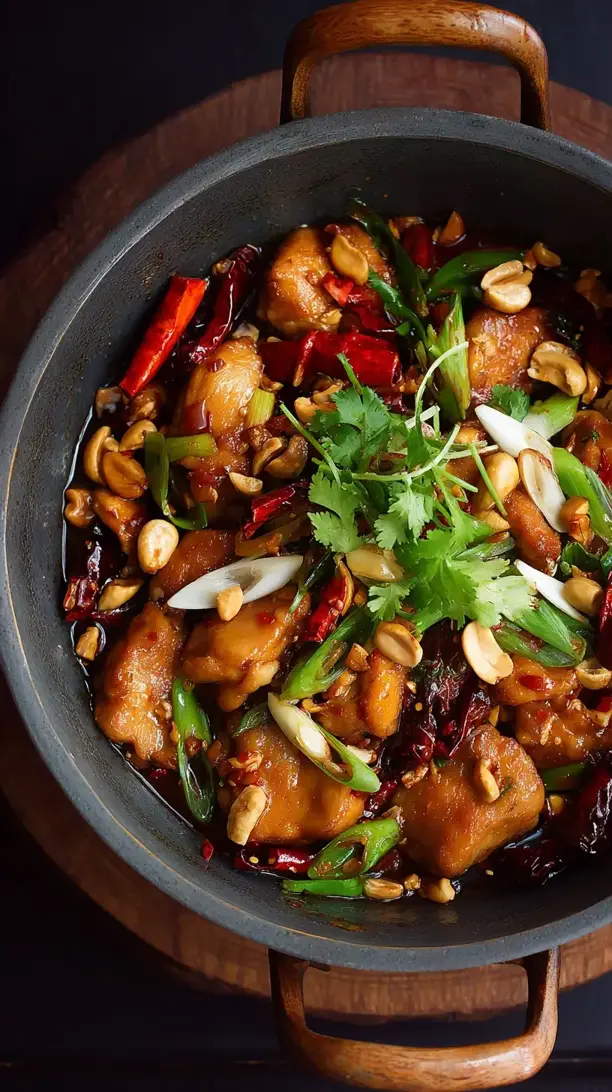
Kung Pao Chicken
Make authentic Kung Pao Chicken at home with this easy recipe. Tender chicken, peanuts & spicy sauce come together in 30 minutes. Get the recipe now!
Ingredients
For the chicken marinade:
-
450 g boneless, skinless chicken thighs (cut into 1-inch cubes)
-
1 tbsp Shaoxing wine
-
1 tsp cornstarch
-
0.5 tsp salt
For the sauce:
-
3 tbsp light soy sauce
-
2 tbsp Chinkiang vinegar (or a good balsamic as a sub)
-
1 tbsp dark soy sauce
-
1 tbsp granulated sugar
-
2 tsp cornstarch
For the stir-fry:
-
4 tbsp neutral oil (like vegetable or peanut, divided)
-
6-8 dried red chilies (halved and seeds shaken out)
-
1 tbsp Sichuan peppercorns (lightly toasted)
-
4 garlic cloves (finely minced)
-
1 tbsp fresh ginger (finely minced)
-
4 spring onions (whites and greens separated, cut into 1-inch pieces)
-
80 g roasted, unsalted peanuts
Instructions
-
First, let's marinate the chicken. In a medium bowl, combine the cubed chicken thighs with the Shaoxing wine, 1 teaspoon of cornstarch, and the salt. Use your hands to mix everything together until each piece of chicken is evenly coated. Let this sit for about 15 minutes while you prepare everything else. You’ll notice the wine helps tenderize the meat and removes any gaminess.01
-
While the chicken marinates, make your sauce. In a small bowl or a liquid measuring cup, whisk together the light soy sauce, Chinkiang vinegar, dark soy sauce, sugar, and the remaining 2 teaspoons of cornstarch until the sugar and cornstarch have completely dissolved. Having this ready to go is crucial for a seamless stir-fry later.02
-
Now, it's time to cook. Place your wok or large skillet over high heat and let it get seriously hot—you should see a faint wisp of smoke. Add 2 tablespoons of the neutral oil and swirl it around to coat the surface. Immediately add the marinated chicken, spreading it out in a single layer. Let it sear undisturbed for about 60-90 seconds to get a nice color, then stir-fry for another 2-3 minutes until the chicken is just cooked through. Transfer it to a clean plate.03
-
Don’t wipe out the wok! Add the remaining 2 tablespoons of oil. Toss in the dried chilies and Sichuan peppercorns. Stir-fry for just 30 seconds until they become incredibly fragrant—be careful not to burn them, or they’ll turn bitter. This step infuses the oil with all that beautiful heat and aroma.04
-
Add the minced garlic, ginger, and the white parts of the spring onions to the flavored oil. Stir-fry constantly for about 45 seconds until they release their fragrance. You’ll notice the kitchen smelling absolutely incredible at this point.05
-
Return the cooked chicken to the wok, giving everything a good toss to combine. Now, give your prepared sauce a quick re-stir (the cornstarch may have settled) and pour it over the chicken. The sauce will bubble and thicken almost immediately. Stir constantly for about a minute until the sauce is glossy and clings to every piece of chicken.06
-
Turn off the heat. Now, stir in the green parts of the spring onions and the roasted peanuts. Give it one final, vigorous stir to incorporate everything. The residual heat will wilt the spring onion greens perfectly. Your Kung Pao Chicken is ready to serve immediately over a bed of fluffy steamed rice.07
Not what you're looking for?