
This Lamb and Carrot Stew is a deeply comforting, slow-simmered meal that fills your kitchen with an incredible savory aroma. The lamb becomes meltingly tender while the carrots sweeten and soften in a rich, hearty broth. It’s the perfect project for a lazy weekend or a make-ahead dinner that tastes even better the next day.
Craving a delicious Lamb and Carrot Stew? You've come to the right spot! From Stew favorites to amazing Dessert Recipes recipes, there's something here for everyone.



Why You’ll Love This Lamb and Carrot Stew
- Deep flavor, minimal effort: Slow simmering coaxes out the lamb’s richness and melds it with sweet carrots and herbs.
- Forgiving & flexible: A wonderful template that welcomes personal touches without getting fussy.
- Comfort food, fancy feel: Rustic elegance makes it impressive for guests, yet straightforward to prepare.
- Fantastic leftovers: Flavors deepen overnight for an even more harmonious bowl of comfort.
Ingredients & Tools
- 1.5 kg lamb shoulder, cut into 3-4 cm chunks
- 2 tbsp olive oil
- 1 large onion, finely chopped
- 4 cloves garlic, minced
- 2 tbsp tomato paste
- 1 tbsp all-purpose flour
- 250 ml dry red wine (like a Cabernet Sauvignon or Merlot)
- 1 liter good-quality beef or lamb stock
- 2 bay leaves
- 1 tsp fresh thyme leaves (or ½ tsp dried)
- 1 tsp fresh rosemary, finely chopped (or ½ tsp dried)
- 600 g carrots, peeled and cut into 2-3 cm chunks
- 2 large potatoes, peeled and cut into large chunks (optional, for a heartier stew)
- Salt and freshly ground black pepper, to taste
- Fresh parsley, chopped, for garnish
Tools: A large, heavy-bottomed pot or Dutch oven (this is non-negotiable for the best sear and even cooking), a sharp knife, and a wooden spoon.
Don’t be tempted to skip browning the lamb—it’s the single most important step for building a deep, flavorful foundation for your stew. And that splash of red wine? It’s not just for show; it deglazes all those delicious browned bits from the bottom of the pot, adding a wonderful layer of complexity.
Nutrition (per serving)
| Calories: | 520 kcal |
| Protein: | 42 g |
| Fat: | 22 g |
| Carbs: | 28 g |
| Fiber: | 6 g |
Serves: 6 | Prep Time: 20 minutes | Cook Time: 2 hours 30 minutes | Total Time: 2 hours 50 minutes
Before You Start: Tips & Ingredient Notes
- Choose the right cut of lamb. Shoulder is ideal because it’s marbled with fat and connective tissue. This breaks down during the long, slow cook, resulting in incredibly tender, fall-apart meat. Avoid lean cuts like leg, as they can become tough and dry.
- Don’t rush the browning step. This is where you build the stew’s flavor base, known as the fond. Get your pot nice and hot, pat the lamb dry, and don’t crowd the pan. You want a deep brown crust, not gray, steamed meat.
- Why use flour? That single tablespoon of flour tossed with the lamb after browning helps to thicken the stew ever so slightly, giving the broth a lovely, velvety body without making it gloppy. It’s a little trick that makes a big difference.
- Taste your stock. Since the stock makes up the bulk of your braising liquid, its quality directly impacts the final dish. Use a low-sodium version so you can control the salt level yourself, and give it a taste—if it’s bland, your stew might be, too.
How to Make Lamb and Carrot Stew
Step 1: Brown the Lamb. Pat the lamb chunks completely dry with paper towels—this is crucial for a good sear. Season generously with salt and pepper. Heat the olive oil in your heavy-bottomed pot or Dutch oven over medium-high heat. Working in batches to avoid overcrowding, add the lamb and sear for 3-4 minutes per side, until you have a beautiful, deep brown crust. Transfer the browned lamb to a plate and set aside. You’ll notice those browned bits stuck to the bottom of the pot… that’s pure flavor gold.
Step 2: Sauté the Aromatics. Reduce the heat to medium. Add the chopped onion to the same pot (with the lamb drippings) and cook for 5-7 minutes, until softened and translucent. Add the minced garlic and cook for another minute until fragrant. Now, stir in the tomato paste and cook for about 2 minutes, stirring almost constantly. You’ll see its color darken slightly—this cooks out the raw taste and sweetens it up.
Step 3: Deglaze with Wine. Return all the lamb and any accumulated juices back to the pot. Sprinkle the flour over everything and stir for a minute to coat. Now, pour in the red wine. As it bubbles and steams, use your wooden spoon to scrape all those delicious browned bits from the bottom of the pot. Let it simmer for 2-3 minutes until the wine has reduced by about half. The sharp alcoholic smell will fade, leaving behind a rich, fruity base.
Step 4: Simmer to Tenderness. Pour in the stock—it should just about cover the lamb. Add the bay leaves, thyme, and rosemary. Bring the stew to a very gentle simmer, then immediately reduce the heat to low. Cover the pot with a lid, leaving it slightly ajar. Let it cook gently for about 1 hour and 15 minutes. You’re looking for the lamb to be just starting to become tender but not quite falling apart yet.
Step 5: Add the Vegetables. Now, stir in the chunked carrots and potatoes (if using). The liquid should still cover most of the ingredients; if it looks a bit low, add a splash more stock or water. Bring it back to a gentle simmer, cover again (slightly ajar), and continue to cook for another 45 minutes to 1 hour. The stew is ready when the lamb is fork-tender and the carrots and potatoes are soft but not mushy.
Step 6: Final Seasoning and Serve. Carefully taste the stew. This is the most important step! Season with more salt and pepper as needed. The flavors should be deep, rich, and balanced. If the broth seems a bit thin, you can remove the lid and let it simmer uncovered for 10-15 minutes to reduce and concentrate. Remove the bay leaves, ladle into warm bowls, and garnish with a generous sprinkle of fresh parsley.
Storage & Freshness Guide
- Fridge: Cool completely and store in an airtight container for up to 4 days.
- Freezer: Freeze in a sealed container for up to 3 months (potatoes may soften slightly upon thawing).
- Reviving: Reheat gently on the stovetop, adding a splash of water or stock if too thick.
Serving Suggestions
Complementary Dishes
- Creamy Mashed Potatoes — The ultimate fluffy, buttery bed for soaking up every last drop of that rich stew gravy. It’s a classic pairing for a reason.
- Buttered Egg Noodles or Polenta — For a change from potatoes, these provide a wonderfully neutral, comforting base that lets the stew truly shine.
- A Simple Green Salad with a Sharp Vinaigrette — The crisp, acidic greens cut through the richness of the stew perfectly, balancing out the meal beautifully.
Drinks
- A Glass of Robust Red Wine — Stick with the same style you cooked with, like a Cabernet Sauvignon or Syrah. Its bold fruit and tannins stand up wonderfully to the hearty lamb.
- A Dark Ale or Stout — The malty, sometimes chocolatey notes in a good dark beer complement the savory, caramelized flavors in the stew incredibly well.
Something Sweet
- Dark Chocolate Pot de Crème — The intense, bittersweet chocolate is a sophisticated and decadent finish that doesn’t feel too heavy after a rich meal.
- Poached Pears with a Hint of Spice — Light, fragrant, and subtly sweet, this dessert cleanses the palate and provides a lovely, gentle end to the feast.
Top Mistakes to Avoid
- Mistake: Crowding the pot when browning the lamb. If you add too much lamb at once, the pot temperature drops dramatically, and the meat steams instead of sears. You’ll miss out on all that beautiful, flavorful fond. I’ve messed this up before too, trying to save time—trust me, it’s worth the extra few minutes to do it in batches.
- Mistake: Boiling the stew instead of simmering. A rolling boil will make the lamb fibers tighten and become tough and stringy. You want the barest whisper of a simmer—just a few lazy bubbles breaking the surface now and then. This gentle heat is what breaks down the connective tissue into gelatin, creating that dreamy, tender texture.
- Mistake: Adding the carrots too early. Carrots need less time to cook than the lamb. If you throw them in at the beginning, they’ll turn to complete mush by the time the meat is tender. Adding them halfway through ensures they keep their shape and a bit of texture.
- Mistake: Skipping the final taste for seasoning. After hours of cooking, the flavor profile changes dramatically. Not tasting and adjusting the salt and pepper at the very end is like serving a half-finished painting. It’s the step that brings all the elements into perfect harmony.
Expert Tips
- Tip: Make it a day ahead. Stews are famously better the next day. Cook it, let it cool completely, and refrigerate overnight. The fat will rise and solidify on top, making it easy to skim off for a cleaner, richer stew. Reheat gently on the stove.
- Tip: Get creative with root vegetables. While carrots are the star, don’t be afraid to add other root veggies. Parsnips, swede (rutabaga), or even a few small turnips added with the carrots introduce wonderful, earthy-sweet complexity.
- Tip: Use a splash of vinegar or lemon juice at the end. If you taste the finished stew and feel it’s a little flat or too rich, a tiny splash (about a teaspoon) of red wine vinegar or a squeeze of fresh lemon juice can work wonders. It brightens all the flavors without making it taste sour.
- Tip: Thicken without flour if needed. For a gluten-free option, you can simply omit the flour. The stew will be a bit more brothy, but you can thicken it at the end by mashing a few of the cooked carrot and potato pieces against the side of the pot and stirring them back in.
FAQs
Can I make this Lamb and Carrot Stew in a slow cooker?
Absolutely! Follow the recipe through Step 3 (deglazing with wine) in a skillet on the stove. Then, transfer everything—the lamb, the deglazed juices, and the aromatics—to your slow cooker. Add the stock and herbs, but hold the carrots. Cook on LOW for 6-7 hours or on HIGH for 3-4 hours. Add the carrots (and potatoes) in the last 2 hours on LOW or the last hour on HIGH, so they don’t turn to mush.
What’s the best way to store and reheat leftovers?
Let the stew cool to room temperature before transferring it to an airtight container. It will keep in the fridge for up to 4 days. Reheat it gently in a pot on the stove over low heat, stirring occasionally, adding a splash of water or stock if it seems too thick. You can also reheat single portions in the microwave, stirring every 60 seconds until hot. The flavor only improves!
My stew is too thin. How can I thicken it?
The easiest way is to let it simmer uncovered for 10-15 minutes to reduce and concentrate. If it’s still not thick enough, you can make a quick slurry. Mix one tablespoon of cornstarch with two tablespoons of cold water until smooth. Stir this into the simmering stew and cook for another 2-3 minutes until thickened. Be careful not to add too much, or it can become gloppy.
Can I freeze this stew?
Yes, it freezes beautifully! Cool it completely and store it in a freezer-safe container for up to 3 months. The texture of the potatoes might become a little softer upon thawing, but the flavor will be fantastic. To serve, thaw overnight in the refrigerator and reheat gently on the stovetop.
Can I use a different meat?
Of course! While lamb shoulder is traditional and delicious, you can apply the same method to beef chuck roast (cut into chunks) for a classic beef stew. The cooking times will be very similar. Just avoid lean cuts, as they won’t hold up to the long, slow cooking process and will end up dry and tough.



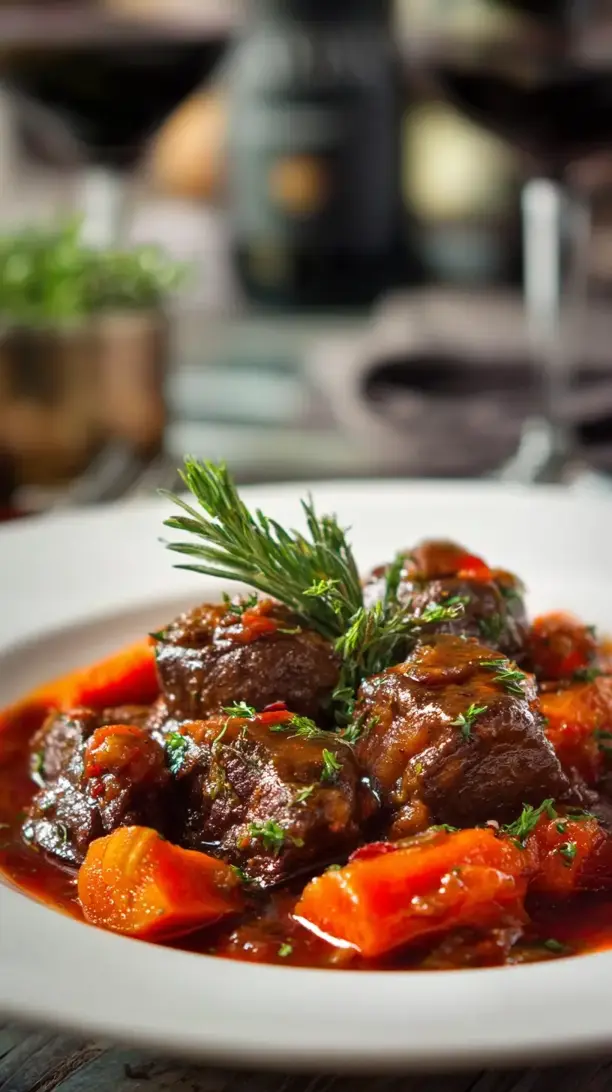
Lamb And Carrot Stew
Make the best Lamb and Carrot Stew with this easy recipe. Tender lamb, sweet carrots & a rich broth create the ultimate comfort food. Get the recipe now!
Ingredients
For the Ingredients
-
1.5 kg lamb shoulder (cut into 3-4 cm chunks)
-
2 tbsp olive oil
-
1 large onion (finely chopped)
-
4 cloves garlic (minced)
-
2 tbsp tomato paste
-
1 tbsp all-purpose flour
-
250 ml dry red wine (like a Cabernet Sauvignon or Merlot)
-
1 liter good-quality beef or lamb stock
-
2 bay leaves
-
1 tsp fresh thyme leaves (or ½ tsp dried)
-
1 tsp fresh rosemary (finely chopped (or ½ tsp dried))
-
600 g carrots (peeled and cut into 2-3 cm chunks)
-
2 large potatoes (peeled and cut into large chunks (optional, for a heartier stew))
-
Salt and freshly ground black pepper (to taste)
-
Fresh parsley (chopped, for garnish)
Instructions
-
Pat the lamb chunks completely dry with paper towels—this is crucial for a good sear. Season generously with salt and pepper. Heat the olive oil in your heavy-bottomed pot or Dutch oven over medium-high heat. Working in batches to avoid overcrowding, add the lamb and sear for 3-4 minutes per side, until you have a beautiful, deep brown crust. Transfer the browned lamb to a plate and set aside. You’ll notice those browned bits stuck to the bottom of the pot… that’s pure flavor gold.01
-
Reduce the heat to medium. Add the chopped onion to the same pot (with the lamb drippings) and cook for 5-7 minutes, until softened and translucent. Add the minced garlic and cook for another minute until fragrant. Now, stir in the tomato paste and cook for about 2 minutes, stirring almost constantly. You’ll see its color darken slightly—this cooks out the raw taste and sweetens it up.02
-
Return all the lamb and any accumulated juices back to the pot. Sprinkle the flour over everything and stir for a minute to coat. Now, pour in the red wine. As it bubbles and steams, use your wooden spoon to scrape all those delicious browned bits from the bottom of the pot. Let it simmer for 2-3 minutes until the wine has reduced by about half. The sharp alcoholic smell will fade, leaving behind a rich, fruity base.03
-
Pour in the stock—it should just about cover the lamb. Add the bay leaves, thyme, and rosemary. Bring the stew to a very gentle simmer, then immediately reduce the heat to low. Cover the pot with a lid, leaving it slightly ajar. Let it cook gently for about 1 hour and 15 minutes. You’re looking for the lamb to be just starting to become tender but not quite falling apart yet.04
-
Now, stir in the chunked carrots and potatoes (if using). The liquid should still cover most of the ingredients; if it looks a bit low, add a splash more stock or water. Bring it back to a gentle simmer, cover again (slightly ajar), and continue to cook for another 45 minutes to 1 hour. The stew is ready when the lamb is fork-tender and the carrots and potatoes are soft but not mushy.05
-
Carefully taste the stew. This is the most important step! Season with more salt and pepper as needed. The flavors should be deep, rich, and balanced. If the broth seems a bit thin, you can remove the lid and let it simmer uncovered for 10-15 minutes to reduce and concentrate. Remove the bay leaves, ladle into warm bowls, and garnish with a generous sprinkle of fresh parsley.06
Not what you're looking for?


