These Lemon Dill Salmon Packets capture the magic of steam cooking in a neat parcel. The salmon steams to perfection with bright lemon and delicate dill, creating a moist, flavorful meal with minimal cleanup. This Lemon Dill Salmon Packets recipe is effortlessly elegant for any night.
If you're looking for the perfect Lemon Dill Salmon Packets, you're in the right place. Whether you love Dinner Ideas or want to explore our Chicken Thigh Recipes collection, we've got you covered.


Why You’ll Love This Lemon Dill Salmon Packets
Forgiving method: Steaming prevents overcooking for moist, flaky salmon every time.
Easy cleanup: No pans to scrub—just toss the foil or parchment.
Restaurant flavor: Lemon and dill create a bright, aromatic sauce.
Endlessly adaptable: Add quick-cooking veggies for a complete meal.
Ingredients & Tools
- 4 (6-ounce / 170 g) skinless salmon fillets, about 1-inch thick
- 2 medium lemons, one thinly sliced and one juiced
- 1/4 cup fresh dill, finely chopped, plus 4 extra sprigs for garnish
- 3 cloves garlic, minced
- 2 tablespoons extra virgin olive oil
- 1 teaspoon Dijon mustard
- 1/2 teaspoon sea salt, or to taste
- 1/4 teaspoon freshly cracked black pepper
- 1/2 small red onion, very thinly sliced (optional, for a bit of bite)
Tools: Baking sheet, aluminum foil or parchment paper, a small bowl for mixing
Notes: Use vibrant, fresh salmon and don’t skimp on the fresh dill—it mellows beautifully when steamed.
Nutrition (per serving)
| Calories: | 315 kcal |
| Protein: | 34 g |
| Fat: | 18 g |
| Carbs: | 5 g |
| Fiber: | 1 g |
Serves: 4 | Prep Time: 15 minutes | Cook Time: 15-18 minutes | Total Time: 30-33 minutes
Before You Start: Tips & Ingredient Notes
- Parchment vs. Foil—what’s better? Parchment paper creates a more traditional, puffed-up packet and is great for presentation. Aluminum foil is sturdier, creates a tighter seal, and is easier to open without tearing. Both work wonderfully, so it’s really a matter of personal preference and what you have on hand.
- Is fresh dill non-negotiable? Honestly, yes, for this recipe it is. Dried dill lacks the vibrant, subtle flavor that makes this dish so special. If you’re in a pinch, you could use a teaspoon of dried, but the final result will be much less aromatic.
- How do I know if my salmon is done? The salmon is perfectly cooked when it flakes easily with a fork and has turned from translucent to an opaque pink all the way through. A digital thermometer inserted into the thickest part should read 125-130°F (52-54°C) for medium, as it will continue to cook a little after you take it out of the oven.
- Can I prepare these ahead of time? Absolutely! You can assemble the packets completely, place them on the baking sheet, and keep them in the refrigerator for up to 4 hours before baking. This makes them fantastic for easy entertaining.
How to Make Lemon Dill Salmon Packets
Step 1: Preheat your oven to 400°F (200°C). While it’s heating up, you’ll want to prepare your packets. Tear off four large sheets of aluminum foil or parchment paper, each about 12×18 inches. If you’re using foil, a light spritz of cooking spray can prevent any sticking, though the olive oil usually takes care of that.
Step 2: In a small bowl, whisk together the olive oil, juice from one lemon, minced garlic, Dijon mustard, salt, and pepper. This is your simple, powerhouse marinade. Whisk it until it looks emulsified and creamy—the mustard helps bind the oil and lemon juice together. Then, stir in the majority of your chopped fresh dill, reserving a little for a fresh garnish at the end.
Step 3: Place one salmon fillet in the center of each piece of foil or parchment. Now, spoon the lemon-dill mixture evenly over the top of each fillet, making sure to coat it well. Use the back of the spoon to spread it around—you want every bite to be infused with that flavor. Don’t forget to spoon a little of the minced garlic directly onto the fish.
Step 4: Top each salmon fillet with a couple of the thin lemon slices and the optional red onion. The lemon slices will steam and become tender, their flavor permeating the fish, while the onion adds a lovely mild sharpness. This is also where you can add any quick-cooking vegetables you like—a handful of asparagus spears or cherry tomatoes tucked around the sides works beautifully.
Step 5: Now, seal the packets. Bring the long sides of the foil or parchment together over the salmon. Fold the edges over a few times, creasing firmly to create a tight seal. Then, fold the short ends up and over, making a neat, sealed packet. The goal is to trap the steam inside, so make sure there are no gaps. You should have a little dome of space above the salmon.
Step 6: Arrange the packets on a baking sheet and transfer them to the preheated oven. Bake for 15-18 minutes. The cooking time will depend on the thickness of your fillets. You’ll know they’re done when the packets are puffed up and you can hear a gentle sizzling inside. For a more dramatic presentation, you can carefully slit open the packets at the table, releasing a cloud of incredible lemony-dill steam.
Step 7: Carefully remove the baking sheet from the oven. Let the packets rest for 2-3 minutes before opening—this allows the internal temperature to stabilize and the juices to redistribute. When you open them (be mindful of the hot steam!), sprinkle with the remaining fresh dill. Serve immediately, spooning the delicious juices from the bottom of the packet over the top of the salmon.
Storage & Freshness Guide
- Fridge: Store leftovers in an airtight container for up to 2 days.
- Freezer: Freeze cooked salmon in sealed packets for up to 1 month.
- Reviving: Reheat gently in a 300°F oven for 10-12 minutes until warmed through.
Serving Suggestions
Complementary Dishes
- Herbed Quinoa or Couscous — The light, fluffy grains are the perfect vehicle for sopping up the incredible lemony sauce left in the packet. A little goes a long way in making the meal feel complete.
- Simple Arugula Salad — The peppery bite of arugula dressed with just a squeeze of lemon and a drizzle of olive oil provides a crisp, refreshing contrast to the rich, steamed salmon.
- Roasted Baby Potatoes — Their crispy exterior and creamy interior are a hearty, comforting base that pairs wonderfully with the delicate fish. Toss them with a bit of dill before roasting to echo the flavors in the salmon.
Drinks
- A Crisp Sauvignon Blanc — Its citrusy and herbal notes are a natural match for the lemon and dill, cutting through the richness of the salmon beautifully.
- Sparkling Water with Cucumber & Mint — A non-alcoholic option that feels just as celebratory. The cool, clean flavors are incredibly refreshing and palate-cleansing.
Something Sweet
- Lemon Sorbet — Continuing the citrus theme with a bright, clean, and palate-cleansing finish. It’s light enough not to overwhelm you after a satisfying meal.
- Almond Shortbread Cookies — A simple, buttery cookie that offers a lovely, gentle sweetness and a satisfying crunch—the perfect, simple endnote.
Top Mistakes to Avoid
- Overfilling the packets. If you pack in too many vegetables, the salmon won’t steam properly and the veggies might still be raw. Keep additions light and choose quick-cooking varieties to ensure everything is done at the same time.
- Using a dull knife to slice the lemons. A sharp knife is key for getting those paper-thin, elegant slices. Thick lemon slices won’t soften as much and can impart a bitter flavor from the pith. I’ve messed this up before, and it makes a noticeable difference.
- Opening the packets immediately after baking. That built-up steam is dangerously hot, and opening them right away can cause a serious burn. More importantly, letting them rest for a few minutes allows the fish to finish cooking gently and reabsorb its juices.
- Not creating a tight seal. If your packet isn’t sealed properly, all that precious steam will escape, and you’ll end up with dry, baked salmon instead of moist, steamed salmon. Take an extra moment to fold and crimp the edges securely.
Expert Tips
- Tip: For an extra flavor boost, let the salmon marinate in the lemon-dill mixture for 15-20 minutes in the refrigerator before you assemble the packets. This allows the flavors to penetrate the fish more deeply, resulting in an even more flavorful final dish.
- Tip: If you’re using foil, you can easily switch to a grill! Just place the sealed packets directly over medium-high heat on a preheated grill and cook for the same amount of time. It’s a fantastic way to keep the kitchen cool in the summer.
- Tip: Don’t discard the incredible juices left in the packet after serving. This liquid gold is packed with flavor. You can drizzle it over your side dishes or even whisk a tablespoon or two into a vinaigrette for a salad the next day.
- Tip: To check for doneness without a thermometer, gently press the top of the salmon with your finger (through the foil). It should feel firm but still have a little give, and you should be able to easily separate the flakes with a fork.
FAQs
Can I use frozen salmon for this recipe?
Yes, you absolutely can, but there’s a crucial step: the salmon must be fully thawed and patted completely dry with paper towels before you begin. If you use frozen or even partially frozen fillets, they will release a lot of excess water as they cook, which will water down your beautiful sauce and prevent the fish from steaming properly. Thaw it in the refrigerator overnight for the best results.
What other herbs can I use besides dill?
While dill is the classic pairing, this method is very adaptable. Fresh tarragon would add a lovely, subtle anise flavor, or fresh parsley would provide a brighter, grassier note. A combination of chives and thyme would also be delicious. I’d steer clear of woody herbs like rosemary, as their flavor can be a bit overpowering for the delicate salmon in this steamed environment.
My packets didn’t puff up. Did I do something wrong?
Not necessarily! Parchment paper is more likely to puff up dramatically than foil. With foil, you might just see it balloon a little, or you might not see much movement at all. The real test is the sizzle and the aroma. If you can hear a gentle sizzling when you take them out and your kitchen smells amazing, you’re on the right track. The most important thing is the seal, not the puff.
Can I make a single serving for myself?
Of course! That’s one of the great things about this method—it scales up or down perfectly. Just use a smaller piece of foil or parchment and a single fillet. You might need to reduce the baking time by a minute or two since a single packet in the oven will heat up a bit faster than a full batch.
How should I store and reheat leftovers?
Store any leftover salmon (still in its foil or removed and placed in an airtight container) in the refrigerator for up to 2 days. The best way to reheat it is gently. You can place the sealed packet back in a 300°F (150°C) oven for 10-12 minutes, or until warmed through. Microwaving is possible but can make the fish rubbery, so the low-and-slow oven method is highly recommended.



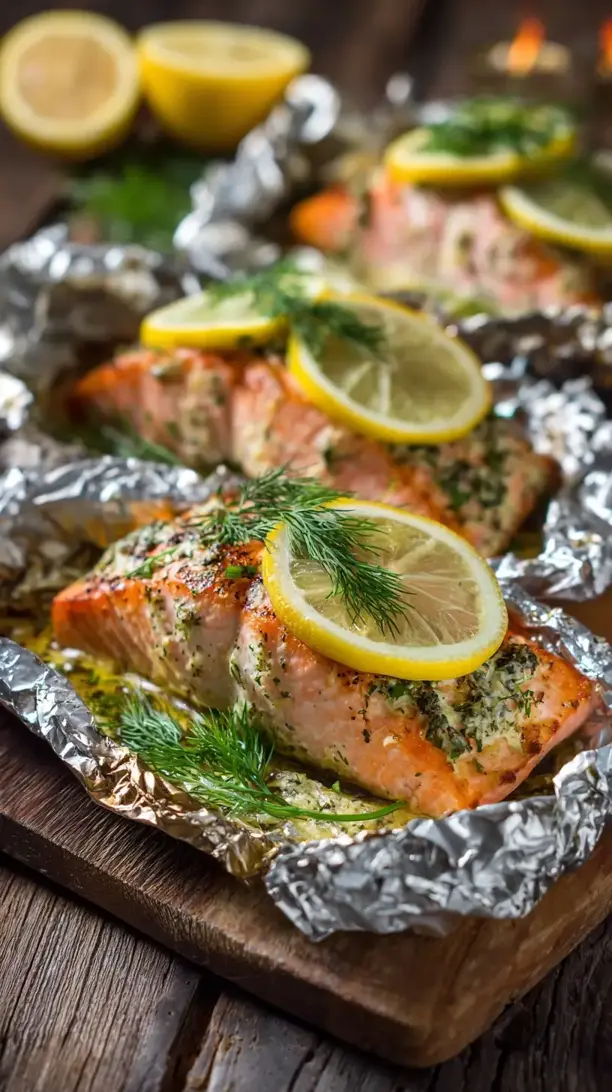
Lemon Dill Salmon Packets
Make perfect Lemon Dill Salmon Packets with this easy recipe. Moist, flaky salmon with lemon and dill, ready in 30 minutes with minimal cleanup. Get the recipe now!
Ingredients
For the Ingredients
-
4 skinless salmon fillets (6-ounce / 170 g, about 1-inch thick)
-
2 medium lemons (one thinly sliced and one juiced)
-
1/4 cup fresh dill (finely chopped, plus 4 extra sprigs for garnish)
-
3 cloves garlic (minced)
-
2 tablespoons extra virgin olive oil
-
1 teaspoon Dijon mustard
-
1/2 teaspoon sea salt (or to taste)
-
1/4 teaspoon freshly cracked black pepper
-
1/2 small red onion (very thinly sliced (optional, for a bit of bite))
Instructions
-
Preheat your oven to 400°F (200°C). Tear off four large sheets of aluminum foil or parchment paper, each about 12x18 inches.01
-
In a small bowl, whisk together the olive oil, juice from one lemon, minced garlic, Dijon mustard, salt, and pepper. Then, stir in the majority of your chopped fresh dill, reserving a little for a fresh garnish at the end.02
-
Place one salmon fillet in the center of each piece of foil or parchment. Spoon the lemon-dill mixture evenly over the top of each fillet, making sure to coat it well.03
-
Top each salmon fillet with a couple of the thin lemon slices and the optional red onion.04
-
Seal the packets by bringing the long sides of the foil or parchment together over the salmon, folding the edges over a few times, creasing firmly to create a tight seal. Then, fold the short ends up and over, making a neat, sealed packet.05
-
Arrange the packets on a baking sheet and transfer them to the preheated oven. Bake for 15-18 minutes.06
-
Carefully remove the baking sheet from the oven. Let the packets rest for 2-3 minutes before opening. When you open them, sprinkle with the remaining fresh dill. Serve immediately, spooning the delicious juices from the bottom of the packet over the top of the salmon.07
Not what you're looking for?