This Mediterranean Chicken Skillet is a vibrant one-pan wonder that brings sunny, robust flavors to your table with minimal fuss. Juicy chicken simmers with tomatoes, olives, and artichokes in a fragrant lemon and herb sauce. It’s a nourishing, satisfying meal perfect for busy weeknights or elegant dinners.
If you're looking for the perfect Mediterranean Chicken Skillet, you're in the right place. Whether you love Dinner Ideas or want to explore our Dessert Recipes collection, we've got you covered.


Why You’ll Love This Mediterranean Chicken Skillet
- One-pan wonder: Everything cooks in a single skillet for maximum flavor and easy cleanup.
- Bright, complex flavors: A vibrant harmony of lemon, garlic, tomatoes, and herbs.
- Highly versatile: Easily adapt with ingredients like zucchini or capers.
- Fancy yet easy: Impressive rustic presentation with straightforward, forgiving steps.
Ingredients & Tools
- 4 boneless, skinless chicken breasts (about 1.5 lbs / 680 g)
- 2 tbsp olive oil, divided
- 1 medium yellow onion, thinly sliced
- 4 cloves garlic, minced
- 1 pint cherry or grape tomatoes
- 1 cup Kalamata olives, pitted
- 1 (14 oz / 400 g) can artichoke hearts, drained and quartered
- 1/2 cup chicken broth
- 1/4 cup fresh lemon juice (from about 1 large lemon)
- 1 tsp dried oregano
- 1/2 tsp dried thyme
- 1/4 cup fresh parsley, chopped
- 2 tbsp fresh basil, chopped
- Salt and freshly ground black pepper to taste
Notes: Don’t be shy with the fresh herbs at the end—they really wake up the whole dish. And using a good, flavorful olive oil for searing makes a noticeable difference in building that foundational taste.
Tools: A large (12-inch) oven-safe skillet is essential here.
Nutrition (per serving)
| Calories: | 380 kcal |
| Protein: | 35 g |
| Fat: | 18 g |
| Carbs: | 18 g |
| Fiber: | 6 g |
Serves: 4 | Prep Time: 15 minutes | Cook Time: 25 minutes | Total Time: 40 minutes
Before You Start: Tips & Ingredient Notes
- Chicken breast thickness matters. If your chicken breasts are very thick, I highly recommend pounding them to an even ¾-inch thickness. This ensures they cook through evenly and stay juicy, without the outside overcooking while the inside catches up.
- Don’t skip the sear. Getting a good, golden-brown crust on the chicken is non-negotiable for flavor. It creates fond—those little browned bits stuck to the pan—which will later dissolve into the sauce, making it incredibly rich and savory.
- Fresh lemon juice is key. The bright, acidic punch from a freshly squeezed lemon is irreplaceable. Bottled juice often has a flat, slightly bitter taste that just won’t give you the same vibrant lift this dish needs.
- Your skillet is your best friend. Make sure you’re using a good, heavy-bottomed oven-safe skillet. A cast-iron or a heavy stainless-steel pan distributes heat evenly, preventing hot spots and giving you that perfect sear.
How to Make Mediterranean Chicken Skillet
Step 1: Pat your chicken breasts completely dry with paper towels—this is the secret to a good sear. Season them generously on both sides with salt and pepper. Place your large skillet over medium-high heat and add one tablespoon of the olive oil. Once the oil is shimmering, carefully add the chicken breasts. You should hear a satisfying sizzle. Sear for 5-7 minutes per side, without moving them, until they develop a beautiful golden-brown crust. They don’t need to be cooked through yet. Transfer the chicken to a clean plate; it will finish cooking later.
Step 2: Reduce the heat to medium and add the remaining tablespoon of olive oil to the same skillet. You’ll notice all those delicious browned bits from the chicken are still there—that’s pure flavor! Add the sliced onion and cook for about 4-5 minutes, stirring occasionally, until it becomes soft and translucent. Now, add the minced garlic and cook for just one more minute until it becomes incredibly fragrant. Be careful not to let the garlic burn, as it can turn bitter.
Step 3: It’s time to build your sauce. Add the cherry tomatoes, Kalamata olives, and quartered artichoke hearts to the skillet. Give everything a good stir to combine it with the onions and garlic. Let this cook for 2-3 minutes; you’ll start to hear the tomatoes soften and pop slightly. This is exactly what you want, as it releases their sweet juices into the pan.
Step 4: Pour in the chicken broth and fresh lemon juice, and sprinkle in the dried oregano and thyme. Stir everything together, scraping the bottom of the pan vigorously to lift all that flavorful fond. Let the mixture come to a gentle simmer. You’ll see the sauce start to come together and take on a lovely, glossy appearance.
Step 5: Nestle the seared chicken breasts back into the skillet, along with any juices that accumulated on the plate. Spoon some of the sauce and vegetables over the top of the chicken. Reduce the heat to medium-low, cover the skillet with a lid (or a baking sheet if you don’t have a lid), and let it simmer for 8-10 minutes. This allows the chicken to cook through completely and absorb all the wonderful flavors of the sauce.
Step 6: To check for doneness, the internal temperature of the chicken should read 165°F (74°C) on an instant-read thermometer. Once cooked, remove the skillet from the heat. Stir in the fresh parsley and basil right before serving. The heat of the dish will wilt them perfectly, releasing their fresh, aromatic oils and making the whole kitchen smell amazing. Give it a final taste and adjust seasoning with more salt or pepper if needed.
Storage & Freshness Guide
- Fridge: Cool completely, store in an airtight container for up to 3 days.
- Freezer: Not recommended—artichokes and tomatoes can become mushy upon thawing.
- Reviving: Reheat gently on the stovetop, adding a splash of broth if sauce is too thick.
Serving Suggestions
Complementary Dishes
- Fluffy Couscous or Orzo — These tiny pastas are fantastic for soaking up every last drop of the delicious lemony sauce. They cook in minutes and provide a lovely, light base.
- Crusty, Toasted Bread — A thick slice of sourdough or a baguette, toasted until golden and rubbed with a garlic clove, is perfect for mopping up the skillet. It’s a simple, rustic touch that feels incredibly satisfying.
- A Simple Arugula Salad — The peppery bite of arugula dressed with just a squeeze of lemon and a drizzle of olive oil provides a fresh, crisp contrast to the rich, savory chicken.
Drinks
- A Crisp Sauvignon Blanc — The wine’s citrusy and herbal notes mirror the flavors in the skillet beautifully, cutting through the richness and cleansing the palate.
- Sparkling Water with Lemon — For a non-alcoholic option, the effervescence and citrus are incredibly refreshing and highlight the bright notes in the dish without overpowering them.
Something Sweet
- Lemon Sorbet — A scoop of intensely tart and sweet sorbet is the perfect, light palate cleanser after this meal. It continues the citrus theme in the most delightful way.
- Baklava — If you want to lean all the way into the Mediterranean theme, a piece of flaky, honey-soaked baklava offers a wonderful contrast in texture and sweetness.
Top Mistakes to Avoid
- Overcrowding the pan when searing the chicken. If you put all the chicken in at once, the pan temperature will drop drastically, and you’ll end up steaming the chicken instead of searing it. Cook in batches if your skillet isn’t large enough.
- Using watery canned artichokes. Make sure you drain your artichoke hearts well, and maybe even give them a quick pat with a paper towel. Excess moisture can make your sauce watery instead of rich and glossy.
- Adding the fresh herbs too early. Delicate herbs like parsley and basil will lose their vibrant color and fresh flavor if they’re cooked for too long. Stirring them in right at the end preserves their bright, aromatic quality.
- Boiling the sauce after adding the chicken back. Once you cover the skillet, you want a gentle simmer, not a rolling boil. A vigorous boil can make the chicken tough and rubbery. Keep the heat low and patient.
Expert Tips
- Tip: Let the chicken rest before slicing. If you plan on slicing the chicken to serve, let it rest on a cutting board for 5 minutes after it comes out of the skillet. This allows the juices to redistribute throughout the meat, ensuring every bite is moist and tender.
- Tip: Add a pinch of red pepper flakes. For a subtle kick of heat that complements the other flavors beautifully, add a quarter teaspoon of red pepper flakes when you add the dried oregano and thyme.
- Tip: Use chicken thighs for more flavor. If you prefer dark meat, boneless, skinless chicken thighs work wonderfully here. They’re inherently more juicy and flavorful, and they can handle the longer cooking time without drying out.
- Tip: Finish with a drizzle. Right before serving, drizzle a little extra virgin olive oil over the top of the dish. This adds a lovely fruity note and a beautiful sheen that makes the dish look restaurant-quality.
FAQs
Can I make this Mediterranean Chicken Skillet ahead of time?
Absolutely, and it actually tastes even better the next day as the flavors have more time to meld. Let it cool completely before storing it in an airtight container in the refrigerator for up to 3 days. Reheat it gently on the stovetop over low heat, adding a splash of chicken broth if the sauce seems too thick. I wouldn’t recommend freezing it, as the texture of the artichokes and tomatoes can become a bit mushy upon thawing.
My sauce is too thin. How can I thicken it?
If your sauce is a little runnier than you’d like, there’s an easy fix. Remove the cooked chicken from the skillet and set it aside. Increase the heat to medium-high and let the sauce simmer uncovered for 3-5 minutes. This will allow some of the excess liquid to evaporate and naturally thicken the sauce. You can also mash a few of the cherry tomatoes with the back of your spoon to help it along.
What can I use instead of artichoke hearts?
No problem at all! This recipe is very adaptable. You can substitute with an equal amount of chopped zucchini, yellow squash, or even bell peppers. Just add them at the same time you would the artichokes so they have time to soften and release their flavor into the sauce.
Is this recipe gluten-free?
Yes, as written, this Mediterranean Chicken Skillet is naturally gluten-free. Just be sure to double-check the labels on your chicken broth, as some brands can contain hidden gluten. Serve it with a gluten-free side like quinoa or rice to keep the entire meal gluten-free.
Can I add feta cheese to this?
Oh, that’s a fantastic idea! Crumbled feta cheese is a wonderful addition. The salty, tangy flavor pairs perfectly with the other ingredients. I’d recommend sprinkling it over the top of the dish right before serving, so it just barely starts to warm through but doesn’t melt completely. A little goes a long way!



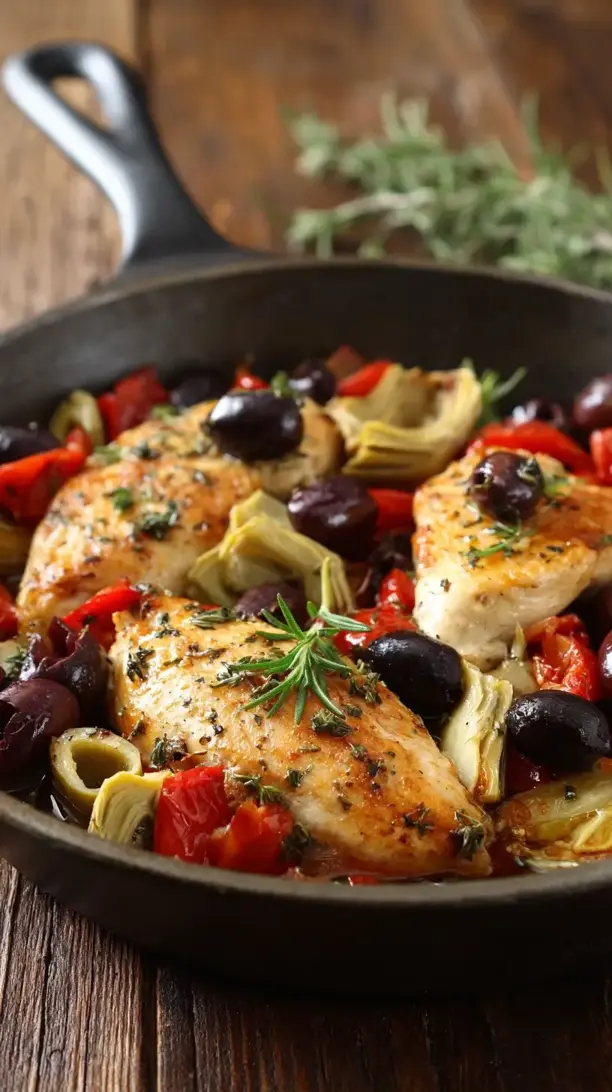
Mediterranean Chicken Skillet
Make this easy Mediterranean Chicken Skillet for a vibrant one-pan meal. Juicy chicken with tomatoes, olives & artichokes in a lemony herb sauce. Get the recipe now!
Ingredients
For the Ingredients
-
4 boneless, skinless chicken breasts (about 1.5 lbs / 680 g)
-
2 tbsp olive oil (divided)
-
1 medium yellow onion (thinly sliced)
-
4 cloves garlic (minced)
-
1 pint cherry or grape tomatoes
-
1 cup Kalamata olives (pitted)
-
1 can artichoke hearts (14 oz / 400 g, drained and quartered)
-
1/2 cup chicken broth
-
1/4 cup fresh lemon juice (from about 1 large lemon)
-
1 tsp dried oregano
-
1/2 tsp dried thyme
-
1/4 cup fresh parsley (chopped)
-
2 tbsp fresh basil (chopped)
-
Salt and freshly ground black pepper (to taste)
Instructions
-
Pat your chicken breasts completely dry with paper towels—this is the secret to a good sear. Season them generously on both sides with salt and pepper. Place your large skillet over medium-high heat and add one tablespoon of the olive oil. Once the oil is shimmering, carefully add the chicken breasts. You should hear a satisfying sizzle. Sear for 5-7 minutes per side, without moving them, until they develop a beautiful golden-brown crust. They don't need to be cooked through yet. Transfer the chicken to a clean plate; it will finish cooking later.01
-
Reduce the heat to medium and add the remaining tablespoon of olive oil to the same skillet. You’ll notice all those delicious browned bits from the chicken are still there—that’s pure flavor! Add the sliced onion and cook for about 4-5 minutes, stirring occasionally, until it becomes soft and translucent. Now, add the minced garlic and cook for just one more minute until it becomes incredibly fragrant. Be careful not to let the garlic burn, as it can turn bitter.02
-
It's time to build your sauce. Add the cherry tomatoes, Kalamata olives, and quartered artichoke hearts to the skillet. Give everything a good stir to combine it with the onions and garlic. Let this cook for 2-3 minutes; you'll start to hear the tomatoes soften and pop slightly. This is exactly what you want, as it releases their sweet juices into the pan.03
-
Pour in the chicken broth and fresh lemon juice, and sprinkle in the dried oregano and thyme. Stir everything together, scraping the bottom of the pan vigorously to lift all that flavorful fond. Let the mixture come to a gentle simmer. You'll see the sauce start to come together and take on a lovely, glossy appearance.04
-
Nestle the seared chicken breasts back into the skillet, along with any juices that accumulated on the plate. Spoon some of the sauce and vegetables over the top of the chicken. Reduce the heat to medium-low, cover the skillet with a lid (or a baking sheet if you don't have a lid), and let it simmer for 8-10 minutes. This allows the chicken to cook through completely and absorb all the wonderful flavors of the sauce.05
-
To check for doneness, the internal temperature of the chicken should read 165°F (74°C) on an instant-read thermometer. Once cooked, remove the skillet from the heat. Stir in the fresh parsley and basil right before serving. The heat of the dish will wilt them perfectly, releasing their fresh, aromatic oils and making the whole kitchen smell amazing. Give it a final taste and adjust seasoning with more salt or pepper if needed.06
Not what you're looking for?