
This Moroccan Vegetable Tagine is a fragrant, spiced stew that simmers vegetables until meltingly tender. It’s a flexible one-pot wonder, perfect for using seasonal produce and filling your kitchen with warm aromas. The gentle cooking allows sweet and savory flavors to meld beautifully.
Love Moroccan Vegetable Tagine? So do we! If you're into Stew or curious about Chicken Breast Recipes, you'll find plenty of inspiration below.


Why You’ll Love This Moroccan Vegetable Tagine
- Sensory journey: Toasting spices fills your kitchen with an intoxicating, warm aroma.
- Incredibly flexible: Easily swap vegetables or beans based on what you have.
- Sublime flavor balance: Earthy spices, gentle heat, sweet fruit, and fresh herbs create captivating bites.
- Set-and-forget meal: After sautéing, the tagine simmers unattended, freeing up your time.
Ingredients & Tools
- 2 tbsp olive oil
- 1 large yellow onion, diced
- 4 garlic cloves, minced
- 1 tbsp freshly grated ginger
- 2 tsp ground cumin
- 1.5 tsp ground coriander
- 1 tsp ground cinnamon
- 1/2 tsp ground turmeric
- 1/4 tsp saffron threads, lightly crushed
- 1-2 tsp harissa paste (adjust to your heat preference)
- 400 g can of chickpeas, drained and rinsed
- 2 medium carrots, cut into thick coins
- 1 large sweet potato, peeled and cubed
- 1 small aubergine, cubed
- 1 red bell pepper, chopped
- 400 g can of chopped tomatoes
- 500 ml vegetable stock
- 75 g dried apricots, roughly chopped
- Salt and black pepper to taste
- To serve: Fresh coriander, chopped; flaked almonds, toasted
Tools: A large, heavy-bottomed pot or Dutch oven with a tight-fitting lid (a traditional tagine is wonderful but not essential).
Notes: Don’t be intimidated by the spice list—these are the soul of the dish. Using whole spices you grind yourself will give you the most vibrant flavor, but good-quality pre-ground ones work perfectly well too. The harissa is your dial for heat, so start with less if you’re sensitive to spice.
Nutrition (per serving)
| Calories: | 320 kcal |
| Protein: | 9 g |
| Fat: | 10 g |
| Carbs: | 52 g |
| Fiber: | 12 g |
Serves: 4 | Prep Time: 20 minutes | Cook Time: 45 minutes | Total Time: 1 hour 5 minutes
Before You Start: Tips & Ingredient Notes
- What if I don’t own a tagine? No problem at all! A heavy-based casserole dish or Dutch oven with a tight-fitting lid works beautifully. The key is heavy-bottomed cookware that distributes heat evenly and traps steam effectively.
- Is harissa absolutely necessary? It really adds an authentic, smoky heat, but if you can’t find it, a pinch of cayenne pepper or a spoonful of another chili paste can stand in. The flavor profile will shift slightly, but it will still be delicious.
- Can I use different vegetables? Absolutely. This is a “guide recipe.” Courgettes, parsnips, pumpkin, or even green beans are all fantastic additions or substitutions. Just be mindful of cooking times—add quicker-cooking veggies later in the process.
- Why toast the spices? This quick step in the oil wakes up the essential oils in the spices, deepening their flavor and aroma exponentially. It only takes a minute, but it makes a world of difference to the final dish.
How to Make Moroccan Vegetable Tagine
Step 1: Start by building your flavor base. Heat the olive oil in your large pot over a medium heat. Add the diced onion and cook for about 8-10 minutes, stirring occasionally, until it’s soft and translucent. You’re not looking for color here, just sweetness. Now, add the minced garlic and grated ginger, and cook for another minute until fragrant—you’ll notice the aroma change and become really inviting.
Step 2: This is where the magic begins. Add all your ground spices—the cumin, coriander, cinnamon, turmeric, and the crushed saffron threads. Stir them into the onion mixture and cook for just 30-60 seconds. You’ll see the oil take on a golden hue and the fragrance will become incredibly warm and deep. Be careful not to burn them! Now, stir in the harissa paste to coat everything.
Step 3: It’s time for the vegetables. Add the carrots, sweet potato, aubergine, and red bell pepper to the pot. Give everything a really good stir, making sure the spiced onion mixture coats all the vegetables. This initial coating helps the flavors penetrate right from the start. Let them cook for about 5 minutes, just to start softening slightly.
Step 4: Pour in the chopped tomatoes and vegetable stock, and then add the drained chickpeas and the chopped dried apricots. Season generously with salt and a good grind of black pepper. Give it one final stir, bring the liquid to a lively simmer, then immediately reduce the heat to low.
Step 5: Cover the pot with its lid. This is the crucial “low and slow” part of the process. Let the tagine simmer gently for 30-40 minutes. You’re aiming for the sweet potato and carrots to be completely tender when pierced with a knife. Resist the urge to stir too often—you want the steam to do its work and the vegetables to hold their shape.
Step 6: Once the vegetables are tender, remove the lid. If the sauce seems a little too thin for your liking, you can let it simmer uncovered for another 5-10 minutes to reduce and thicken slightly. The finished tagine should have a thick, stew-like consistency, not a brothy soup. Have a taste and adjust the seasoning—sometimes it needs another pinch of salt to make all the flavors pop.
Step 7: Serve your tagine directly from the pot, ladled into deep bowls. Garnish generously with a handful of fresh, chopped coriander and a scattering of toasted flaked almonds for a lovely bit of crunch. The contrast of the fresh herbs and the nutty almonds against the soft, spiced vegetables is just perfect.
Storage & Freshness Guide
- Fridge: Cool completely and store in an airtight container for up to 4 days.
- Freezer: Freeze in airtight containers or bags for up to 3 months. Thaw in fridge before reheating.
- Reviving: Reheat gently on the stove, adding a splash of water or stock if too thick.
Serving Suggestions
Complementary Dishes
- Couscous — It’s the classic partner for a reason. The light, fluffy grains are the perfect vehicle for soaking up all that incredible sauce. A little goes a long way in making the meal feel complete.
- Warm, crusty bread — A rustic loaf or even some flatbreads are essential for mopping up every last bit of the tagine from your bowl. It’s a wonderfully informal and satisfying way to eat.
- A simple green salad with a lemon vinaigrette — The sharp, fresh crunch of the salad provides a brilliant counterpoint to the rich, warm, and spiced flavors of the tagine, cleansing the palate between bites.
Drinks
- Mint tea — The traditional Moroccan choice. Its sweet, refreshing qualities cut through the richness of the dish and enhance the spices beautifully, creating an authentic dining experience.
- A light-bodied red wine — Something like a Grenache or a Pinot Noir won’t overpower the delicate spice blend. Its fruity notes can actually complement the dried apricots and sweet vegetables in the tagine.
Something Sweet
- Orange and cinnamon salad — Simply sliced oranges sprinkled with a little cinnamon and perhaps some orange flower water. It’s light, fragrant, and continues the Moroccan theme perfectly without being too heavy.
- Baklava — A small piece of this flaky, nutty, honey-soaked pastry offers a decadent and texturally exciting end to the meal, playing on the same flavor profiles you’ve just enjoyed.
Top Mistakes to Avoid
- Mistake: Rushing the onion. If you don’t cook the onion until it’s properly soft and sweet, you miss out on a foundational layer of flavor that carries the entire dish. Patience here is key.
- Mistake: Burning the spices. Toasting them is essential, but they can turn bitter in a flash. Keep the heat at medium and stir constantly for just about a minute until fragrant.
- Mistake: Over-stirring while simmering. Once the lid is on, trust the process. Lifting the lid too often lets the precious steam escape, which can increase the cooking time and result in less tender vegetables.
- Mistake: Underseasoning. Tagines need a confident hand with salt to balance the sweetness from the fruit and vegetables. Always taste and adjust at the end—you’ll be surprised how much it can transform the dish.
Expert Tips
- Tip: Make it a day ahead. Tagines, like many stews, taste even better the next day after the flavors have had more time to meld and deepen. Simply reheat it gently on the stove.
- Tip: Add preserved lemon. For a truly authentic and bright, salty kick, stir in a tablespoon of finely chopped preserved lemon peel right at the end of cooking. It’s a game-changer.
- Tip: Toast your own spices. If you have cumin seeds and coriander seeds, toast them in a dry pan for a minute until fragrant, then grind them. The flavor intensity is on another level compared to pre-ground.
- Tip: Create a “blanket” for steaming. If you’re using a regular pot, you can place a circle of parchment paper (a cartouche) directly on the surface of the stew before putting the lid on. This helps trap moisture even more effectively, mimicking a traditional tagine.
FAQs
Can I freeze this tagine?
Absolutely, it freezes beautifully! Let it cool completely, then transfer it to airtight containers or freezer bags. It will keep well for up to 3 months. The texture of the vegetables might be a little softer upon thawing and reheating, but the flavor will be fantastic. To reheat, simply defrost in the fridge overnight and warm through gently on the stove, adding a tiny splash of water or stock if it seems too thick.
Is this tagine spicy?
It’s warmly spiced rather than overtly “hot.” The heat level is completely controlled by the amount of harissa you use. Start with one teaspoon, you can always add more at the end. The dominant flavors are the warm, aromatic ones like cinnamon and cumin, which create complexity without setting your mouth on fire. It’s a very family-friendly dish in that regard.
What can I use instead of aubergine?
Aubergine adds a wonderful, silky texture, but if you’re not a fan, courgette is a fantastic substitute. Just add it later in the cooking process (about 15 minutes before the end) since it cooks much faster and can turn mushy. Butternut squash or even more carrots would also work perfectly well here.
My tagine is too watery. How can I fix it?
This can happen if your vegetables release more water than expected. The easiest fix is to remove the lid and let it simmer for an extra 10-15 minutes to allow the liquid to reduce. Alternatively, you can mix a teaspoon of cornflour with a tablespoon of cold water to make a slurry and stir that in during the last few minutes of cooking to thicken it up quickly.
Can I make this in a slow cooker?
Yes, you can! Follow steps 1 and 2 in a pan on the stove to build your flavor base, then transfer the spiced onion mixture to your slow cooker. Add all the remaining ingredients (except the fresh garnishes), give it a stir, and cook on low for 6-7 hours, or on high for 3-4 hours, until the vegetables are tender.



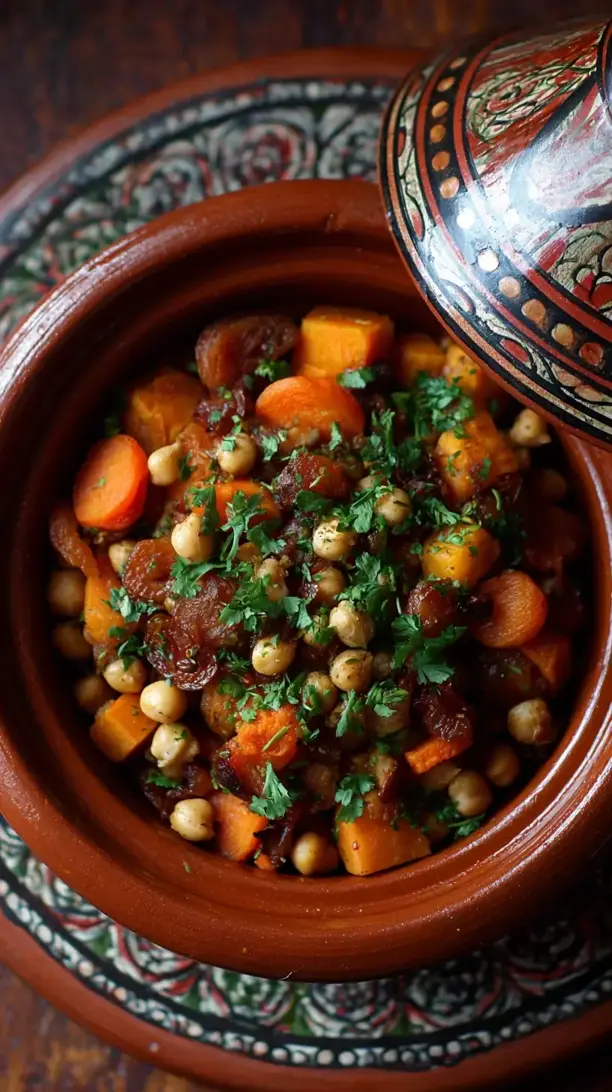
Moroccan Vegetable Tagine
Learn to make an authentic Moroccan Vegetable Tagine with this easy recipe. Fragrant spices, tender veggies & chickpeas simmer into a perfect stew. Get cooking now!
Ingredients
For the main ingredients:
-
2 tbsp olive oil
-
1 large yellow onion (diced)
-
4 garlic cloves (minced)
-
1 tbsp freshly grated ginger
-
2 tsp ground cumin
-
1.5 tsp ground coriander
-
1 tsp ground cinnamon
-
1 tsp ground turmeric
-
0.25 tsp saffron threads (lightly crushed)
-
1-2 tsp harissa paste (adjust to your heat preference)
-
400 g can of chickpeas (drained and rinsed)
-
2 medium carrots (cut into thick coins)
-
1 large sweet potato (peeled and cubed)
-
1 small aubergine (cubed)
-
1 red bell pepper (chopped)
-
400 g can of chopped tomatoes
-
500 ml vegetable stock
-
75 g dried apricots (roughly chopped)
-
Salt and black pepper (to taste)
For the garnish:
-
Fresh coriander (chopped)
-
Flaked almonds (toasted)
Instructions
-
Heat olive oil in a large pot over medium. Add diced onion and cook 8–10 minutes until soft and translucent. Stir in minced garlic and grated ginger; cook 1 minute until fragrant.01
-
Add ground cumin, coriander, cinnamon, turmeric, and crushed saffron; cook 30–60 seconds to bloom spices. Stir in harissa to coat the aromatics.02
-
Add carrots, sweet potato, aubergine, and red bell pepper. Toss well to coat in the spiced oil and cook ~5 minutes to start softening.03
-
Pour in chopped tomatoes and vegetable stock. Add drained chickpeas and chopped dried apricots. Season with salt and black pepper; stir to combine.04
-
Bring to a lively simmer, then reduce heat to low. Cover and cook gently 30–40 minutes, until carrots and sweet potato are tender.05
-
Uncover. If sauce is thin, simmer 5–10 minutes to reduce to a thick, stew-like consistency. Taste and adjust salt and pepper.06
-
Serve hot, ladled into bowls. Garnish with chopped fresh coriander and toasted flaked almonds.07
Not what you're looking for?


