This One Pan Sausage Pasta is a hearty, flavorful meal that comes together in a single skillet. The pasta cooks right in the sauce, soaking up savory flavors from sausage, tomatoes, and herbs. It’s the perfect fuss-free dinner for busy weeknights.
Looking for One Pan Sausage Pasta inspiration? You'll love what we have! Explore more Dinner Ideas recipes or discover our Chicken Recipes favorites.


Why You’ll Love This One Pan Sausage Pasta
- One-pan convenience: Minimal cleanup with maximum flavor.
- Flavorful fusion: Pasta absorbs rich sausage and tomato sauce.
- Easy adaptability: Swap sausages, veggies, or spice level.
- Creamy yet light: Silky texture from pasta starch, not heavy cream.
Ingredients & Tools
- 1 tbsp olive oil
- 400 g Italian sausage, casings removed
- 1 medium onion, finely chopped
- 3 garlic cloves, minced
- 1 tsp dried oregano
- ½ tsp red pepper flakes (optional, for heat)
- 800 g canned crushed tomatoes
- 500 ml chicken or vegetable broth
- 250 g short pasta like penne or rigatoni
- 120 ml heavy cream or half-and-half
- 50 g grated Parmesan cheese, plus extra for serving
- Handful fresh basil or parsley, chopped
- To taste salt and black pepper
Tools: One large, deep skillet or sauté pan with a lid (or use foil to cover), wooden spoon, measuring cups/spoons.
Notes: Using good-quality sausage makes a difference. Don’t skip the fresh herbs at the end—they brighten everything up.
Nutrition (per serving)
| Calories: | 520 kcal |
| Protein: | 22 g |
| Fat: | 28 g |
| Carbs: | 48 g |
| Fiber: | 5 g |
Serves: 4 | Prep Time: 10 minutes | Cook Time: 25 minutes | Total Time: 35 minutes
Before You Start: Tips & Ingredient Notes
- Choose the right pan. Use a large, deep skillet or sauté pan—something that can comfortably hold all the ingredients with a little room to stir. If your pan is too small, the liquid might not cover the pasta evenly.
- Brown the sausage well. Take your time here. Proper browning adds tons of flavor, and those crispy bits at the bottom will deglaze into the sauce, making it even richer.
- Don’t rush the onion and garlic. Sauté them until they’re soft and fragrant—this builds a solid flavor base. If you add the liquid too soon, you’ll miss out on that sweet, aromatic depth.
- Short pasta works best. Shapes like penne, rigatoni, or fusilli hold the sauce beautifully and cook evenly. Long pasta can be tricky to submerge and might not cook as uniformly.
- Taste and adjust at the end. Since broths and sausages vary in saltiness, wait until the pasta is cooked before adding extra salt. You can always add more, but you can’t take it out.
How to Make One Pan Sausage Pasta
Step 1: Heat the olive oil in your large skillet over medium-high heat. Add the sausage (casings removed) and use your wooden spoon to break it up into small chunks. Cook for about 5–7 minutes, stirring occasionally, until it’s nicely browned and cooked through. You’ll notice those delicious browned bits sticking to the pan—that’s pure flavor waiting to be released.
Step 2: Reduce the heat to medium and add the chopped onion. Sauté for 3–4 minutes until it starts to soften and turn translucent. Then, stir in the minced garlic, dried oregano, and red pepper flakes (if using). Cook for another minute until the garlic is fragrant—be careful not to burn it, or it’ll turn bitter.
Step 3: Pour in the crushed tomatoes and broth, then give everything a good stir, scraping up any browned bits from the bottom of the pan. This is where the magic happens—those stuck-on bits will dissolve into the liquid, adding a rich, savory depth to the sauce.
Step 4: Add the uncooked pasta directly to the skillet and stir to submerge it as much as possible. Bring the liquid to a lively simmer, then reduce the heat to low, cover the pan with a lid (or foil), and let it cook for about 12–15 minutes. Stir halfway through to prevent sticking and ensure even cooking.
Step 5: Check the pasta—it should be al dente and most of the liquid should be absorbed, but the sauce will still look a bit loose. Stir in the heavy cream and grated Parmesan until everything is well combined and creamy. The sauce will thicken slightly as it cools.
Step 6: Turn off the heat and fold in the fresh basil or parsley. Season with salt and black pepper to taste. Let it sit for 2–3 minutes—this allows the pasta to soak up any remaining liquid and the flavors to meld together perfectly.
Step 7: Serve immediately, topped with extra Parmesan and a sprinkle of fresh herbs. The pasta will continue to absorb liquid as it sits, so enjoy it right away for the best texture.
Storage & Freshness Guide
- Fridge: Store in an airtight container up to 3 days.
- Freezer: Freeze for up to 2 months; pasta may soften slightly.
- Reviving: Reheat with a splash of broth or cream to restore sauciness.
Serving Suggestions
Complementary Dishes
- Garlic bread or focaccia — Perfect for mopping up every last bit of that creamy tomato sauce. The crisp, buttery edges contrast wonderfully with the rich pasta.
- A simple arugula salad with lemon vinaigrette — The peppery arugula and bright lemon cut through the richness of the sausage and provide a refreshing balance.
- Roasted broccoli or asparagus — Their slightly charred, earthy flavor complements the savory sausage and adds a nice textural variation to the meal.
Drinks
- A medium-bodied red wine like Chianti or Sangiovese — The bright acidity and cherry notes in these wines stand up beautifully to the tomato sauce and savory sausage without overpowering the dish.
- Sparkling water with a wedge of lemon or lime — The bubbles help cleanse the palate between bites, especially if you’ve added a bit of heat with red pepper flakes.
- An Italian lager or pale ale — The crisp, slightly bitter finish of a cold beer contrasts nicely with the creamy, rich pasta and enhances the herbal notes.
Something Sweet
- Lemon sorbet or granita — Its bright, citrusy sharpness is a refreshing palate cleanser after the hearty, savory main course and feels light yet satisfying.
- Dark chocolate affogato — A scoop of vanilla gelato drowned in a shot of hot espresso, maybe with some shaved dark chocolate on top. The bitter coffee and sweet cream are a fantastic way to end the meal.
- Almond biscotti — Crunchy, not too sweet, and perfect for dipping into a cup of coffee or dessert wine. They’re simple, elegant, and won’t leave you feeling overly full.
Top Mistakes to Avoid
- Using the wrong pan size. If your skillet is too small, the pasta won’t cook evenly and the liquid might evaporate too quickly, leaving you with undercooked noodles and a too-thick sauce.
- Adding the pasta before bringing the liquid to a simmer. This can result in gummy, unevenly cooked pasta. Always wait for that lively bubble before you cover the pan and reduce the heat.
- Stirring too infrequently. Especially in the second half of cooking, giving the pasta a good stir prevents it from sticking to the bottom and ensures every piece is coated in that glorious sauce.
- Skipping the rest time at the end. Letting the pasta sit for a few minutes off the heat allows the sauce to thicken and the flavors to fully meld. Serving it straight away can mean a slightly soupy consistency.
Expert Tips
- Tip: If you prefer a smoother sauce, you can use an immersion blender to lightly pulse the sauce after the sausage is cooked but before adding the pasta. This creates a more uniform texture while keeping some meaty bits.
- Tip: For a richer, deeper flavor, try deglazing the pan with a splash of red wine after browning the sausage and onions. Let it reduce by half before adding the tomatoes and broth—it adds a wonderful complexity.
- Tip: If your sauce seems too thick before the pasta is done, add a splash more broth or water. If it’s too thin, remove the lid and let it simmer uncovered for the last few minutes to reduce.
- Tip: Leftovers reheat beautifully, but the pasta will continue to absorb liquid. Add a tablespoon or two of broth or cream when reheating to bring back that saucy consistency.
- Tip: For a lighter version, you can use turkey or chicken sausage and swap the heavy cream for half-and-half or even whole milk—just be mindful that the sauce might be a bit less creamy.
FAQs
Can I use a different type of pasta?
Absolutely! Short shapes like penne, rigatoni, or fusilli work best because they hold the sauce well and cook evenly in the liquid. Avoid long pasta like spaghetti—it’s tricky to submerge and may not cook uniformly. If you’re using whole wheat pasta, note that it might need a bit more liquid and a slightly longer cooking time, so keep an eye on it and add a splash of broth if needed.
What can I use instead of heavy cream?
You can substitute with half-and-half for a lighter option, though the sauce will be slightly less rich. For a dairy-free version, try full-fat coconut milk—it adds a subtle sweetness that works surprisingly well with the tomatoes and sausage. Another option is stirring in a couple tablespoons of cream cheese or mascarpone at the end for creaminess without as much liquid.
Can I make this ahead of time?
Yes, but with a caveat. The pasta will continue to absorb liquid as it sits, so it’s best enjoyed fresh. If you must make it ahead, prepare the sauce base (through adding tomatoes and broth) and store it separately. Cook the pasta separately too, then combine and reheat with a splash of broth or cream to loosen it up. The texture will be a bit different, but still delicious.
How do I store and reheat leftovers?
Store any leftovers in an airtight container in the fridge for up to 3 days. When reheating, add a tablespoon or two of broth or water to the pan to help loosen the sauce—the pasta tends to soak up liquid as it cools. Gently warm it on the stove over medium-low heat, stirring occasionally, until heated through. Avoid the microwave if you can, as it can make the pasta mushy.
Can I freeze this dish?
You can, but the texture of the pasta may become a bit soft upon thawing. If you plan to freeze it, slightly undercook the pasta and cool the dish completely before transferring to a freezer-safe container. It’ll keep for up to 2 months. Thaw in the fridge overnight, then reheat gently on the stove with a splash of broth or cream to refresh the sauce.



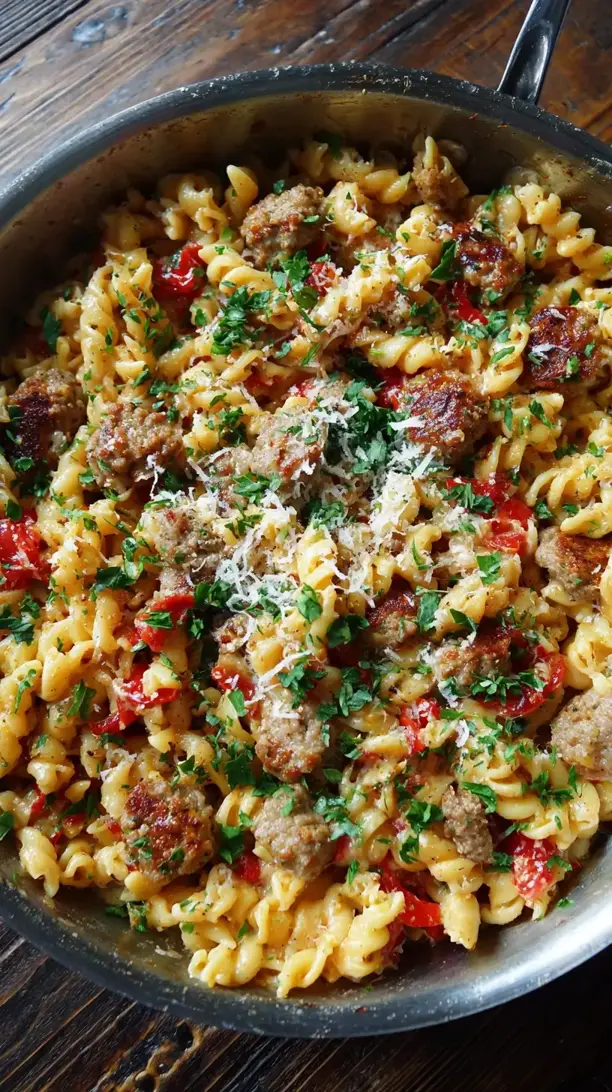
One Pan Sausage Pasta
Make this easy One Pan Sausage Pasta for a flavorful, fuss-free dinner with minimal cleanup. Ready in 35 minutes! Get the simple recipe now.
Ingredients
For the Ingredients & Tools
-
1 tbsp olive oil
-
400 g Italian sausage (casings removed)
-
1 medium onion (finely chopped)
-
3 garlic cloves (minced)
-
1 tsp dried oregano
-
½ tsp red pepper flakes (optional, for heat)
-
800 g canned crushed tomatoes
-
500 ml chicken or vegetable broth
-
250 g short pasta (like penne or rigatoni)
-
120 ml heavy cream or half-and-half
-
50 g grated Parmesan cheese (plus extra for serving)
-
fresh basil or parsley (handful, chopped)
-
salt and black pepper (to taste)
Instructions
-
Heat the olive oil in your large skillet over medium-high heat. Add the sausage (casings removed) and use your wooden spoon to break it up into small chunks. Cook for about 5–7 minutes, stirring occasionally, until it’s nicely browned and cooked through.01
-
Reduce the heat to medium and add the chopped onion. Sauté for 3–4 minutes until it starts to soften and turn translucent. Then, stir in the minced garlic, dried oregano, and red pepper flakes (if using). Cook for another minute until the garlic is fragrant—be careful not to burn it, or it’ll turn bitter.02
-
Pour in the crushed tomatoes and broth, then give everything a good stir, scraping up any browned bits from the bottom of the pan.03
-
Add the uncooked pasta directly to the skillet and stir to submerge it as much as possible. Bring the liquid to a lively simmer, then reduce the heat to low, cover the pan with a lid (or foil), and let it cook for about 12–15 minutes. Stir halfway through to prevent sticking and ensure even cooking.04
-
Check the pasta—it should be al dente and most of the liquid should be absorbed, but the sauce will still look a bit loose. Stir in the heavy cream and grated Parmesan until everything is well combined and creamy.05
-
Turn off the heat and fold in the fresh basil or parsley. Season with salt and black pepper to taste. Let it sit for 2–3 minutes—this allows the pasta to soak up any remaining liquid and the flavors to meld together perfectly.06
-
Serve immediately, topped with extra Parmesan and a sprinkle of fresh herbs.07
Not what you're looking for?