Mastering a perfect pan seared steak is a game-changer for any home cook. This method delivers a crispy crust and juicy interior with just a skillet and confidence. Follow these steps for restaurant-quality results every time.
If you're looking for the perfect Pan Seared Steak, you're in the right place. Whether you love Dinner Ideas or want to explore our Christmas Cookie collection, we've got you covered.


Why You’ll Love This Pan Seared Steak
- Unbeatable crust: High-heat searing locks in juices for incredible texture.
- Simple & fast: Ready in about 15 minutes with basic equipment.
- Versatile canvas: Easy to customize with rubs, butters, or sauces.
- Builds confidence: Teaches heat control and resting for better cooking.
Ingredients & Tools
- 2 boneless steaks, about 1 to 1.5 inches thick (such as ribeye, strip, or filet mignon)
- 1 tbsp high-smoke-point oil (like avocado, grapeseed, or refined coconut oil)
- 1.5 tsp coarse kosher salt
- 1 tsp freshly cracked black pepper
- 2 tbsp unsalted butter
- 2-3 cloves garlic, lightly smashed
- 2-3 fresh thyme or rosemary sprigs
Tools: A heavy-bottomed skillet (cast iron is ideal), tongs, an instant-read thermometer, and a plate for resting.
Notes: The thickness of the steak is key here—it gives you enough time to build a proper crust without overcooking the center. And don’t skip the aromatics; the garlic and herbs infuse the butter with so much flavor as you baste, creating a simple but incredible sauce.
Nutrition (per serving)
| Calories: | 480 kcal |
| Protein: | 45 g |
| Fat: | 32 g |
| Carbs: | 1 g |
| Fiber: | 0 g |
Serves: 2 | Prep Time: 5 minutes | Cook Time: 10 minutes | Total Time: 15 minutes
Before You Start: Tips & Ingredient Notes
- Choosing your steak cut. Ribeye is wonderfully marbled and flavorful, a New York strip is leaner but still tender, and a filet mignon is the most tender. For a perfect sear, a 1 to 1.5-inch thickness is your sweet spot.
- The importance of a dry surface. Pat your steak thoroughly dry with paper towels right before cooking. Any surface moisture will create steam and prevent that beautiful, crispy crust from forming.
- Why a heavy pan matters. A cast iron or heavy stainless steel skillet retains and distributes heat evenly. A thin pan will have hot spots and won’t give you that consistent, all-over sear we’re after.
- Salt timing debate. You can salt your steak right before it goes in the pan for the best crust, or up to 45 minutes prior if you have time. Salting too far in advance (1+ hours) can draw out moisture, so I find the “right before” method is the most reliable.
How to Make Pan Seared Steak
Step 1: Take your steaks out of the refrigerator about 20-30 minutes before you plan to cook them. This allows them to come closer to room temperature, which helps them cook more evenly from edge to center. While they’re resting, pat them completely dry with paper towels—this is a non-negotiable step for a good crust. Generously season all sides with the coarse salt and cracked pepper, pressing it gently into the meat.
Step 2: Place your heavy skillet over medium-high heat and let it get seriously hot for a good 3-5 minutes. You should be able to feel the heat radiating when you hold your hand a few inches above the surface. Add the high-smoke-point oil and swirl it to coat the pan. It should shimmer and look thin almost immediately.
Step 3: Carefully place the steaks in the hot pan—you should hear a loud, confident sizzle. Resist the urge to move them! Let them cook undisturbed for 2-4 minutes (depending on thickness and desired doneness) to form that initial crust. You’ll notice the color changing from the bottom up; when it’s about halfway up the side, it’s time to flip.
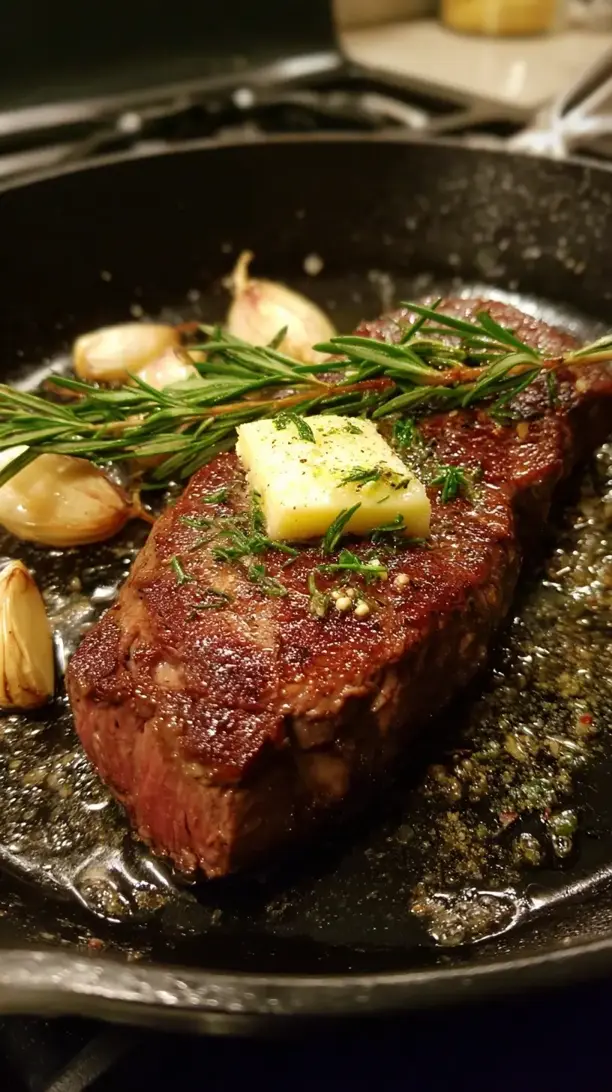
Step 4: Use your tongs to flip the steaks. Immediately add the butter, smashed garlic cloves, and herb sprigs to the pan. As the butter melts, tilt the pan slightly towards you and use a spoon to continuously baste the steaks with the foaming butter. This buttery, aromatic bath cooks the top of the steak and infuses it with incredible flavor.
Step 5: Continue cooking and basting for another 2-4 minutes. For a perfect medium-rare, you’re aiming for an internal temperature of 125-130°F (52-54°C). The best way to check this is with an instant-read thermometer inserted horizontally into the thickest part of the steak. The surface should have a deep, rich, brown crust.
Step 6: Once the steak hits your target temperature, transfer it to a cutting board or a warm plate. Do not slice into it yet! Let it rest for at least 5-8 minutes. This allows the muscle fibers to relax and reabsorb all the juices. If you cut it too soon, those precious juices will just run out all over the plate.
Step 7: After the steak has rested, slice it against the grain. You’ll see the muscle fibers running in one direction; cutting perpendicular to them makes the steak much more tender to eat. Serve immediately, spooning any resting juices from the board over the top.
Storage & Freshness Guide
- Fridge: Store leftover steak in an airtight container for up to 3–4 days.
- Freezer: Wrap tightly in foil and place in a freezer bag for up to 3 months.
- Reviving: Reheat gently in a low oven or skillet to avoid overcooking.
Serving Suggestions
Complementary Dishes
- Creamy Mashed Potatoes — The ultimate comfort food pairing. The rich, buttery potatoes are a perfect canvas for the steak’s savory juices.
- Simple Arugula Salad — A light, peppery salad with a lemon vinaigrette cuts through the richness of the steak beautifully and adds a fresh element.
- Crispy Roasted Asparagus — The earthy, slightly charred flavor of roasted asparagus complements the savory, umami notes of the steak perfectly.
Drinks
- A Bold Cabernet Sauvignon — The tannins in a good Cabernet stand up to the fat and robust flavor of the steak, creating a classic and harmonious pairing.
- A Smoky Bourbon on the Rocks — The caramel and oak notes in bourbon mirror the charred, caramelized crust of the steak for a truly decadent experience.
- Non-Alcoholic Ginger Beer — The spicy, sharp kick of ginger beer cleanses the palate between bites and contrasts nicely with the savory meat.
Something Sweet
- Dark Chocolate Pots de Crème — The intense, slightly bitter dark chocolate is a sophisticated finish that doesn’t overwhelm after a rich meal.
- Classic Crème Brûlée — The cool, creamy custard and the satisfying crack of caramelized sugar provide a lovely textural contrast.
- Fresh Berries with Whipped Cream — A light, fresh, and slightly tart dessert that feels refreshing and simple after a hearty steak dinner.
Top Mistakes to Avoid
- Using a steak that’s too thin. A thin steak will cook through before a proper crust can develop. You need that 1-inch+ thickness to give the exterior enough time to brown without the interior turning gray.
- Not getting the pan hot enough. If you don’t hear that loud, immediate sizzle when the steak hits the pan, it wasn’t hot enough. A lukewarm pan will steam the steak instead



Pan Seared Steak
Learn how to cook the perfect Pan Seared Steak with a crispy crust and juicy center. Our easy 15-minute method guarantees restaurant-quality results. Try it tonight!
Ingredients
For the Ingredients
-
2 boneless steaks (about 1 to 1.5 inches thick (such as ribeye, strip, or filet mignon))
-
1 tbsp high-smoke-point oil (like avocado, grapeseed, or refined coconut oil)
-
1.5 tsp coarse kosher salt
-
1 tsp freshly cracked black pepper
-
2 tbsp unsalted butter
-
2-3 cloves garlic (lightly smashed)
-
2-3 fresh thyme or rosemary sprigs
Instructions
-
Take your steaks out of the refrigerator about 20-30 minutes before you plan to cook them. This allows them to come closer to room temperature, which helps them cook more evenly from edge to center. While they’re resting, pat them completely dry with paper towels—this is a non-negotiable step for a good crust. Generously season all sides with the coarse salt and cracked pepper, pressing it gently into the meat.01
-
Place your heavy skillet over medium-high heat and let it get seriously hot for a good 3-5 minutes. You should be able to feel the heat radiating when you hold your hand a few inches above the surface. Add the high-smoke-point oil and swirl it to coat the pan. It should shimmer and look thin almost immediately.02
-
Carefully place the steaks in the hot pan—you should hear a loud, confident sizzle. Resist the urge to move them! Let them cook undisturbed for 2-4 minutes (depending on thickness and desired doneness) to form that initial crust. You’ll notice the color changing from the bottom up; when it’s about halfway up the side, it’s time to flip.03
-
Use your tongs to flip the steaks. Immediately add the butter, smashed garlic cloves, and herb sprigs to the pan. As the butter melts, tilt the pan slightly towards you and use a spoon to continuously baste the steaks with the foaming butter. This buttery, aromatic bath cooks the top of the steak and infuses it with incredible flavor.04
-
Continue cooking and basting for another 2-4 minutes. For a perfect medium-rare, you’re aiming for an internal temperature of 125-130°F (52-54°C). The best way to check this is with an instant-read thermometer inserted horizontally into the thickest part of the steak. The surface should have a deep, rich, brown crust.05
-
Once the steak hits your target temperature, transfer it to a cutting board or a warm plate. Do not slice into it yet! Let it rest for at least 5-8 minutes. This allows the muscle fibers to relax and reabsorb all the juices. If you cut it too soon, those precious juices will just run out all over the plate.06
-
After the steak has rested, slice it against the grain. You’ll see the muscle fibers running in one direction; cutting perpendicular to them makes the steak much more tender to eat. Serve immediately, spooning any resting juices from the board over the top.07
Not what you're looking for?