
There’s something truly magical about a cookie that feels both elegantly simple and deeply comforting. For me, that’s exactly what these Pecan Sandies with Sea Salt are all about. Picture pulling a golden pan from the oven, filled with buttery shortbread studded with toasted pecans. Each bite is a perfect little moment—tender and crumbly, with a rich nutty crunch and that delicate salty pop that makes them utterly unforgettable. Best of all, this easy pecan sandies recipe requires no chilling of the dough, so you can go from mixing bowl to blissful snacking in almost no time.
I consider these the secret weapon of my holiday kitchen. They are truly standout unique Christmas cookies and a brilliant, effortless addition to any holiday baking plan. Whether you’re searching through classic Christmas cookie recipes or craving fresh Christmas baking ideas, these sweet and salty gems are a perfect choice. They are the kind of easy Christmas treats that effortlessly elevate any platter of holiday treats.
So, if you’re looking for the elegant, homemade answer to your Christmas dessert ideas, look no further. Simple to make yet always impressive, they prove that the best holiday baking often yields the most comforting rewards.
If you're looking for the perfect Pecan Sandies with Sea Salt, you're in the right place. Whether you love Christmas Cookie or want to explore our Chicken Recipes collection, we've got you covered.


Why You’ll Love This Pecan Sandies with Sea Salt
- Perfect texture trifecta: Sandy crumb, pecan crunch, and a salty pop.
- Deceptively simple: A no-fuss, one-bowl dough with no chilling required.
- Sweet-and-salty balance: Flaky sea salt elevates the buttery, nutty flavors.
- Incredibly versatile: Perfect with coffee, tea, or for a holiday cookie plate.
Ingredients & Tools
- 225 g (1 cup) unsalted butter, at cool room temperature
- 100 g (½ cup) granulated sugar
- 1 tsp pure vanilla extract
- 240 g (2 cups) all-purpose flour
- ¼ tsp fine sea salt (for the dough)
- 120 g (1 heaping cup) pecans, toasted and finely chopped
- Flaky sea salt for sprinkling on top
Tools: A stand mixer or hand mixer, a baking sheet, parchment paper, and a small bowl for your extra sugar.
Notes: Use high-quality butter and pecans. Toasting the pecans is non-negotiable for deeper flavor. Don’t skip the flaky sea salt topping.
Nutrition (per serving)
| Calories: | 180 kcal |
| Protein: | 2 g |
| Fat: | 12 g |
| Carbs: | 17 g |
| Fiber: | 1 g |
Serves: 24 cookies | Prep Time: 15 minutes | Cook Time: 12-14 minutes | Total Time: 30 minutes
Storage & Freshness Guide
- Fridge: Store in an airtight container at room temperature for up to 1 week.
- Freezer: Freeze baked cookies for up to 3 months, or freeze dough balls and bake from frozen.
- Reviving: Refresh stale cookies in a 325°F oven for 3-5 minutes to restore crispness.
Serving Suggestions
Complementary Dishes
- A simple cheese board — The rich, buttery cookies are a fantastic counterpoint to sharp, aged cheddar or a creamy blue cheese. It’s an unexpected but brilliant pairing.
- Spiced pear or apple compote — The warm, soft fruit with a hint of cinnamon complements the nutty, sandy texture of the cookies beautifully.
Drinks
- Earl Grey tea — The bergamot in the tea has a citrusy, floral note that cuts through the richness and makes the pecan flavor pop.
- A rich, dark roast coffee — The bitterness of the coffee creates a perfect balance with the sweet and salty cookie, making for a truly decadent experience.
- A glass of tawny port or cream sherry — For a real treat, the nutty, caramel notes in these fortified wines are a match made in heaven with the pecans.
Something Sweet
- Vanilla bean ice cream — Crumble a warm cookie over a scoop of high-quality vanilla ice cream for an instant, elegant dessert.
- Dark chocolate mousse — The intense, bittersweet chocolate provides a lovely contrast to the subtle, nutty sweetness of the sandies.
Before You Start: Tips & Ingredient Notes
- Butter temperature is everything. Your butter should be cool to the touch but soft enough that you can leave an indentation with your finger. If it’s too warm, the cookies will spread too much; if it’s too cold, the dough will be crumbly and hard to work with.
- Don’t rush the toasting. Toasting the pecans is what transforms them from a simple nut into a flavor powerhouse. Spread them on a baking sheet and toast at 175°C (350°F) for 6-8 minutes, until fragrant. Let them cool completely before chopping, or they’ll get oily.
- How fine should the pecans be? You want a fine chop, but not a dust. Little pecan bits throughout the dough give the cookie its signature texture. A few slightly larger pieces are totally fine and add to the charm.
- Why two types of salt? We use fine sea salt in the dough to evenly season the entire cookie. The flaky sea salt on top is for that final, crunchy, salty burst that hits your tongue first. They play two different, essential roles.
How to Make Pecan Sandies with Sea Salt
Step 1: Start by preheating your oven to 175°C (350°F) and lining your baking sheet with parchment paper. Now, in the bowl of your stand mixer fitted with the paddle attachment (or using a hand mixer), beat the cool room-temperature butter and granulated sugar together on medium speed. You’re not looking for light and fluffy here, like a cake—just a well-combined, smooth, and pale mixture. This should take about 2 minutes. Scrape down the sides of the bowl, then beat in the vanilla extract until just incorporated.
Step 2: In a separate bowl, whisk together the all-purpose flour and the fine sea salt. This ensures the salt is evenly distributed. With your mixer on low speed, gradually add the flour mixture to the butter mixture. Mix only until the flour streaks have just disappeared—the second the dough comes together, stop! You’ll notice the dough will be quite soft and a little sticky, which is perfect.
Step 3: Now for the star ingredient! Add your finely chopped, cooled toasted pecans to the bowl. Use a spatula or your mixer on the lowest possible setting to fold them in until they’re evenly distributed. At this point, the dough should be cohesive and smell incredible from the toasted nuts. If the dough feels excessively soft or sticky, you can pop it in the fridge for 15 minutes to firm up slightly, but this usually isn’t necessary.
Step 4: It’s time to shape the cookies. Scoop out about 1 tablespoon of dough for each cookie. Roll them between your palms into smooth, round balls. Place them on your prepared baking sheet, leaving about 2 inches (5 cm) between each one as they will spread a little. You don’t need to press them down yet.
Step 5: Here’s a little pro-trick for the perfect sandy texture. Take a flat-bottomed glass or measuring cup. Lightly dip the bottom in water, then into a small bowl of granulated sugar. Use this sugared glass to gently press down on each dough ball to flatten it to about a ½-inch (1.25 cm) thickness. This gives the cookies a lovely, slightly crackled top and a delicate sugary crust.
Step 6: Now for the final flourish! Right before baking, take a small pinch of flaky sea salt and sprinkle it over the top of each cookie. A little goes a long way—you just want a few crystals per cookie to provide that salty spark.
Step 7: Bake for 12 to 14 minutes. You’re looking for the edges to be set and just barely, barely starting to turn a light golden brown. The centers will still look quite soft and pale—this is exactly what you want! They will firm up as they cool. Over-baking is the enemy of a tender, sandy cookie.
Step 8: Let the cookies cool on the baking sheet for at least 10 minutes. They are very fragile when they first come out of the oven. After that, you can transfer them to a wire rack to cool completely. The wait is the hardest part, but it’s worth it for that perfect texture.
Top Mistakes to Avoid
- Using warm, melted butter. This is the number one reason cookies spread too much. Your butter should be cool—if you can easily squish it, it’s probably too warm. You’ll end up with flat, greasy cookies instead of tender, tall ones.
- Over-mixing the dough after adding the flour. Once the flour is incorporated, stop mixing! Over-working the dough develops gluten, which leads to a tougher, more biscuit-like texture instead of that desirable delicate, crumbly sandiness.
- Skipping the nut toasting step. Raw pecans have a much milder, almost grassy flavor. Toasting them is what gives these cookies their deep, nutty, irresistible aroma and taste. It’s a simple step with a huge payoff.
- Over-baking. These cookies don’t get very brown. If you wait for them to look “done” in the center, they’ll be overdone and dry. Take them out when the edges are just set and the centers are still soft.
Expert Tips
- Tip: Weigh your flour. If you’re using cup measures, fluff your flour first, then spoon it into the cup and level it off. Scooping directly from the bag can pack in too much flour, leading to a dry dough. For perfect results every time, a kitchen scale is your best friend.
- Tip: Make a slice-and-bake log. If you want to get a head start, you can form the dough into a log, wrap it in parchment, and chill it. Then you can just slice and bake whenever a cookie craving strikes. It’s the ultimate freezer staple.
- Tip: Add a hint of spice. While these are perfect as-is, a tiny pinch (about ¼ tsp) of ground cinnamon or cardamom added with the flour can add a lovely, warm background note that complements the pecans beautifully.
- Tip: Refresh stale cookies. If your cookies lose their crispness after a few days (though they rarely last that long!), you can pop them in a 160°C (325°F) oven for 3-5 minutes to bring back their texture.
FAQs
Can I use a different type of nut?
Absolutely! While pecans are classic, walnuts would be a fantastic substitute with a slightly more robust, earthy flavor. You could also use hazelnuts for a more decadent, frangelico-like taste. Just make sure whatever nut you choose, you toast it first. That toasting step is universal for unlocking maximum nutty flavor.
My dough is really crumbly and won’t hold together. What happened?
This usually means your butter was a bit too cold, or you may have accidentally added a touch too much flour. Don’t worry, it’s an easy fix! Try kneading the dough with your hands for a few seconds—the warmth from your hands can help bring it together. If it’s still too dry, you can add a single teaspoon of cold water or milk and mix it in. It should come together nicely.
Can I make these cookies ahead of time?
You sure can! The dough balls can be shaped and then frozen solid on a baking sheet before being transferred to a freezer bag. You can bake them straight from the freezer, just add 1-2 minutes to the baking time. Baked cookies also freeze beautifully in an airtight container for up to 3 months.
Why did my cookies spread so much?
The most common culprit is butter that was too warm. If your kitchen is particularly hot, the dough can become greasy. If this happens, just pop the shaped dough balls on the baking sheet into the fridge for 15 minutes before you bake them. This will re-solidify the butter and prevent excessive spreading.
Is the sea salt on top really necessary?
I know it might seem like a small, optional garnish, but I really encourage you not to skip it. It’s what takes these cookies from “very good” to “absolutely unforgettable.” The salt doesn’t make them taste salty; it enhances all the other flavors—the butter, the sugar, the pecans—making them taste more intensely of themselves. It’s the magic touch, I promise.



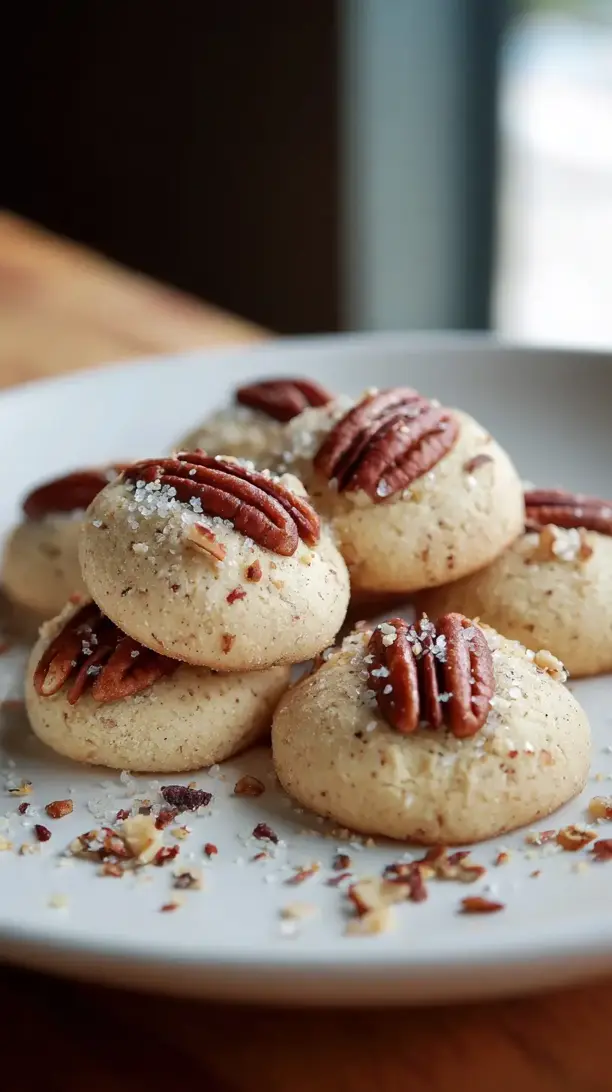
Pecan Sandies With Sea Salt: Easy No-Chill Cookie Dough
Pecan Sandies With Sea Salt are the ultimate sophisticated comfort cookie. This easy pecan sandies recipe is a perfect holiday treat, featuring a buttery crumble with toasted pecans and a delicate salty pop.
Ingredients
For the Ingredients
-
225 g unsalted butter (at cool room temperature)
-
100 g granulated sugar
-
1 tsp pure vanilla extract
-
240 g all-purpose flour
-
¼ tsp fine sea salt (for the dough)
-
120 g pecans (toasted and finely chopped)
-
Flaky sea salt (for sprinkling on top)
Instructions
-
Start by preheating your oven to 175°C (350°F) and lining your baking sheet with parchment paper. Now, in the bowl of your stand mixer fitted with the paddle attachment (or using a hand mixer), beat the cool room-temperature butter and granulated sugar together on medium speed. You’re not looking for light and fluffy here, like a cake—just a well-combined, smooth, and pale mixture. This should take about 2 minutes. Scrape down the sides of the bowl, then beat in the vanilla extract until just incorporated.01
-
In a separate bowl, whisk together the all-purpose flour and the fine sea salt. This ensures the salt is evenly distributed. With your mixer on low speed, gradually add the flour mixture to the butter mixture. Mix only until the flour streaks have just disappeared—the second the dough comes together, stop! You’ll notice the dough will be quite soft and a little sticky, which is perfect.02
-
Now for the star ingredient! Add your finely chopped, cooled toasted pecans to the bowl. Use a spatula or your mixer on the lowest possible setting to fold them in until they’re evenly distributed. At this point, the dough should be cohesive and smell incredible from the toasted nuts. If the dough feels excessively soft or sticky, you can pop it in the fridge for 15 minutes to firm up slightly, but this usually isn't necessary.03
-
It’s time to shape the cookies. Scoop out about 1 tablespoon of dough for each cookie. Roll them between your palms into smooth, round balls. Place them on your prepared baking sheet, leaving about 2 inches (5 cm) between each one as they will spread a little. You don’t need to press them down yet.04
-
Here’s a little pro-trick for the perfect sandy texture. Take a flat-bottomed glass or measuring cup. Lightly dip the bottom in water, then into a small bowl of granulated sugar. Use this sugared glass to gently press down on each dough ball to flatten it to about a ½-inch (1.25 cm) thickness. This gives the cookies a lovely, slightly crackled top and a delicate sugary crust.05
-
Now for the final flourish! Right before baking, take a small pinch of flaky sea salt and sprinkle it over the top of each cookie. A little goes a long way—you just want a few crystals per cookie to provide that salty spark.06
-
Bake for 12 to 14 minutes. You’re looking for the edges to be set and just barely, barely starting to turn a light golden brown. The centers will still look quite soft and pale—this is exactly what you want! They will firm up as they cool. Over-baking is the enemy of a tender, sandy cookie.07
-
Let the cookies cool on the baking sheet for at least 10 minutes. They are very fragile when they first come out of the oven. After that, you can transfer them to a wire rack to cool completely. The wait is the hardest part, but it’s worth it for that perfect texture.08
Not what you're looking for?


