
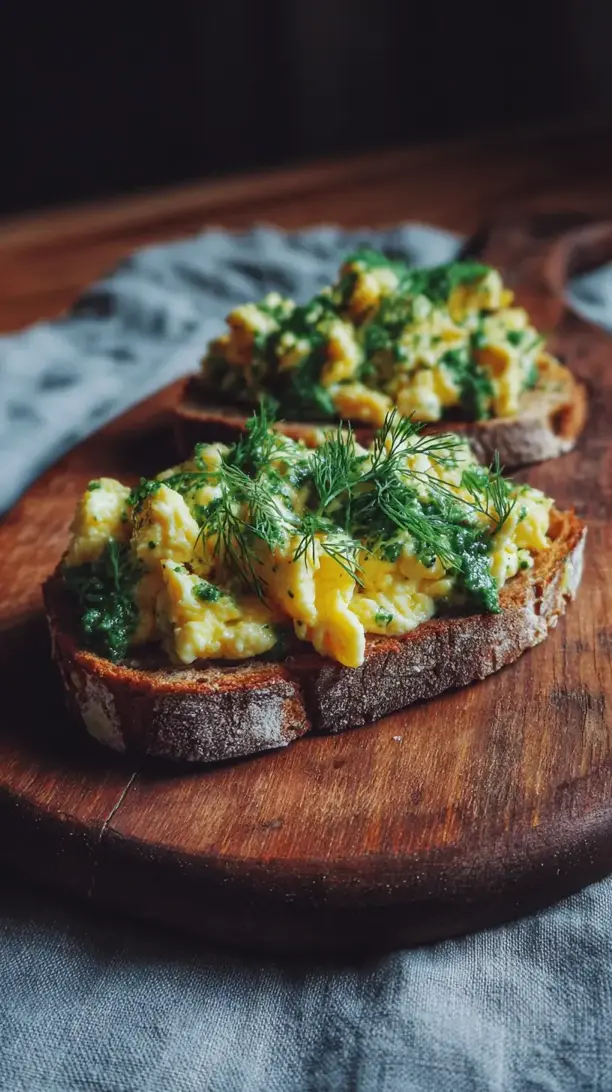
There’s something magical about turning humble ingredients into something special. These Pesto Scrambled Eggs on Sourdough are creamy eggs infused with vibrant pesto, piled on tangy toasted sourdough. It’s a celebratory breakfast that comes together in minutes.
Nothing beats a great Pesto Scrambled Eggs on Sourdough. Whether you're a fan of Savory Breakfast or want to try something from our Burgers selection, keep scrolling!

Why You’ll Love This Pesto Scrambled Eggs on Sourdough
- Flavor Bomb: Pesto infuses creamy eggs with basil, garlic, and parmesan.
- Texture Combo: Custardy eggs meet crisp, chewy sourdough toast.
- Infinitely Customizable: Easily adapt with your favorite add-ins.
- Fancy & Simple: Feels café-worthy but is deceptively easy to make.
Ingredients & Tools
- 4 large eggs
- 2 tbsp fresh basil pesto (homemade or a good-quality store-bought)
- 1 tbsp whole milk or heavy cream
- 1 tbsp unsalted butter
- 2 thick slices of sourdough bread
- Salt and freshly ground black pepper to taste
- Optional: Flaky sea salt, for finishing; extra grated Parmesan cheese; fresh basil leaves for garnish; a drizzle of extra virgin olive oil.
Tools: A good non-stick skillet, a silicone spatula, a medium bowl, a whisk, and a toaster or grill pan.
Notes: Use a fresh, refrigerated pesto for best flavor. Don’t skip the butter—it’s key for rich, creamy eggs.
Nutrition (per serving)
| Calories: | 420 kcal |
| Protein: | 20 g |
| Fat: | 25 g |
| Carbs: | 28 g |
| Fiber: | 2 g |
Serves: 2 | Prep Time: 5 minutes | Cook Time: 10 minutes | Total Time: 15 minutes
Before You Start: Tips & Ingredient Notes
- Pesto Power. The pesto you choose makes all the difference. A vibrant, refrigerated pesto will have a much fresher, brighter flavor than a shelf-stable jarred one. If you’re using a very oily pesto, give it a good stir before measuring to incorporate all the ingredients.
- Egg Temperature Matters. For the creamiest scramble, try to use eggs that are close to room temperature. If you have a minute, take them out of the fridge before you start prepping everything else. Cold eggs can sometimes seize up a bit more in the pan.
- Don’t Skimp on the Sourdough. A good, sturdy, tangy sourdough is the ideal foundation. Its chewy texture and slight acidity cut through the richness of the eggs beautifully. A flimsy white bread just won’t provide the same structural or flavor support.
- Butter is Non-Negotiable. You might be tempted to use oil, but butter contributes an irreplaceable flavor and helps create those soft, small curds we’re aiming for. It also adds to the overall luxurious mouthfeel of the dish.
How to Make Pesto Scrambled Eggs on Sourdough
Step 1: First, get your toast ready. Place your slices of sourdough in the toaster or under the grill. You’re aiming for a deep golden brown with some crisp edges—this will ensure it can hold up to the juicy eggs without getting soggy. While that’s happening, you can focus entirely on the eggs without any distractions.
Step 2: Now, for the main event. Crack your eggs into a medium bowl. Add the tablespoon of milk or cream—this is your secret weapon for extra creaminess. Now, add your two tablespoons of pesto. Don’t be shy with it! Whisk everything together until it’s fully combined. You’ll notice the mixture turns a lovely pale green color with flecks of basil throughout. Season with a good pinch of salt and a generous grind of black pepper.
Step 3: Place your non-stick skillet over medium-low heat. Add the tablespoon of butter and let it melt, swirling it around the pan until it just starts to foam. You don’t want it to brown. The key to perfect scrambled eggs is gentle, patient heat. If your pan is too hot, the eggs will cook too quickly and become rubbery.
Step 4: Pour your pesto-egg mixture into the foaming butter. Let it sit, undisturbed, for about 20-30 seconds, just until you see a thin cooked layer forming at the edges. Now, with your silicone spatula, gently push the eggs from the edges toward the center. Tilt the pan to let the uncooked egg run into the empty spaces. You’re creating soft, large curds.
Step 5: Continue this slow, gentle pushing and folding motion. You’ll notice the eggs transforming from liquid to a soft, creamy mass. This should take about 3-5 minutes. The moment they look mostly set but still a bit wet and glossy, take them off the heat immediately. They will continue to cook from the residual heat—this is the trick to avoiding dry eggs!
Step 6: Your sourdough should be perfectly toasted by now. Place the slices on two plates. Immediately divide the soft, creamy pesto scrambled eggs between the two slices, piling them high. Give them one final crack of black pepper, a tiny pinch of flaky sea salt, and if you’re feeling extra, a drizzle of olive oil or a sprinkle of extra Parmesan. Serve right away while everything is warm and the textures are at their peak.
Storage & Freshness Guide
- Fridge: Store leftover eggs in an airtight container for up to 2 days.
- Freezer: Not recommended; eggs become watery when thawed.
- Reviving: Reheat gently in a non-stick pan over low heat, stirring often.
Serving Suggestions
Complementary Dishes
- A simple arugula salad — The peppery bite of fresh arugula dressed with just a squeeze of lemon juice provides a fantastic, light counterpoint to the rich, creamy eggs.
- Pan-fried cherry tomatoes — Cook a handful of cherry tomatoes in the same pan after the eggs until they blister and burst. Their sweet, acidic juice is a perfect companion for the pesto.
- Crispy prosciutto or bacon — For a heartier meal, a side of salty, crispy cured meat adds a wonderful savory crunch and umami depth.
Drinks
- A freshly squeezed orange juice — The bright, sweet acidity cuts through the richness of the dish beautifully and feels like a classic, refreshing brunch pairing.
- A dry sparkling wine or Prosecco — If you’re going for a celebratory brunch, the bubbles and crispness of a dry sparkling wine are a perfect match for the herbal notes in the pesto.
- A strong Americano or Cappuccino — The bitter, robust flavor of good coffee provides a wonderful palate cleanser and balances the meal perfectly.
Something Sweet
- Fresh berries with a dollop of Greek yogurt — After a savory, rich dish, a light, slightly tart and sweet finish is ideal. It’s refreshing and doesn’t feel too heavy.
- A warm, flaky croissant with jam — Lean into the café vibe with a buttery, warm croissant. A little apricot or raspberry jam on the side makes for a delightful sweet bite.
- Dark chocolate almond biscotti — You can nibble on these with your remaining coffee. They offer a satisfying crunch and a hit of dark chocolate without being overly sweet.
Top Mistakes to Avoid
- Mistake: Cooking over high heat. This is the number one culprit for rubbery, dry scrambled eggs. Low and slow is the only way to achieve that custardy, creamy texture we’re after. I’ve rushed this before and ended up with disappointing, tough eggs—patience truly is a virtue here.
- Mistake: Over-whisking the eggs. You just want to combine the yolks, whites, pesto, and cream until they’re uniform. Whisking too vigorously can incorporate too much air and sometimes lead to a slightly foamy, less creamy final texture.
- Mistake: Overcooking in the pan. Remember, scrambled eggs continue to cook after you remove them from the heat. Take them off the stove when they still look a bit wet and underdone. They will set up perfectly on the plate. If they look done in the pan, they’ll be overdone by the time you eat them.
- Mistake: Using thin, soft bread. A weak slice of bread will instantly turn into a soggy, unappetizing mess under the weight of the moist eggs. The structural integrity of a good sourdough is key to the experience.
Expert Tips
- Tip: Swirl in cold butter at the end. For an extra layer of restaurant-level luxury, take a small, cold knob of butter and stir it into the scrambled eggs right after you’ve taken them off the heat. This technique, called monté au beurre, makes them impossibly glossy and rich.
- Tip: Warm your bowls. A simple pro-move is to place your serving plates in a warm oven (turned off) while you cook. A warm plate will keep your eggs and toast at the perfect temperature for longer, so you’re not eating a cold breakfast.
- Tip: Add mix-ins at the right time. If you’re adding extras like chopped sun-dried tomatoes or spinach, sauté them briefly in the butter before adding the egg mixture. For something delicate like fresh herbs or cheese, fold them in during the last 30 seconds of cooking.
- Tip: Use a flexible silicone spatula. This tool is perfect for gently folding the eggs and getting into the curves of the pan without scratching the surface. It gives you the most control for creating perfect curds.
FAQs
Can I make this recipe dairy-free?
Absolutely! You can use a high-quality dairy-free pesto (many are made with nutritional yeast instead of Parmesan) and substitute the butter for a neutral-tasting oil like avocado oil or a vegan butter. For the cream, a splash of unsweetened almond or oat milk will work just fine, though the final result might be slightly less rich.
What if I don’t have sourdough bread?
No problem! Any sturdy, crusty bread will be a good substitute. A thick-cut seedy multigrain, a rustic ciabatta, or even a good quality English muffin would all hold up well and taste delicious. The goal is just to have a base with some substance and chew.
Can I prepare the egg mixture ahead of time?
You can whisk the eggs, pesto, and cream together and keep it covered in the fridge for a few hours before cooking. However, I wouldn’t recommend leaving it overnight as the pesto can start to slightly discolor the eggs. For the best results, fresh is always best.
Why are my eggs not turning green?
This depends entirely on the color and intensity of your pesto. A very herb-forward, vibrant green pesto will give you a more pronounced color. If your pesto has more cheese, nuts, or oil, the color will be more subtle. It doesn’t affect the taste—it will still be delicious!
How can I make this for a crowd?
This recipe scales up beautifully. Just use a larger skillet or cook in batches to avoid overcrowding the pan. You can also keep finished batches warm in a low oven (around 200°F/95°C) on a baking sheet while you finish the rest. Toast the sourdough in the oven on a separate rack for efficiency.



Pesto Scrambled Eggs On Sourdough
Make perfect Pesto Scrambled Eggs on Sourdough in 15 minutes! This easy, creamy breakfast recipe is a flavor-packed start to your day. Get the recipe now!
Ingredients
For the eggs and toast:
-
4 large eggs
-
2 tbsp fresh basil pesto
-
1 tbsp whole milk or heavy cream
-
1 tbsp unsalted butter
-
2 slices sourdough bread (thick)
-
Salt and freshly ground black pepper (to taste)
-
Flaky sea salt (for finishing)
-
extra grated Parmesan cheese
-
fresh basil leaves (for garnish)
-
extra virgin olive oil (a drizzle)
Instructions
-
First, get your toast ready. Place your slices of sourdough in the toaster or under the grill. You’re aiming for a deep golden brown with some crisp edges—this will ensure it can hold up to the juicy eggs without getting soggy. While that’s happening, you can focus entirely on the eggs without any distractions.01
-
Now, for the main event. Crack your eggs into a medium bowl. Add the tablespoon of milk or cream—this is your secret weapon for extra creaminess. Now, add your two tablespoons of pesto. Don’t be shy with it! Whisk everything together until it’s fully combined. You’ll notice the mixture turns a lovely pale green color with flecks of basil throughout. Season with a good pinch of salt and a generous grind of black pepper.02
-
Place your non-stick skillet over medium-low heat. Add the tablespoon of butter and let it melt, swirling it around the pan until it just starts to foam. You don’t want it to brown. The key to perfect scrambled eggs is gentle, patient heat. If your pan is too hot, the eggs will cook too quickly and become rubbery.03
-
Pour your pesto-egg mixture into the foaming butter. Let it sit, undisturbed, for about 20-30 seconds, just until you see a thin cooked layer forming at the edges. Now, with your silicone spatula, gently push the eggs from the edges toward the center. Tilt the pan to let the uncooked egg run into the empty spaces. You’re creating soft, large curds.04
-
Continue this slow, gentle pushing and folding motion. You’ll notice the eggs transforming from liquid to a soft, creamy mass. This should take about 3-5 minutes. The moment they look mostly set but still a bit wet and glossy, take them off the heat immediately. They will continue to cook from the residual heat—this is the trick to avoiding dry eggs!05
-
Your sourdough should be perfectly toasted by now. Place the slices on two plates. Immediately divide the soft, creamy pesto scrambled eggs between the two slices, piling them high. Give them one final crack of black pepper, a tiny pinch of flaky sea salt, and if you’re feeling extra, a drizzle of olive oil or a sprinkle of extra Parmesan. Serve right away while everything is warm and the textures are at their peak.06
Not what you're looking for?


