This vibrant Pesto Veggie Pasta Salad is summer in a bowl. It’s packed with fresh flavors and gets better as it sits, making it perfect for potlucks or easy lunches. The pesto clings to every spiral of pasta and seeps into the crunchy vegetables for a truly delicious dish.
Nothing beats a great Pesto Veggie Pasta Salad. Whether you're a fan of Dinner Ideas or want to try something from our Chicken Breast Recipes selection, keep scrolling!


Why You’ll Love This Pesto Veggie Pasta Salad
- Make-ahead marvel: Improves in flavor after a few hours in the fridge.
- Perfect texture: A symphony of chewy, juicy, crisp, and sweet in every bite.
- Incredibly versatile: A fantastic blueprint for using up any veggies.
- Pesto-powered: Brings herbaceous, garlicky, cheesy flavor with minimal effort.
Ingredients & Tools
- 450 g fusilli or rotini pasta
- 200 g homemade or high-quality store-bought basil pesto
- 250 g cherry or grape tomatoes, halved
- 1 large yellow bell pepper, diced
- 1 large red bell pepper, diced
- 150 g canned sweet corn, drained and rinsed
- 120 g jarred artichoke hearts, drained and quartered
- 100 g pitted Kalamata olives, halved
- 1/2 small red onion, thinly sliced
- 75 g Parmesan cheese, freshly grated, plus more for serving
- Juice of 1/2 a lemon
- Salt and freshly ground black pepper to taste
Tools: A large pot for boiling pasta, a colander, a very large mixing bowl, a sharp knife, and a cutting board.
Notes: Don’t skimp on pesto quality—it’s the heart of the dish. Use a pasta shape with nooks, like fusilli, to trap the sauce and veggies.
Nutrition (per serving)
| Calories: | 385 kcal |
| Protein: | 12 g |
| Fat: | 16 g |
| Carbs: | 48 g |
| Fiber: | 5 g |
Serves: 6 | Prep Time: 20 minutes | Cook Time: 10 minutes | Total Time: 30 minutes (plus chilling)
Before You Start: Tips & Ingredient Notes
- Pasta shape matters. Those little spirals and twists aren’t just for looks. They’re designed to hold onto sauces and tiny vegetable pieces, ensuring you get a perfect bite every single time. Avoid long, smooth pasta like spaghetti for this.
- Don’t rinse your pasta. I know it’s a habit for some, but for a pasta salad, you want that starchy surface. It helps the pesto cling to the pasta beautifully, creating a creamier, more cohesive dish instead of a watery one.
- Go for the good stuff. When it comes to jarred ingredients like artichokes and olives, a little upgrade can make a big difference. Splurge on the artichokes in oil rather than brine, and seek out firm, flavorful olives from the deli counter if you can.
- Grate your own Parmesan. The pre-shredded stuff often contains anti-caking agents that can make the texture a bit grainy and prevent it from melting smoothly into the pesto. A quick grate from a block makes all the difference.
How to Make Pesto Veggie Pasta Salad
Step 1: Cook your pasta. Bring a large pot of well-salted water to a rolling boil—it should taste like the sea. Add your fusilli and cook according to the package directions, but aim for al dente. You want a little bite to it, as it will soften slightly later when it absorbs the pesto. Once cooked, drain it immediately in a colander. Do not rinse it! Just give the colander a good shake to remove excess water.
Step 2: Combine the warm pasta and pesto. While the pasta is still warm, transfer it to your very large mixing bowl. This is the secret step! Adding the pesto to the warm pasta allows it to be absorbed more deeply, flavoring the pasta from the inside out. Pour in the pesto and use a large spoon or spatula to toss everything together until every single piece of pasta is coated in that vibrant green sauce. You’ll notice the aroma of basil and garlic will just bloom at this point.
Step 3: Prepare your vegetables. While the pasta is cooling down a bit from its pesto bath, you can get all your veggies prepped. Halve the tomatoes, dice the bell peppers, slice the red onion thinly, quarter the artichokes, and halve the olives. The goal here is to have everything roughly the same, bite-sized proportion so the salad is easy to eat.
Step 4: Assemble the salad. Now for the fun part—bringing it all together. Add all of your prepped vegetables to the bowl with the pesto-coated pasta. Don’t forget the sweet corn and the freshly grated Parmesan cheese. A little goes a long way here. Toss everything gently but thoroughly. You want to distribute the colorful veggies evenly without crushing them.
Step 5: Season and brighten. Now, squeeze the juice of half a lemon over the entire salad. This isn’t just for acidity; it really wakes up all the other flavors and keeps the color of the pesto looking bright and fresh. Give it one more good toss. Now, taste it. This is your moment. Does it need a pinch more salt? A crack of black pepper? Adjust to your liking.
Step 6: The all-important rest. I know it’s tempting to dig right in, but patience is a virtue here. Cover the bowl with cling film or a lid and pop it in the refrigerator for at least an hour, though two or three is even better. This resting time allows the flavors to meld and marry, and the pasta will soak up any excess moisture, resulting in a perfectly textured salad.
Step 7: Final touches and serve. Just before serving, give the salad one last stir. The pesto might have settled a bit at the bottom. Check the consistency—if it seems a little thick, you can add a tiny drizzle of olive oil or another squeeze of lemon juice to loosen it. Serve it cold or at a cool room temperature, with an extra sprinkle of Parmesan on top for good measure.
Storage & Freshness Guide
- Fridge: Store in an airtight container for 3-4 days.
- Freezer: Not recommended; pasta and veggies become mushy upon thawing.
- Reviving: Stir in a splash of olive oil, lemon juice, or reserved pasta water if dry.
Serving Suggestions
Complementary Dishes
- Grilled Lemon Herb Chicken — The bright, citrusy char from the chicken plays wonderfully with the herbaceous notes in the pesto, making for a complete and satisfying meal.
- Garlic Butter Shrimp Skewers — The rich, savory flavor of the shrimp adds a luxurious protein element that feels fancy but is incredibly easy to prepare alongside the salad.
- A Simple Arugula Salad with Lemon Vinaigrette — A little side salad with a peppery kick and sharp dressing provides a lovely contrast to the creaminess of the pasta.
Drinks
- A Crisp Sauvignon Blanc — Its herbaceous and citrusy profile is a natural partner for the basil and lemon in the salad, cutting through the richness beautifully.
- Sparkling Water with Citrus Slices — A non-alcoholic option that cleanses the palate between bites with its effervescence and subtle fruitiness.
- An Italian Lager — A light, crisp beer won’t overpower the salad and its refreshing quality is just perfect for a sunny day.
Something Sweet
- Fresh Berry Parfaits — Layers of mixed berries and whipped cream offer a light, fruity, and refreshing end to the meal that doesn’t feel too heavy.
- Lemon Sorbet — This is the ultimate palate cleanser. Its sharp, clean citrus flavor is the perfect follow-up to the garlic and herb-forward pasta salad.
- Almond Biscotti — For a little crunch with your coffee, these nutty, not-too-sweet cookies are a classic and elegant choice.
Top Mistakes to Avoid
- Overcooking the pasta. Mushy pasta will continue to break down as you mix it with the vegetables, leading to a sad, porridge-like texture. Al dente is non-negotiable for a salad that holds up.
- Adding the pesto when the pasta is cold. I’ve messed this up before too, and you end up with pesto that just sits on the surface. Warm pasta absorbs the sauce, creating a unified flavor throughout the entire dish.
- Skipping the resting time. I know, the wait is hard! But serving it immediately means the flavors haven’t had a chance to get to know each other. It will taste good, but after a rest, it tastes incredible.
- Using watery vegetables. Be sure to drain your canned corn and jarred artichokes really well. Any extra liquid will water down your pesto dressing and make the salad soupy.
Expert Tips
- Tip: Toast your pasta. For a next-level nutty flavor, spread the dry pasta on a baking sheet and toast it in a 180°C oven for 5-7 minutes before boiling. It adds a whole new dimension of flavor that stands up to the robust pesto.
- Tip: Make a “pesto vinaigrette” for a lighter feel. If you want to ensure a non-greasy salad, whisk your pesto with an equal part of lemon juice or a light vinegar before adding it to the pasta. It emulsifies beautifully and coats everything evenly.
- Tip: Add fresh herbs at the end. While the pesto is the base, stirring in a handful of freshly chopped basil or parsley right before serving introduces a burst of fresh aroma and flavor that can get lost in the pesto during the marinating time.
- Tip: Use the pasta water. Before you drain the pasta, reserve about a half cup of the starchy cooking water. If your salad seems a bit dry after chilling, a tablespoon or two of this water tossed through will bring it back to life, making it glossy and saucy again.
FAQs
Can I make this pasta salad ahead of time?
Absolutely, and you should! This is one of those rare dishes that’s better the next day. You can prepare it up to 2 days in advance. Just keep it tightly covered in the refrigerator. If it thickens up too much, stir in a tiny splash of olive oil or lemon juice just before serving to refresh it.
What’s the best way to store leftovers?
Store any leftovers in an airtight container in the fridge. It will keep well for 3-4 days. The texture of the vegetables will soften a bit over time, but the flavor will remain delicious. I don’t recommend freezing it, as the pasta and veggies will become mushy upon thawing.
Can I use a different type of pesto?
Of course! While classic basil pesto is the standard, feel free to experiment. A sun-dried tomato pesto would be rich and tangy, or a kale and walnut pesto would add a earthier twist. The method remains exactly the same—just swap out the pesto and enjoy the new flavor profile.
My salad turned out a bit dry. What happened?
This usually happens if the pasta was too dry when the pesto was added, or if it was over-chilled. The pasta continues to absorb liquid. The fix is easy: stir in a little more pesto, a drizzle of olive oil, or even a spoonful of that reserved pasta water to loosen it up and bring back the sauciness.
Is there a way to make this dairy-free?
Yes, it’s very simple. Just use a vegan pesto (many are made with nutritional yeast instead of Parmesan) and omit the cheese in the recipe. The salad will still be packed with flavor from the vegetables and the herbaceous pesto base.



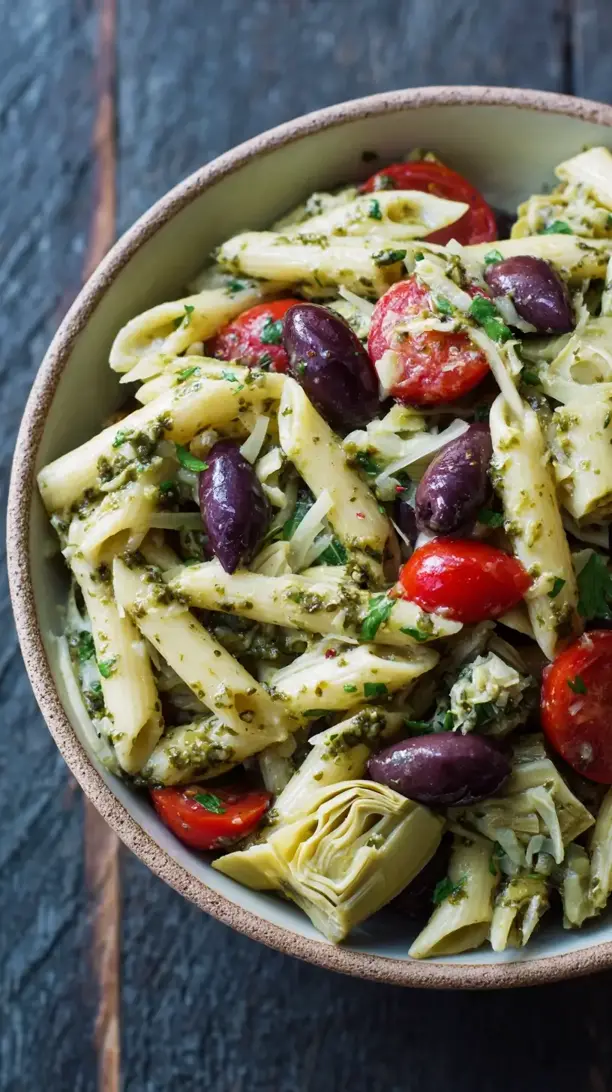
Pesto Veggie Pasta Salad
Make the best Pesto Veggie Pasta Salad for potlucks or easy lunches. This vibrant, make-ahead recipe is packed with fresh flavor. Get the easy recipe now!
Ingredients
For the Ingredients
-
450 g fusilli or rotini pasta
-
200 g homemade or high-quality store-bought basil pesto
-
250 g cherry or grape tomatoes (halved)
-
1 large yellow bell pepper (diced)
-
1 large red bell pepper (diced)
-
150 g canned sweet corn (drained and rinsed)
-
120 g jarred artichoke hearts (drained and quartered)
-
100 g pitted Kalamata olives (halved)
-
1/2 small red onion (thinly sliced)
-
75 g Parmesan cheese (freshly grated, plus more for serving)
-
Juice of 1/2 a lemon
-
Salt and freshly ground black pepper (to taste)
Instructions
-
Cook your pasta. Bring a large pot of well-salted water to a rolling boil—it should taste like the sea. Add your fusilli and cook according to the package directions, but aim for al dente. You want a little bite to it, as it will soften slightly later when it absorbs the pesto. Once cooked, drain it immediately in a colander. Do not rinse it! Just give the colander a good shake to remove excess water.01
-
Combine the warm pasta and pesto. While the pasta is still warm, transfer it to your very large mixing bowl. This is the secret step! Adding the pesto to the warm pasta allows it to be absorbed more deeply, flavoring the pasta from the inside out. Pour in the pesto and use a large spoon or spatula to toss everything together until every single piece of pasta is coated in that vibrant green sauce. You’ll notice the aroma of basil and garlic will just bloom at this point.02
-
Prepare your vegetables. While the pasta is cooling down a bit from its pesto bath, you can get all your veggies prepped. Halve the tomatoes, dice the bell peppers, slice the red onion thinly, quarter the artichokes, and halve the olives. The goal here is to have everything roughly the same, bite-sized proportion so the salad is easy to eat.03
-
Assemble the salad. Now for the fun part—bringing it all together. Add all of your prepped vegetables to the bowl with the pesto-coated pasta. Don’t forget the sweet corn and the freshly grated Parmesan cheese. A little goes a long way here. Toss everything gently but thoroughly. You want to distribute the colorful veggies evenly without crushing them.04
-
Season and brighten. Now, squeeze the juice of half a lemon over the entire salad. This isn't just for acidity; it really wakes up all the other flavors and keeps the color of the pesto looking bright and fresh. Give it one more good toss. Now, taste it. This is your moment. Does it need a pinch more salt? A crack of black pepper? Adjust to your liking.05
-
The all-important rest. I know it’s tempting to dig right in, but patience is a virtue here. Cover the bowl with cling film or a lid and pop it in the refrigerator for at least an hour, though two or three is even better. This resting time allows the flavors to meld and marry, and the pasta will soak up any excess moisture, resulting in a perfectly textured salad.06
-
Final touches and serve. Just before serving, give the salad one last stir. The pesto might have settled a bit at the bottom. Check the consistency—if it seems a little thick, you can add a tiny drizzle of olive oil or another squeeze of lemon juice to loosen it. Serve it cold or at a cool room temperature, with an extra sprinkle of Parmesan on top for good measure.07
Not what you're looking for?