
This Pork and Apple Stew is the ultimate comfort food, balancing tender pork and sweet apples in a savory broth. It’s a cozy, one-pot meal perfect for chilly evenings. The slow braise yields fall-apart meat and rich, harmonious flavors.
Looking for Pork and Apple Stew inspiration? You'll love what we have! Explore more Stew recipes or discover our Crockpot Recipes favorites.



Why You’ll Love This Pork and Apple Stew
- Ultimate comfort food: Warm, tender, and deeply satisfying from the first spoonful.
- Perfect sweet-savory balance: Apples melt into the sauce, complementing the rich pork.
- Forgiving & flexible: Adapts easily to different pork cuts and root vegetables.
- Better leftovers: Flavors deepen overnight for an even more magical meal.
Ingredients & Tools
- 1.5 kg pork shoulder, cut into 3 cm cubes
- 2 tbsp olive oil
- 1 large onion, chopped
- 3 garlic cloves, minced
- 2 medium carrots, sliced into rounds
- 2 firm, sweet apples (like Braeburn or Honeycrisp), peeled and cubed
- 2 tbsp tomato paste
- 500 ml chicken or vegetable stock
- 250 ml dry cider or apple juice
- 2 fresh thyme sprigs
- 1 bay leaf
- Salt and black pepper to taste
- 1 tbsp apple cider vinegar (optional, for brightness)
Tools: A large, heavy-bottomed pot or Dutch oven, wooden spoon, and a sharp knife.
Notes: Use well-marbled pork shoulder for melt-in-your-mouth texture and firm apples that hold their shape.
Nutrition (per serving)
| Calories: | 420 kcal |
| Protein: | 35 g |
| Fat: | 18 g |
| Carbs: | 28 g |
| Fiber: | 4 g |
Serves: 6 | Prep Time: 20 minutes | Cook Time: 2 hours | Total Time: 2 hours 20 minutes
Before You Start: Tips & Ingredient Notes
- Choose the right cut of pork. Pork shoulder is ideal because it has enough fat to break down during slow cooking, resulting in incredibly tender meat. Leaner cuts can become tough and dry.
- Don’t rush the browning step. Searing the pork properly builds a deep, savory foundation for the stew. If you skip this, you’ll miss out on layers of flavor.
- Use firm, sweet apples. Varieties like Braeburn or Honeycrisp work beautifully because they soften without turning to mush, giving the stew subtle sweetness and texture.
- Dry cider adds complexity. If you can, use dry cider instead of apple juice—it lends a lovely tang that balances the sweetness. Non-alcoholic versions work fine too!
How to Make Pork and Apple Stew
Step 1: Start by patting the pork cubes completely dry with paper towels—this is crucial for achieving a good sear. Season generously with salt and pepper. Heat the olive oil in your heavy-bottomed pot over medium-high heat until it shimmers. Working in batches to avoid crowding, add the pork and sear until deeply browned on all sides, about 3–4 minutes per batch. Transfer the browned pork to a plate and set aside. You’ll notice those browned bits at the bottom of the pot… that’s pure flavor waiting to be unleashed.
Step 2: Reduce the heat to medium and add the chopped onion to the same pot. Sauté for about 5 minutes until softened and lightly golden, scraping up those delicious browned bits from the pork. Add the minced garlic and cook for another minute until fragrant—be careful not to burn it, or it’ll turn bitter. Stir in the carrots and cubed apples, cooking for 3–4 minutes until they just begin to soften.
Step 3: Push the vegetables to one side and add the tomato paste to the cleared space. Let it cook for a minute until it darkens slightly and smells sweet—this deepens its flavor. Now, return the seared pork and any accumulated juices to the pot, stirring everything together so the tomato paste coats the meat and vegetables evenly.
Step 4: Pour in the stock and cider, scraping the bottom of the pot to release any remaining stuck-on bits. Add the thyme sprigs and bay leaf, then bring the liquid to a gentle simmer. Once bubbling, reduce the heat to low, cover the pot with a lid slightly ajar, and let it cook slowly for about 1.5 to 2 hours. The pork should become fork-tender, and the apples will have mostly melted into the sauce, thickening it naturally.
Step 5: About 15 minutes before the stew is done, taste and adjust the seasoning with more salt and pepper if needed. If you want a bit of brightness, stir in the apple cider vinegar. Remove the thyme stems and bay leaf before serving. The stew should be richly colored, with tender pork that pulls apart easily and a sauce that clings lovingly to every ingredient.
Storage & Freshness Guide
- Fridge: Cool completely, store in an airtight container up to 4 days.
- Freezer: Freeze in sealed containers or bags up to 3 months.
- Reviving: Reheat gently on stove, adding a splash of stock if too thick.
Serving Suggestions
Complementary Dishes
- Creamy mashed potatoes — The ultimate comfort pairing, their smooth texture soaks up the savory-sweet sauce beautifully.
- Buttered egg noodles — A simple, quick option that lets the stew shine while adding a lovely, soft bite to each forkful.
- Crusty sourdough bread — Perfect for mopping up every last drop of that delicious broth—no one will want to leave any behind.
Drinks
- Dry cider — Echoing the stew’s own flavors, a crisp dry cider cleanses the palate and enhances the apple notes.
- Light-bodied red wine — A Pinot Noir or Beaujolais offers subtle fruitiness that doesn’t overpower the delicate sweet-savory balance.
- Sparkling water with lemon — For a non-alcoholic option, the effervescence and citrus cut through the richness refreshingly.
Something Sweet
- Warm apple crumble — Continuing the apple theme, a rustic crumble with vanilla ice cream feels like the natural, cozy finale.
- Dark chocolate pot de crème — Its rich, silky depth provides a elegant contrast to the hearty, savory main course.
- Gingerbread cookies — Spicy, molasses-kissed cookies offer a lovely, spiced finish that complements the stew’s warmth.
Top Mistakes to Avoid
- Overcrowding the pot when browning the pork. If you add too much pork at once, it steams instead of sears, and you’ll miss out on that deep, caramelized flavor that forms the stew’s foundation.
- Using apples that turn to mush. Super soft apples like Red Delicious will disintegrate completely during cooking, leaving you with a texture that’s more like applesauce than stew.
- Skimping on cooking time. Pork shoulder needs those long, slow hours to break down its connective tissues—rushing it means tough, chewy meat instead of that dreamy, fall-apart tenderness.
- Forgetting to season layer by layer. Season the pork before searing, and taste again at the end. Building seasoning gradually ensures every component is perfectly flavored.
Expert Tips
- Tip: Make it a day ahead. Seriously, the flavors deepen and meld together beautifully overnight in the fridge. Just reheat gently on the stove—you’ll be amazed at the difference.
- Tip: For a thicker sauce, mix a tablespoon of flour with a little cold water to form a paste, then stir it in during the last 20 minutes of cooking. It’ll give the stew a velvety, gravy-like consistency.
- Tip: Add a parmesan rind to the pot while simmering. It melts into the sauce, adding a subtle umami depth that makes the stew taste even more complex.
- Tip: If you prefer more vegetable texture, add hardy veggies like parsnips or celery along with the carrots. Softer ones like zucchini should go in during the last 30 minutes to avoid turning to mush.
FAQs
Can I make this stew in a slow cooker?
Absolutely! After browning the pork and sautéing the aromatics in a skillet, transfer everything to your slow cooker along with the remaining ingredients. Cook on low for 6–8 hours or on high for 3–4 hours. The long, gentle heat actually enhances the tenderness of the pork, though you might want to reduce the liquid slightly at the end if it seems too thin.
What can I use instead of cider?
If you don’t have cider, you can substitute with apple juice—though it’ll be sweeter, so you might want to balance it with an extra splash of vinegar. White wine or even additional stock work well too; just add a teaspoon of honey or maple syrup to mimic that subtle apple sweetness.
How do I store and reheat leftovers?
Let the stew cool completely, then store it in an airtight container in the fridge for up to 4 days. Reheat gently on the stove over low heat, stirring occasionally. If it thickens too much, add a splash of stock or water to loosen it. You can also freeze it for up to 3 months—just thaw overnight in the fridge before reheating.
Can I use a different type of meat?
Yes, chicken thighs or beef chuck would work wonderfully here. Chicken will cook faster (about 45–60 minutes), while beef chuck needs a similar braising time to pork. Adjust the cooking time accordingly, and keep in mind that the flavor profile will shift slightly depending on your choice.
Why did my stew turn out too sweet?
This usually happens if the apples were very sweet or if you used sweet apple juice instead of dry cider. Next time, choose tarter apple varieties like Granny Smith for balance, and always opt for dry cider. A good squeeze of lemon juice or vinegar at the end can help counteract excess sweetness in your current batch.



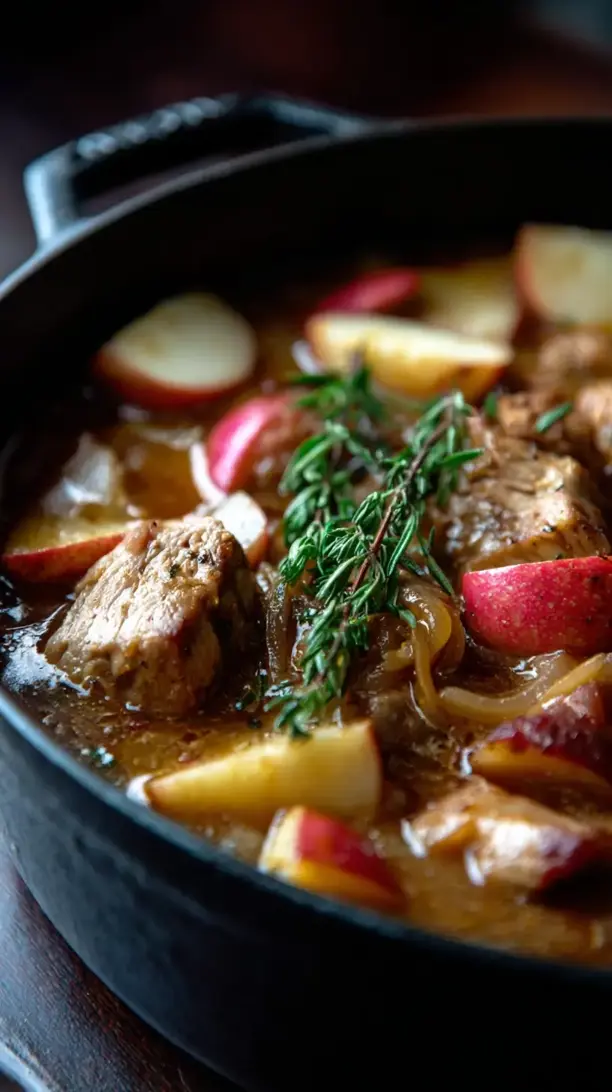
Pork And Apple Stew
Make the best Pork and Apple Stew with this easy recipe. Tender pork & sweet apples in a savory broth create the perfect comfort meal. Get the recipe now!
Ingredients
For the Ingredients & Tools
-
1.5 kg pork shoulder (cut into 3 cm cubes)
-
2 tbsp olive oil
-
1 large onion (chopped)
-
3 garlic cloves (minced)
-
2 medium carrots (sliced into rounds)
-
2 firm, sweet apples (like Braeburn or Honeycrisp, peeled and cubed)
-
2 tbsp tomato paste
-
500 ml chicken or vegetable stock
-
250 ml dry cider or apple juice
-
2 fresh thyme sprigs
-
1 bay leaf
-
Salt and black pepper (to taste)
-
1 tbsp apple cider vinegar (optional, for brightness)
Instructions
-
Start by patting the pork cubes completely dry with paper towels—this is crucial for achieving a good sear. Season generously with salt and pepper. Heat the olive oil in your heavy-bottomed pot over medium-high heat until it shimmers. Working in batches to avoid crowding, add the pork and sear until deeply browned on all sides, about 3–4 minutes per batch. Transfer the browned pork to a plate and set aside. You’ll notice those browned bits at the bottom of the pot… that’s pure flavor waiting to be unleashed.01
-
Reduce the heat to medium and add the chopped onion to the same pot. Sauté for about 5 minutes until softened and lightly golden, scraping up those delicious browned bits from the pork. Add the minced garlic and cook for another minute until fragrant—be careful not to burn it, or it’ll turn bitter. Stir in the carrots and cubed apples, cooking for 3–4 minutes until they just begin to soften.02
-
Push the vegetables to one side and add the tomato paste to the cleared space. Let it cook for a minute until it darkens slightly and smells sweet—this deepens its flavor. Now, return the seared pork and any accumulated juices to the pot, stirring everything together so the tomato paste coats the meat and vegetables evenly.03
-
Pour in the stock and cider, scraping the bottom of the pot to release any remaining stuck-on bits. Add the thyme sprigs and bay leaf, then bring the liquid to a gentle simmer. Once bubbling, reduce the heat to low, cover the pot with a lid slightly ajar, and let it cook slowly for about 1.5 to 2 hours. The pork should become fork-tender, and the apples will have mostly melted into the sauce, thickening it naturally.04
-
About 15 minutes before the stew is done, taste and adjust the seasoning with more salt and pepper if needed. If you want a bit of brightness, stir in the apple cider vinegar. Remove the thyme stems and bay leaf before serving. The stew should be richly colored, with tender pork that pulls apart easily and a sauce that clings lovingly to every ingredient.05
Not what you're looking for?


