
This Pork and Black Bean Stew is a deeply comforting, one-pot meal that fills your kitchen with an inviting aroma. It features tender pork shoulder and black beans simmered in a smoky-spiced broth for maximum flavor with minimal effort. This rustic pork and black bean stew is a satisfying, make-ahead dinner perfect for chilly evenings.
Love Pork and Black Bean Stew? So do we! If you're into Stew or curious about Burgers, you'll find plenty of inspiration below.


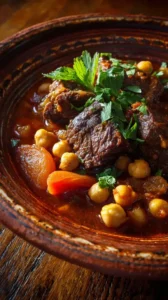
Why You’ll Love This Pork and Black Bean Stew
- Deep, complex flavors: Smoked paprika and cumin create a rich, savory base with minimal hands-on work.
- Forgiving & versatile: Easily adapts to ingredient swaps without compromising taste.
- Better next day: Flavors deepen overnight, making it an ideal make-ahead meal.
- Satisfying & balanced: Packed with protein, fiber, and healthy fats to keep you full.
Ingredients & Tools
- 1.5 kg pork shoulder (Boston butt), cut into 3-4 cm cubes
- 2 tbsp olive oil
- 1 large yellow onion, diced
- 4 cloves garlic, minced
- 2 medium carrots, diced
- 2 celery stalks, diced
- 1 tbsp smoked paprika
- 2 tsp ground cumin
- 1 tsp dried oregano
- ¼ tsp cayenne pepper (optional, for heat)
- 240 ml dry white wine or chicken broth
- 800 g canned black beans, rinsed and drained
- 800 g canned diced tomatoes, with their juices
- 500 ml chicken broth
- 2 bay leaves
- Salt and freshly ground black pepper, to taste
- For serving: Fresh cilantro or parsley, sour cream or Greek yogurt, lime wedges
Tools: A large, heavy-bottomed pot or Dutch oven (this is key for even heat distribution), wooden spoon, sharp knife, and cutting board.
Don’t be tempted to skip searing the pork—it’s the foundation for a deep, caramelized flavor. And using a good, heavy pot makes all the difference, preventing any scorching during the long, slow cook.
Nutrition (per serving)
| Calories: | 520 kcal |
| Protein: | 42 g |
| Fat: | 18 g |
| Carbs: | 45 g |
| Fiber: | 12 g |
Serves: 6 | Prep Time: 20 minutes | Cook Time: 2 hours 15 minutes | Total Time: 2 hours 35 minutes
Before You Start: Tips & Ingredient Notes
- Choosing your pork. Pork shoulder (also called Boston butt) is the best cut here. It has a good amount of marbled fat that slowly renders and bastes the meat from within, resulting in fall-apart tender pieces. Leaner cuts like pork loin will become dry and tough.
- To drain or not to drain the beans? Definitely rinse and drain your canned black beans. This removes the starchy, sometimes salty canning liquid, which allows the beans to better absorb the stew’s flavors without making the broth cloudy or overly thick.
- The power of a proper sear. When browning the pork, resist the urge to move it around constantly. Let it develop a dark, golden-brown crust on one side before turning. This fond—the browned bits stuck to the pot—is pure flavor that will deglaze into your stew.
- Wine vs. broth. Using a dry white wine like Sauvignon Blanc adds a subtle acidity that brightens the rich stew. If you prefer not to cook with alcohol, an equal amount of additional chicken broth works perfectly well.
How to Make Pork and Black Bean Stew
Step 1: Brown the Pork. Pat the pork cubes completely dry with paper towels—this is crucial for getting a good sear, not a steam. Season generously with salt and pepper. Heat the olive oil in your large heavy pot over medium-high heat. Working in batches to avoid crowding the pan, add the pork and sear for about 3-4 minutes per side, until you have a deep brown crust. Transfer the seared pork to a clean plate and set aside.
Step 2: Sauté the Aromatics. Reduce the heat to medium. In the same pot, you’ll notice all those delicious browned bits. Add the diced onion, carrots, and celery (this is your soffritto or mirepoix). Sauté for 6-8 minutes, stirring occasionally, until the vegetables have softened and the onion is translucent. Add the minced garlic and cook for just one more minute until fragrant—you don’t want it to burn.
Step 3: Bloom the Spices. Now, add the smoked paprika, cumin, dried oregano, and cayenne (if using) to the pot. Stir constantly for about 30 seconds. You’ll smell the spices becoming incredibly fragrant; this process, called “blooming,” wakes up their essential oils and deeply embeds their flavor into the base of the stew.
Step 4: Deglaze the Pot. Pour in the white wine (or broth), and use your wooden spoon to scrape up all the browned fond from the bottom of the pot. Let it simmer for 2-3 minutes, allowing the liquid to reduce by about half. This step lifts all that concentrated flavor back into the sauce.
Step 5: Combine and Simmer. Return the seared pork and any accumulated juices back to the pot. Add the rinsed black beans, diced tomatoes with their juices, chicken broth, and the bay leaves. Give everything a good stir and bring it to a lively simmer.
Step 6: The Low and Slow Cook. Once simmering, reduce the heat to low, cover the pot with a lid slightly ajar to allow some steam to escape, and let it cook gently for 1.5 to 2 hours. You’re looking for the pork to be fork-tender, easily shredding when pressed. Stir occasionally to prevent anything from sticking to the bottom.
Step 7: Final Adjustments. After the long simmer, the stew should be thick and rich. Remove the bay leaves. Taste it and season with more salt and pepper as needed. If you prefer a slightly thicker stew, you can let it simmer uncovered for another 10-15 minutes. For a thinner consistency, add a splash of broth or water.
Storage & Freshness Guide
- Fridge: Cool completely and store in an airtight container for up to 4 days.
- Freezer: Freeze in sealed containers or bags for up to 3 months.
- Reviving: Reheat gently on the stovetop, adding a splash of broth if needed.
Serving Suggestions
Complementary Dishes
- Buttery Cornbread or Crusty Bread — Perfect for sopping up every last bit of the flavorful broth. The slight sweetness of cornbread is a fantastic contrast to the savory stew.
- Simple Cilantro-Lime Rice — A bed of fluffy rice cooked with a bit of lime zest and fresh cilantro adds a fresh, bright element and makes the stew go even further.
- A Crisp Green Salad with a Zesty Vinaigrette — Something light and acidic, like a simple arugula salad with a lemon-Dijon dressing, helps cut through the richness of the stew.
Drinks
- A Malty Amber Ale or Brown Ale — The caramel and toasty notes in these beers complement the smokiness of the paprika and the heartiness of the pork without overpowering it.
- A Glass of Zinfandel or Garnacha — These fruit-forward, medium-bodied red wines have enough structure to stand up to the stew but won’t clash with the spices.
- Sparkling Water with Lime — A non-alcoholic option that provides a crisp, clean palate cleanser between bites, enhancing the overall dining experience.
Something Sweet
- Warm Churros with Chocolate Sauce — Staying with the theme, these crispy, cinnamon-sugar-dusted treats are a fun and decadent way to end the meal.
- Orange and Almond Cake — A moist, gluten-free option that isn’t too heavy. The citrus notes are a lovely, refreshing finish.
- Vanilla Bean Ice Cream with a Dark Chocolate Drizzle — Sometimes, simple is best. The cool, creamy vanilla is the perfect counterpart to the warm, savory spices of the stew.
Top Mistakes to Avoid
- Mistake: Not drying the pork before searing. If the meat is wet, it will steam instead of sear, and you’ll miss out on developing that deep, caramelized flavor base that is essential to a great stew.
- Mistake: Crowding the pot when browning. Overloading the pan drops the temperature dramatically, causing the meat to release its juices and boil in them. Always brown in batches for a proper, crisp sear.
- Mistake: Skipping the spice bloom. Adding the spices directly to the liquid means their flavor won’t be as pronounced or complex. Taking that extra 30 seconds to toast them in the oil makes a world of difference.
- Mistake: Boiling the stew instead of simmering. A rolling boil will make the pork tough and chewy. A gentle simmer with small bubbles breaking the surface is what you need for slow, tenderizing cooking.
Expert Tips
- Tip: Make it a day ahead. Stews are almost always better on the second day. The fat rises to the top and solidifies when chilled, making it easy to skim off for a leaner dish, and the flavors have more time to marry beautifully.
- Tip: Use an ice cube to degrease. If you’re serving immediately and want to remove excess surface fat, drag a few ice cubes through the stew in a ladle. The fat will cling to the cold ladle, and you can easily discard it.
- Tip: Add a splash of acidity at the end. Before serving, stir in a tablespoon of fresh lime juice or a dash of red wine vinegar. This little hit of acidity will brighten all the flavors and make the stew taste fresher and more balanced.
- Tip: Don’t forget the garnishes. A dollop of cool sour cream, a sprinkle of fresh cilantro, and a wedge of lime aren’t just for looks. They add contrasting textures, temperatures, and flavors that elevate the entire dish.
FAQs
Can I make this Pork and Black Bean Stew in a slow cooker?
Absolutely! It adapts wonderfully. Just follow steps 1 through 4 on the stovetop to sear the meat and sauté the aromatics—this builds a flavor foundation you can’t get from just dumping everything in the slow cooker. Then, transfer everything to your slow cooker, add the remaining ingredients, and cook on LOW for 7-8 hours or on HIGH for 4-5 hours, until the pork is fork-tender.
Can I use a different type of bean?
You can, but the cooking time and liquid absorption may vary slightly. Kidney beans or pinto beans would be excellent substitutes with a similar texture. I wouldn’t recommend using a more delicate bean like cannellini, as it may break down too much during the long cooking process.
My stew is too thin. How can I thicken it?
The easiest way is to let it simmer uncovered for an additional 15-20 minutes, which will allow excess liquid to evaporate. Alternatively, you can mash a few spoonfuls of the beans and pork against the side of the pot and stir them back in—this will naturally thicken the broth. A cornstarch slurry (1 tbsp cornstarch mixed with 2 tbsp cold water) stirred in at the end also works in a pinch.
How long will leftovers keep?
Stored in an airtight container in the refrigerator, this stew will keep beautifully for up to 4 days. The flavor will continue to improve for the first day or two. You can also freeze it for up to 3 months. Just thaw overnight in the fridge before reheating gently on the stovetop.
Is it possible to overcook this stew?
It’s quite forgiving, but yes, it is possible. If cooked for an excessively long time at too high a temperature, the pork can start to dry out and the beans can become mushy. Stick to the recommended simmering time and check for tenderness. The pork is done when it shreds easily with a fork.



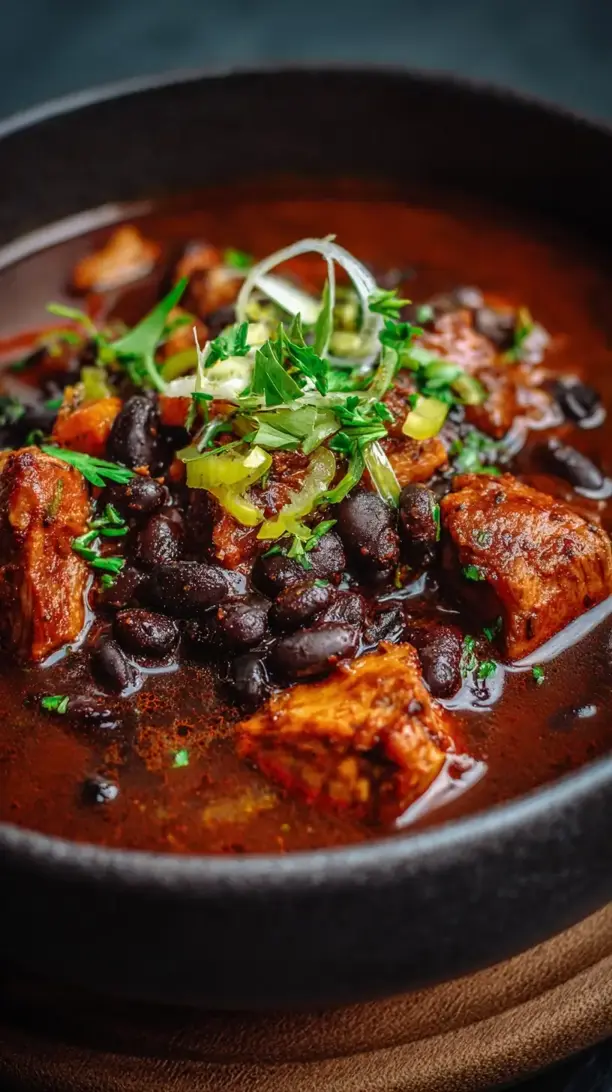
Pork And Black Bean Stew
Make this easy Pork and Black Bean Stew recipe for a smoky, one-pot comfort meal. Tender pork & beans simmer in a rich broth. Get the recipe now!
Ingredients
For the Stew:
-
1.5 kg pork shoulder (Boston butt, cut into 3-4 cm cubes)
-
2 tbsp olive oil
-
1 large yellow onion (diced)
-
4 cloves garlic (minced)
-
2 medium carrots (diced)
-
2 celery stalks (diced)
-
1 tbsp smoked paprika
-
2 tsp ground cumin
-
1 tsp dried oregano
-
0.25 tsp cayenne pepper (optional, for heat)
-
240 ml dry white wine or chicken broth
-
800 g canned black beans (rinsed and drained)
-
800 g canned diced tomatoes (with their juices)
-
500 ml chicken broth
-
2 bay leaves
-
Salt and freshly ground black pepper (to taste)
For serving:
-
Fresh cilantro or parsley
-
sour cream or Greek yogurt
-
lime wedges
Instructions
-
Pat pork cubes dry; season generously with salt and pepper. Heat olive oil in a heavy pot over medium-high. Sear pork in batches 3–4 minutes per side until deeply browned. Transfer to a plate.01
-
Reduce heat to medium. In the same pot, add diced onion, carrots, and celery; cook 6–8 minutes until softened and translucent. Stir in minced garlic; cook 1 minute.02
-
Add smoked paprika, cumin, dried oregano, and cayenne (optional). Stir constantly ~30 seconds to bloom spices.03
-
Pour in white wine (or broth) and scrape up browned bits. Simmer 2–3 minutes to reduce by about half.04
-
Return pork (and juices) to the pot. Add rinsed black beans, diced tomatoes with juices, chicken broth, and bay leaves. Stir and bring to a lively simmer.05
-
Reduce heat to low, cover with lid slightly ajar, and simmer gently 1½–2 hours, stirring occasionally, until pork is fork-tender.06
-
Discard bay leaves. Taste and adjust salt and pepper. For a thicker stew, simmer uncovered 10–15 minutes; for thinner, add a splash of broth or water.07
Not what you're looking for?


